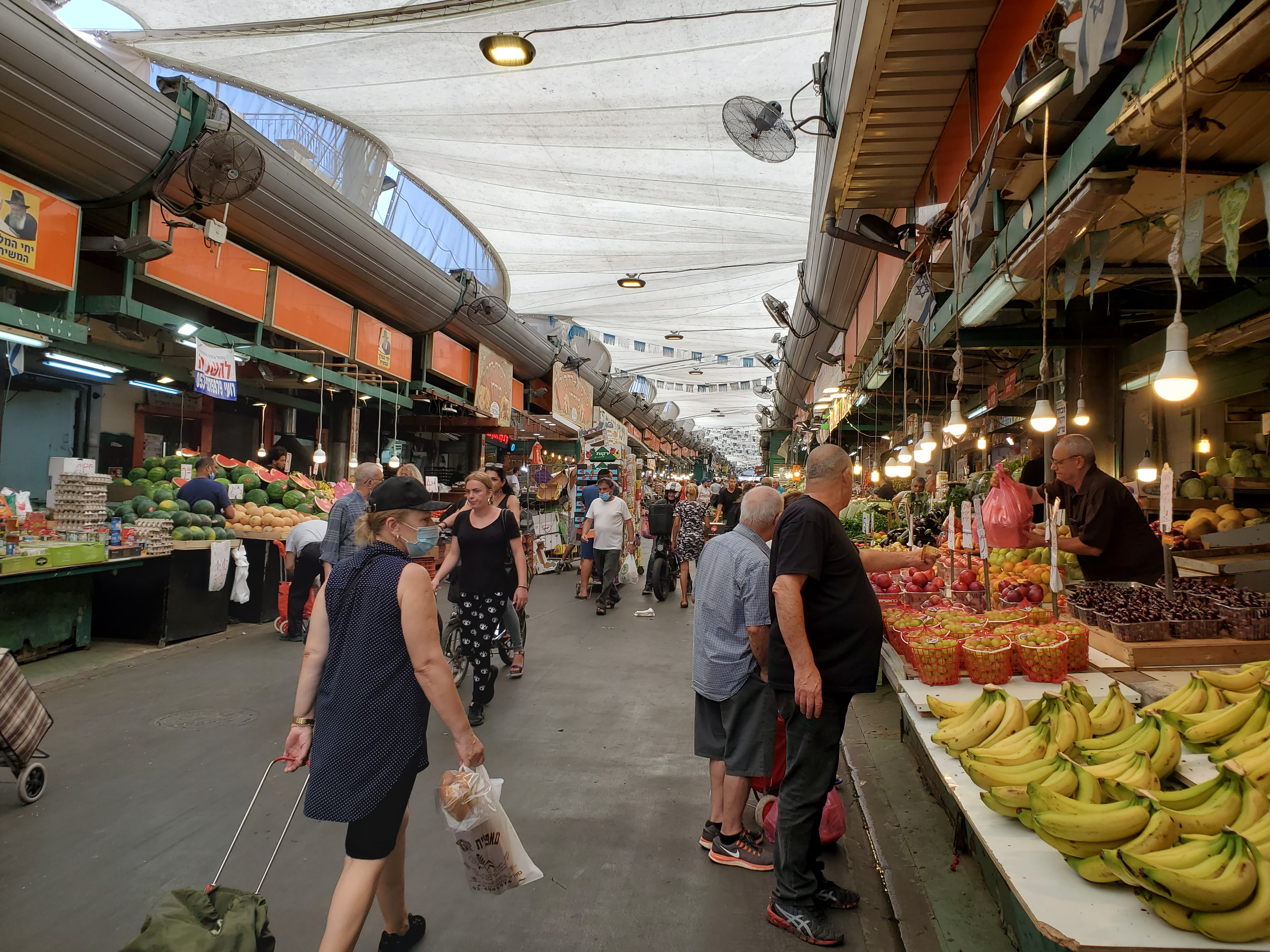
One of the things I love most about Israel are the various shukim or markets around the country. The fresh produce, the banter from vendors and the amazing variety of the crowds you encounter make my trips to them my real Israel experiences.
The smells. No matter which market we’re talking about, there is always a similar mixture of scents: the fresh fruits, vegetables and herbs alongside the aromas of grilling meat, frying pastries, and roasting nuts, with subtle hints of cigarette smoke, rotting vegetables and decaying meat, and just a nose of urine every now and then.
The people. You can see every stratum of society, young and old, well-to-do and poor, secular and religious, standing and shopping side by side. You also notice people from every ethnic background shopping next to each other: Iraqis, Moroccans, Yemenites, Russians, Ethiopians, South Africans, and Americans all mixed together doing their regular grocery shopping.
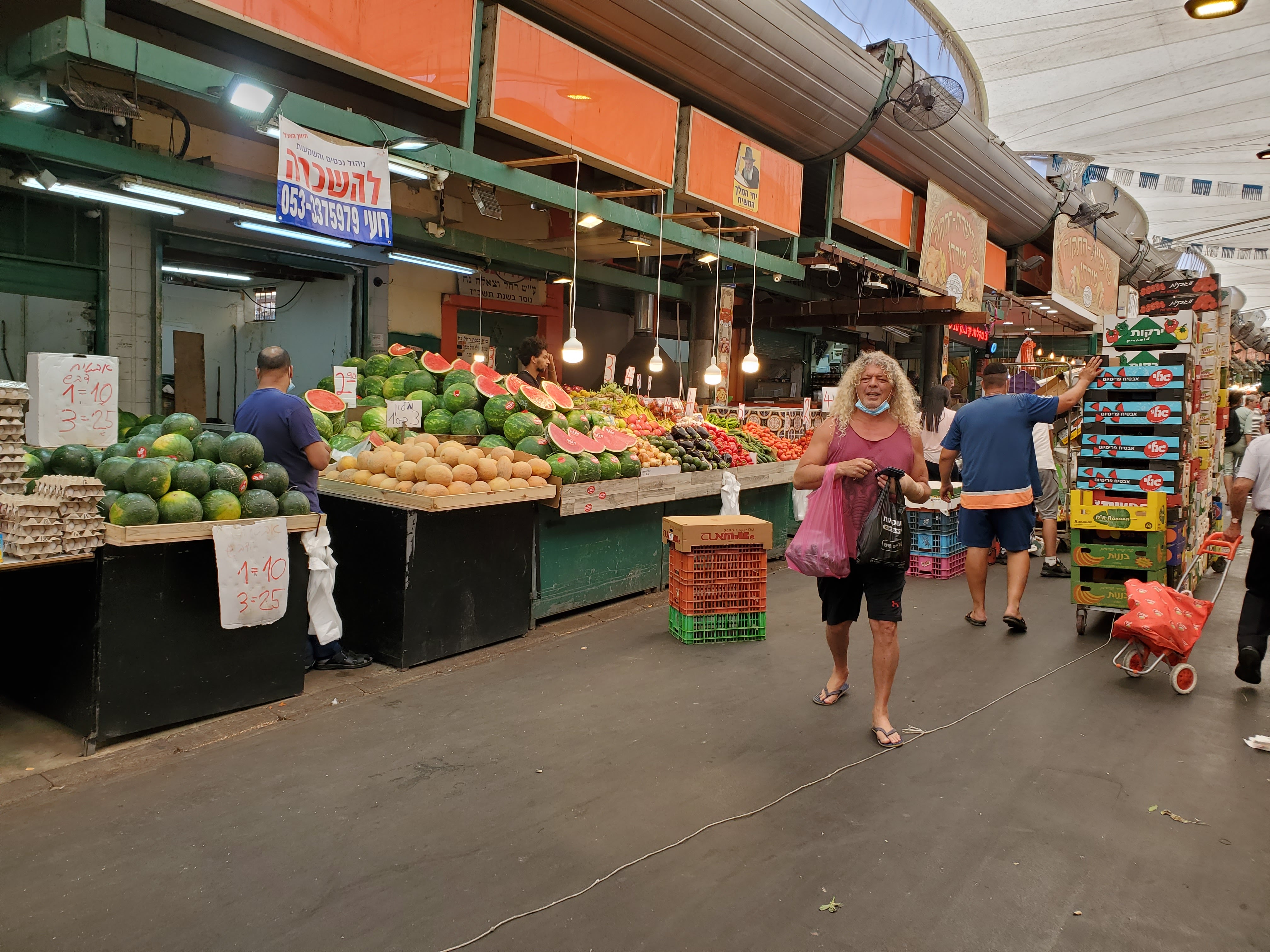
Shuk Hatikva is in the Hatikva neighborhood of Tel Aviv, a working class neighborhood, still filled with immigrants. The market was founded in the mid-1930’s when Arab farmers from the nearby village of Salama stopped coming to the neighborhood to sell their produce. Initially opened with a few stalls from Iraqi, Yemenite, Persian, and Syrian immigrants. The market grew and has spread over several streets in South Tel Aviv and has added foods from Russian, Georgian, Bukharan, and other communities.
Unlike some of the larger markets like Shuk Hacarmel in Tel Aviv or Machane Yehuda in Jerusalem, or like its smaller neighbor, Shuk Levinksy, Shuk Hatikvah has not gentrified, but remains a working person’s market, filled with whatever produce a person might need, as well as true homestyle food.
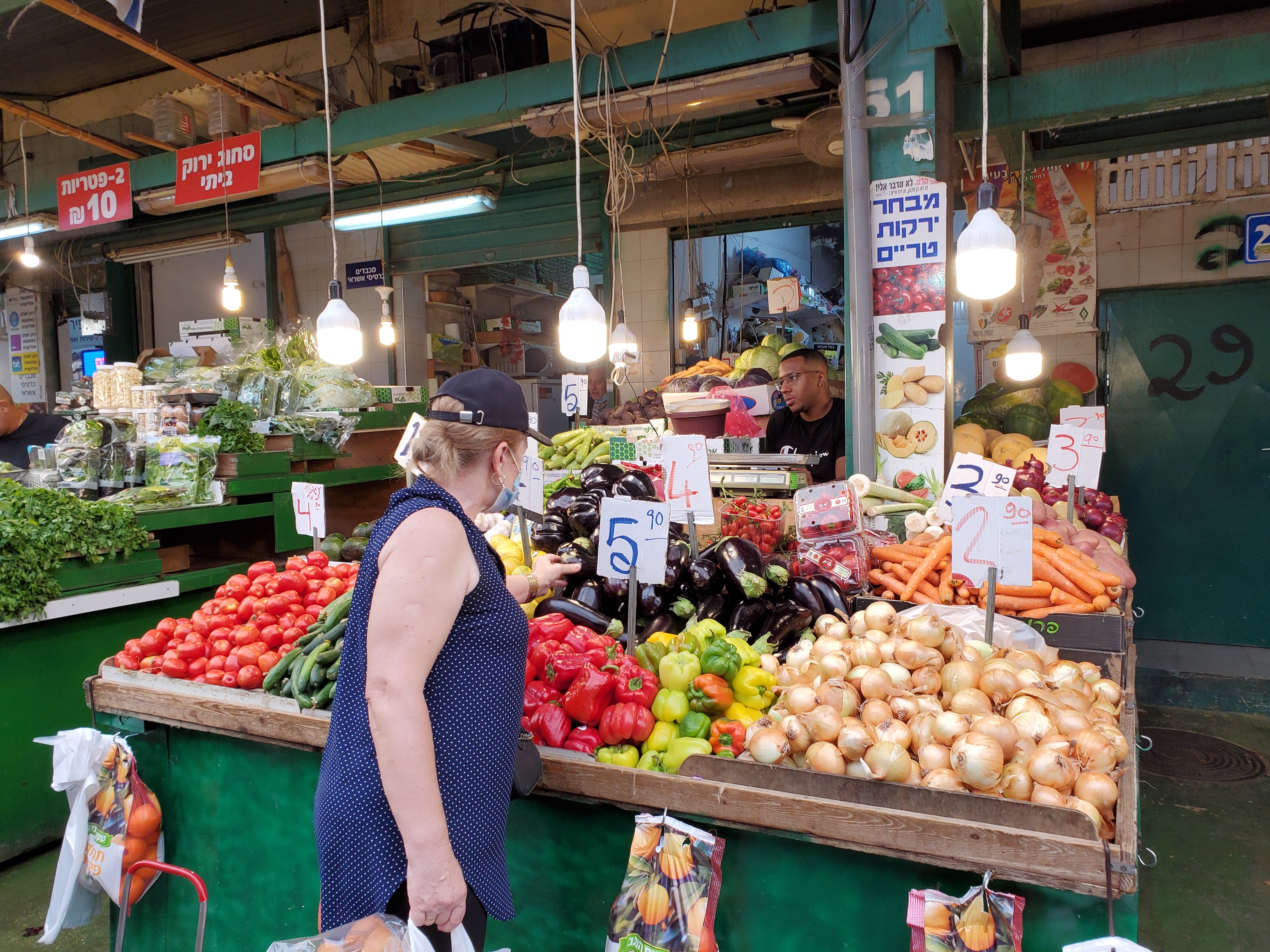
I visited Shuk Hatikva on a Thursday morning when it was busy, but not overly crowded. I was struck by the variety and volume of fresh produce – not just the tomatoes, cucumbers, and peppers, but squashes, eggplant, kohlrabi, watermelon, apricots, plums, and more. In addition, there are butcher shops filled with fresh meat, fish mongers, a shops filled with dried fruits and nuts, cookies, and pastries.
The hardest thing to figure out is where to start. I walked the market to get a feel for the selection and prices and began to pick out some items that I would likely use over the next few days. In addition to the usual salad ingredients, I picked up some eggplant, kohlrabi, amba, hummus, techina, roasted nuts, and pita.
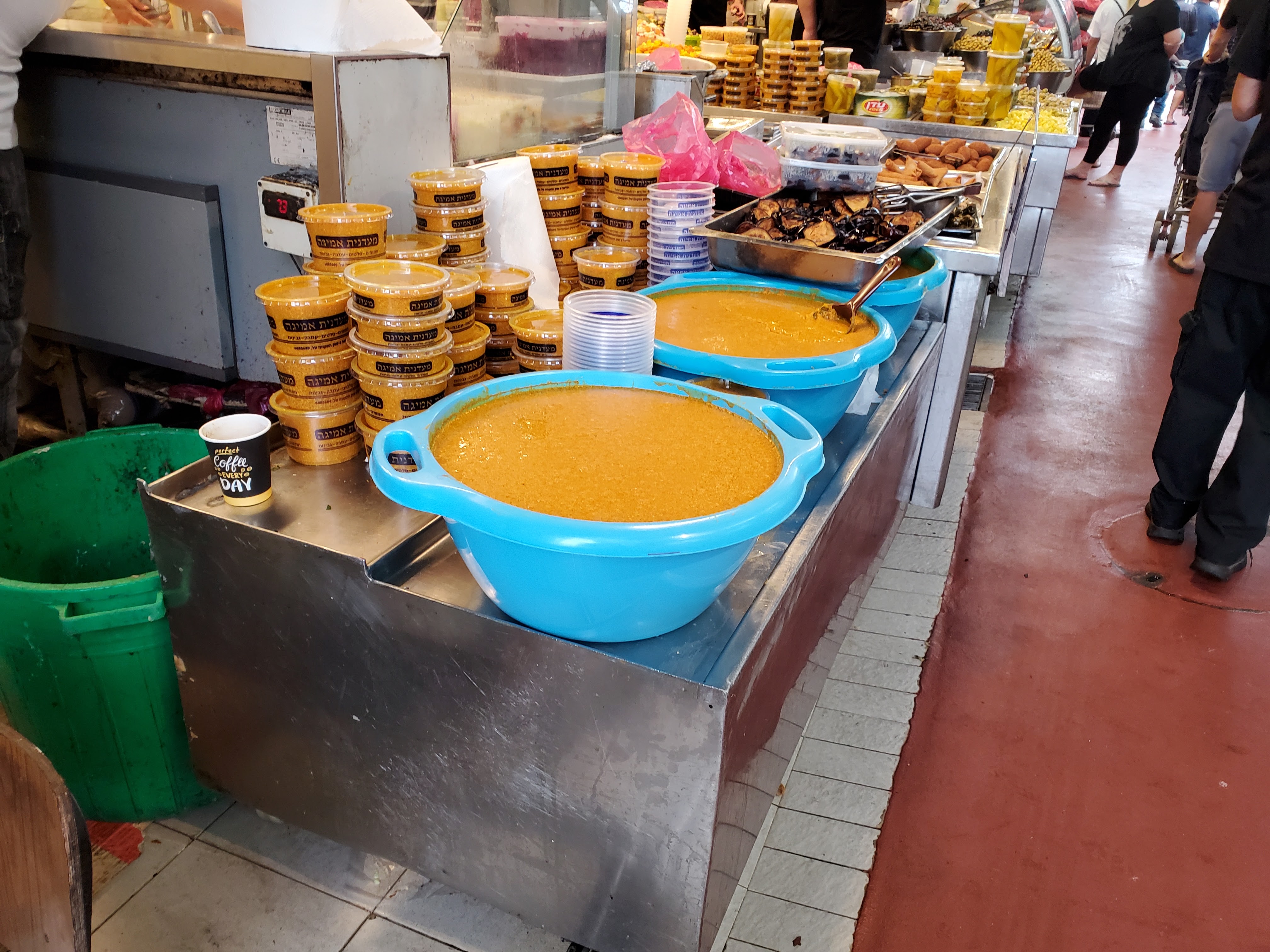
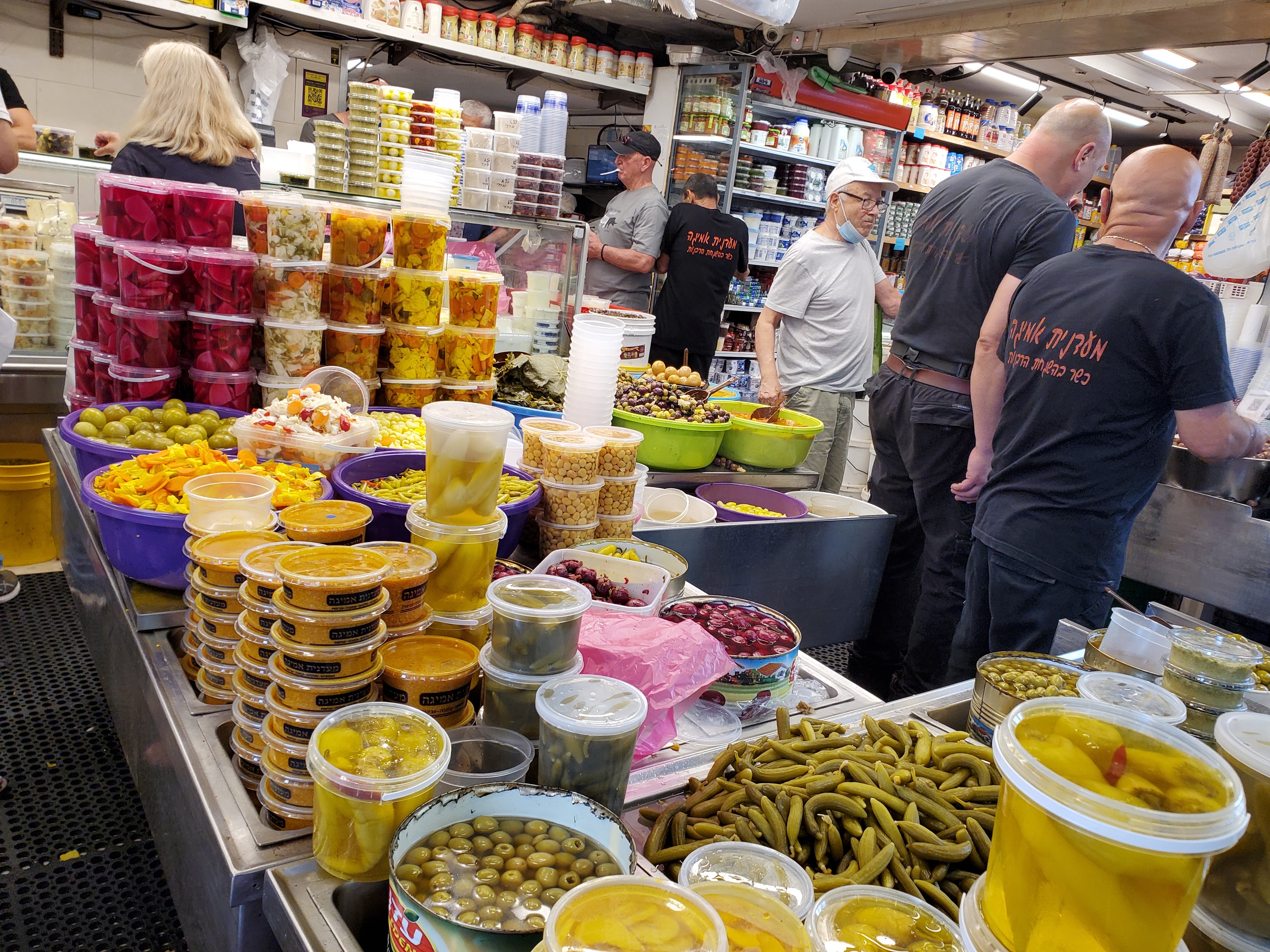
Maadani Ofer sells, hummus, techina, a wide variety of salads, olives, pickles, and other foods, but the star is the amba. Amba is a sauce made from green mangoes, vinegar, salt, turmeric, chilis, and fenugreek. It is used as a topping on sabich, kubbeh, falafel, and more. You can see vats of amba in various stages of preparation and purchase pre-packaged bottles or have them scoop it out into plastic containers on the spot.
The roasted peanuts that I bought came straight off the roaster into a plastic bag from which I greedily scooped them up. Unlike many of the roasted peanuts that we buy in jars or tins, these didn’t have all of the excess salt, just that wonderful just roasted flavor.
The pita were recently baked, not the dry thin shells we find packaged in supermarkets. These were soft and doughy, with that wonderful chewy bread texture. I can see a future of these being stuffed with tomatoes, cucumbers, hummus, techina, and whatever else I might pick up later.
On my way out of the market, I picked up sabich for a late breakfast/early lunch. Sabich , for those unfamiliar is an incredibly tasty sandwich brought to Israel by Iraqi Jews. The base of the sandwich as slices of fried eggplant and chopped hard-boiled eggs. To that are added techina, amba, and your choice of additional salad toppings, all stuffed inside a pita. You can taste each individual ingredient, but at the same time feel all the flavors blending in your mouth from the pungent amba to the smooth nutty techina, the smokiness of the eggplant and creaminess of the eggs, with some sharp, sweet, bitter, and hot notes from the additional ingredients. Sabich remains one of my favorite foods and this one was an amazing taste experience.
One shuk down, several more to experience.

 My Journey to Israel: Connections and Disruptions