Akko is a mere 9 km, or 5.5 miles, from Nahariya, perfect for a quick trip, at least in terms of distance. The two communities, of similar size, both having populations of about 50,000 people, are historically almost polar opposites. Nahariya, founded in the 1930’s is less than 100 years old. Akko, although initially founded around 3000 BCE, then abandoned after a few hundred years, was re-established around 2000 BCE, has been inhabited ever since. This makes it one of the oldest continuously inhabited places on the planet.
Akko’s presence on the coast as a secure and defensible harbor at the terminus of the route from the Jezreel Valley is probably what has sustained it for so long.
While it existed as a port city during the era of the united kingdom of David and Solomon, and continued through the period of the northern kingdom of Israel; it was later ruled by Romans, Seleucids, Hasmoneans, Persians, Crusaders, Arabs, Ottomans, and the British.
The period for which Akko is best known is the Crusader era. Akko was captured during the First Crusade, in 1104, and remained in Crusader hands until 1187 and Saladin’s conquests. During that period, Akko rivaled Jerusalem for influence and wealth within the Crusader kingdom and Akko served as the primary port for entry.
Akko fell back into Crusader hands during the Third Crusade in 1191 and remained in their control for the next 100 years. A tremendous amount of building activity took place during this time period, creating and strengthening the Crusader fortress.
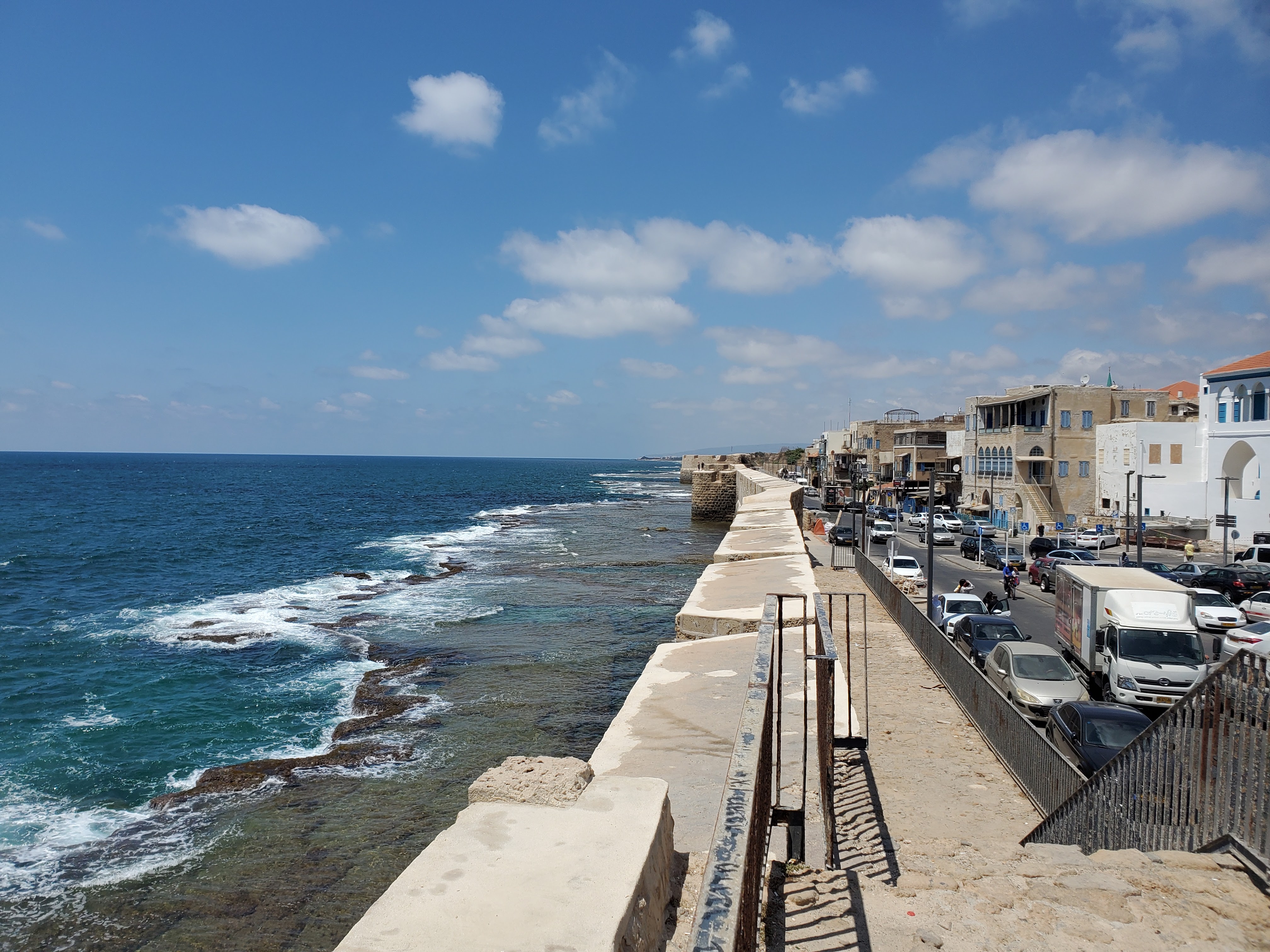
The next significant period in the history of Akko was during the Ottoman period, during the late 18th and early 19th centuries, when the walls were strengthened, and the Khan al-Umdan and the al-Jazzar mosque were constructed.
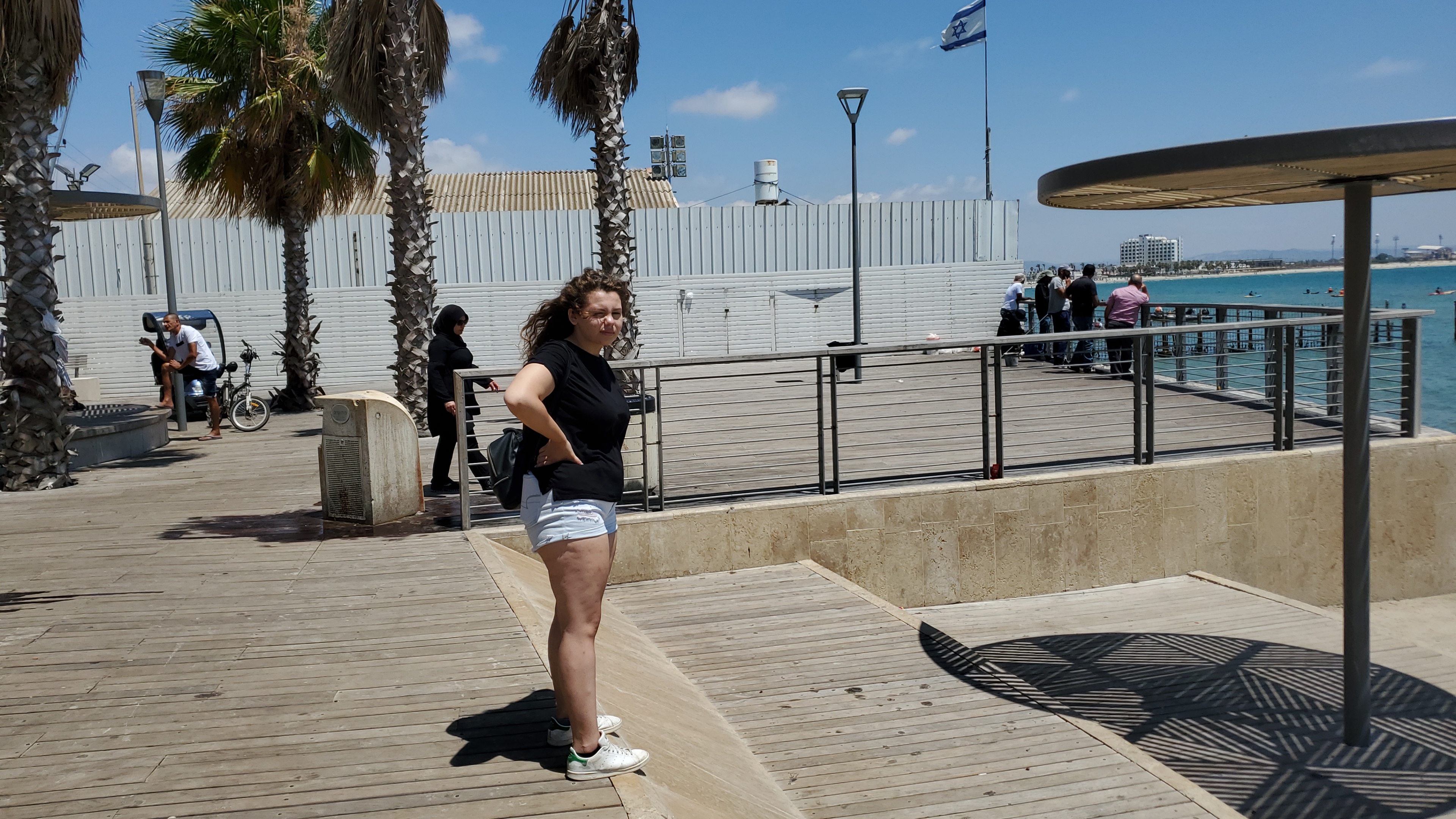
Orli and I took the brief train ride from Nahariya to Akko, in fact, it took longer to walk to the train station, than to actually travel to Akko. From the train station it was a short (and thanks to the bus driver, very fast) bus ride to the Old City of Akko.
We began with shopping. Orli selected a hat.
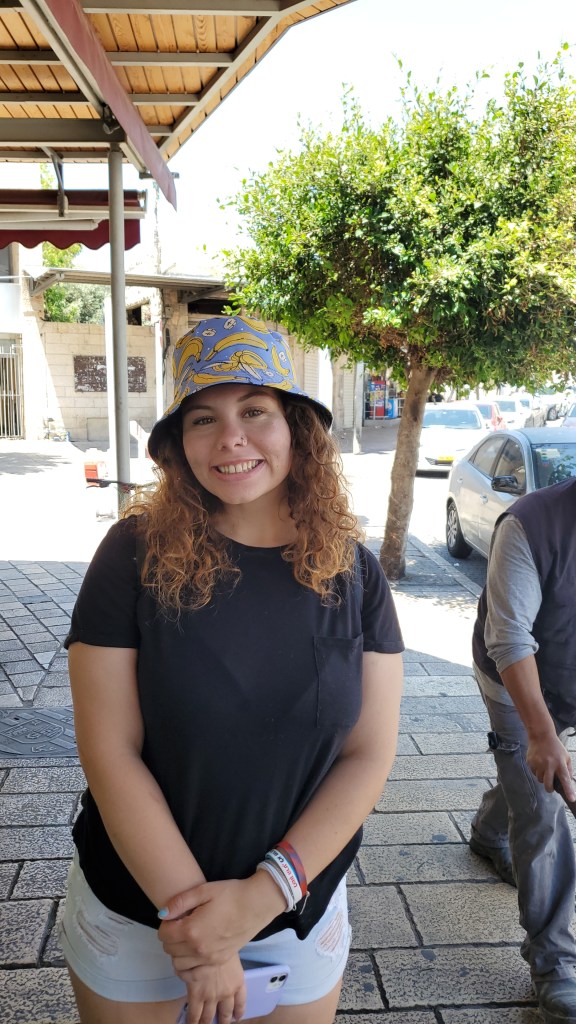
She wanted me to get one as well, but banana just isn’t my style; I’m more of a mango.
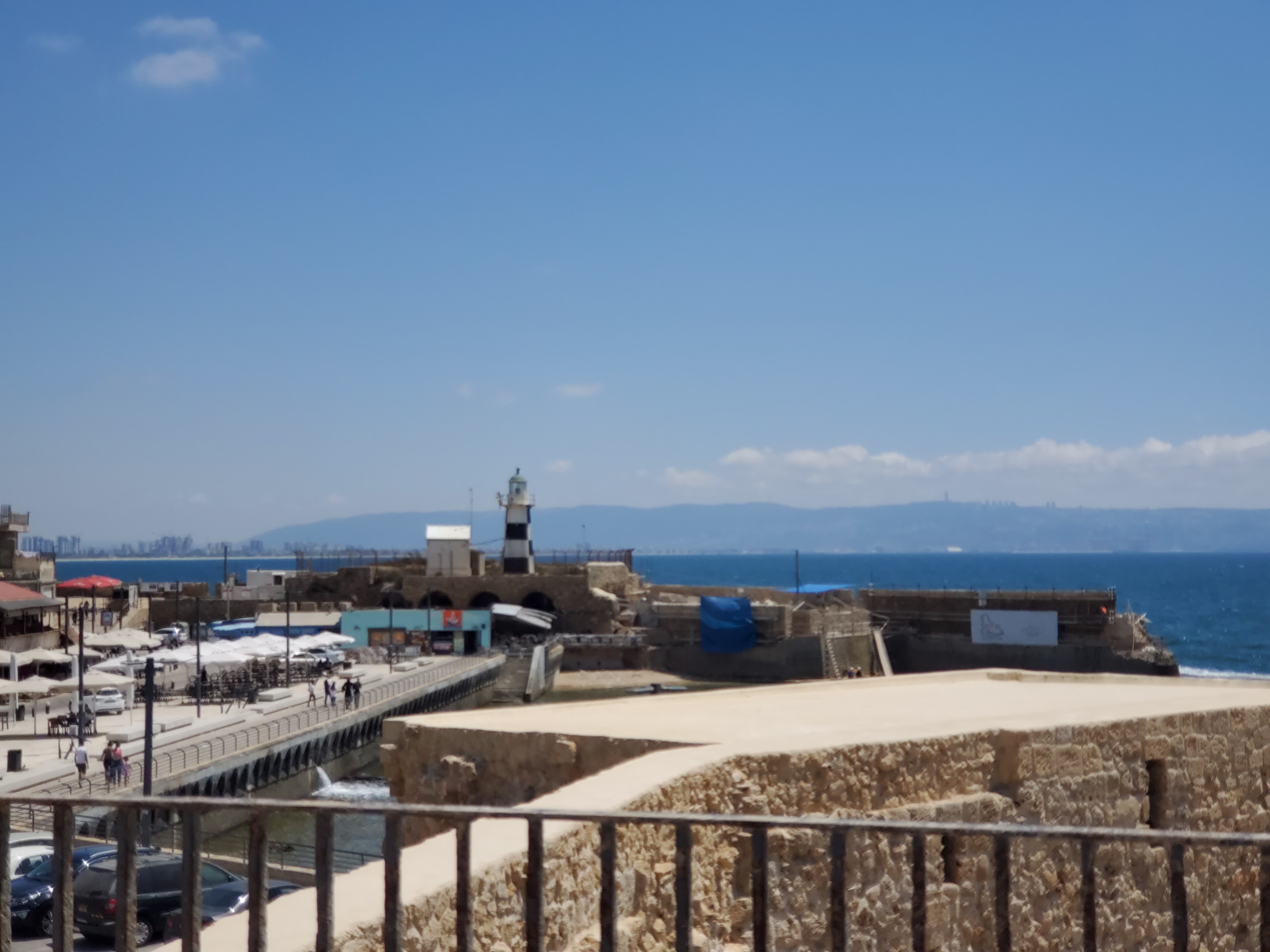
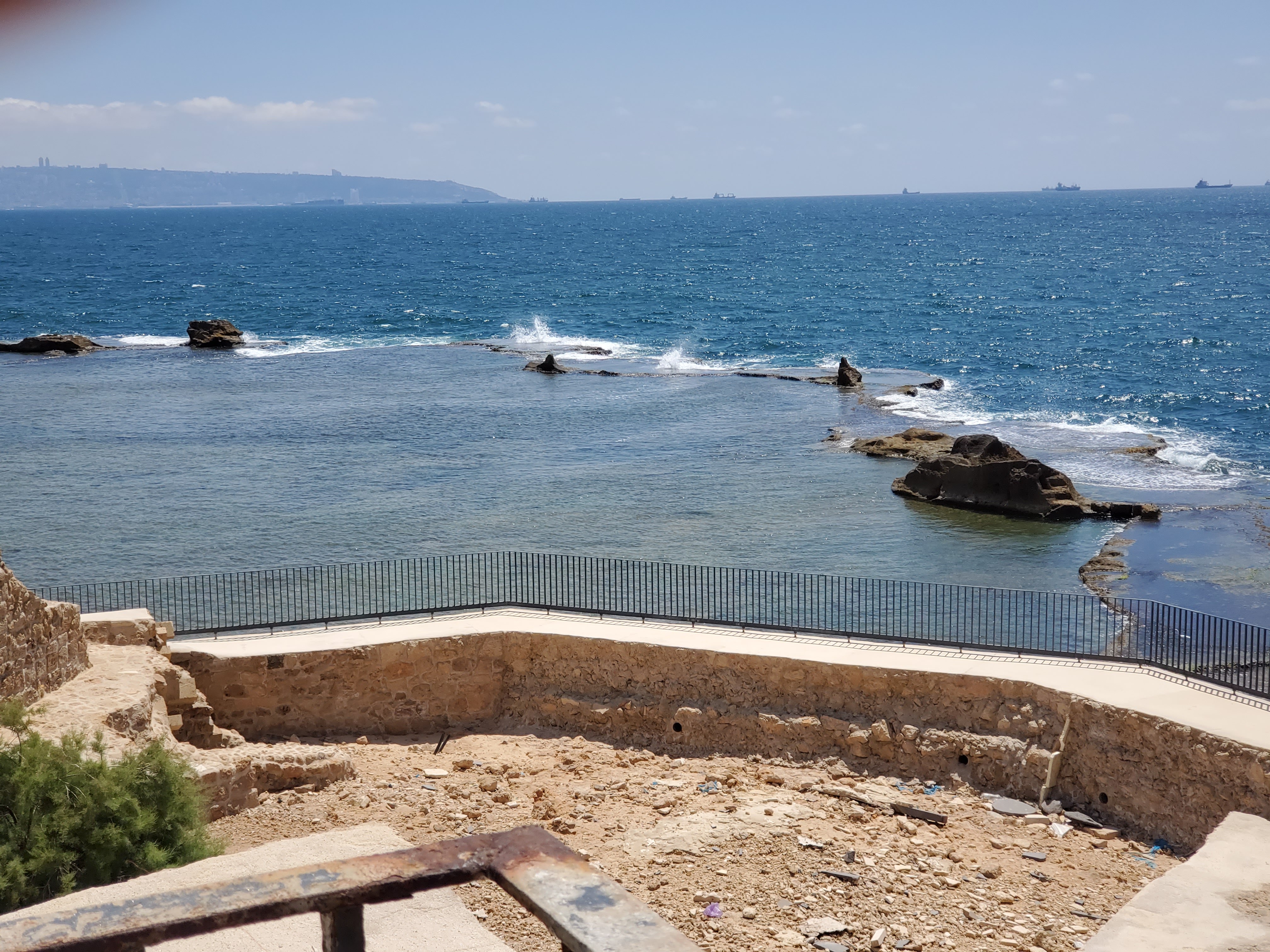
We explored the views of the port and the harbor.
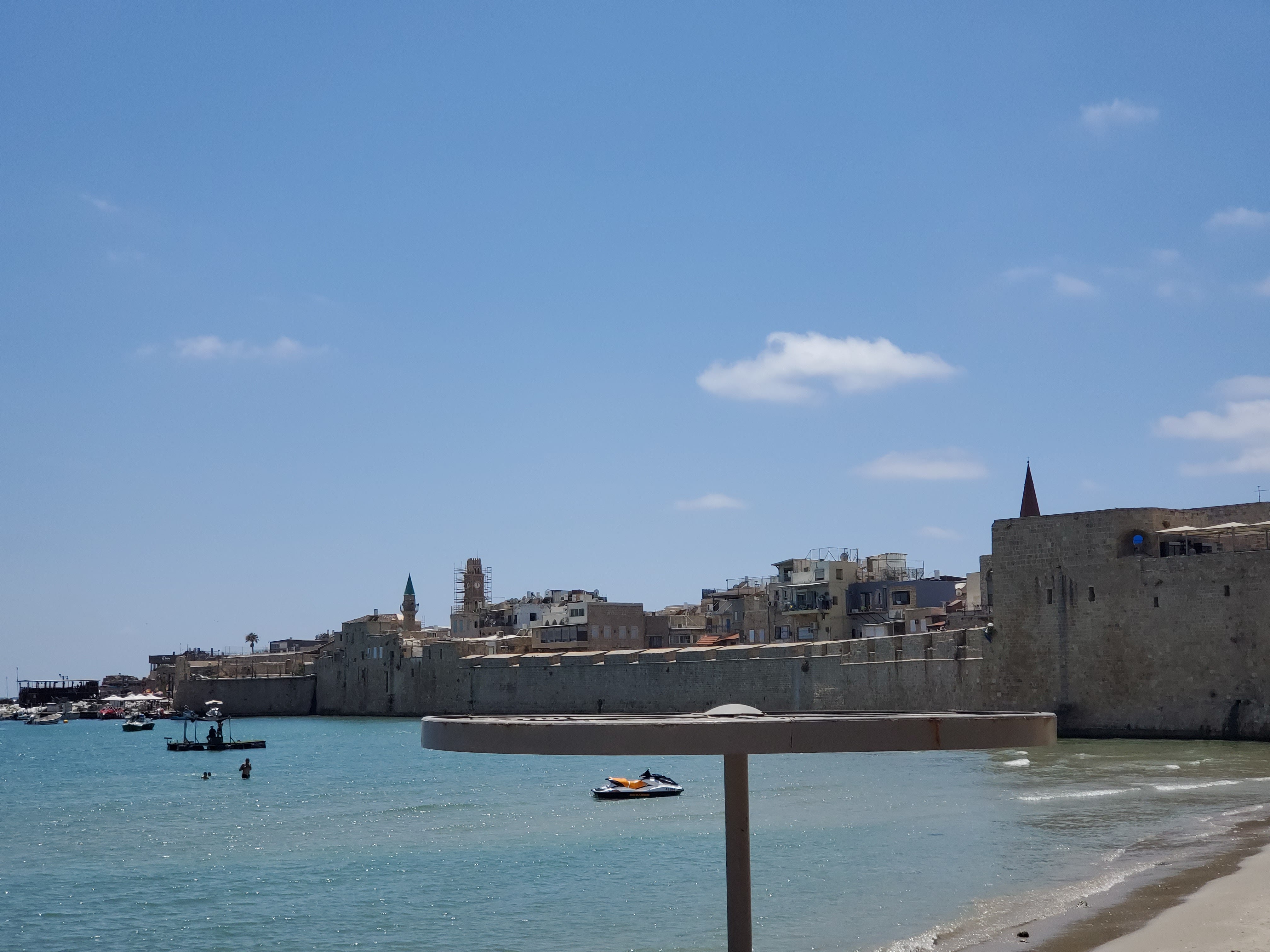
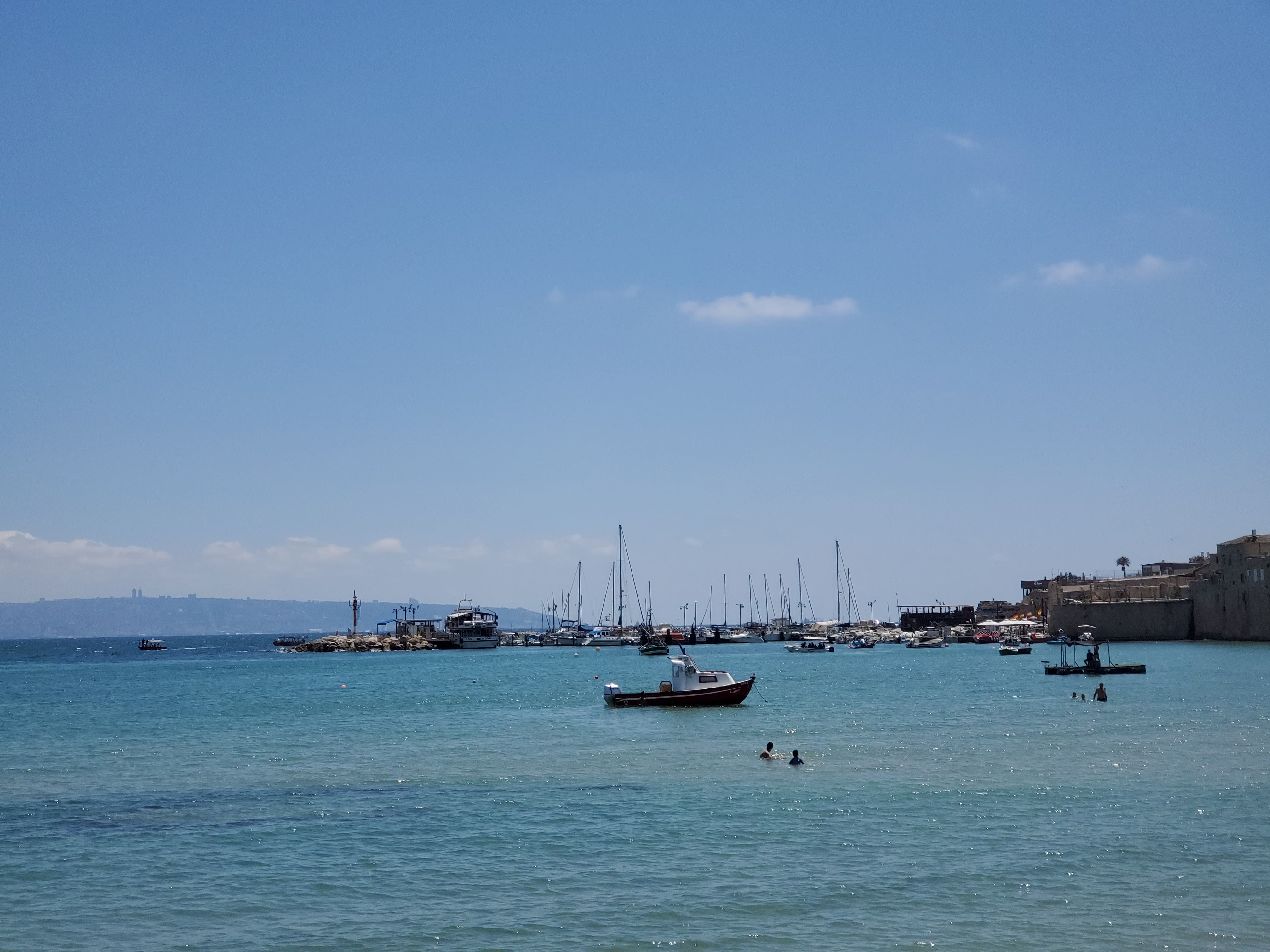
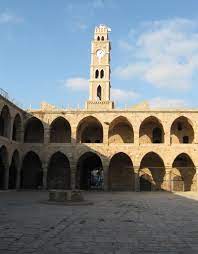
We then saw the Khan al-Umdan, the inn built in the late 18th century by Jazzar Pasha, the largest of the mercantile facilities built in that era. The clock tower, similar to the one in Jaffa, was added in 1906.
We then traveled through the Crusader tunnels that run beneath Akko and are currently under restoration. Remaining bent over in the semi-dark passages was somewhat of a challenge for me, but I did survive.
The Citadel of Akko, originally built by the Crusaders and then reinforced during the Ottoman period, was repurposed by the British during the mandatory period as a prison, as well as a gallows. In May, 1947, the Irgun broke a large number of inmates, their own members and others, out of this prison and avoided their execution by British authorities.
We walked around a little bit more and then headed back to Nahariya by bus, a nice afternoon soaking up some of the history of Akko.

 My Journey to Israel: Connections and Disruptions