The Happiest Place on Earth

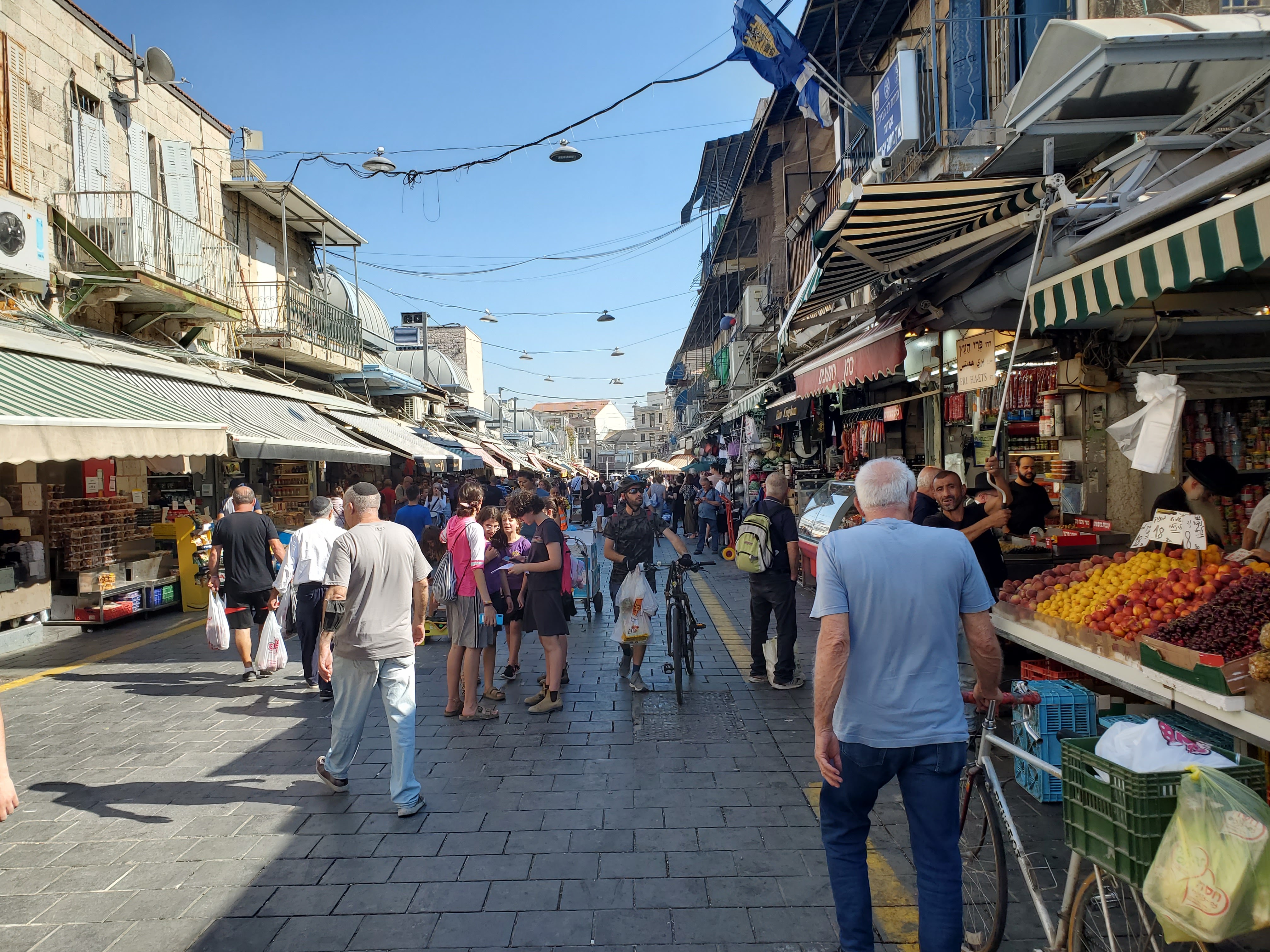
When the world is cold and bleak, each of us has a happy place to which we can go. For some, it’s a simple trip to McDonald’s to allow the taste and smell to trigger for us the comfort of childhood memories, for others it might be a trip to Disneyland, “the happiest place on earth”, but for me, Machane Yehuda in Jerusalem is my happy place.

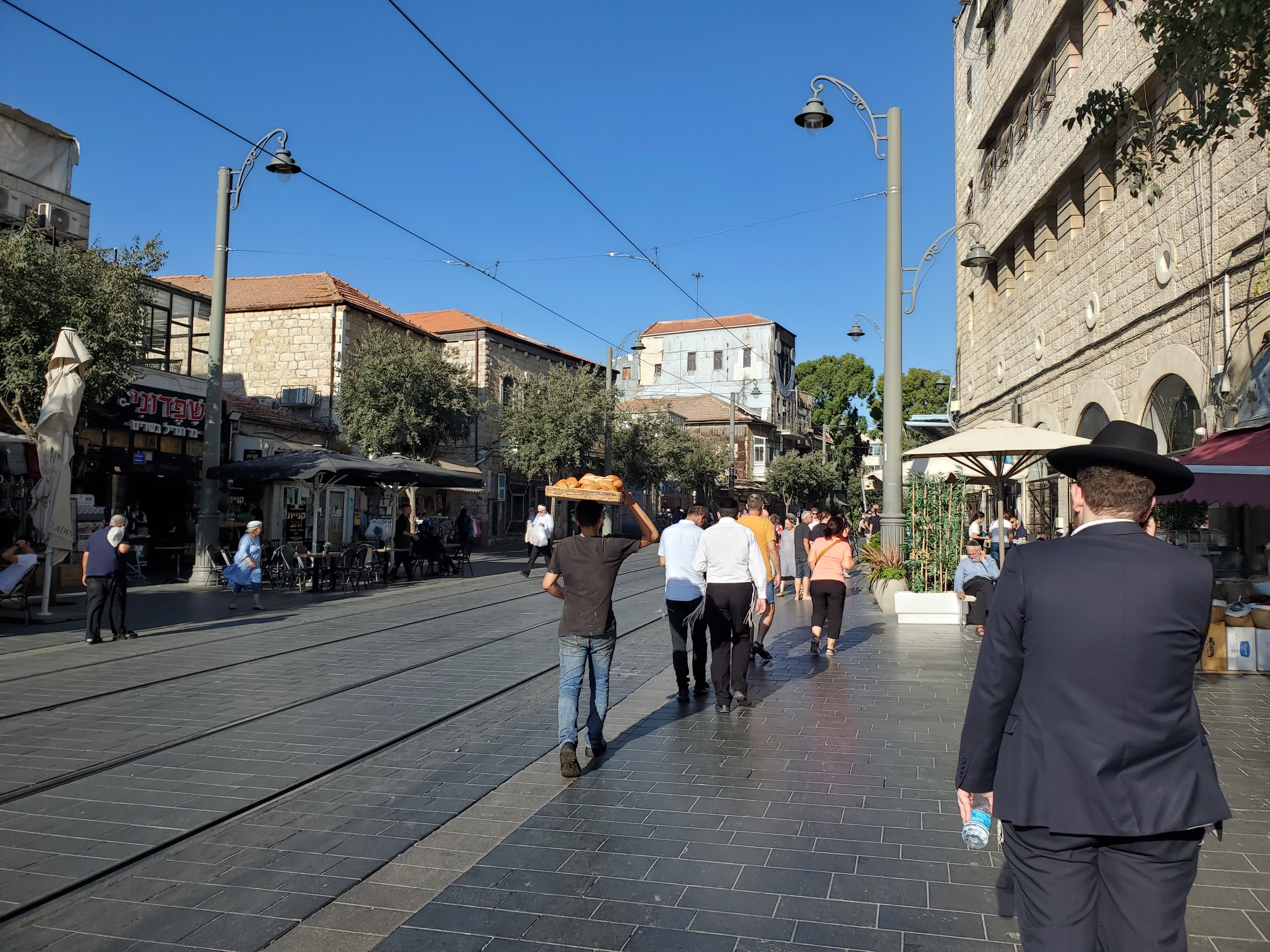
Machane Yehuda is the shuk in the new city. It is a short ride on the light rail from Damascus Gate. The market is one of the largest in Israel with some 250 stalls and vendors in the market, as well as being one of the oldest, initially established in the late 19th century.

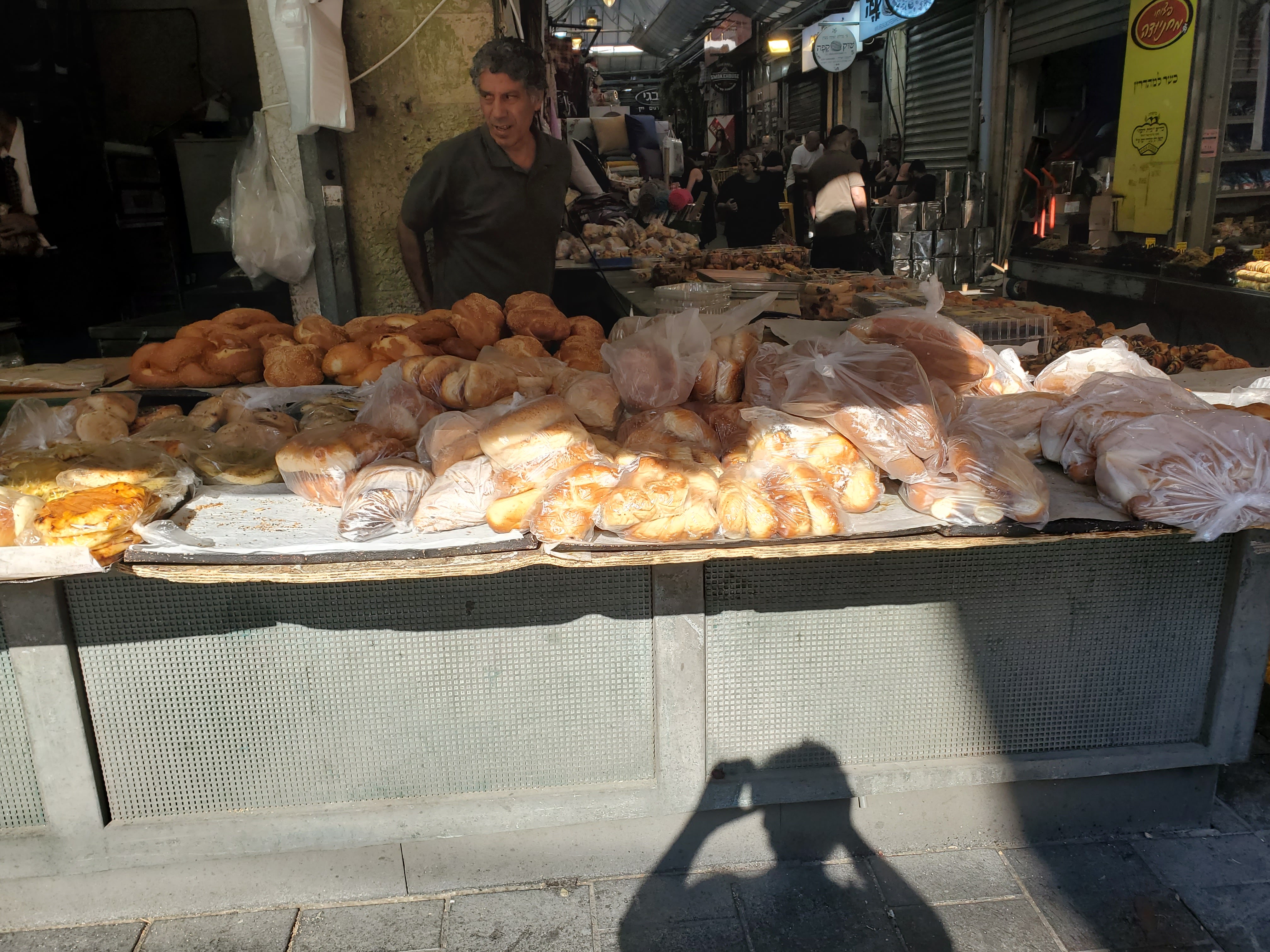
Machane Yehuda, has the combination of everything that I love. There is first and foremost the selection of produce. Everything you could want from tomatoes, cucumbers, peppers, and onions, to watermelons, plums, figs, and grapes, and more can be found in the stalls in the market. There are also a dozen different spice shops, at least as many shops selling dried fruit and nuts, as well as stalls selling meat, fish, and more. There are more than a dozen different bakeries with bread, pita, pastries, cakes, and more. And there are the restaurants serving everything from falafel and shawarma or grilled meats or pizza to fish and chips or empanadas.

The eyes drink in the sights of all of the colors displayed in all of the stalls, but the sensory experience extends well beyond the visual. The sounds of the market ring in your ears through the banter between vendors and the calls directed toward customers trying to convince us who has the best bananas or the lowest price on mangoes. In addition there are all the conversations among the customers, greeting each other, catching up on news, children complaining, and shoppers comparing prices . Finally, there are the smells of the market: fruits and vegetables, herbs and spices, nuts roasting, meat grilling, falafel and chips in the fryer, meat and fish, bread baking, and more.

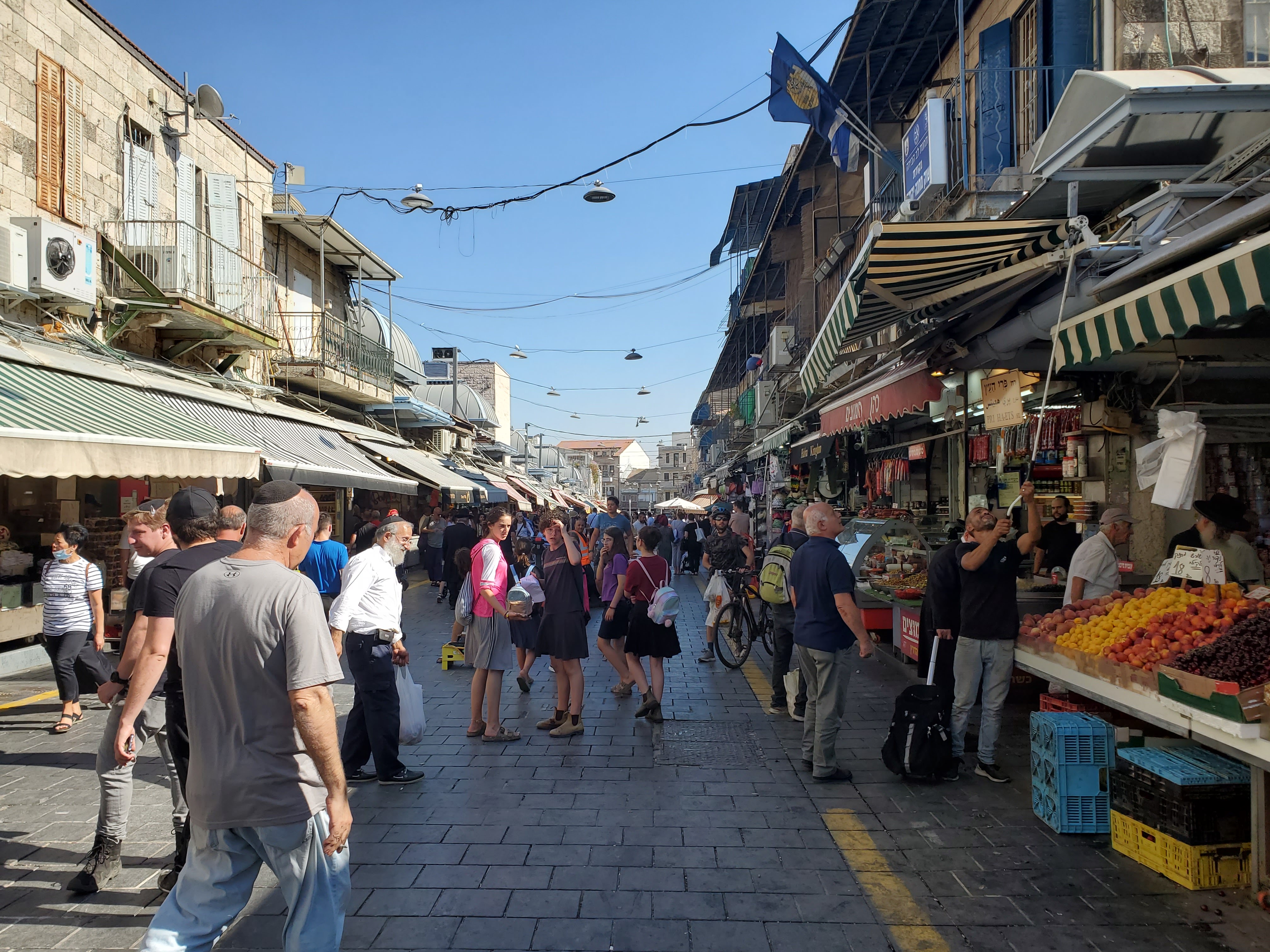
And in Machane Yehuda you see all of Israel pushing and shoving and shopping side by side. Teenagers jostling for space with seniors, the ultra-Orthodox vying for attention with the devoutly secular. Tourists and sabras straining to sample halvah, those whose families came from Iraq or Yemen or Morocco alongside those from Poland or France or South Africa.

It is a show that you can sit back and just watch for a while and then join in and be part of the performance. For me, it is pure magic. Because I would be traveling back up to Nahariya, I didn’t want to load up on produce or anything that might go bad after a couple of hours, so while I wandered and took in all the sights, sounds, and scents, I bought spices, and baked goods.

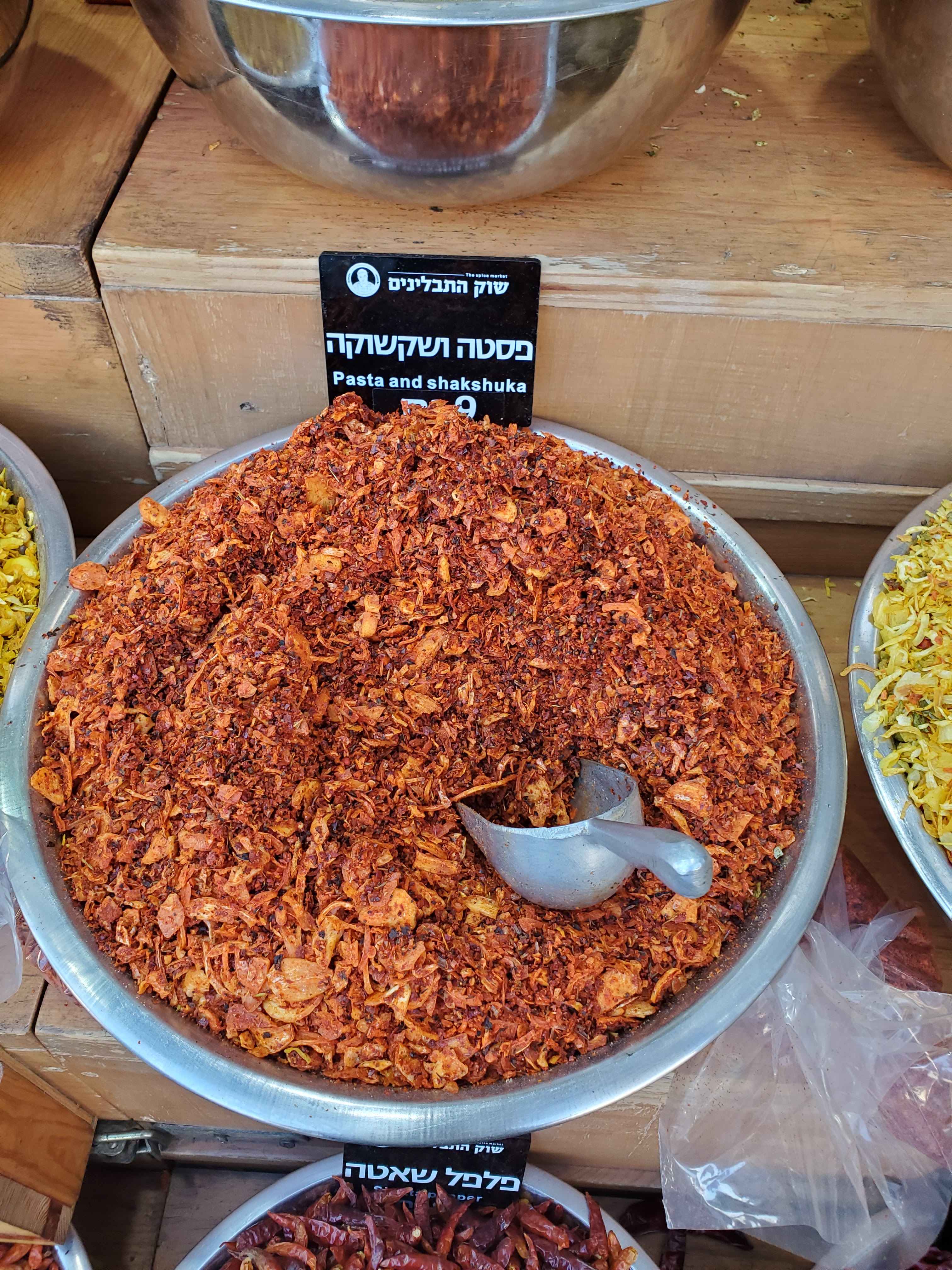
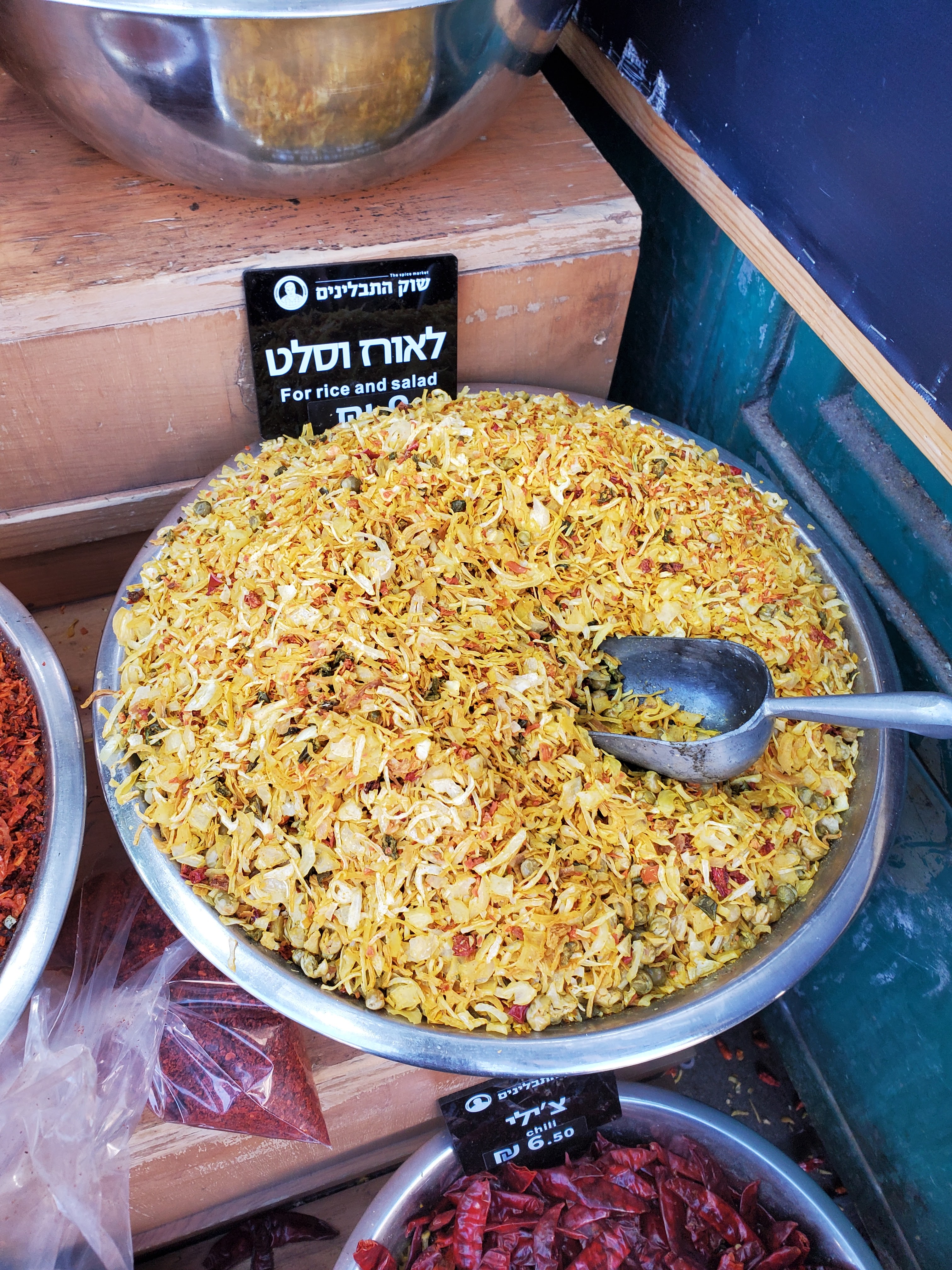
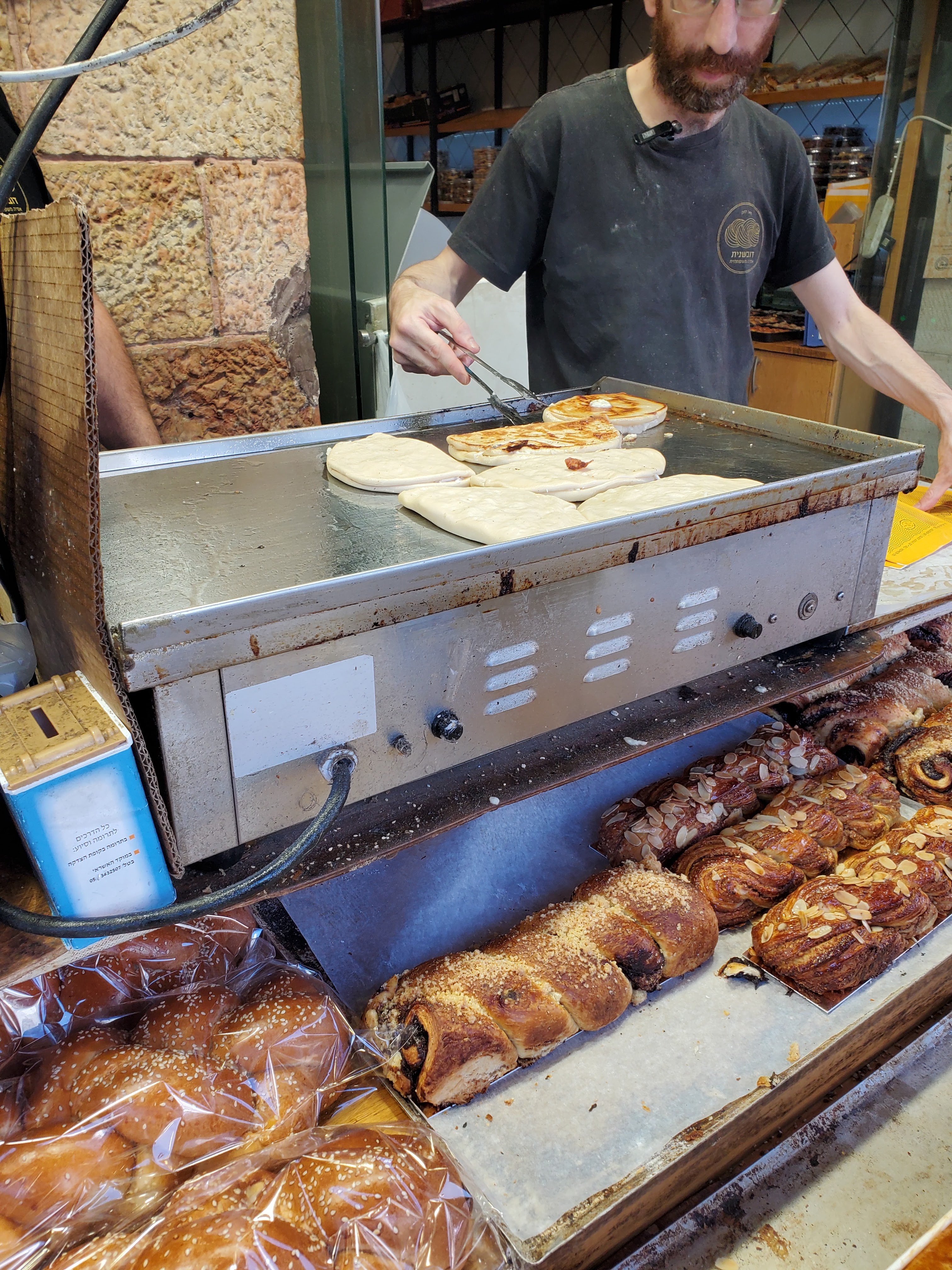
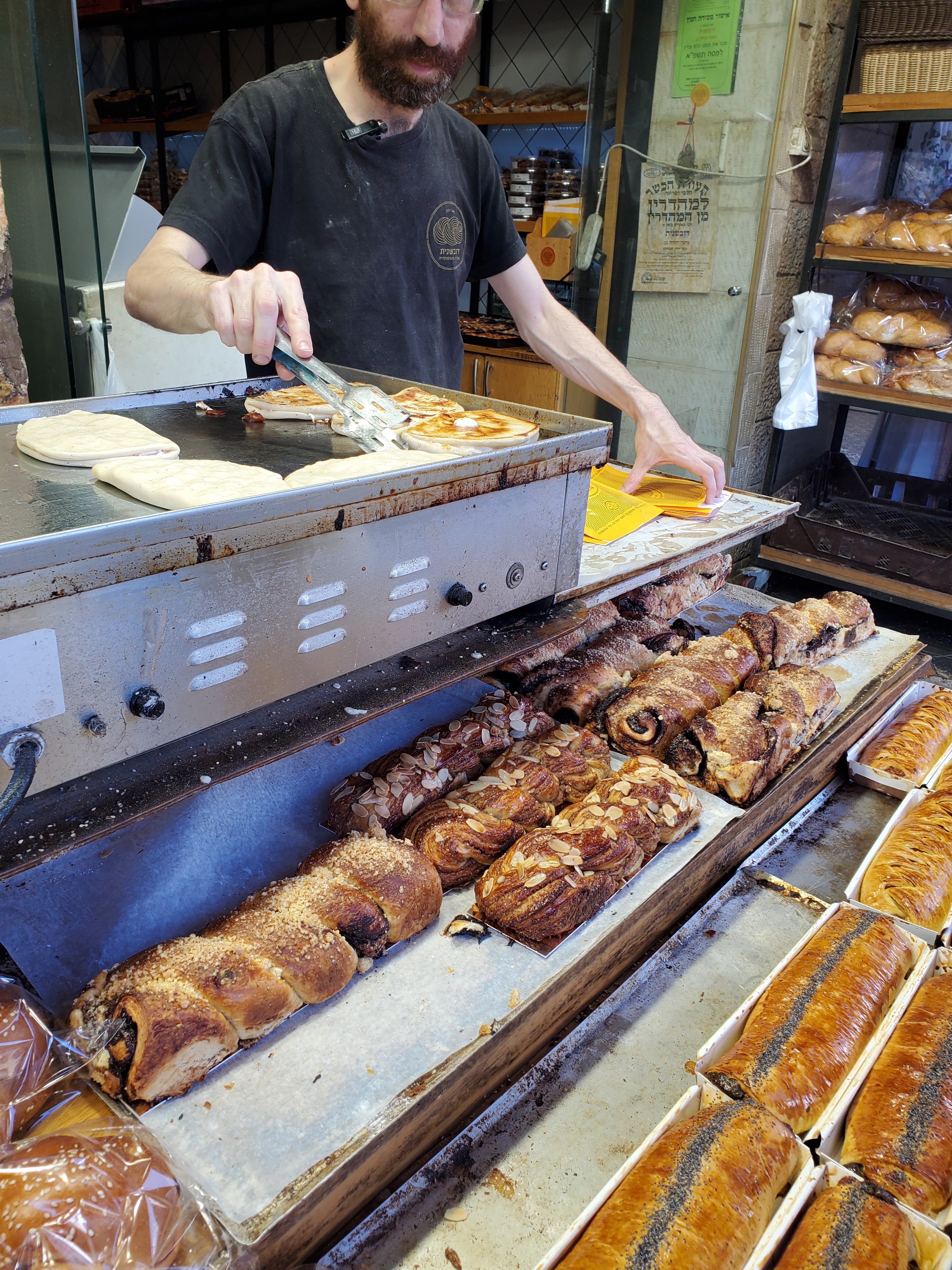
At Duvshanit, I bought a what resembled a quesadilla, but inside of a tortilla, it was pita-like bread on the griddle, with warm, gooey cheese inside, and a crust that carmelized a little on the grill, as well as buying some pastry to bring back. Across the street at Glueless, I bought some gluten free bread for my daughter. I spent most of my time just wandering and soaking up the moment, but did buy some spice blends for rice, and pasta, and pilpel chuma for shakshuka and more.

Magical times must come to an end, and so did my time at Machane Yehuda. I took the light rail to the Central Railway Station and from there it was two easy train rides to Nahariya and I was home.
Wherever one might be on the political spectrum or socio-economic spectrum
The Old City

From Motza to Jerusalem is a very short drive, but it feels like a trip to a different universe. Motza is a sleepy suburb, while Jerusalem is a bustling city, filled with incongruities on almost every corner. Modern buildings rise next to ancient ruins, ultra-Orthodox Jews wait at bus stops next to young women in shorts and crop-tops, men in orthodox garb ride bikes down the street engrossed in whatever is on the screen of their phones. Jerusalem exists in a realm that is both real and magical at the same time.
The bus ride from Motza to the central bus station takes only a few minutes. From there, one merely has to cross the street for a bus to the Old City.

I crossed the street and then decided I needed a falafel more at that moment, than I needed to get on a bus. Fortunately, I was standing right in front of a falafel stand. After not too long a wait, my growling stomach and taste buds were rewarded with falafel on laffa with hummus, techina, salad, onions, fries, and charif. Laffa is a flatbread, that is larger and thinner than pita that is used to wrap around the contents of the sandwich, whether its falafel or sabich or shwarma. The charif, hot sauce, was a green Yemenite zhoug, although not very hot, and the french fries were hot right out of the fryer. Few things in life taste better than street food and few street foods are better than falafel.

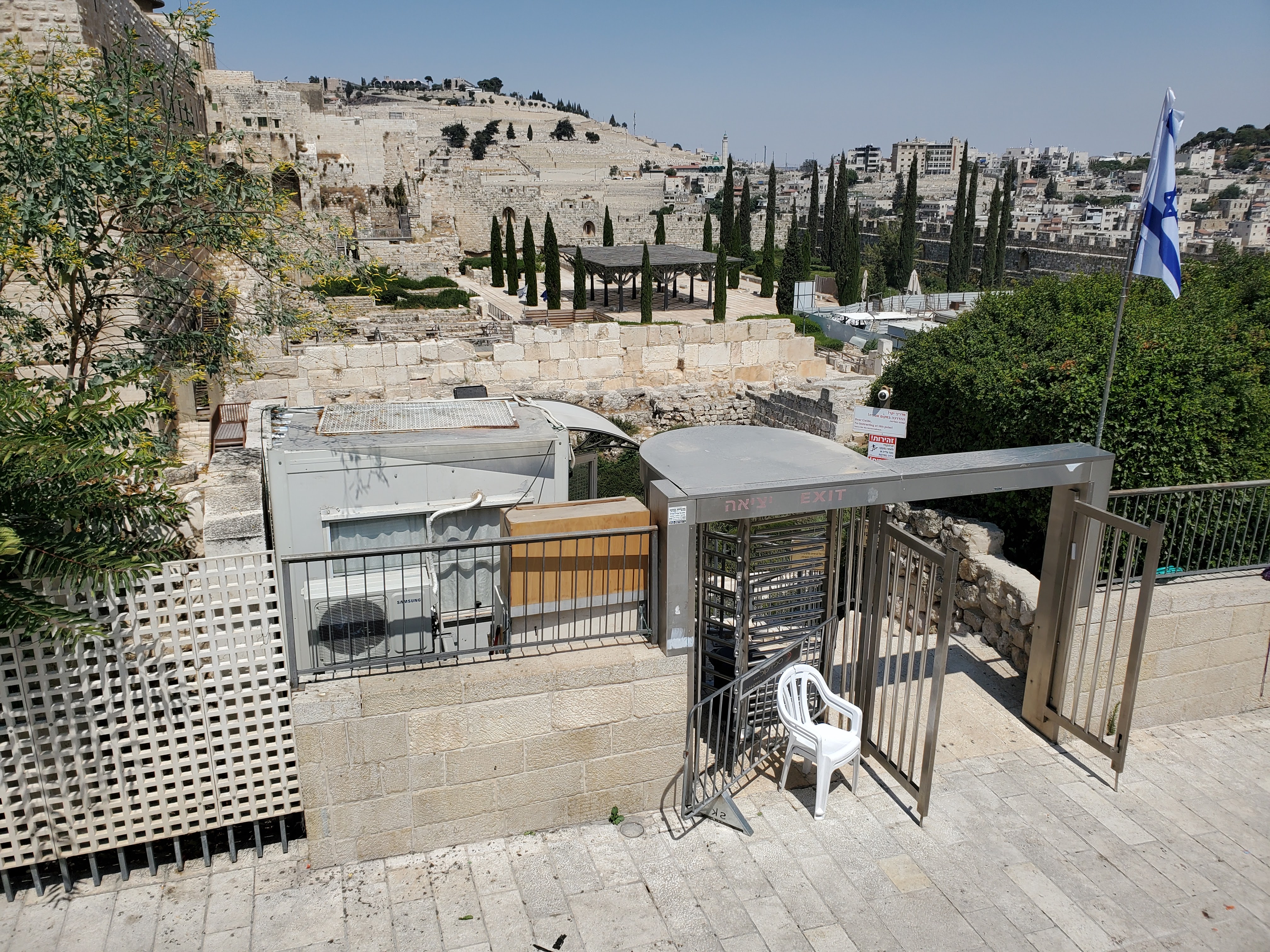
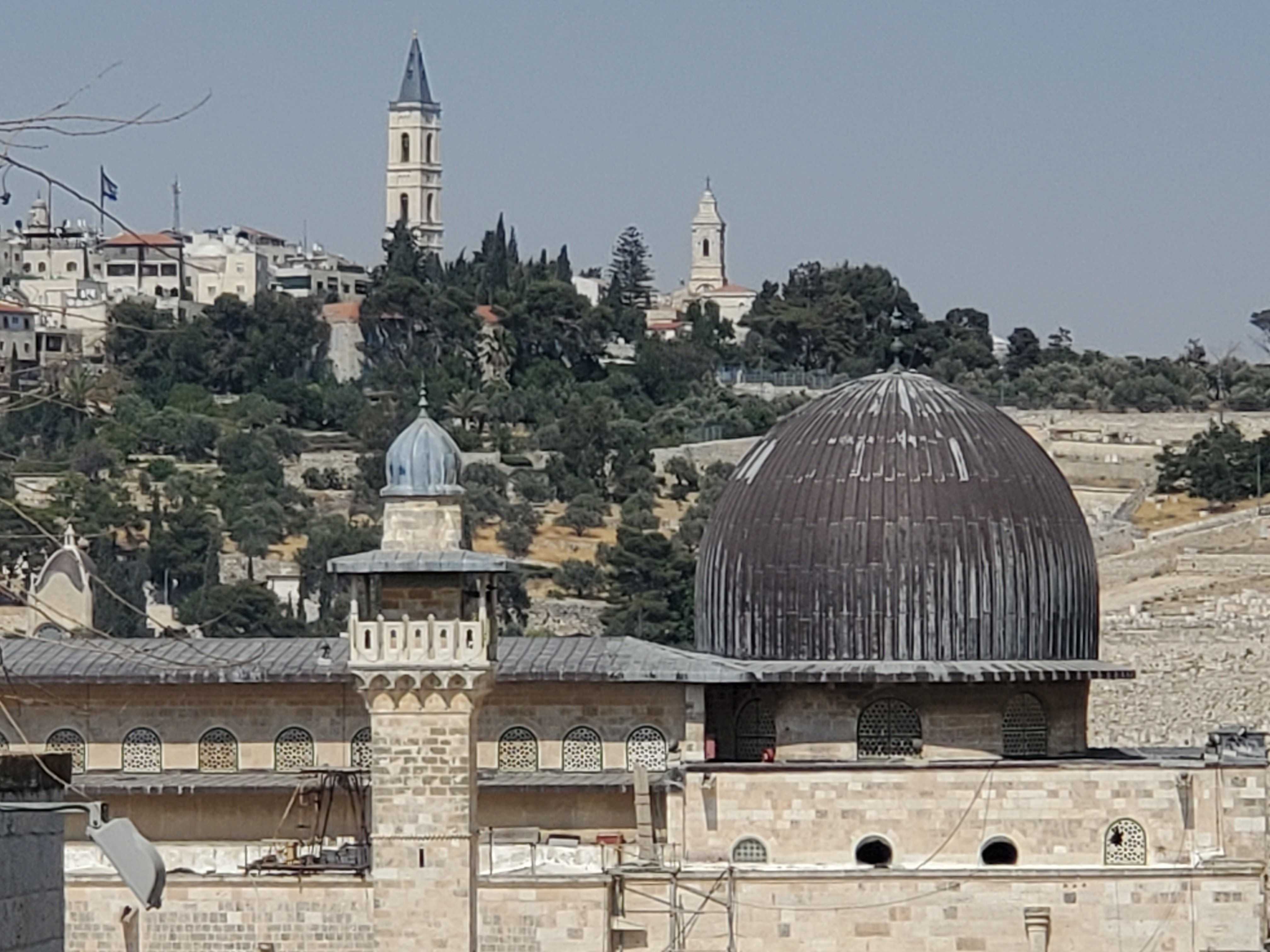
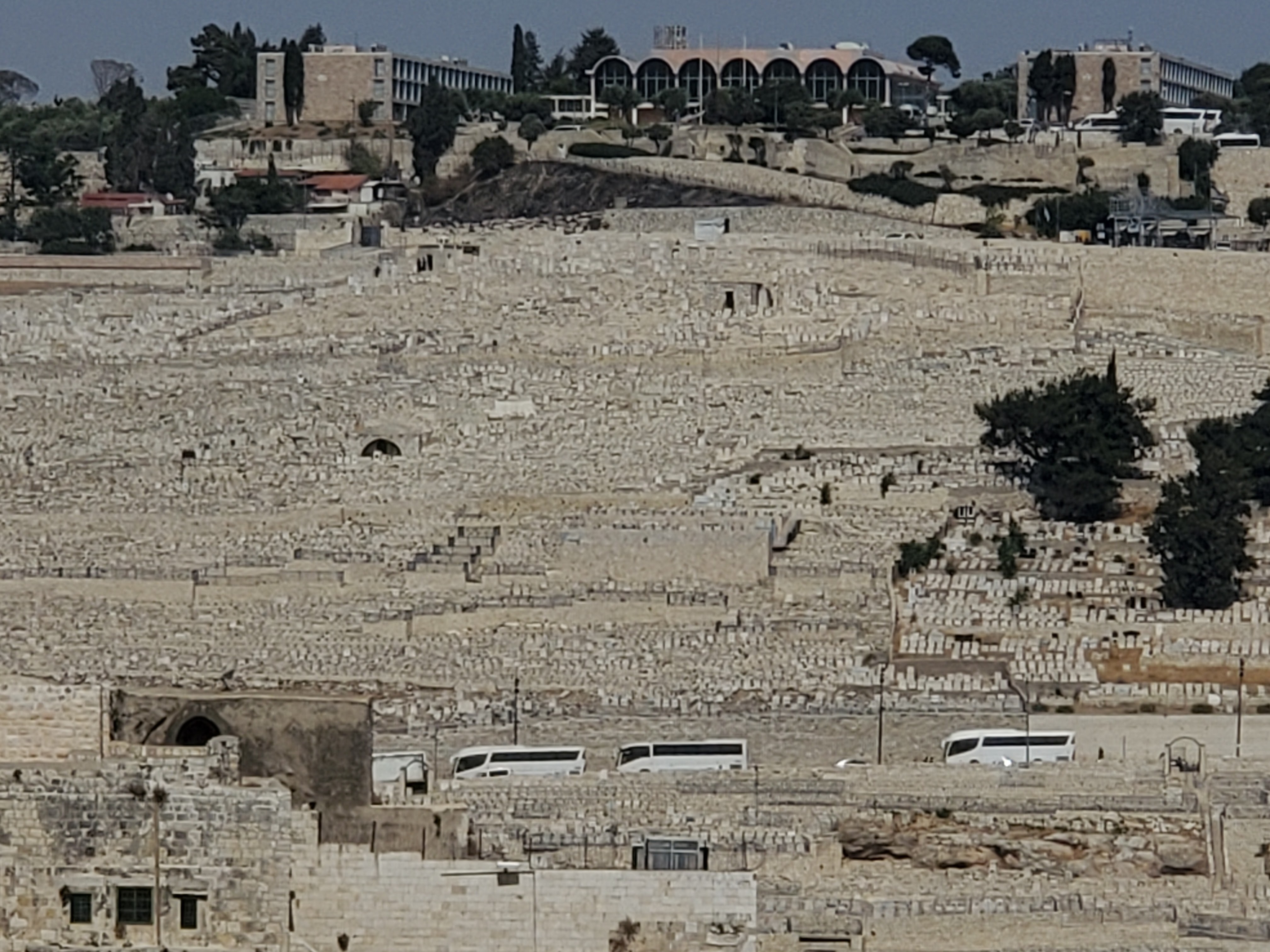
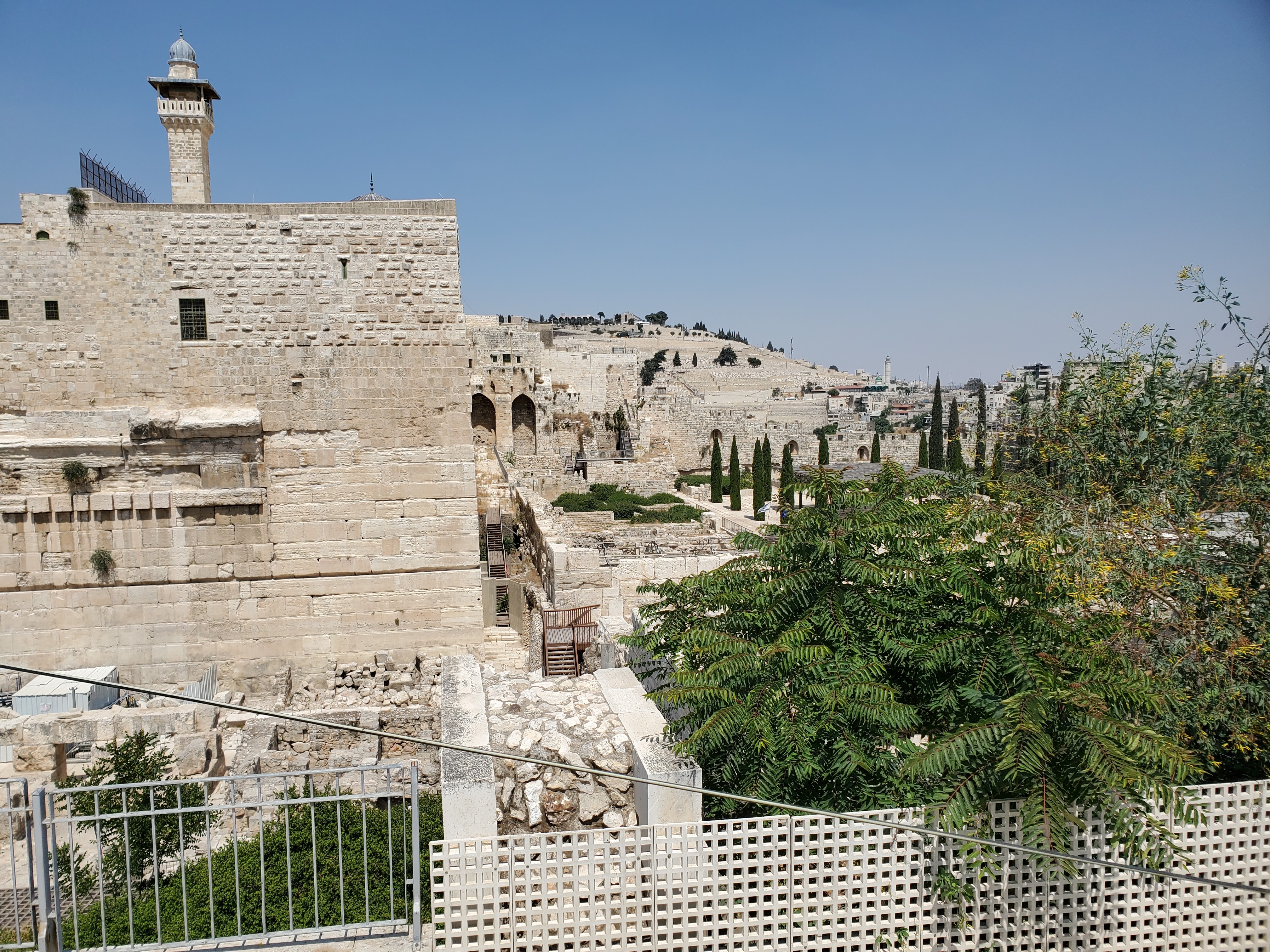
Strengthened, I rode to the Old City, and entered through the Dung Gate right to the Kotel Plaza. The ride was somewhat eventful. The bus driver and a car played chicken in terms of who could get into the single file position first. The bus won. The driver, visibly angry at what remained of his right side back quarter panel, blocked the bus, jumped out and started shouting at the bus driver. The bus driver shouted back. The exchange went on for a few minutes, then they shook hands (the car driver more reluctantly)and we were free to continue the last several feet into the Old City. To the east of the Old City, or left side of the bus was the Mount of Olives, besides the row after row after row of graves, one could immediately see the landmarks of the Augusta Victoria Hospital with its bell tower, the colorful Church of All Nations, the gold-domed Russian Orthodox Church of Maria Magdalena, and atop the mountain, the Seven Arches Hotel. Looking to the immediate north and south of the gate entrance a visitor can see the City of David archaeological excavations.

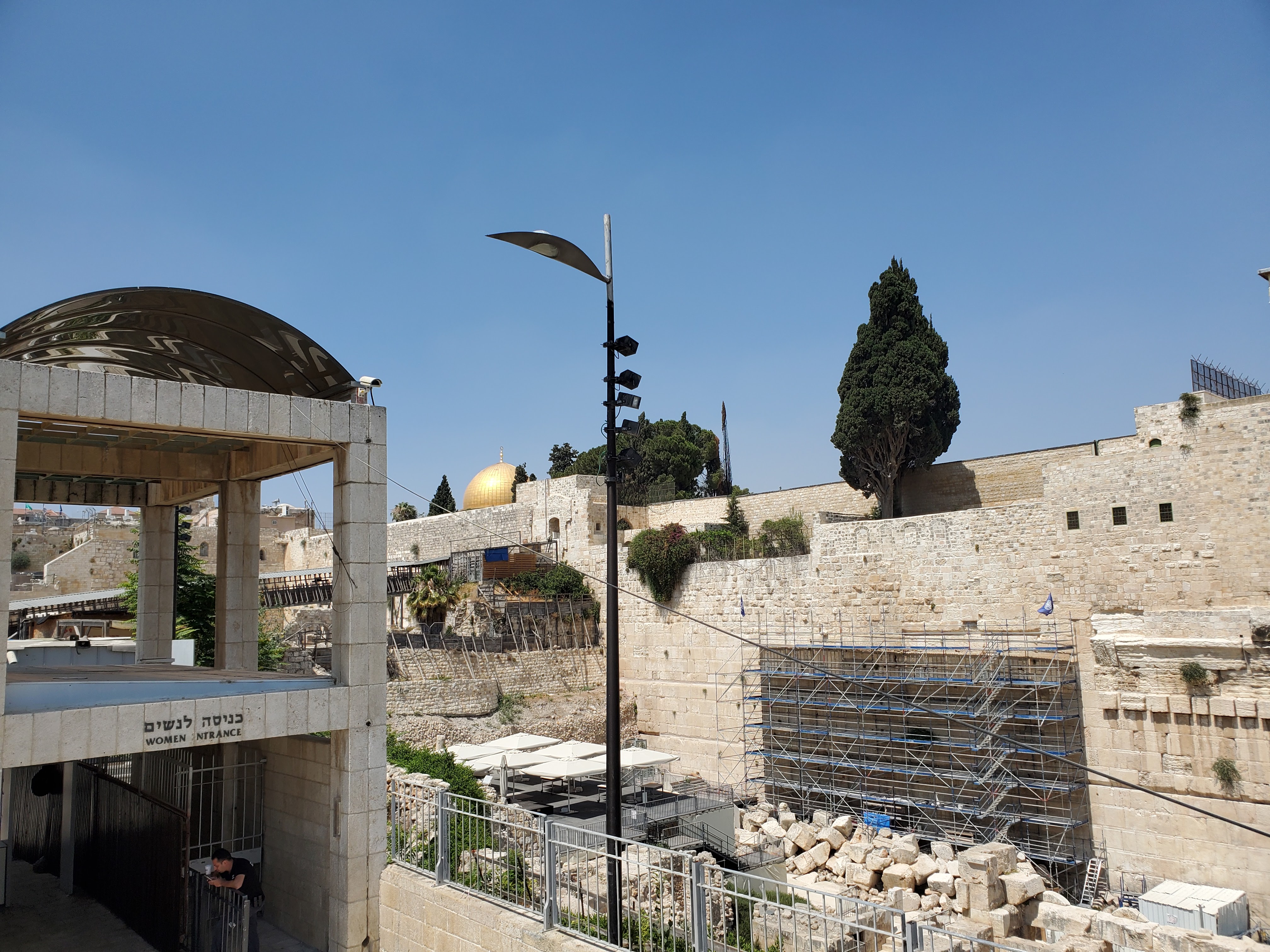
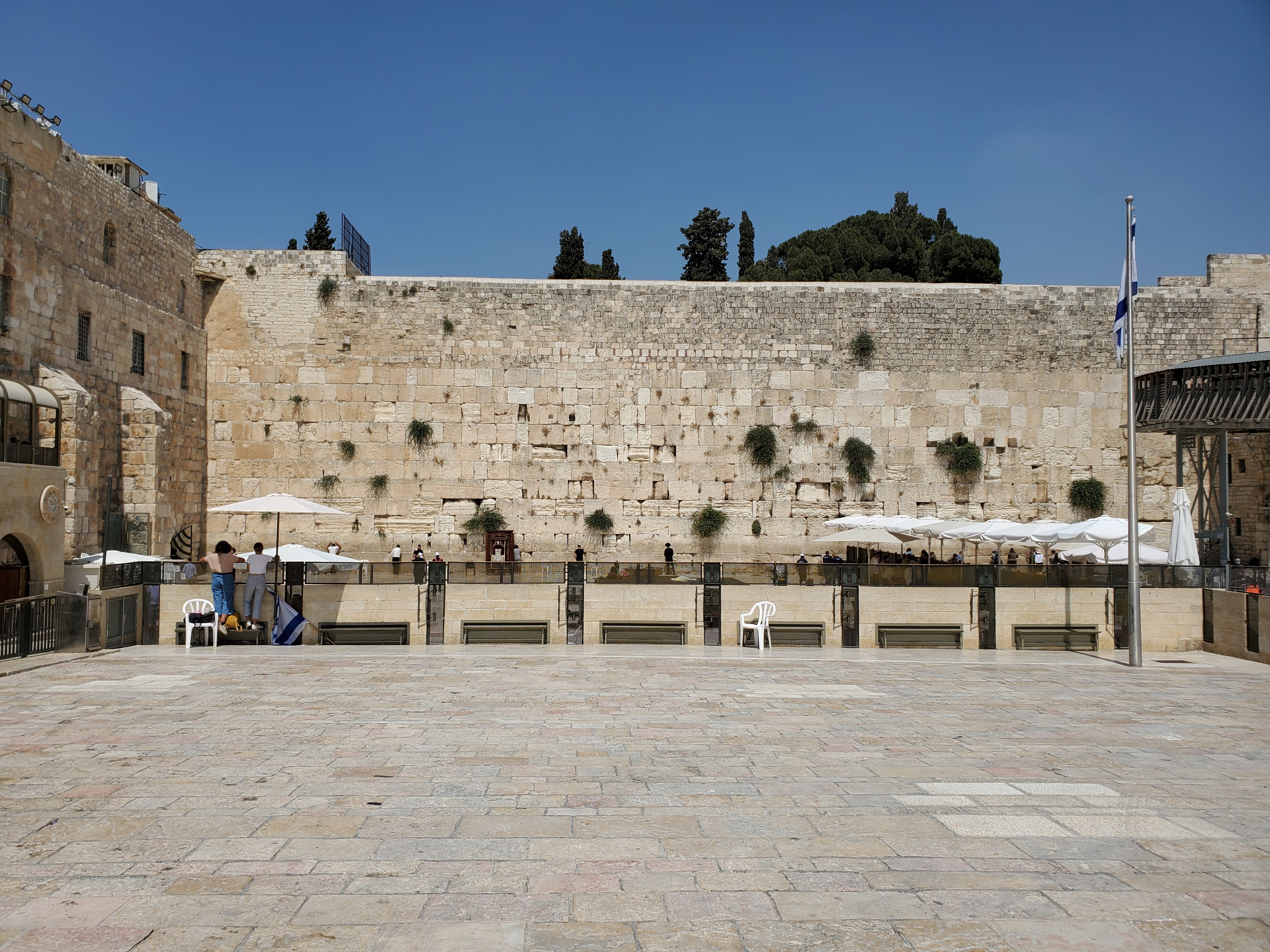
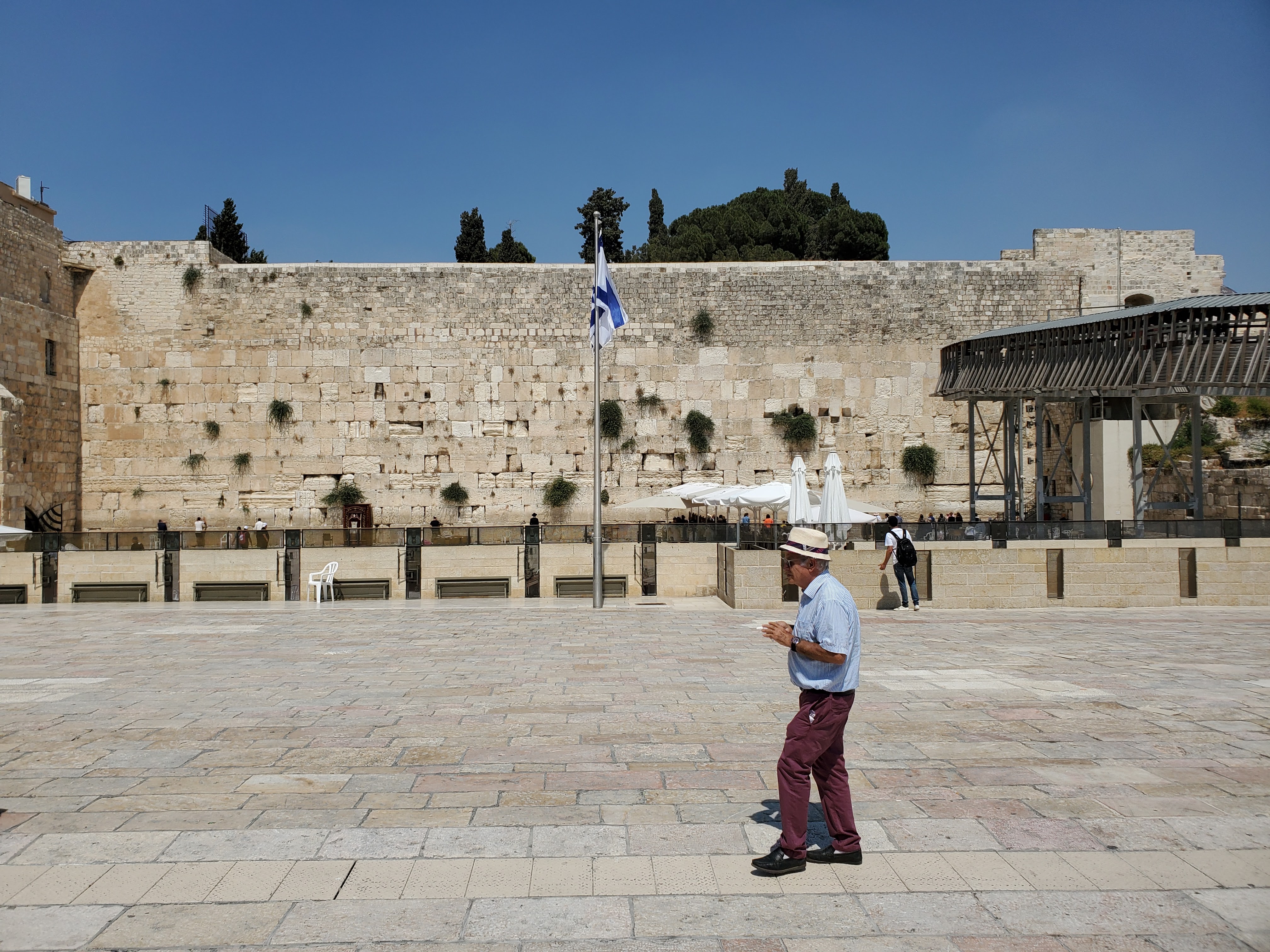
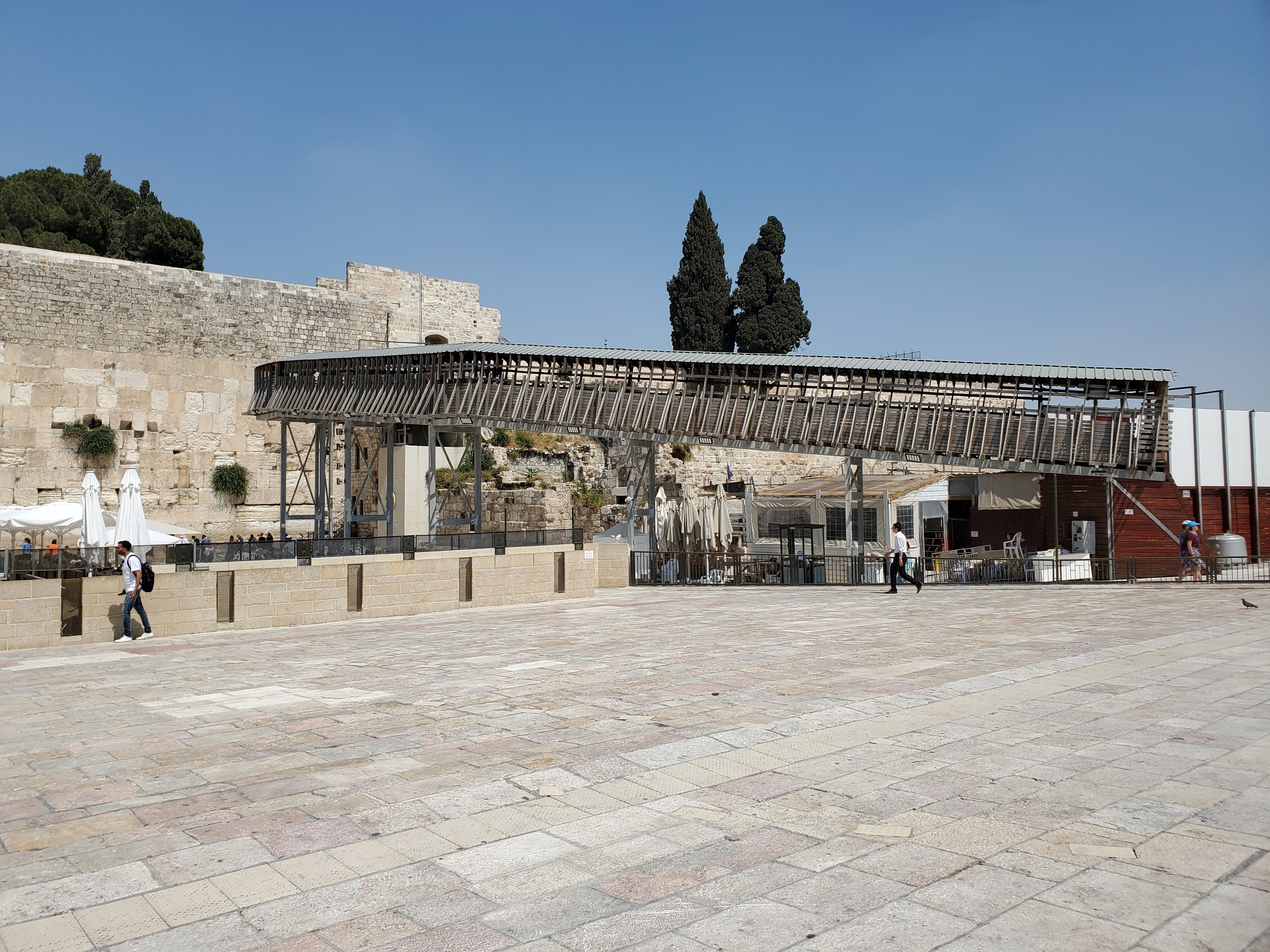
As many times as I’ve been to the Kotel, I am still moved by its sight and its sheer presence. There is something almost primordial about this place that evokes feelings of an ineffable encounter with the infinite. The Kotel is more than the surviving remnant of the Temple (actually not even the Temple, but the retaining wall for the Temple Mount), it serves as a nexus to history, spirituality and the web of connections between them.

I took the opportunity to reconnect, to pour out what was in my heart and enjoy a moment of catharsis. I bid my farewells and then continued my explorations of the area.

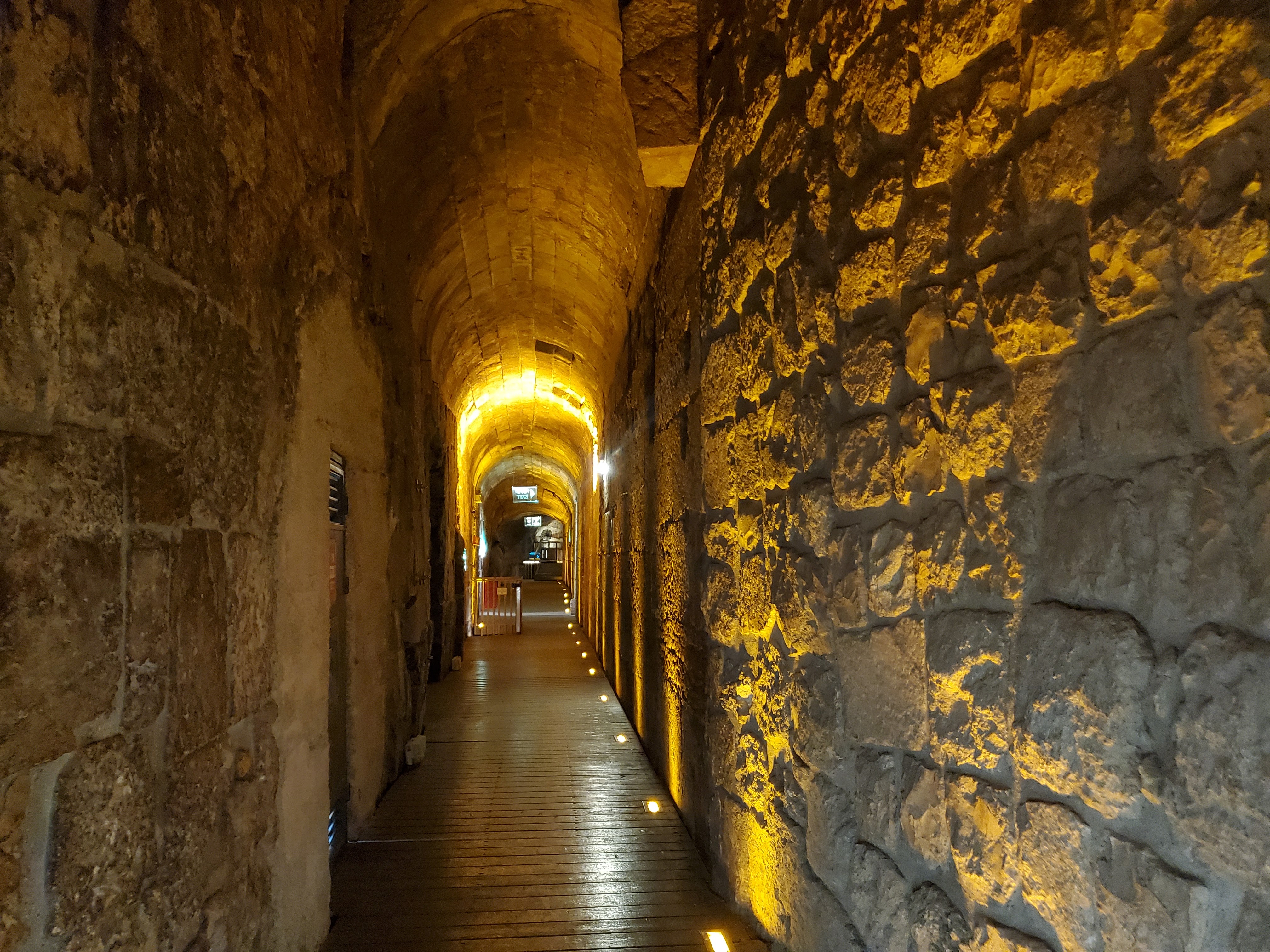
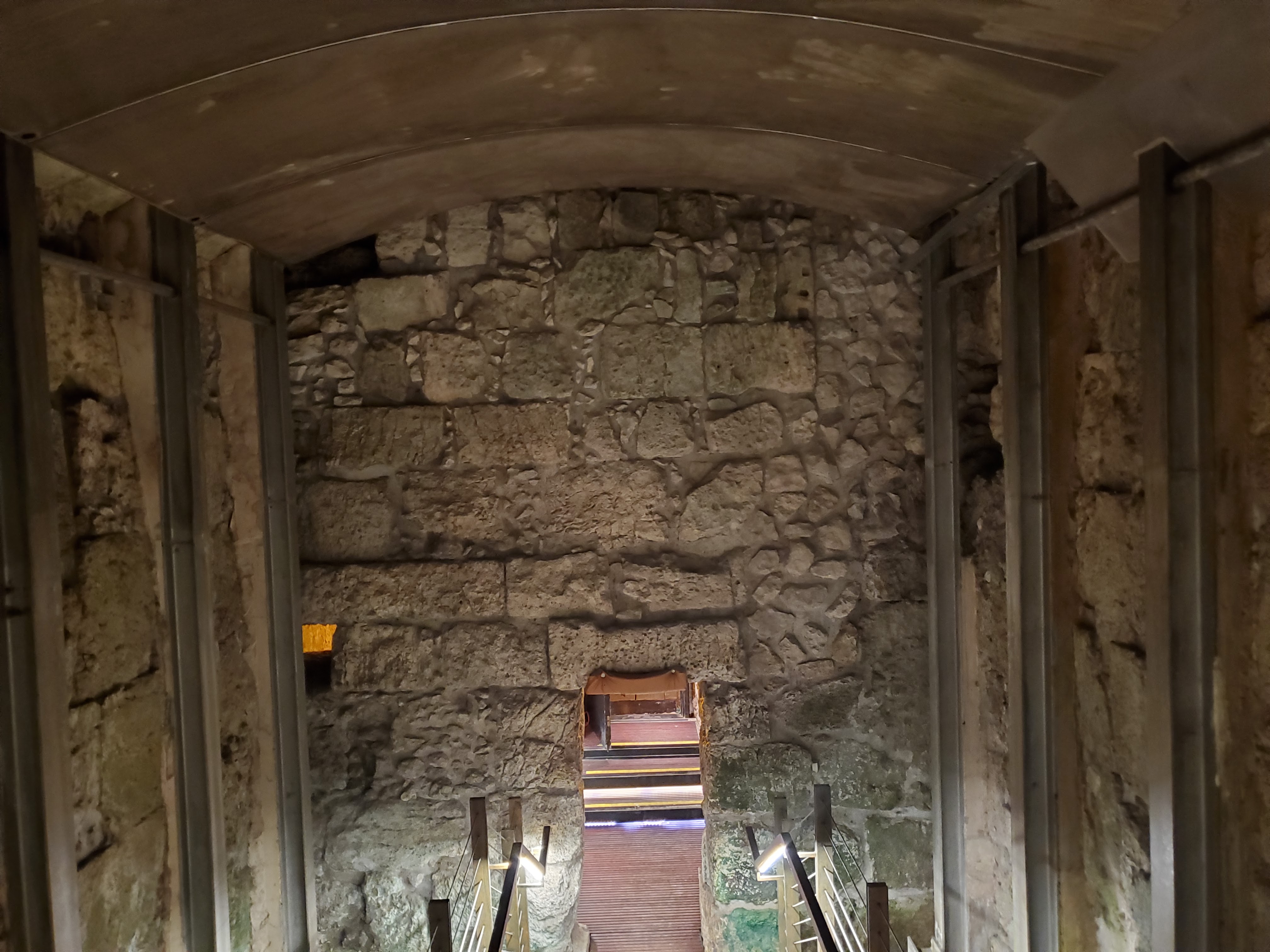
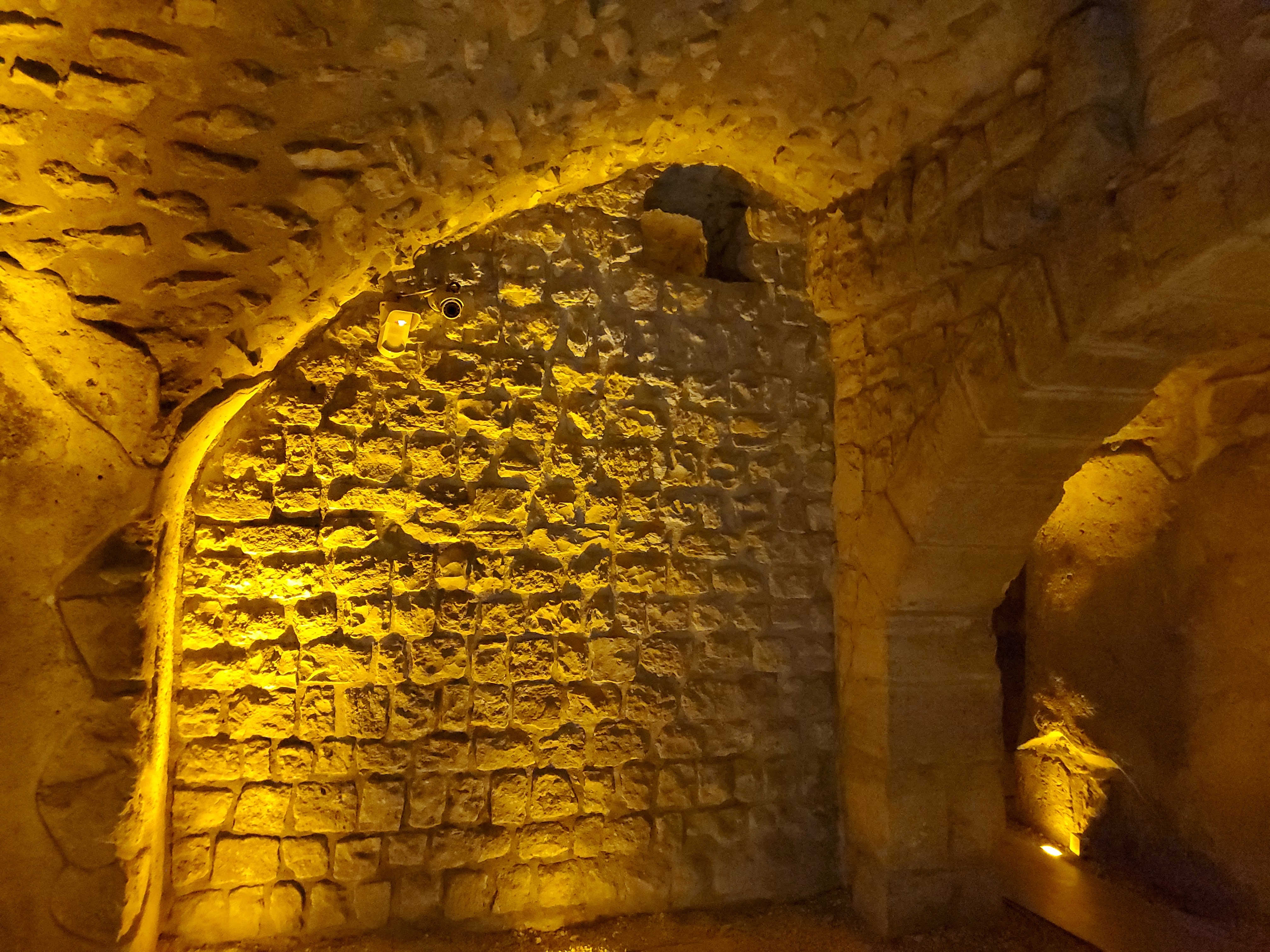
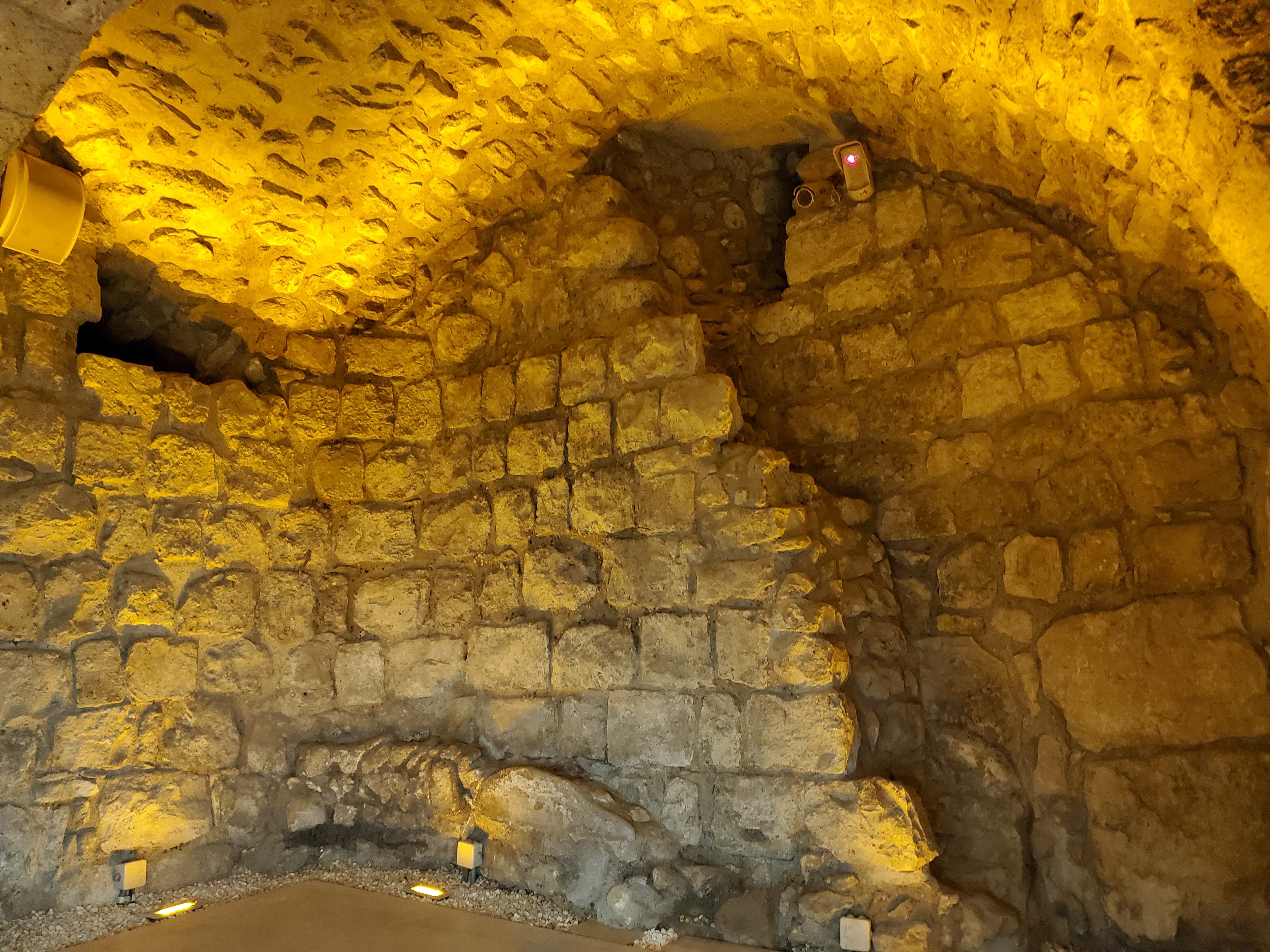
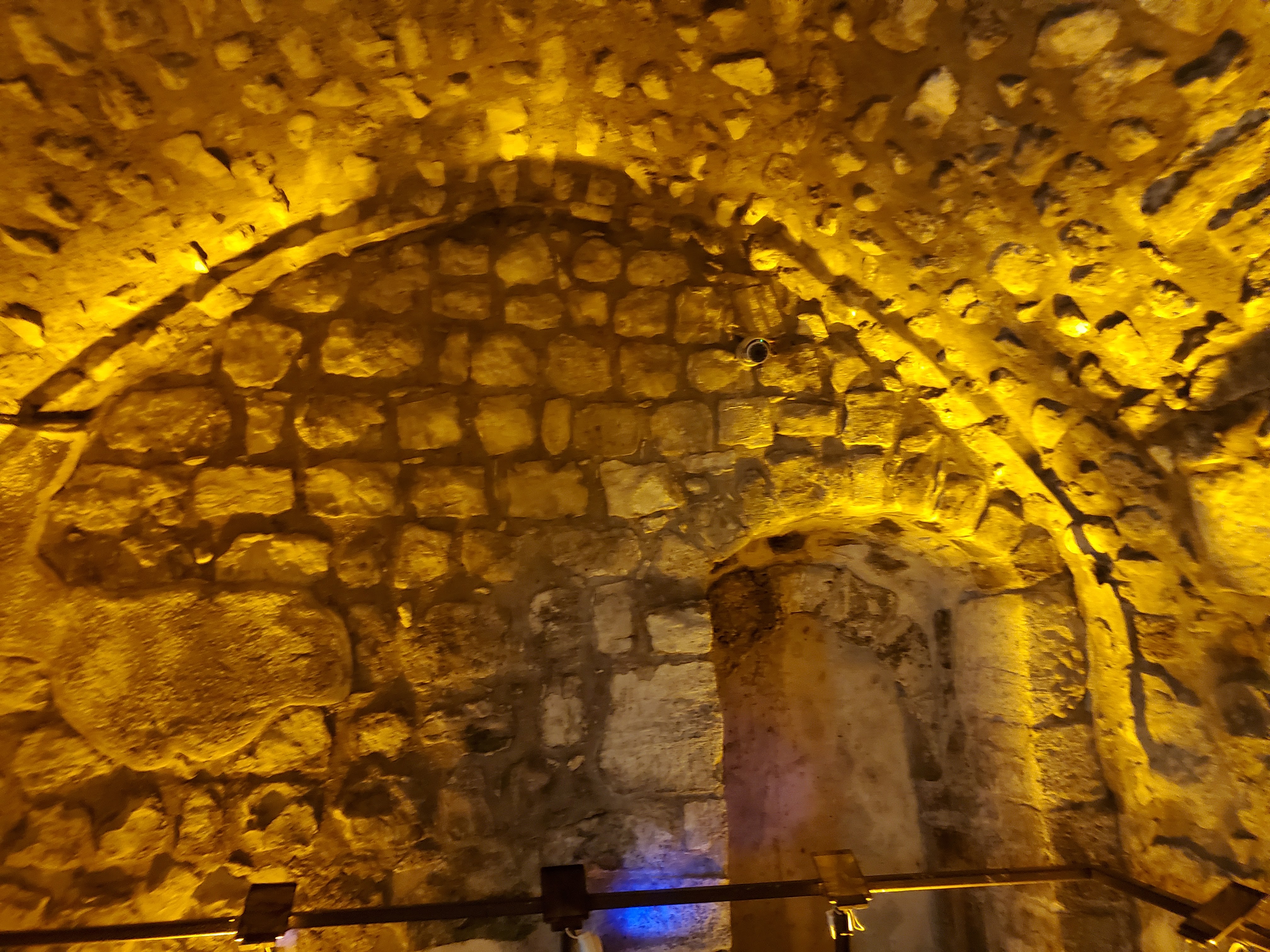
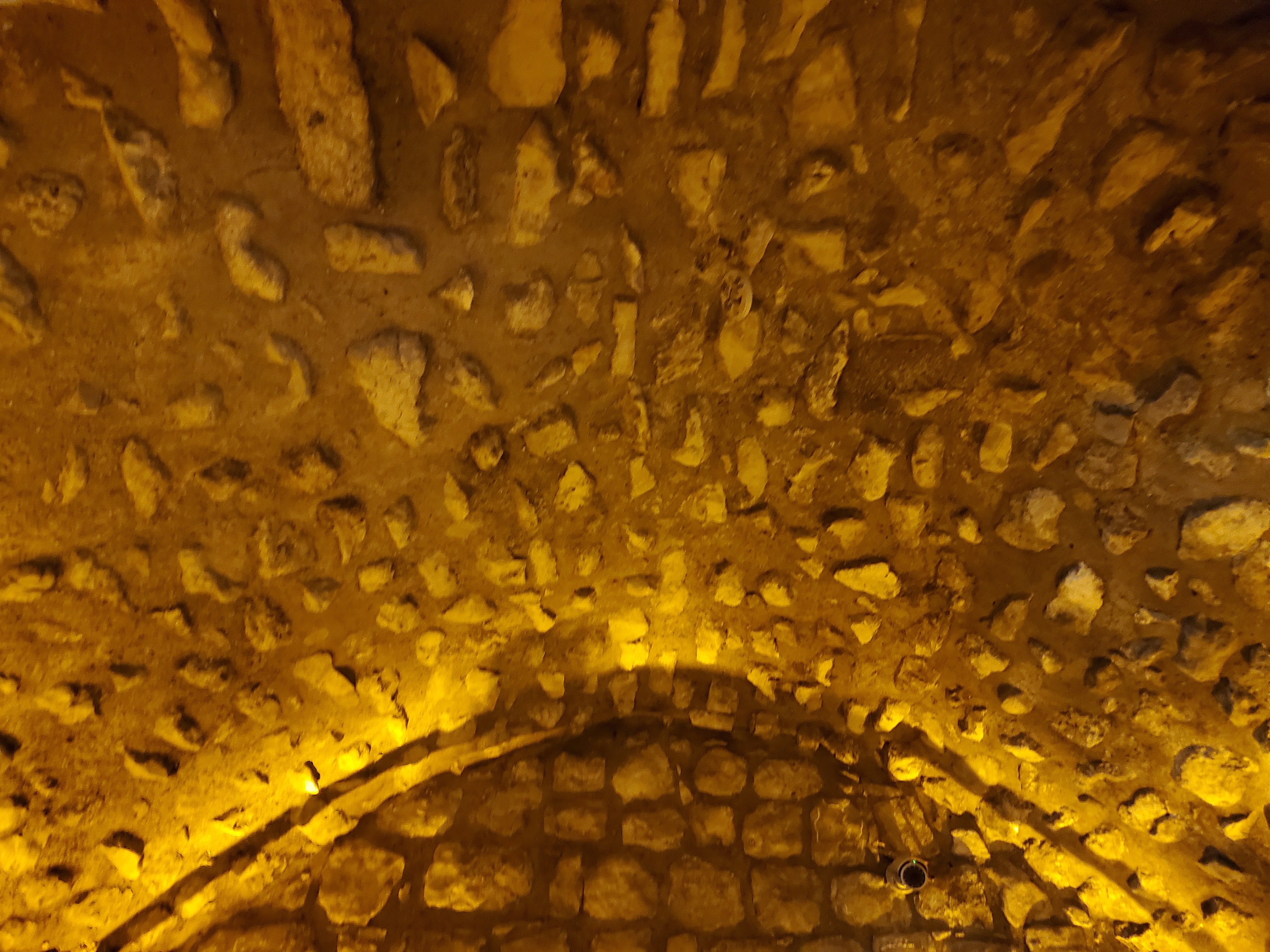
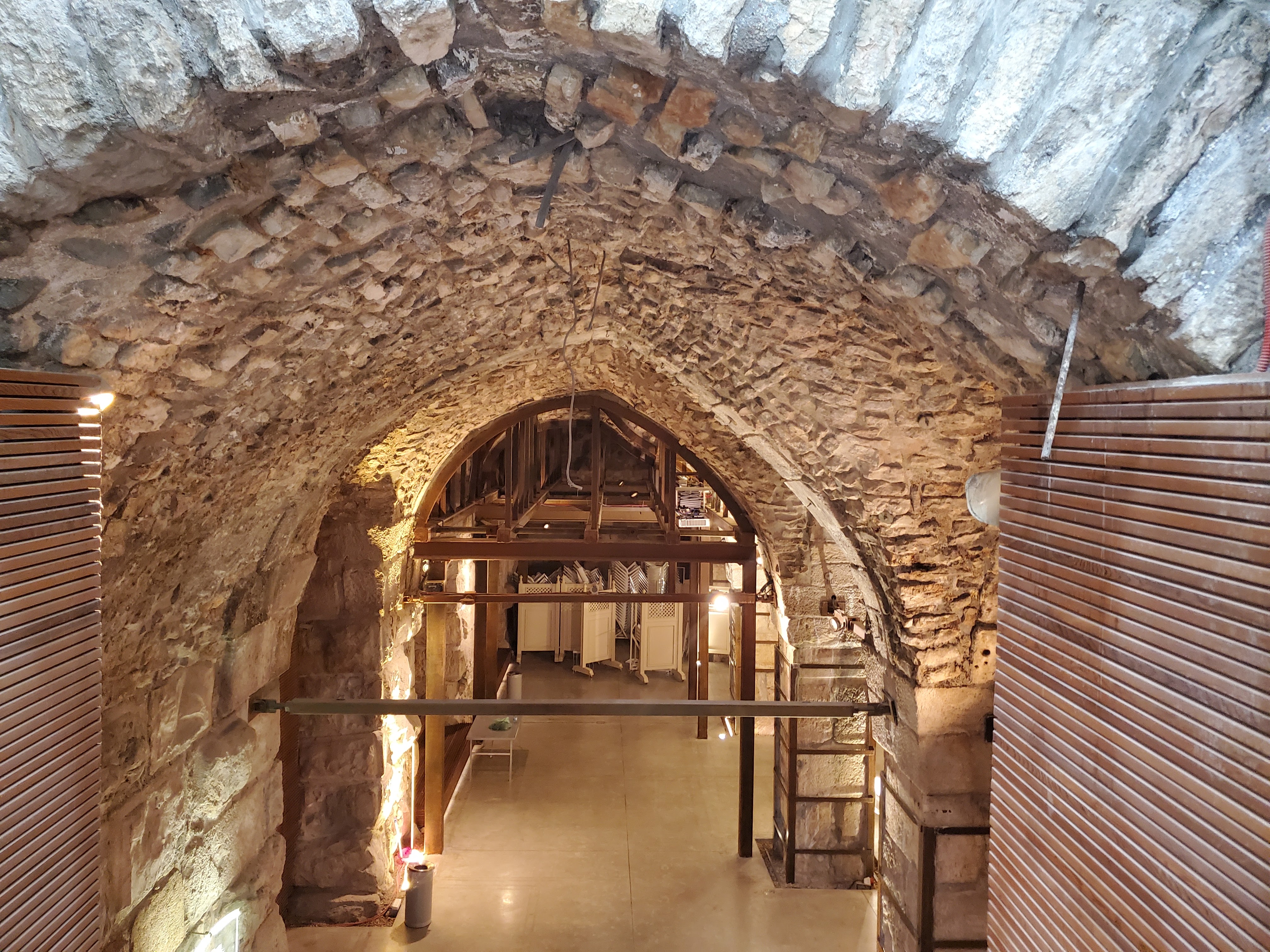
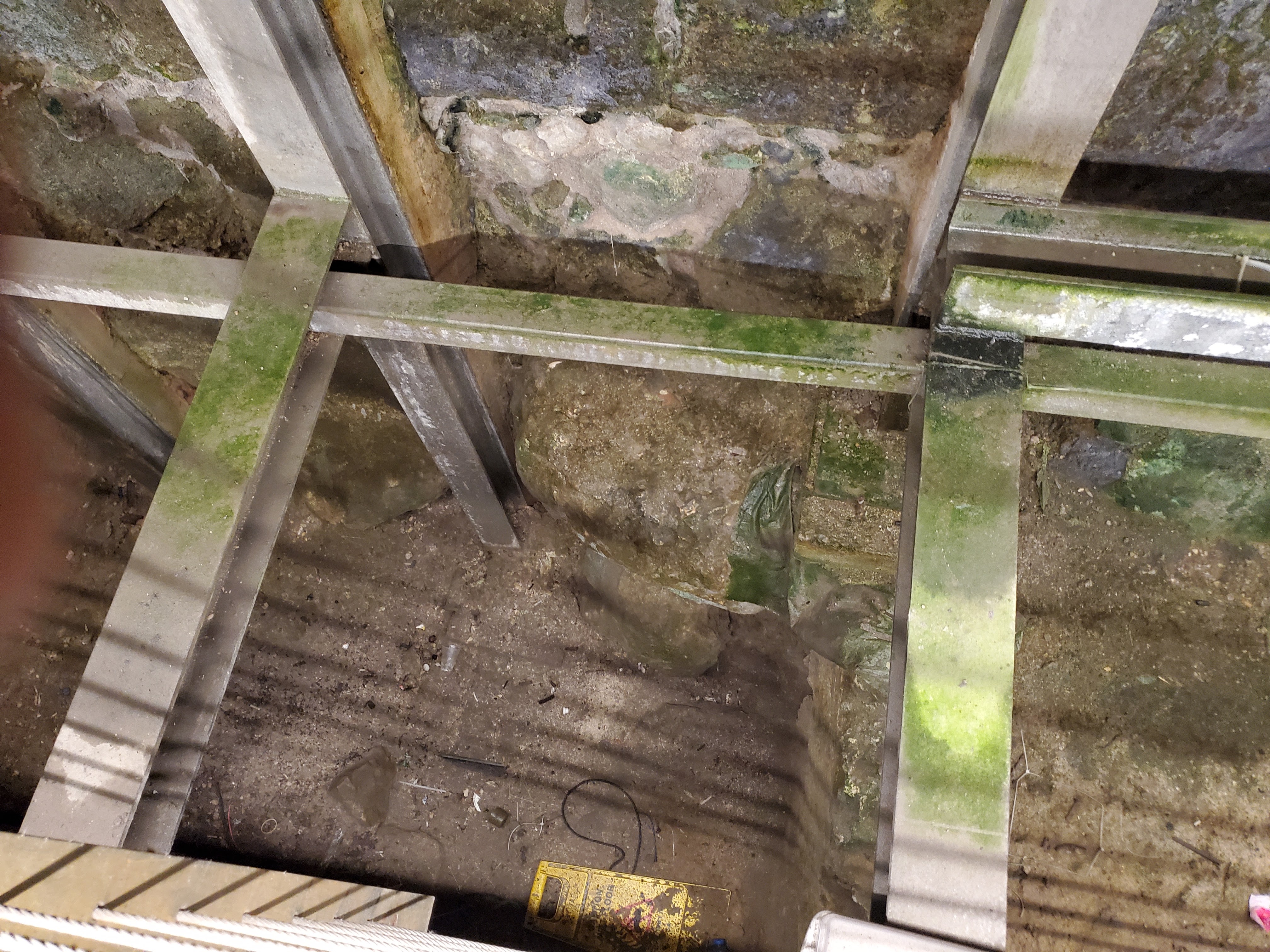
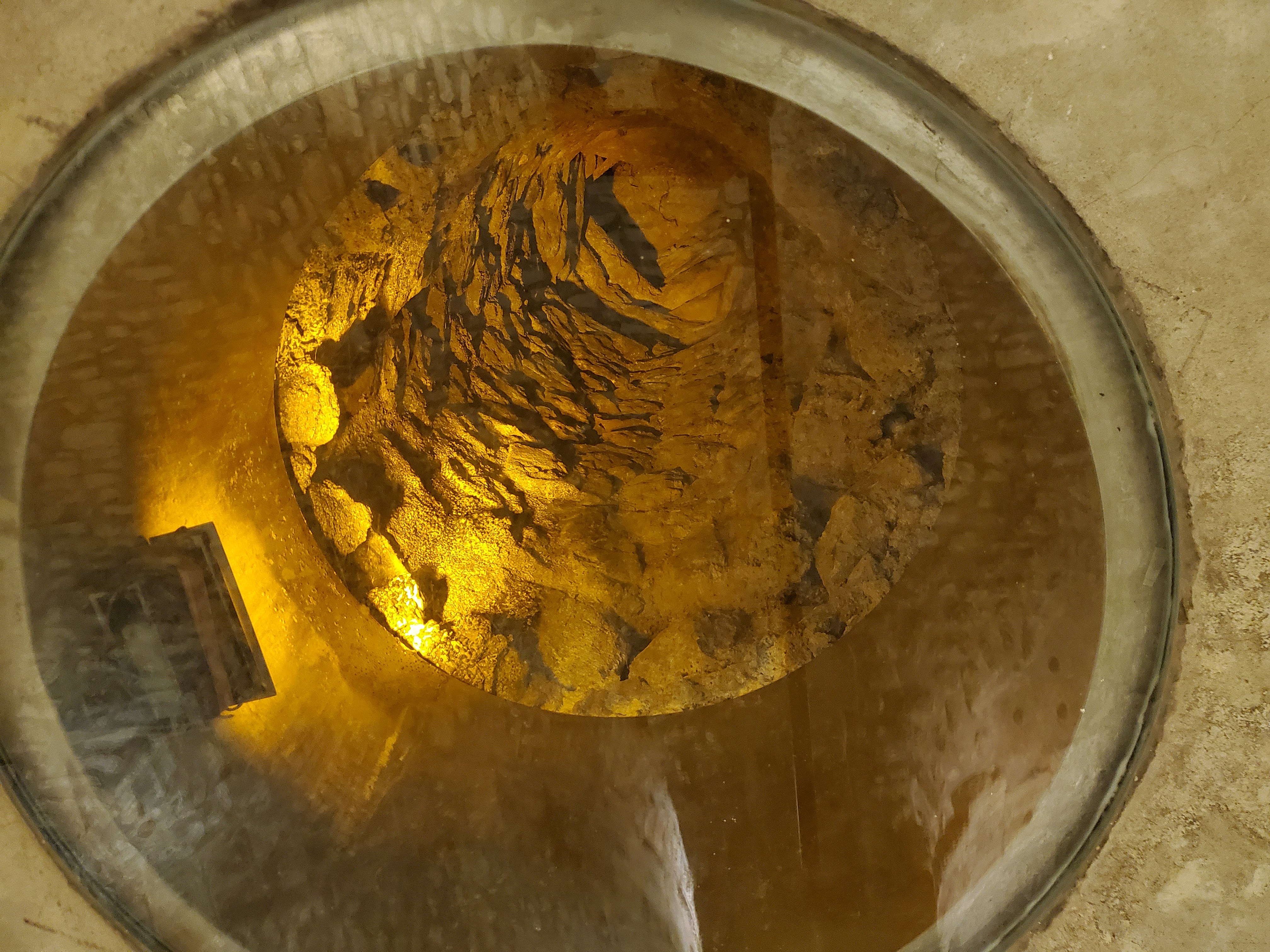
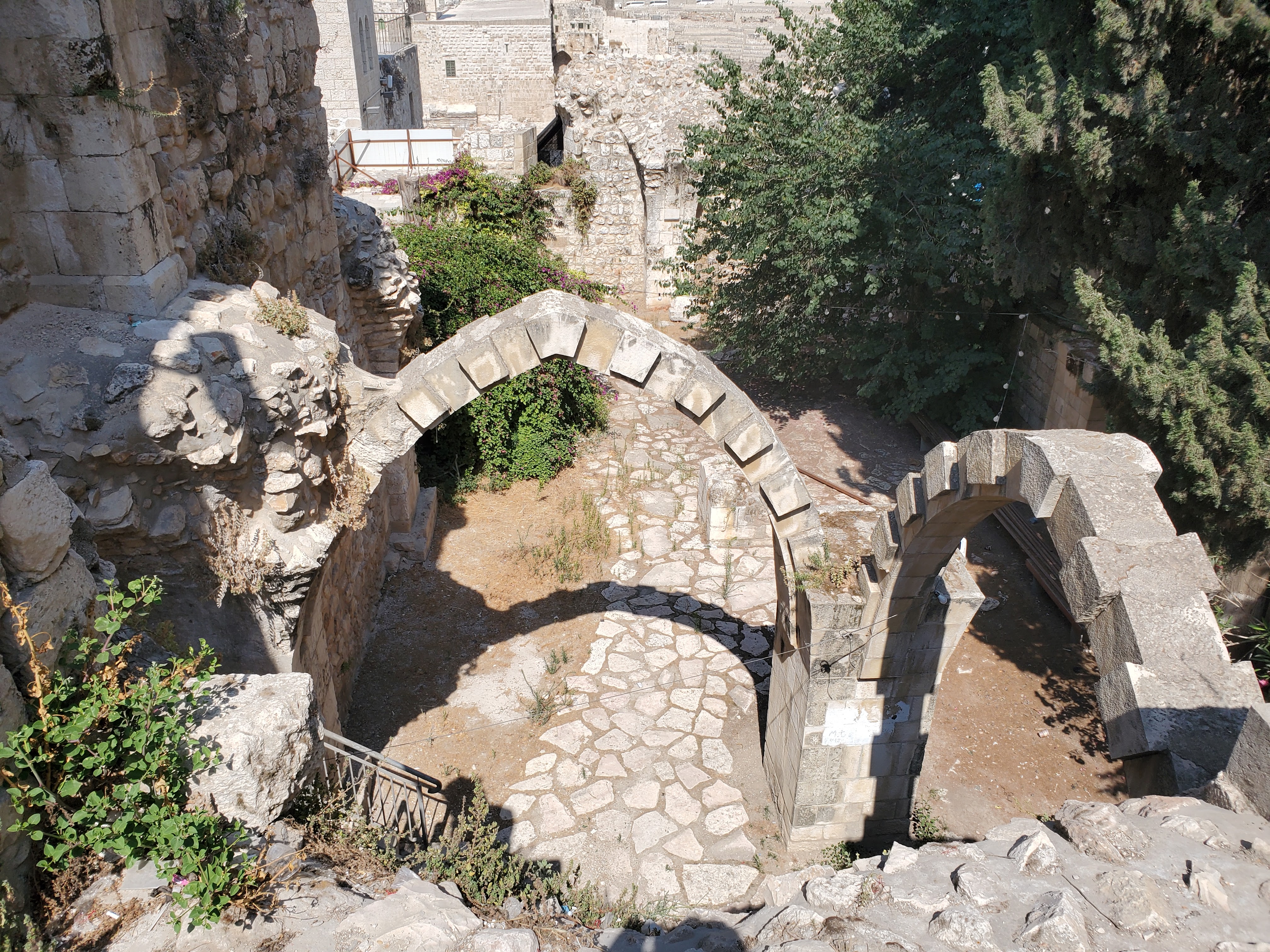
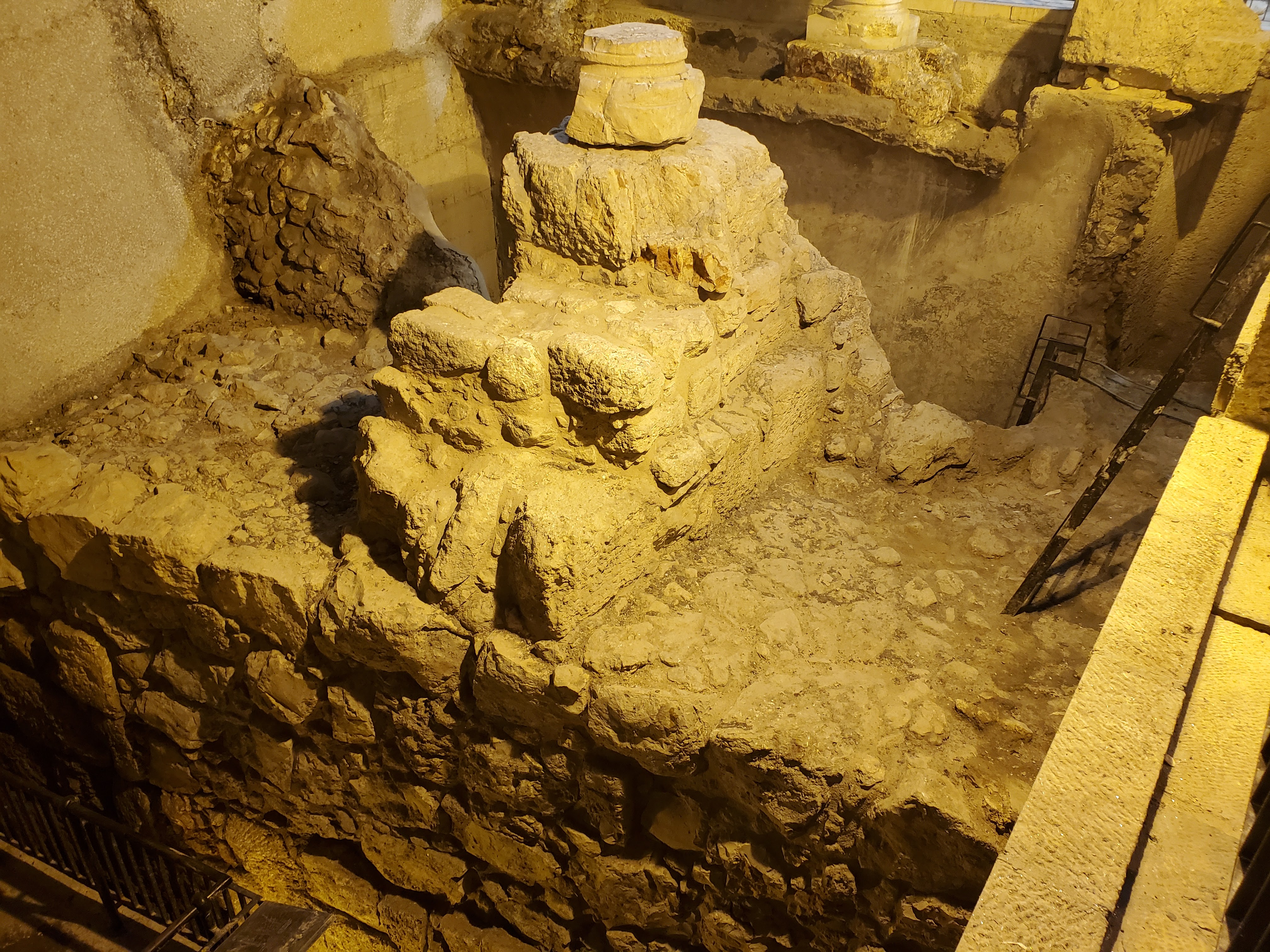
The Kotel plaza contains a significant amount of the visible retaining wall. The Kotel, however, continues to the northwest. Looking at the tunnels that run beneath and along the Kotel is now possible due to more recent excavations. One is able to see supporting arches, water channels and get a better sense of the path that could have been taken to the Temple. Gazing through a portal, one can also see how deep this supporting structure extends down to the base of the bedrock.

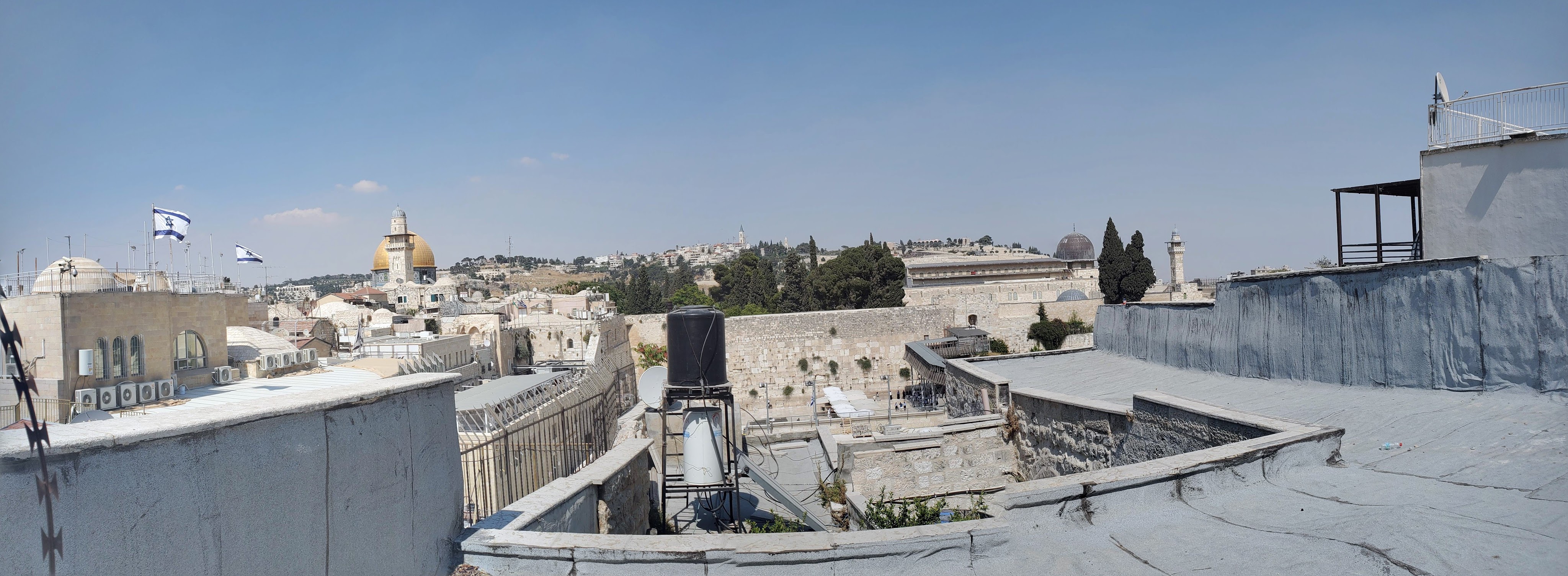
From beneath the Kotel, I ascended to the rooftops for some views of the Kotel and the Jewish Quarter.

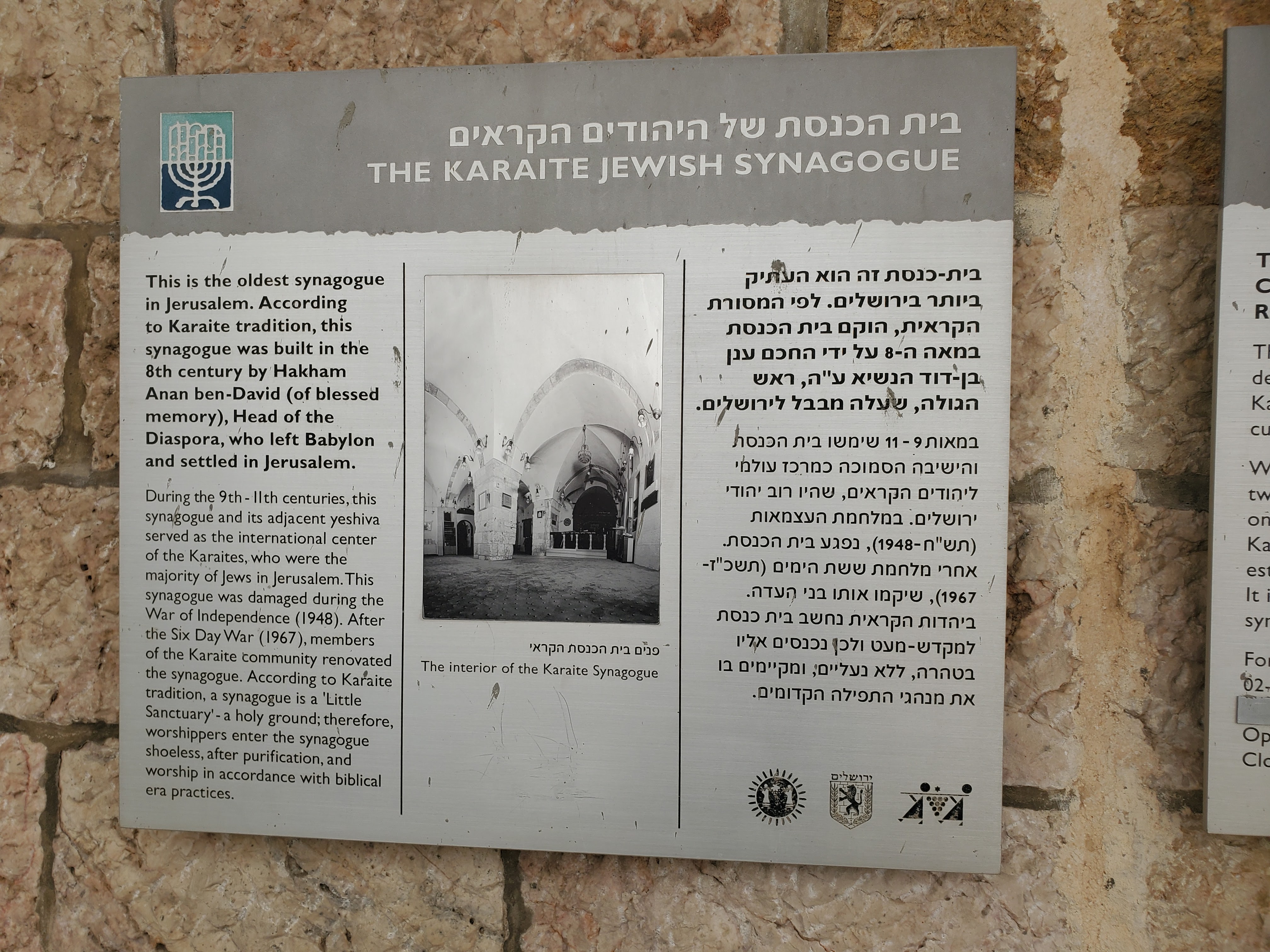
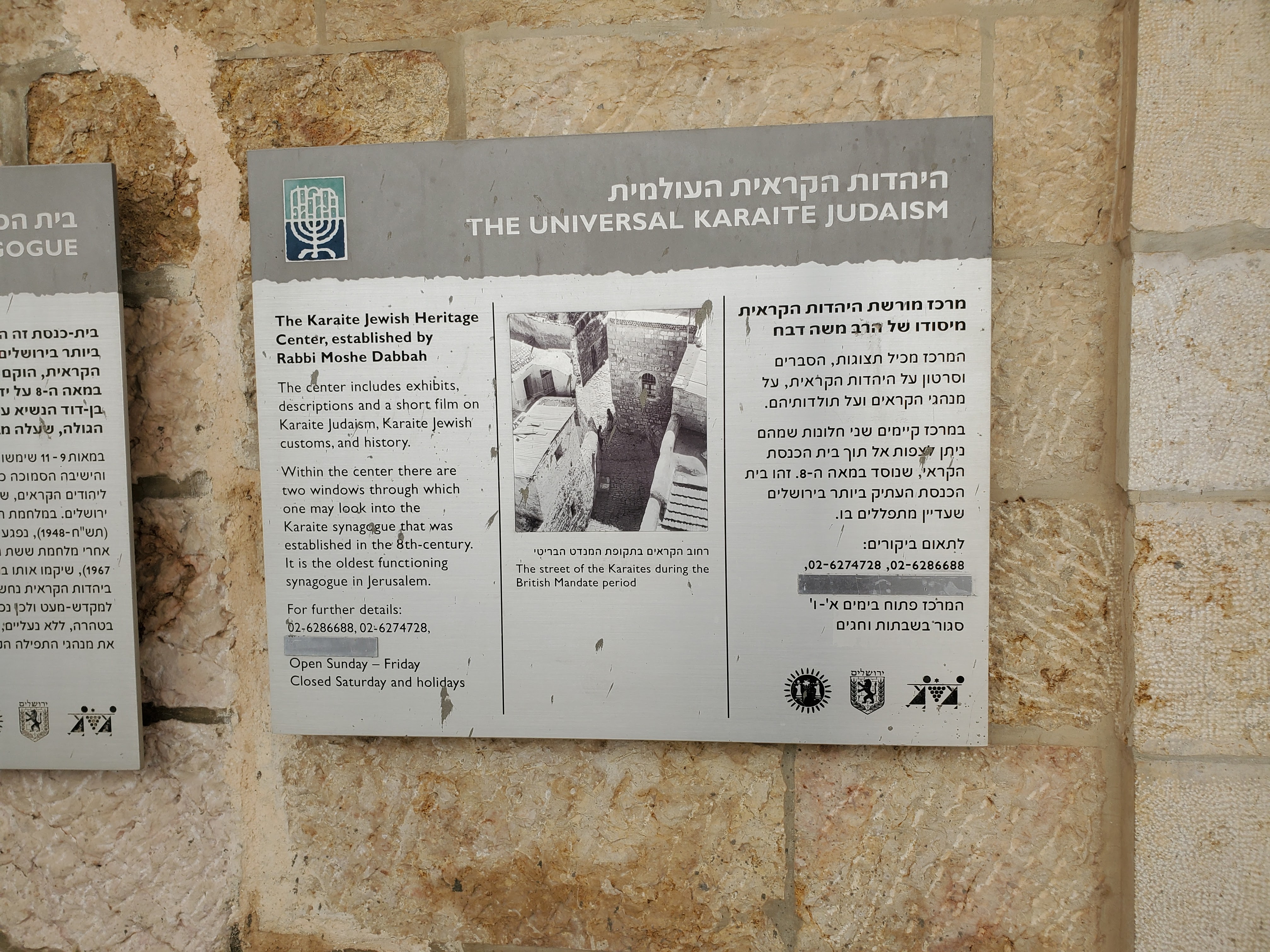
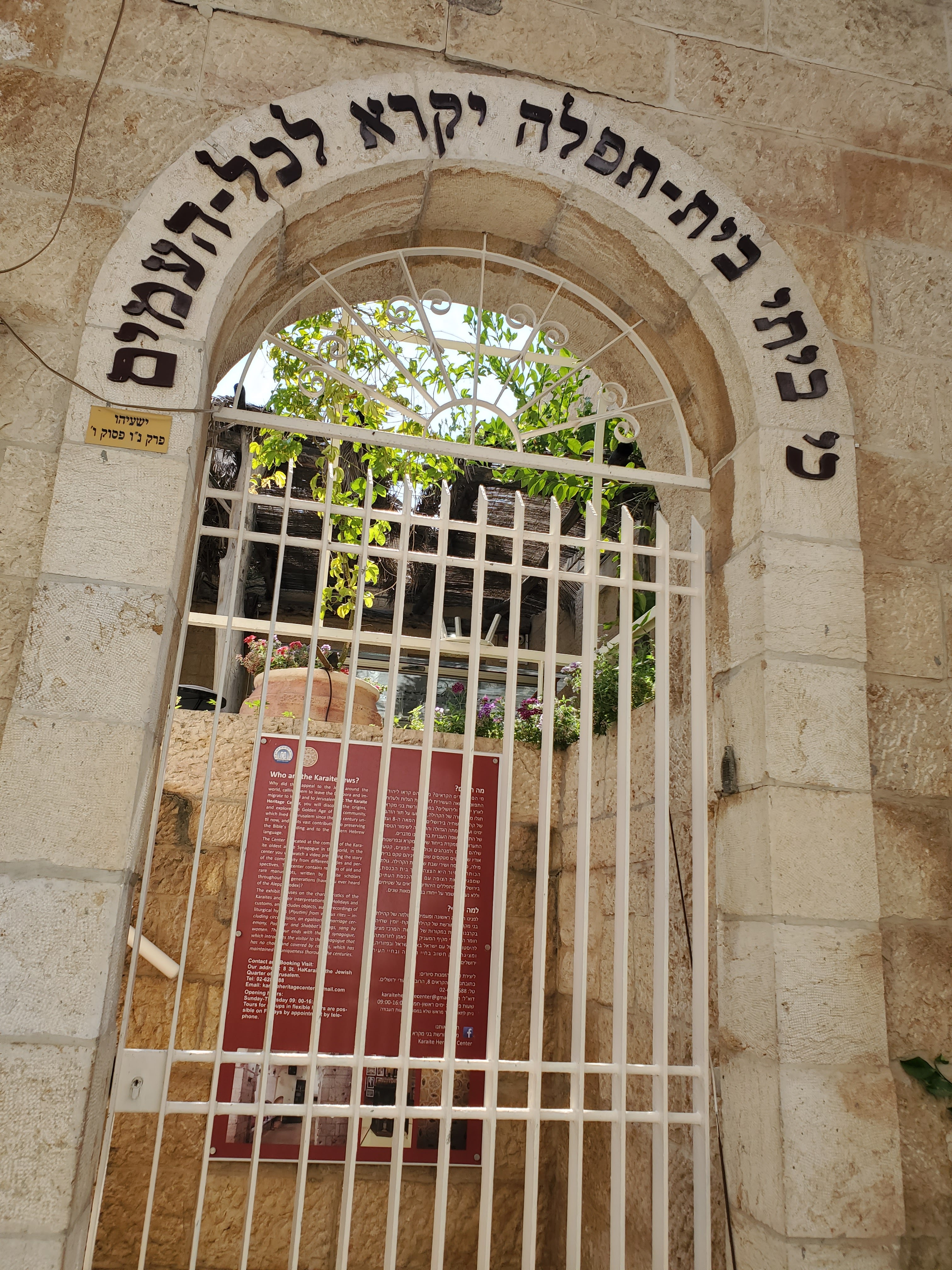
Descending again, I entered the Middle Ages and early modern times, as I walked through the Jewish Quarter. I passed by the Karaite Center and synagogue, which was closed. The Karaites broke away from Rabbinic Judaism in the late 8th, early 9th centuries and allegedly built the Karaite synagogue in Jerusalem then. Architecturally, it appears the synagogue dates to Crusader times. The distinctive feature of the synagogue is that it is below ground level.

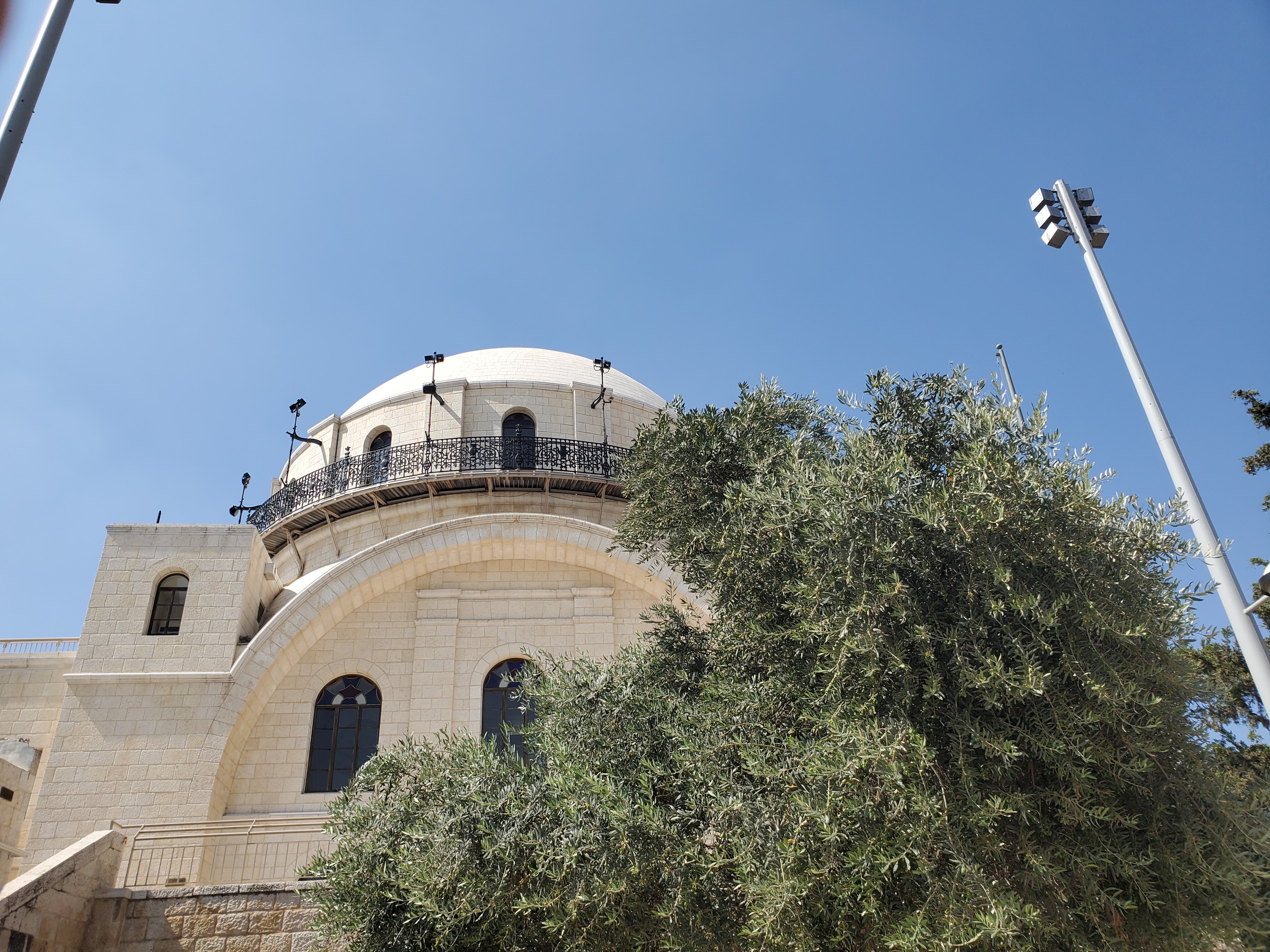
Around the corner from the Karaite center and synagogue, is the Hurva or Destroyed synagogue. It was first built in the early 18th century, then destroyed in 1721 by the Muslim authorities. The Hurva was rebuilt in 1864 and served as the primary Ashkenazi synagogue until in was destroyed in 1948 by the Arab Legion. It remained as a ruin marked only by a distinctive arch until it was rebuilt in 2010.

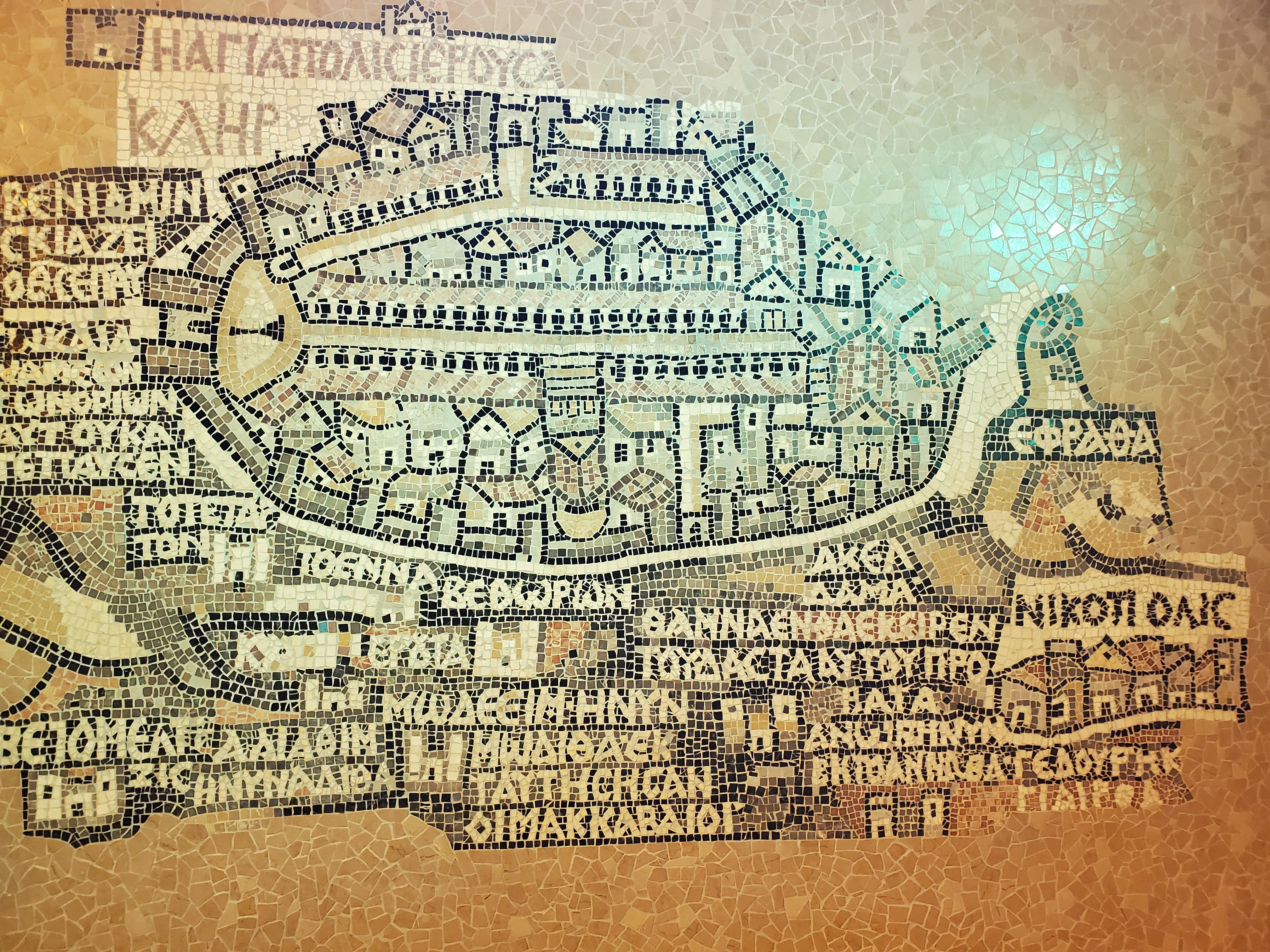
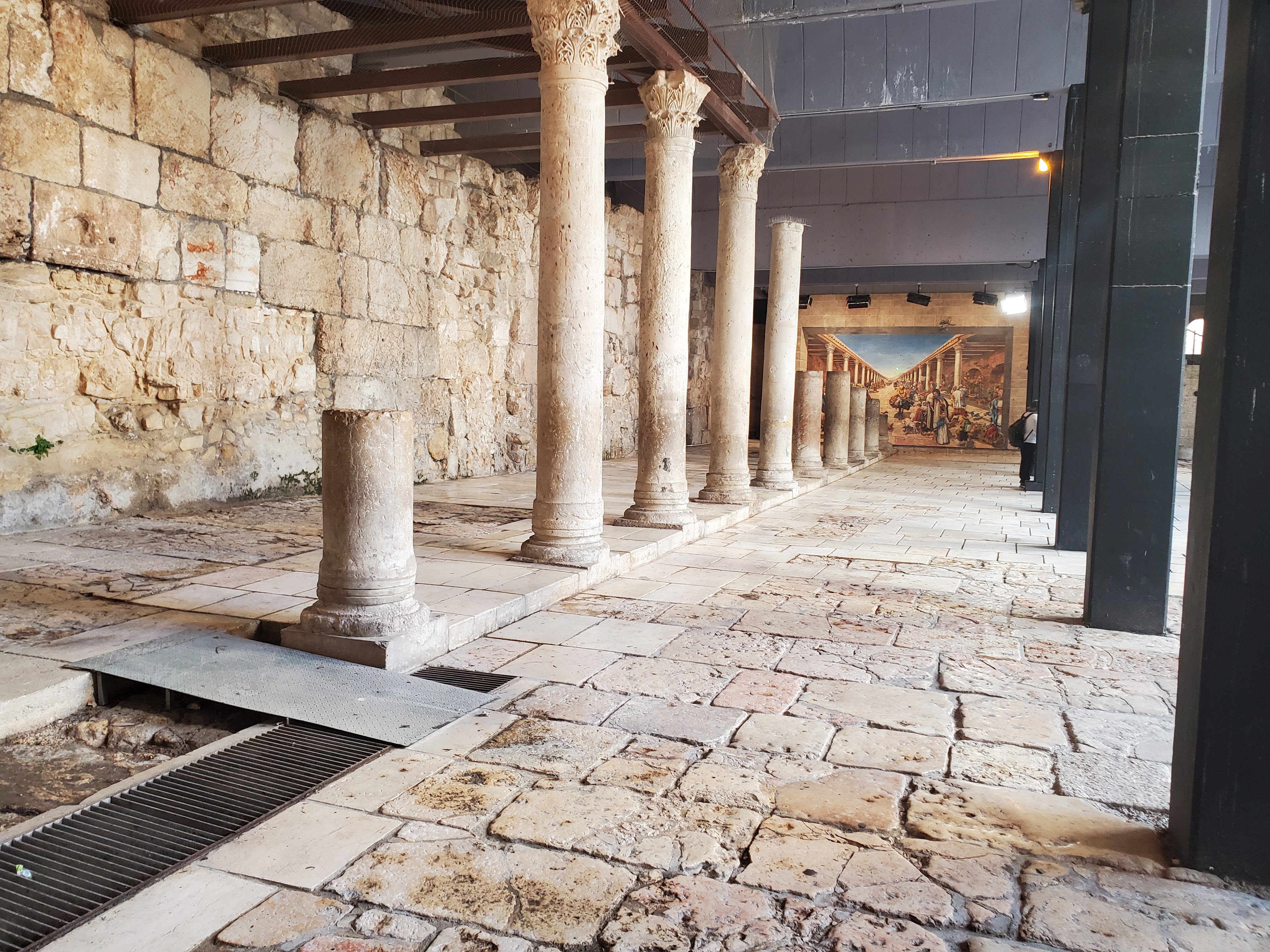
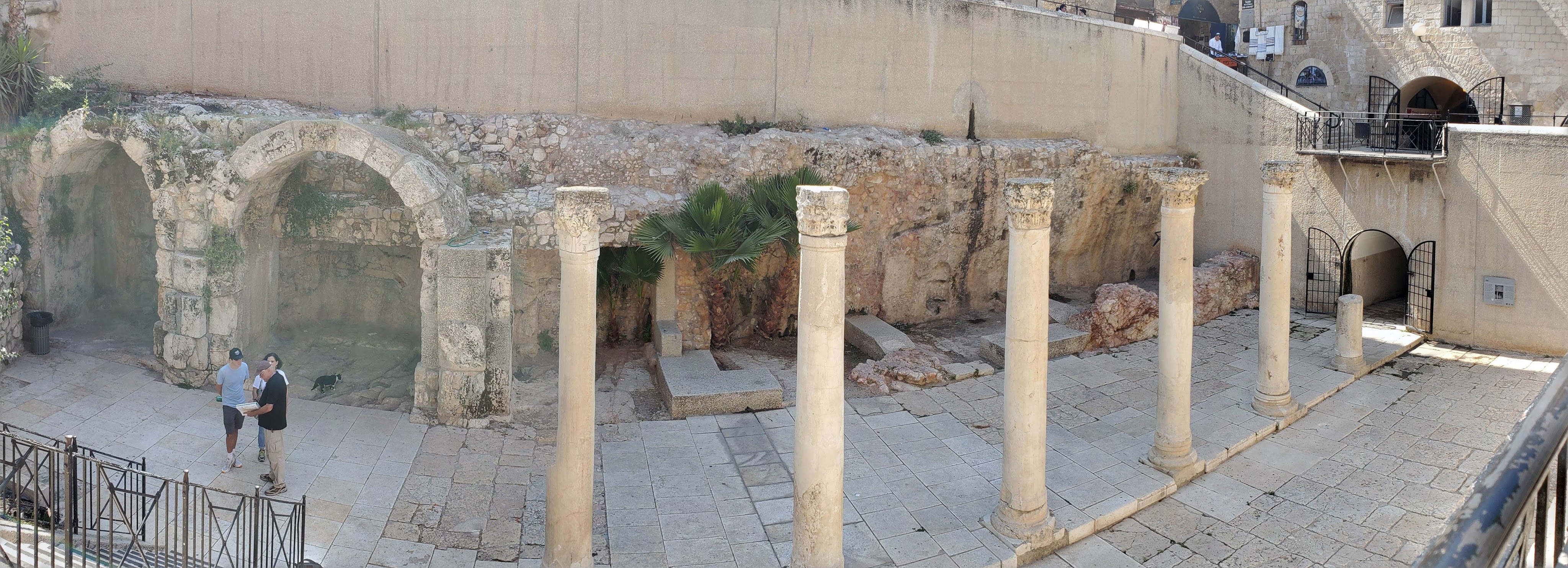
From early modern times, I went back to Roman times to walk along the Cardo, the ancient street from Roman times, built on top of the Hasmonean layer, built upon layer after layer that preceded it. The copy of the Madaba map shows the layout of Jerusalem during the Roman period. The Cardo served as the Roman street, wide enough for carts with shops and stalls at street level, and columns to create a covered walkways for pedestrians. The Cardo was then extended farther across the city under Byzantine times.

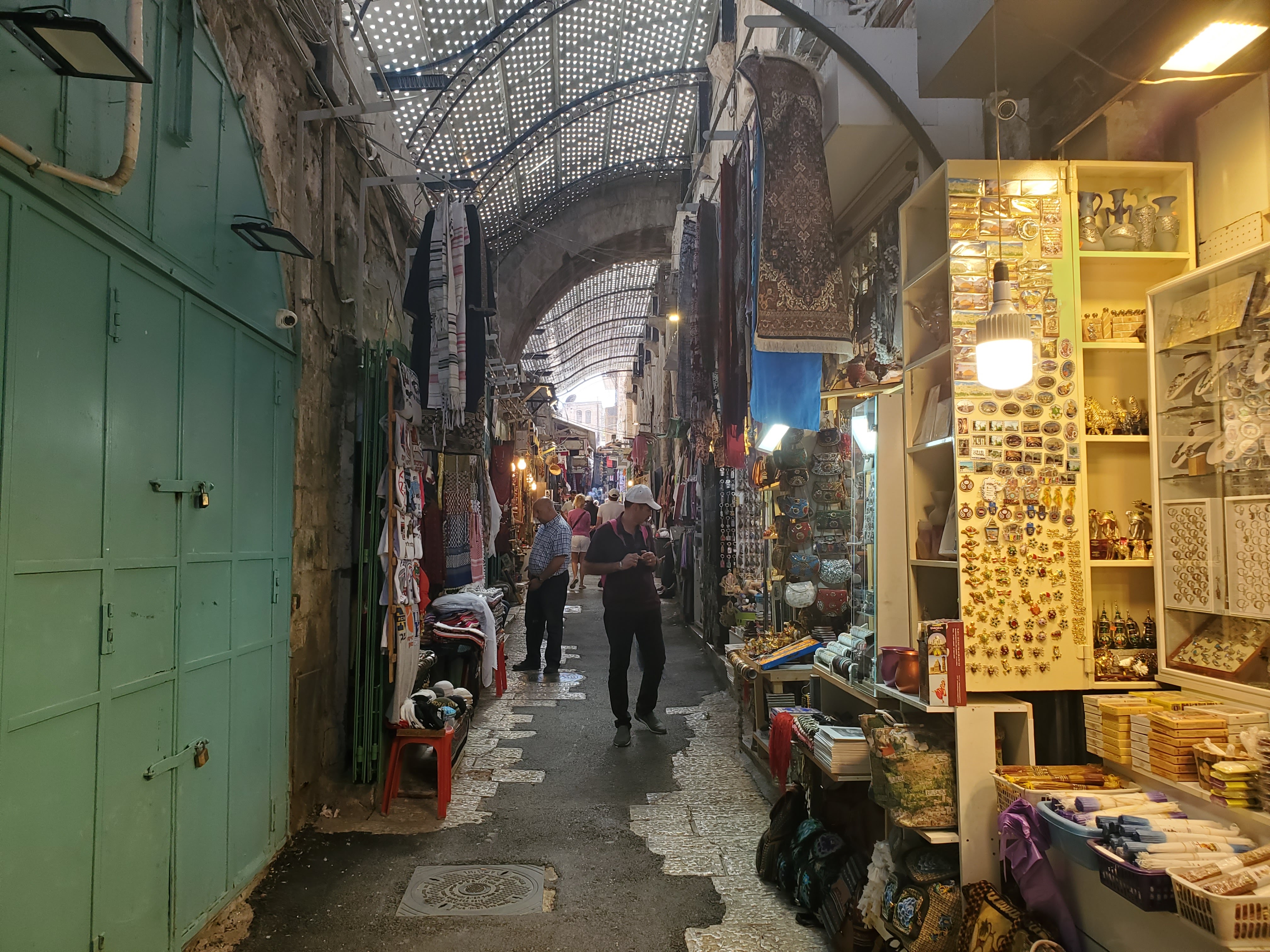
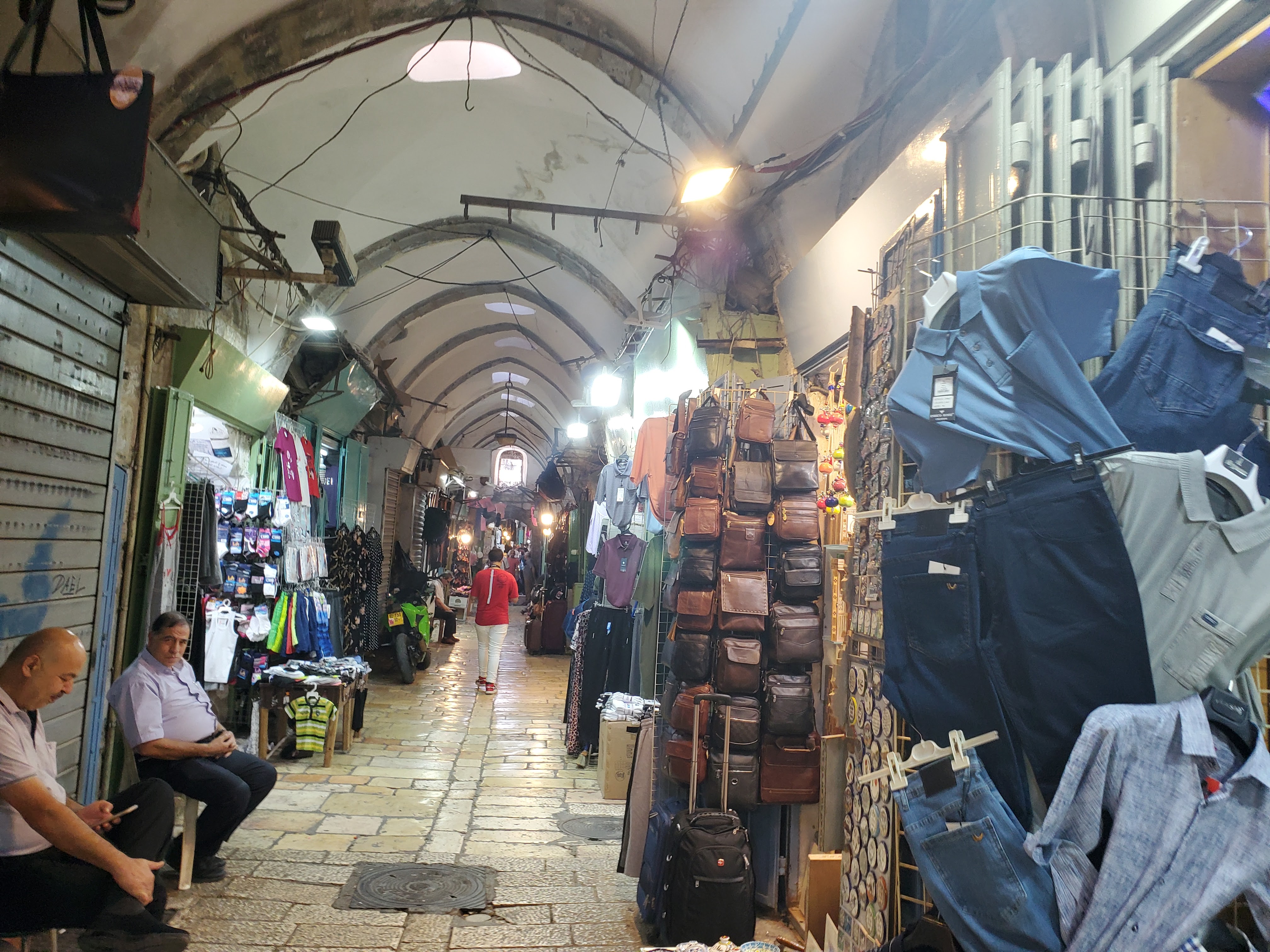
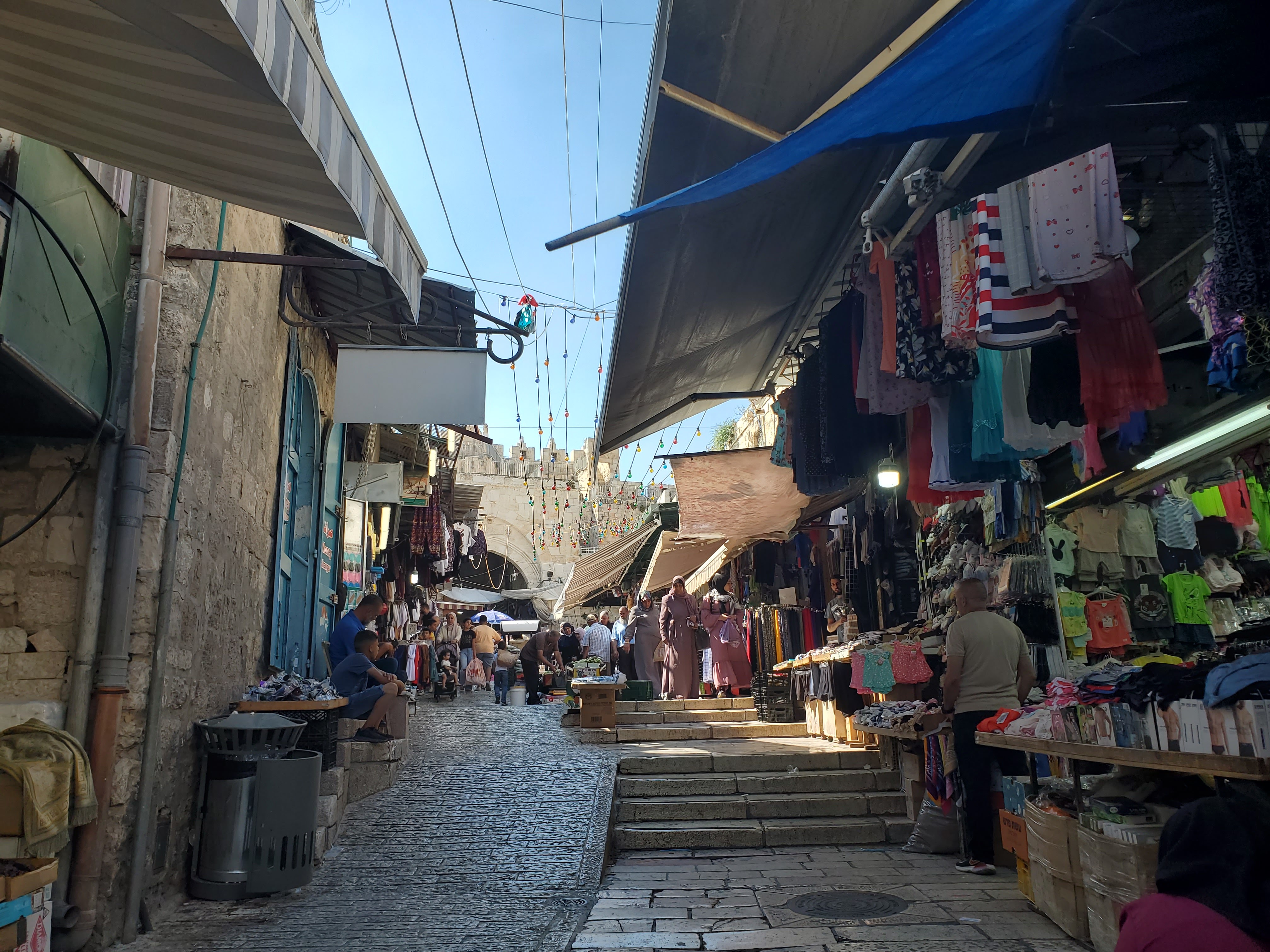
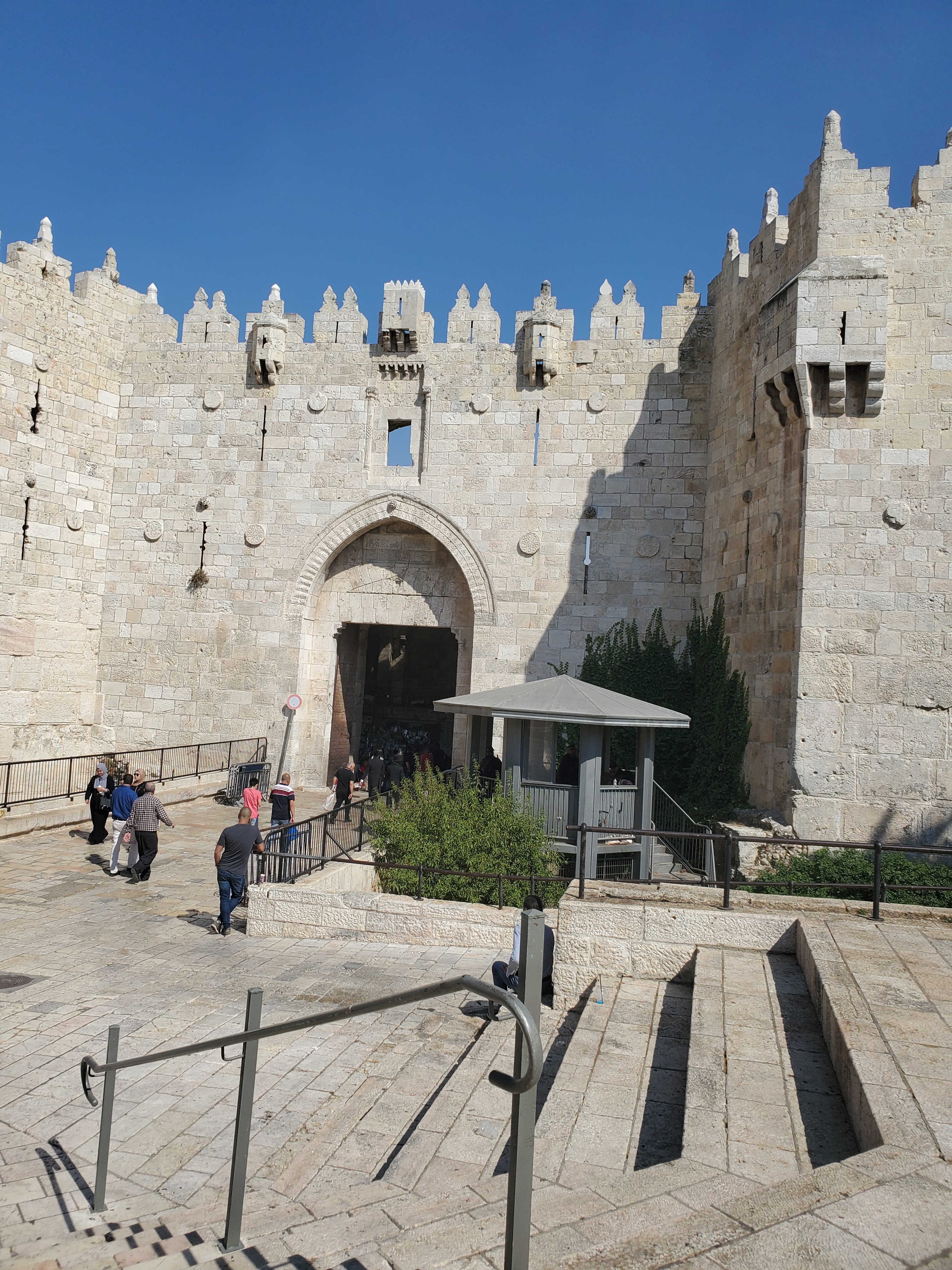
After stepping back into history, I re-entered modern times by exiting the Old City through the shuk, with stalls selling food, souvenirs, and all sorts of everyday goods. Walking through the crowds I made my way through Damascus Gate and then off to my next stop.

Another Temple?

About a year and a half ago, I started reading about another temple unearthed near Jerusalem in Motza, while working to expand the highway system leading in and out of Jerusalem.

I was intrigued by the thought of a temple existing alongside the Temple in Jerusalem, and just a short distance away, only a few kilometers.

It is theorized that there were a number of sanctioned temples throughout Judah that eventually disappeared after the centralization of worship and ritual during the reigns of Hezekiah and later, Josiah.

Nevertheless, this was something I had never heard of or even thought about; the Temple, was simply, THE TEMPLE, without competition. Here we can see another one in close proximity, with no indication that this was a discount temple, or wholesale temple, or bargain temple location. It was equipped for all of the normal cultic observances found just down the road.

It was something I really wanted to see.

So, I got up early in the morning and began my trek down toward Jerusalem. It involved a series of buses and trains that would eventually take me within a short walk of the Motza excavation. The train to Tel Aviv was slightly delayed, but I had plenty of time to catch the bus to the Chemed junction. Unfortunately, my timing was off and had to wait over an hour and a half to get from the Chemed junction to Motza, a distance of a couple of miles.

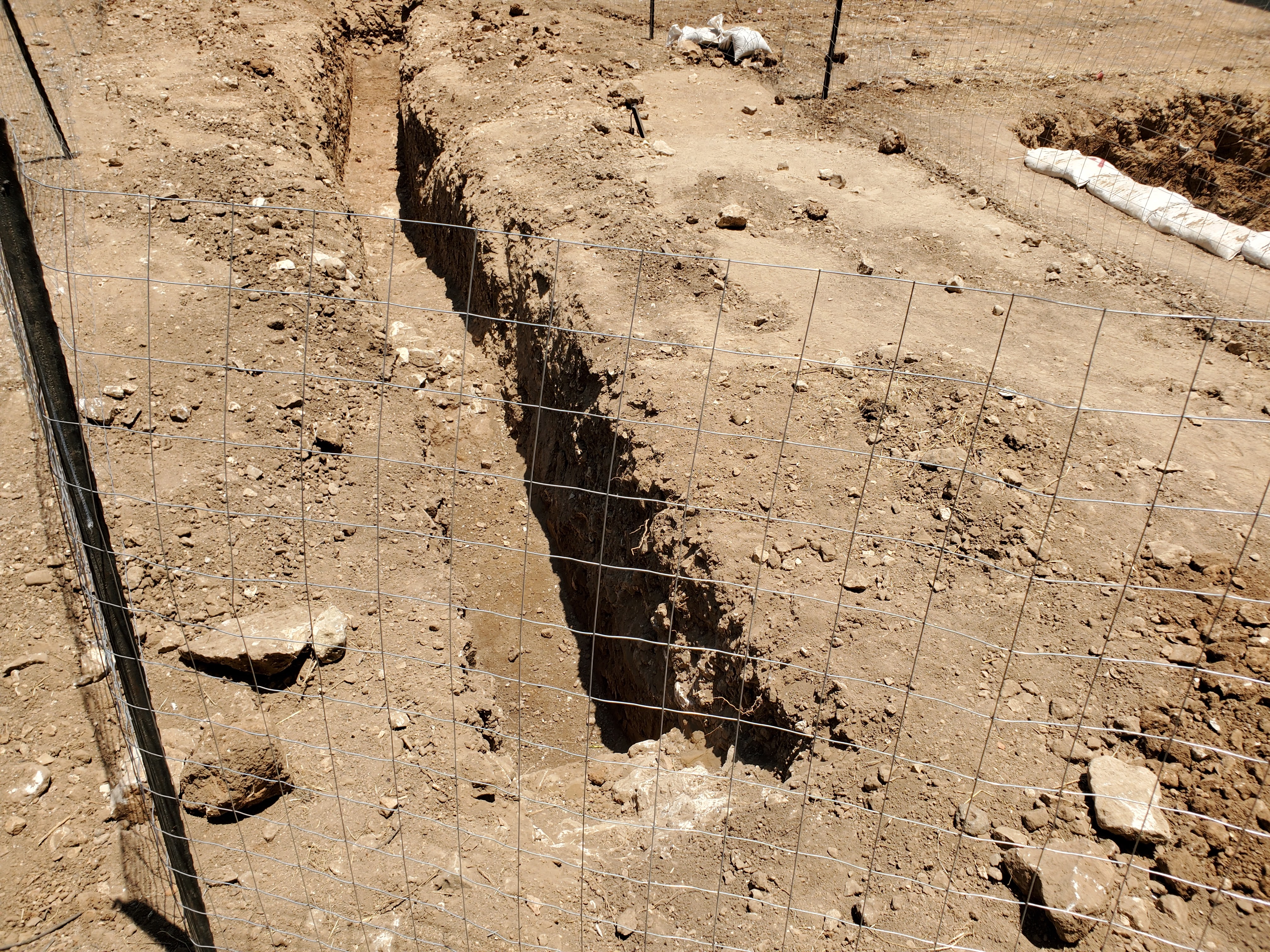
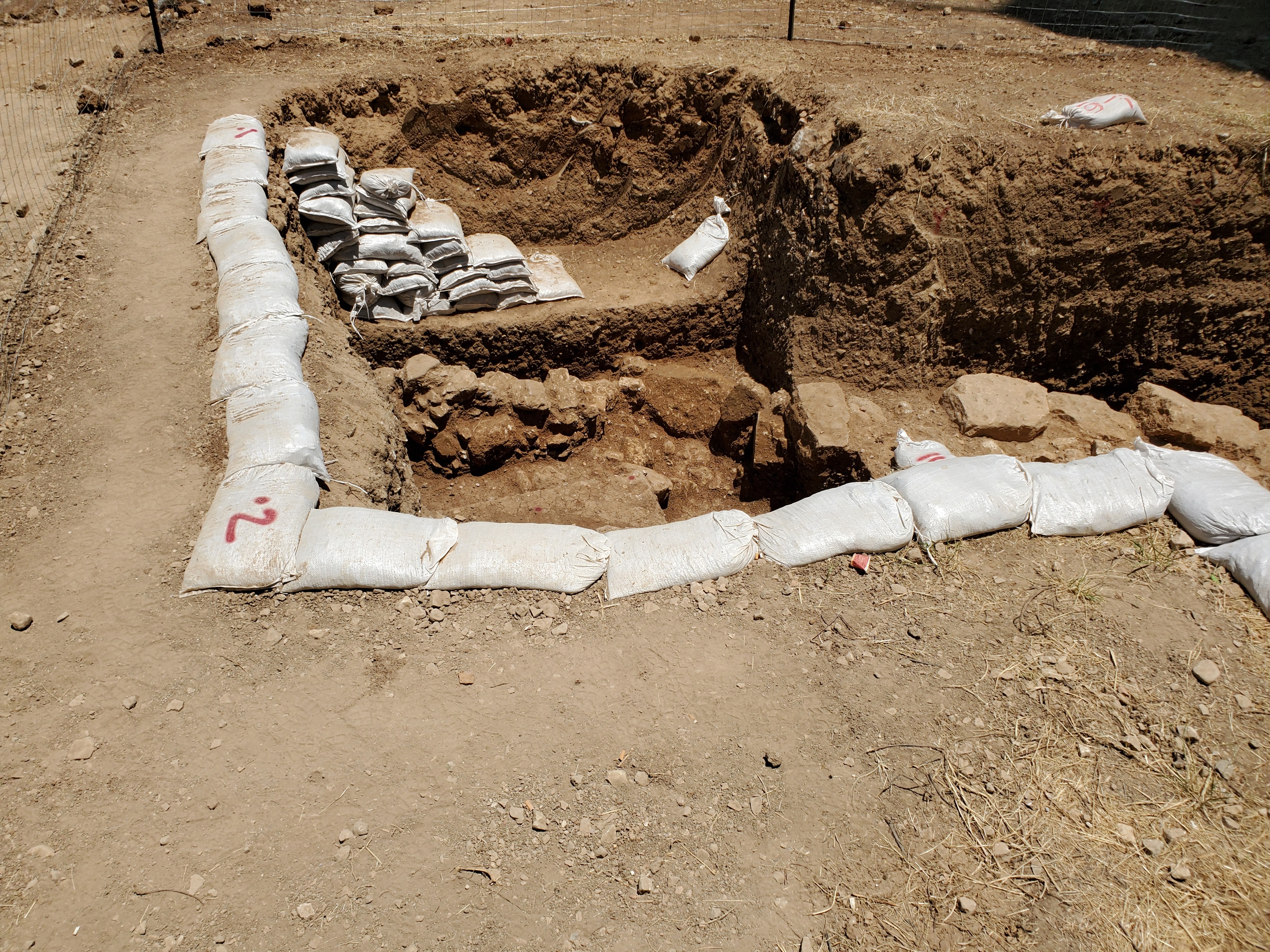
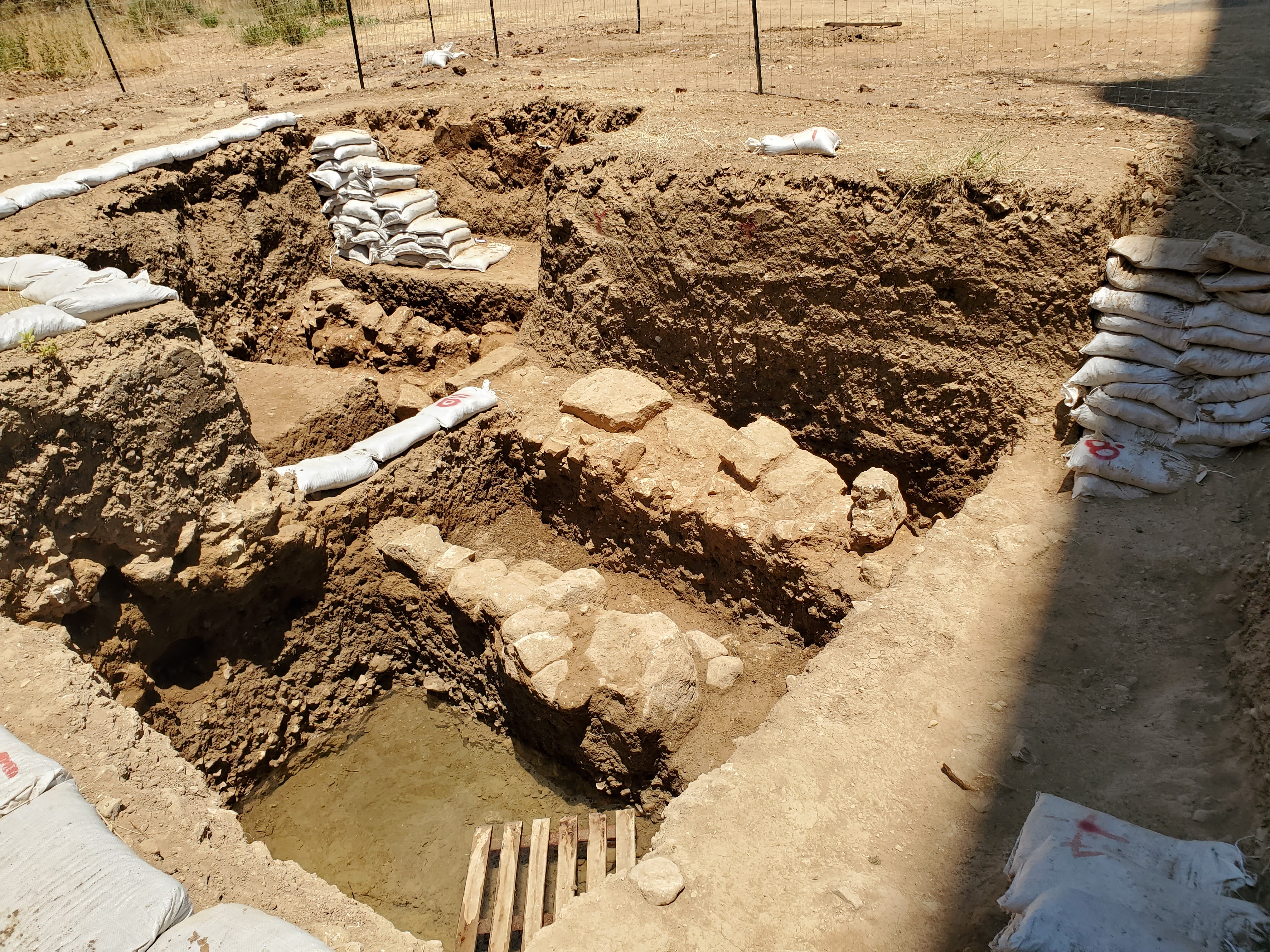
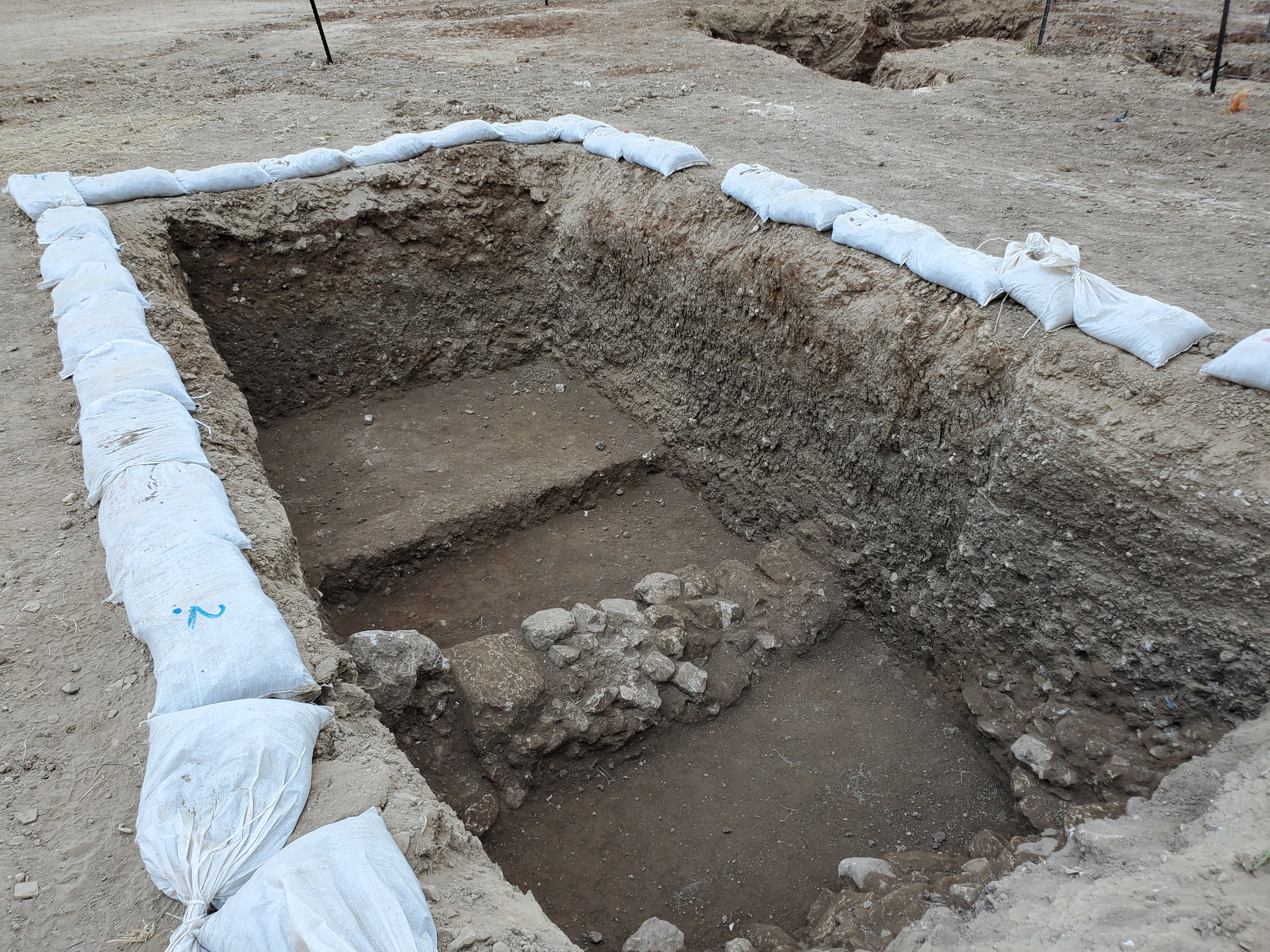
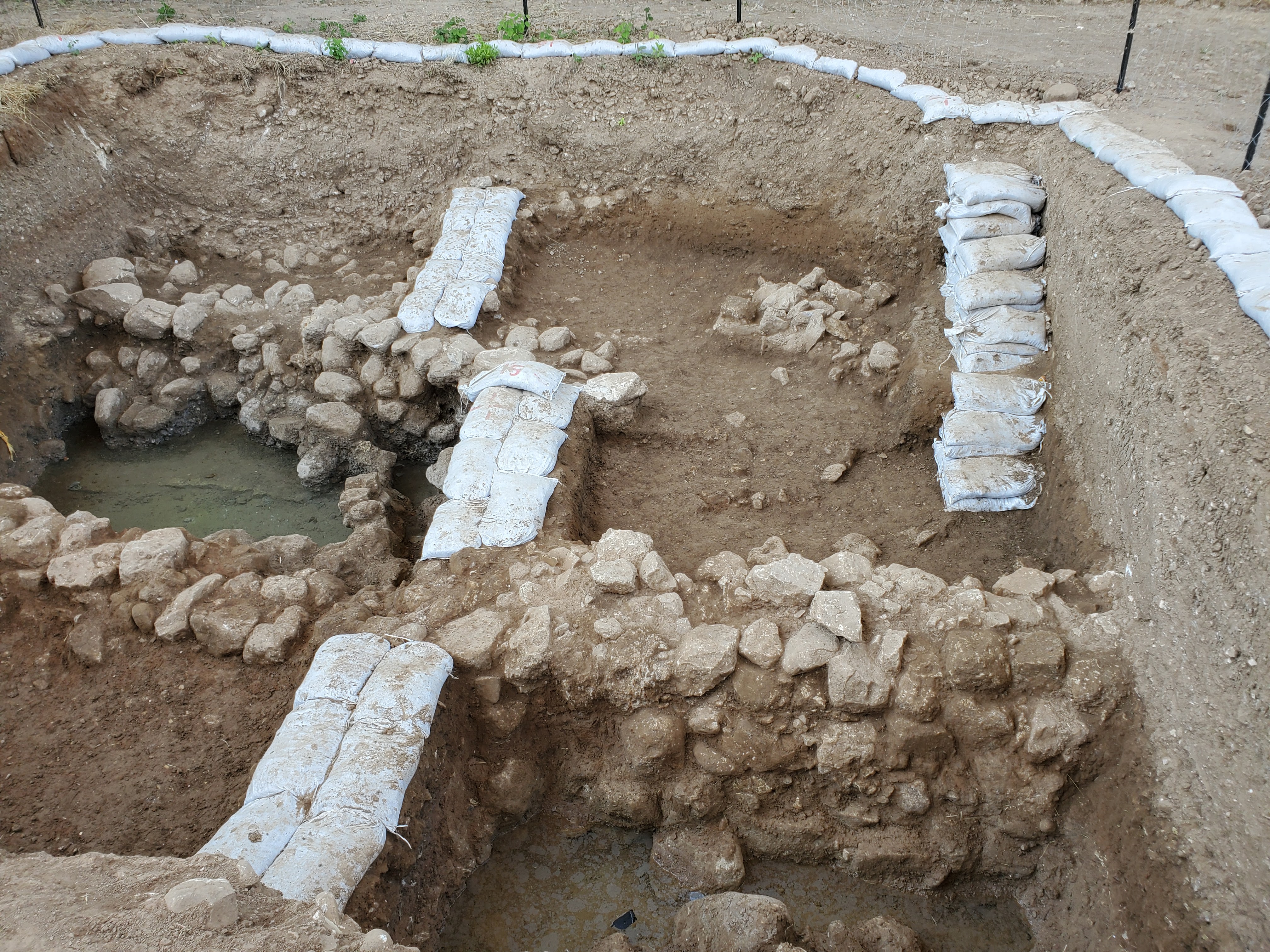
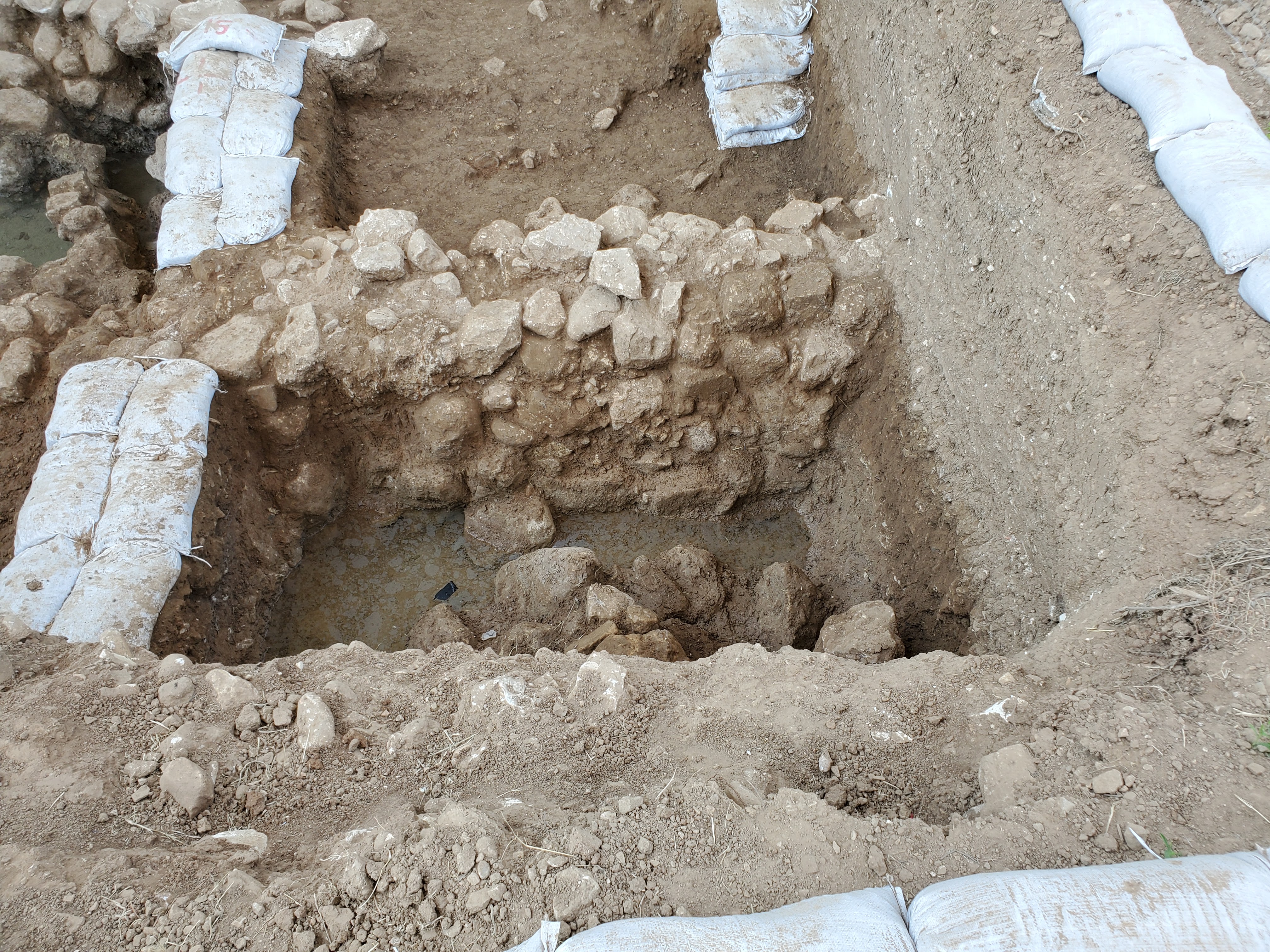
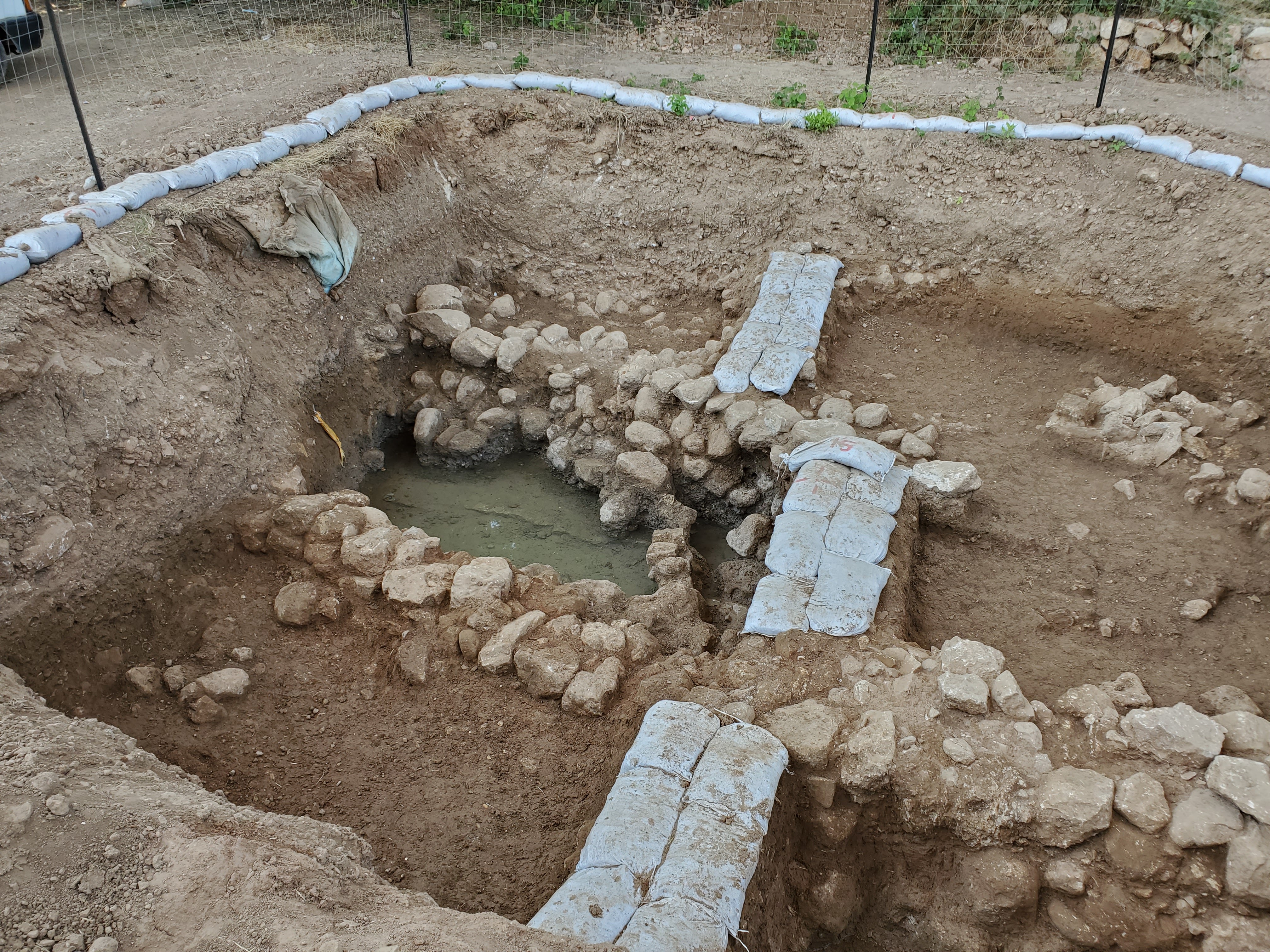
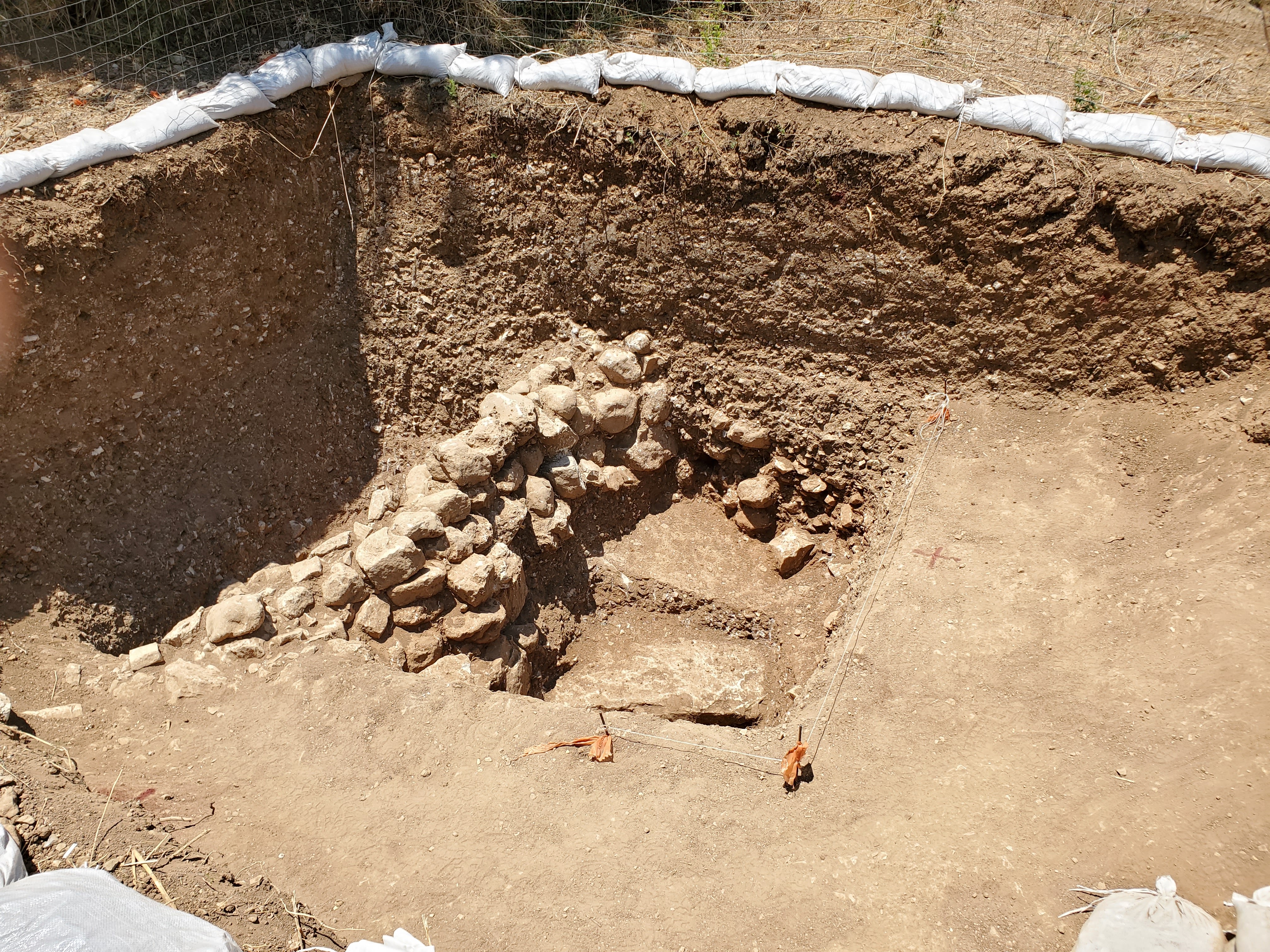
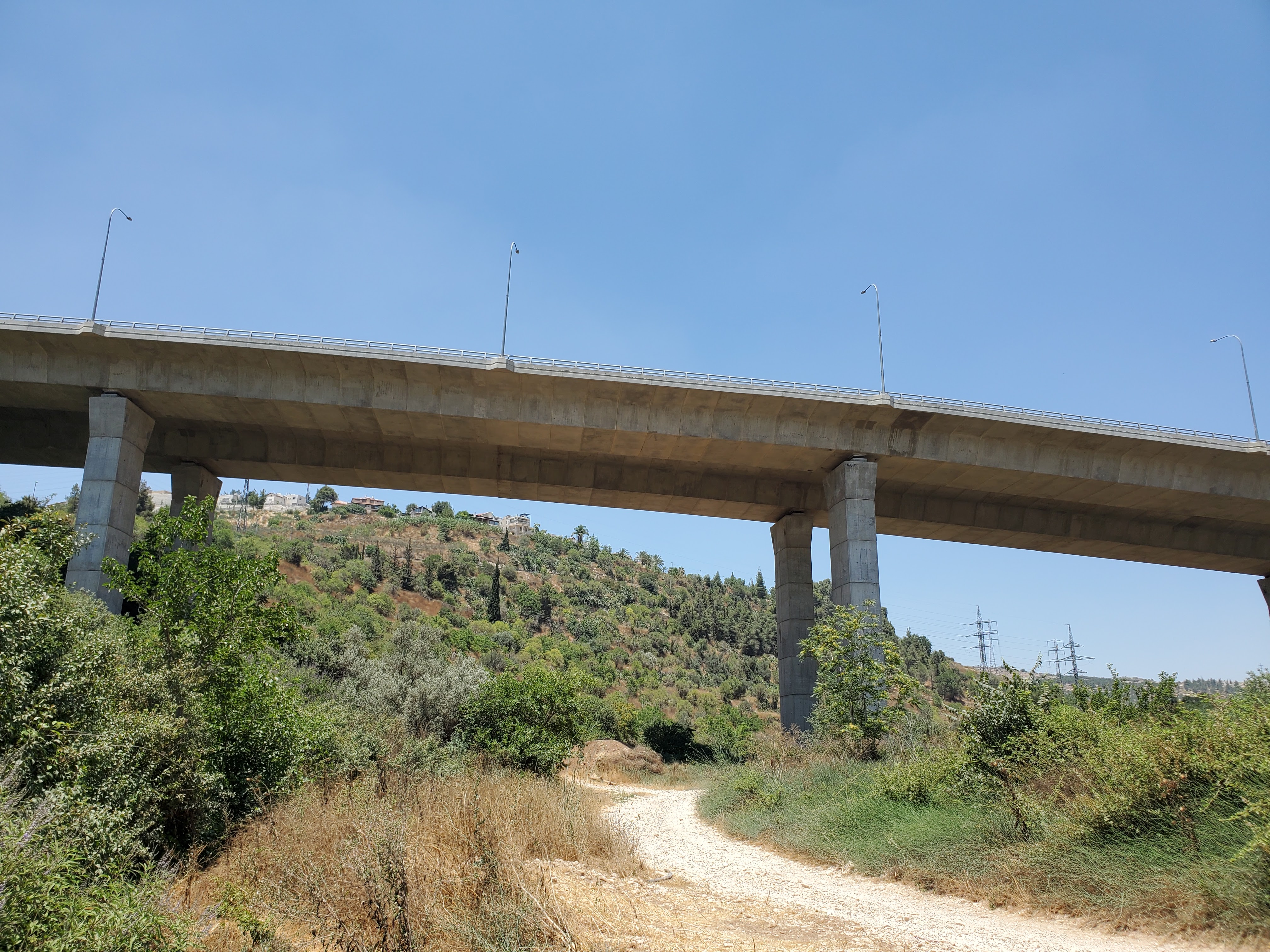
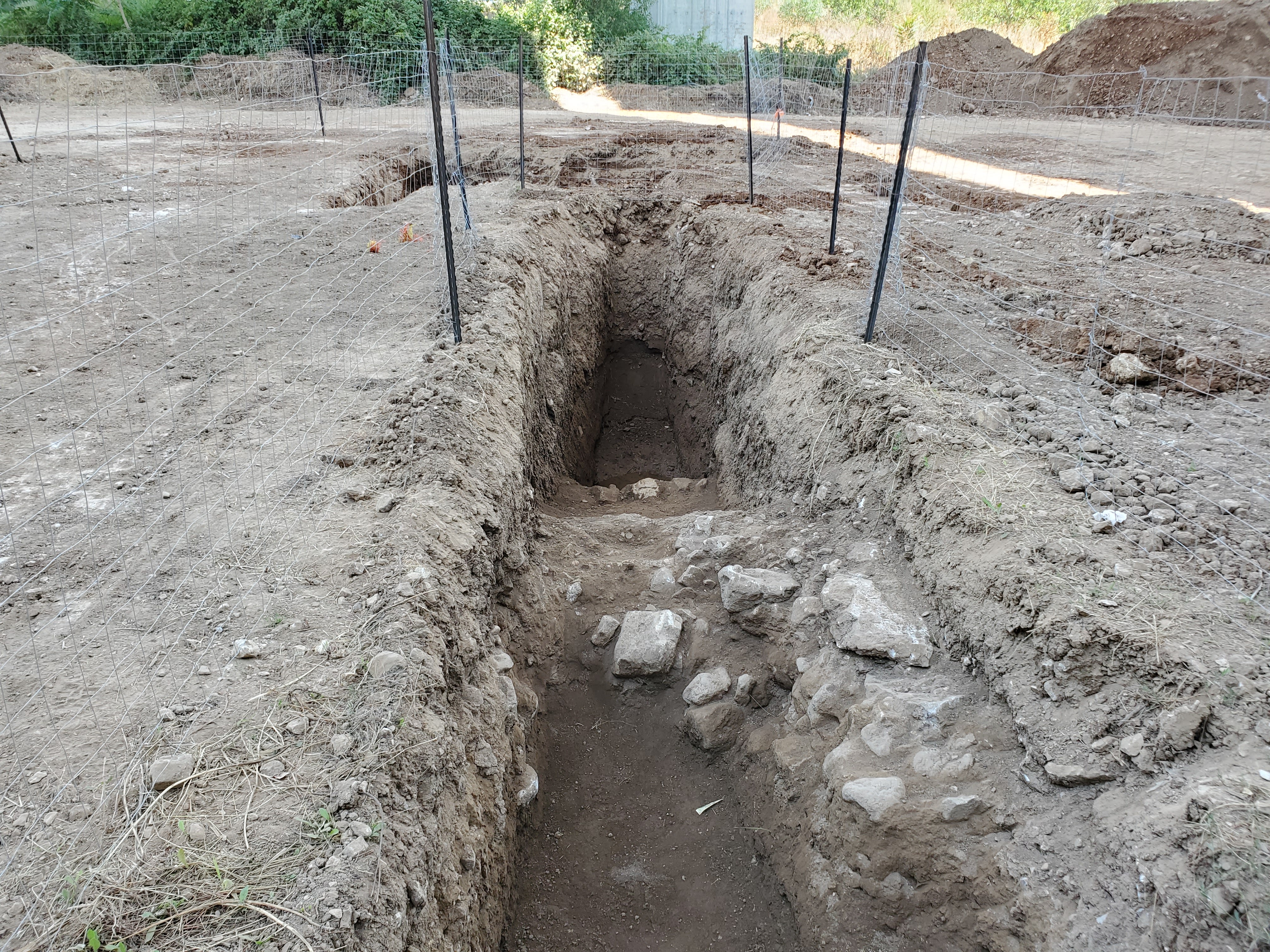
Once in Motza it was an interesting route that I needed to take, walking under a highway overpass, through a construction zone, down a dirt path, to an unmarked series of pits, that were cordoned off with wire fencing. There were no placards identifying what I was peering at, no one around to answer questions, nothing but brush and dirt.

Here’s what I found.

All of these discoveries found under this.

The discoveries made by chance, from penicillin to Post-it notes, and ancient temples found under highway interchanges continue to amaze me. More seems to come from our accidental discoveries than from carefully considered plans.

From Motza, it was on to Jerusalem for me.

My True Mission

My readers, I think that I can now reveal to you the true purpose of my trip to Israel. Attending my kids’ graduations is significant, as well as having some time to travel and explore, these serve as cover for my true mission. I am a mule.

I have been tasked to return with 5 kilos of white, the highest quality of white that I can locate. Those who I work for are jonesing for the good stuff, making do with the lesser quality local product.

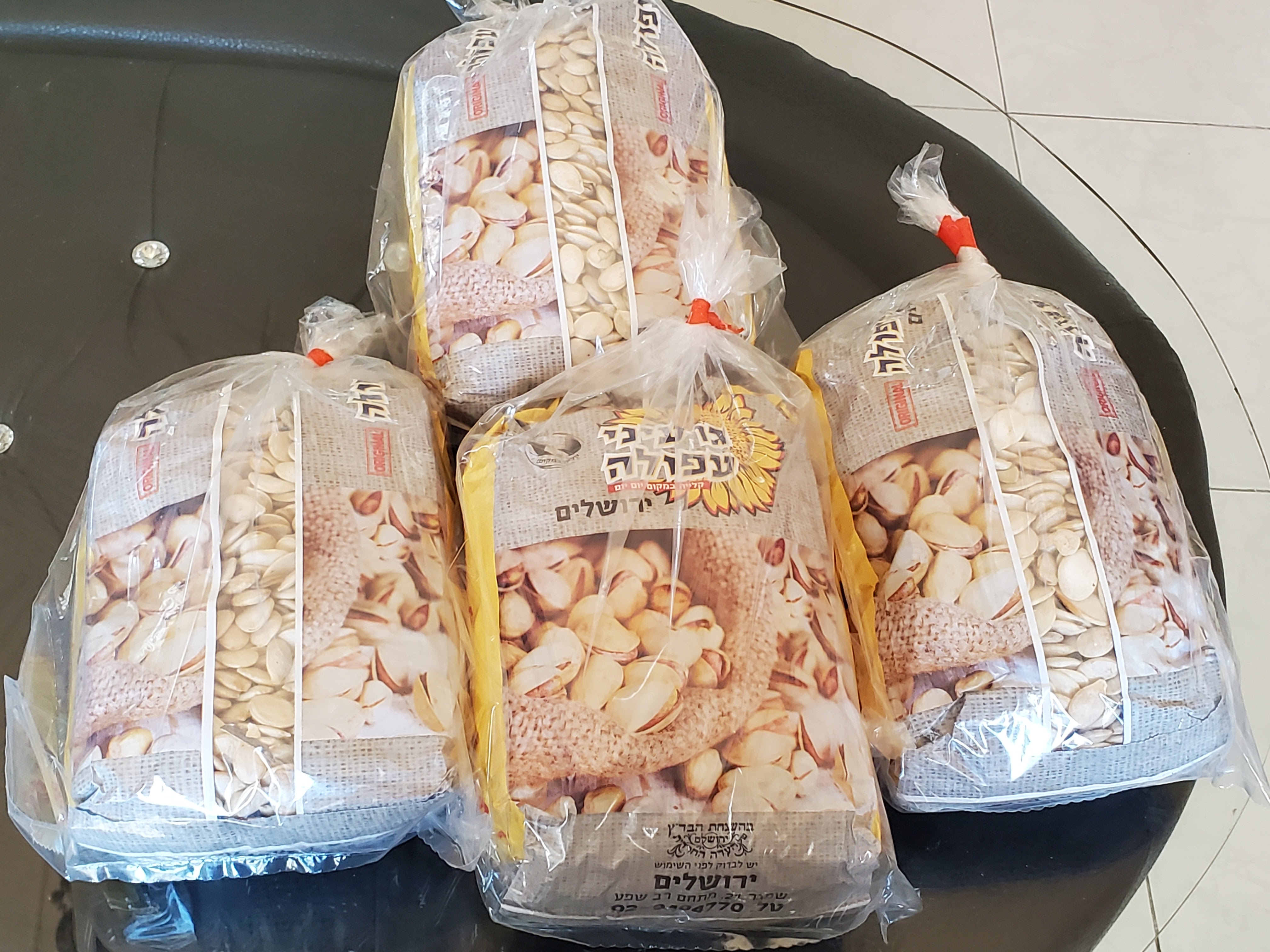
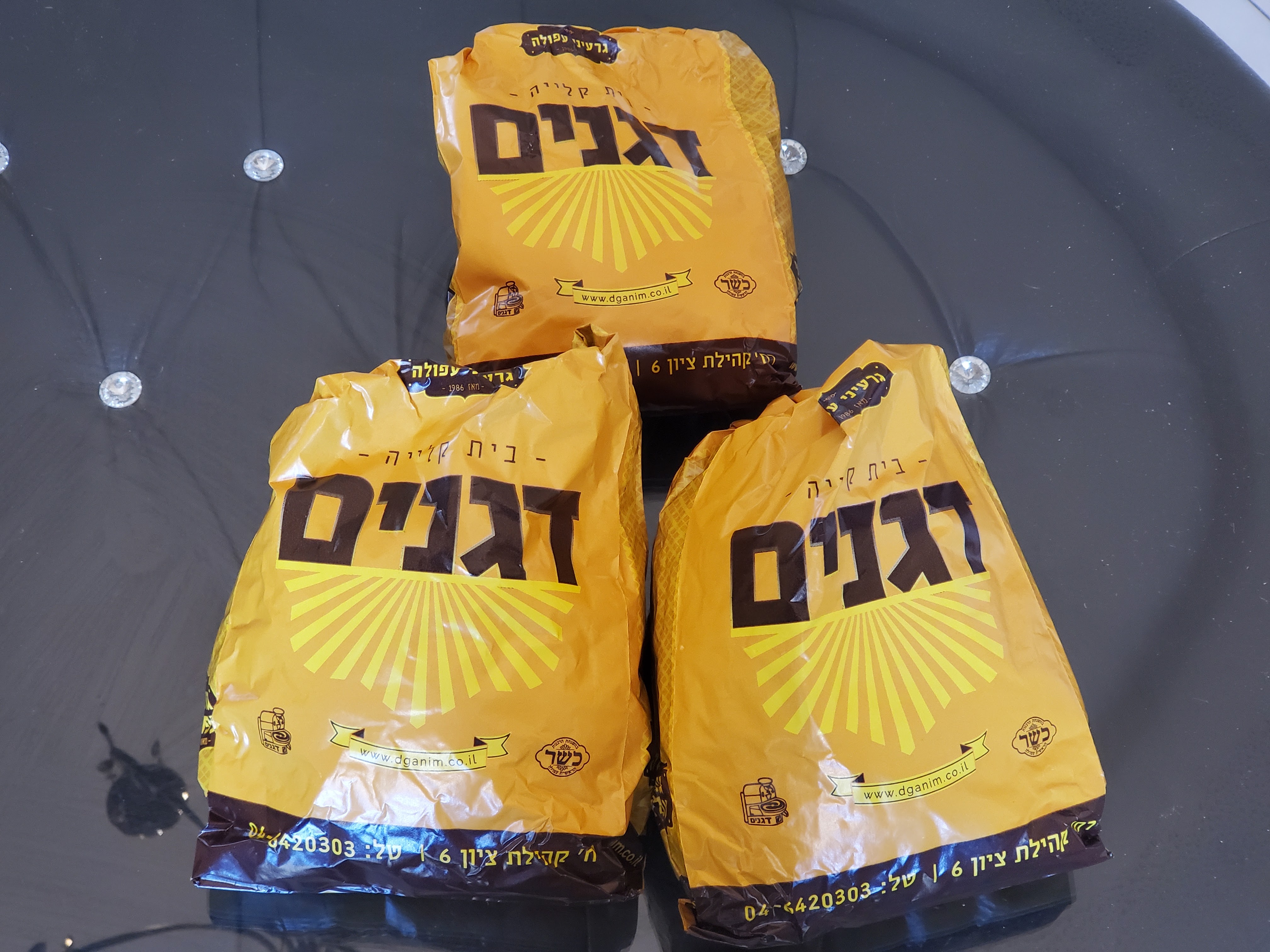
Garinim levanim, white seeds, or pumpkin seeds, as distinguished from garinim sh’chorim, black seeds, or sunflower seeds, are both my wife and my father-in-law’s favorite. Garinim levanim or garinim of any variety for that matter can be purchased in any corner store, grocery store, or market in Israel.

They prefer Garinei Afula, literally the Seeds of Afula, based in the city of Afula. Garinei Afula is now a massive corporation, with multiple locations throughout the country, as well as owning other food companies. You can pick up Garinei Afula almost anywhere.

They didn’t want Garinei Afula from just any outlet. They wanted Garinei Afula from Afula. Afula is not exactly a tourist mecca. It isn’t very far from places of interest like Mount Gilboa, Mout Tavor, Ein Harod, Jezreel, or Megiddo, but there really isn’t much to see in Afula itself.

Fortunately, I had chosen to go to Jezreel, and the easiest way to get from Jezreel back to Nahariya is through Afula. On my way into Afula, I checked my app, and there was a Garinei Afula location very close to the central bus station. It turned out it was only a two or three minute walk. It also turned out that was no longer Garinei Afula, but was now Dganim or Beit Kliyah Dganim, House of Roasted Grains. The bags were marked as both Garinei Afula and Beit Kliyah Dganim, so I bought 2 kilo and just to be safe, looked for the other Garinei Afula location. It was only a 10-12 minute walk, so I headed in that direction, bought 3 kilo of seeds, and was able to catch my bus out of town directly across the street.

Mission successful.

Tuesday with the Omrides

After a few days traversing the Crusader era, I was ready for a change. I set my sights on the Biblical period in Emek Yizreel or the Jezreel Valley. The Jezreel Valley, runs from the center of the Galilee, from approximately Mount Gilboa in the south to the coastal area near Haifa, with the highlands of Samaria and the lower Galilee forming the southern and northern boundaries.

This flat path from the Kinneret or Sea of Galilee, to the coast made it perfect for trade, as well as for invading armies. Defense against invaders was the primary function served by Megiddo, my first stop today. To get to Megiddo from Nahariya involves taking the train to Haifa and then a bus to Megiddo, other than a slight misstep in the train station, by walking into the mall, instead of down toward the buses, the trip was straightforward.

Megiddo, in addition to overlooking the Jezreel Valley, is also the northern terminus of the Wadi Ara, the pass that leads through the Carmel mountains. Megiddo is the choke point for this junction and through it, trade between Egypt and Syria and Mesopotamia could be controlled.

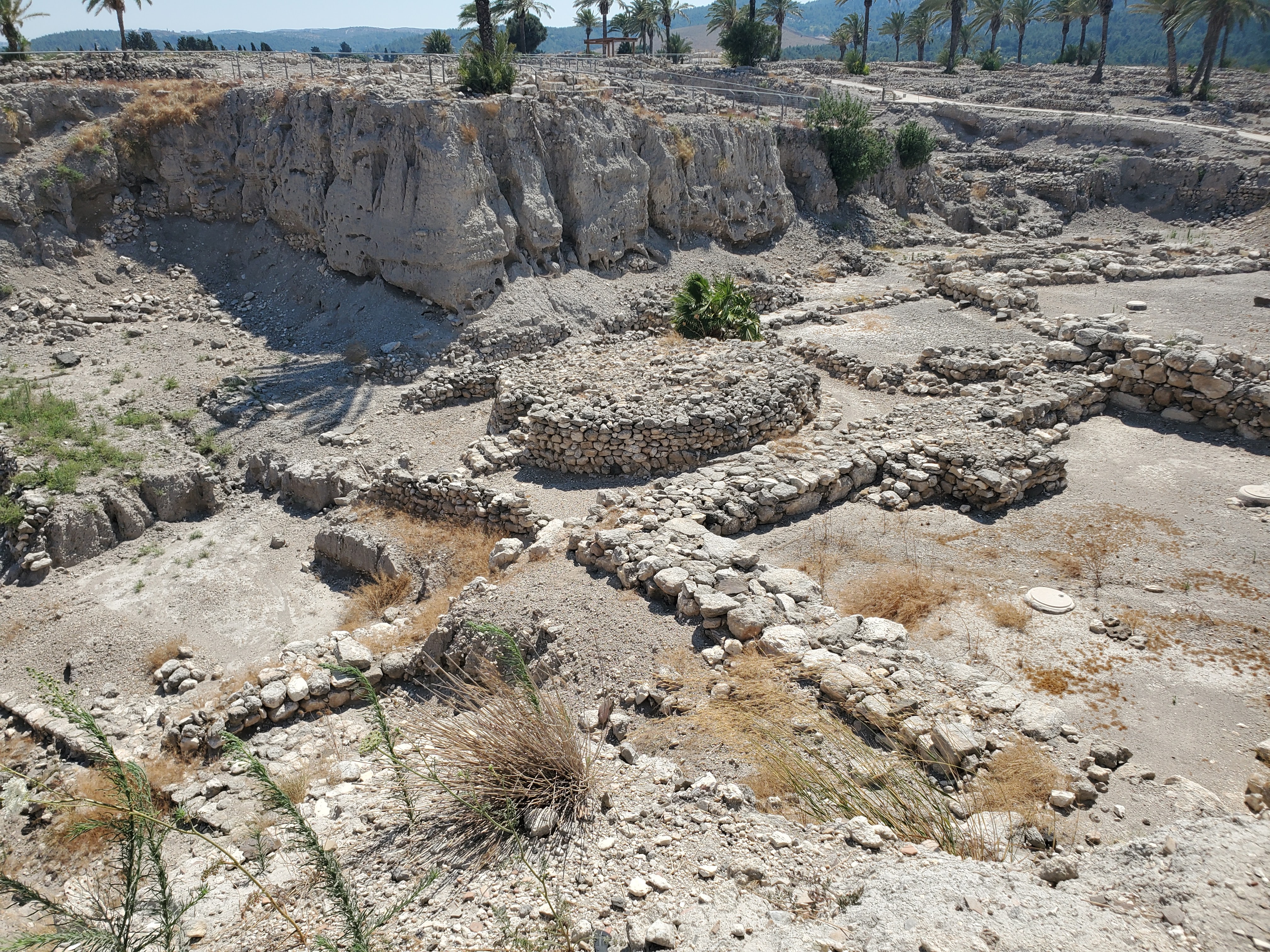
It shouldn’t be any surprise that there are 26 distinct layers of settlement that have been unearthed in Megiddo. Megiddo was first settled about 8500 years ago, but its earliest period of importance was during the Early Bronze Age I period (3500-3100 BCE) when it was one of the largest sites in the Middle East. The temple uncovered from that time period is considered to be the largest single structure discovered from this time period in the Middle East. The large round altar for animal sacrifice was at the center of ancient Canaanite ritual.

In the later Bronze Age, Megiddo become a vassal of Egypt, following its defeat by Thutmose III, and continued as an important Egyptian ally, controlling the trade route to Mesopotamia.

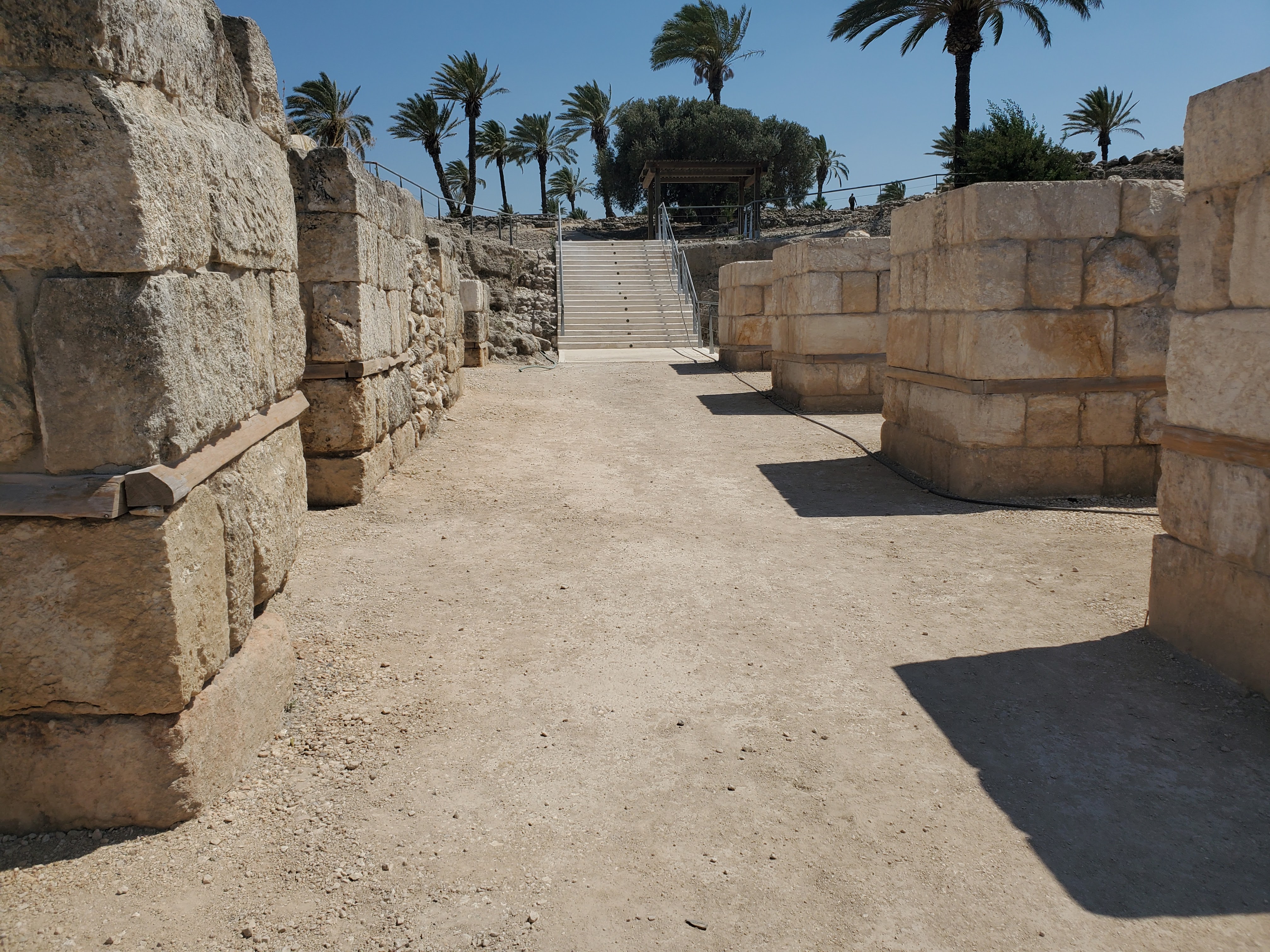
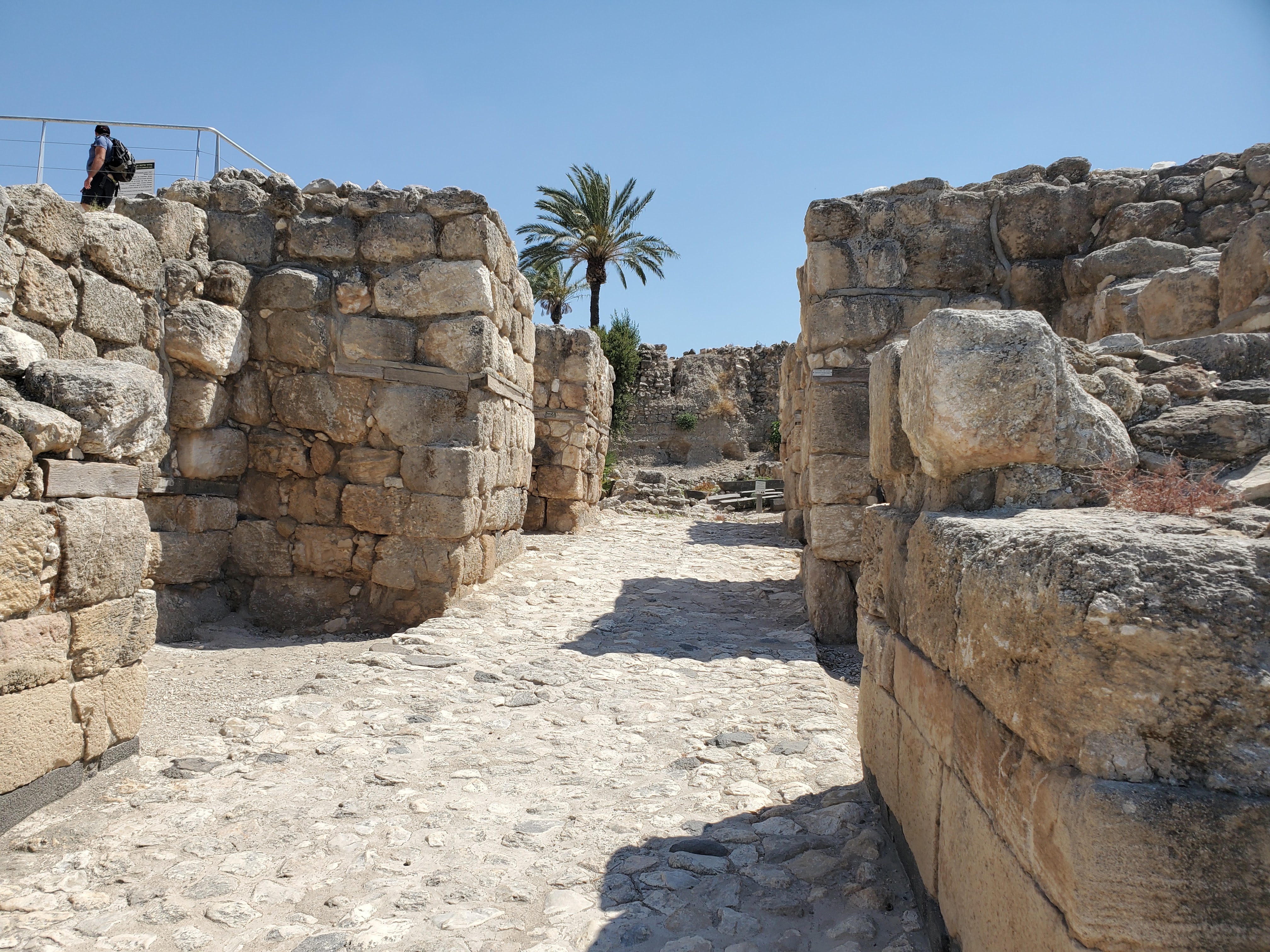
During the period when Egyptian dominance in the region slipped, Megiddo was conquered by King David and fortified by Solomon. Solomon expanded and reinforced the gate system.

This replaced the earlier Canaanite gates.

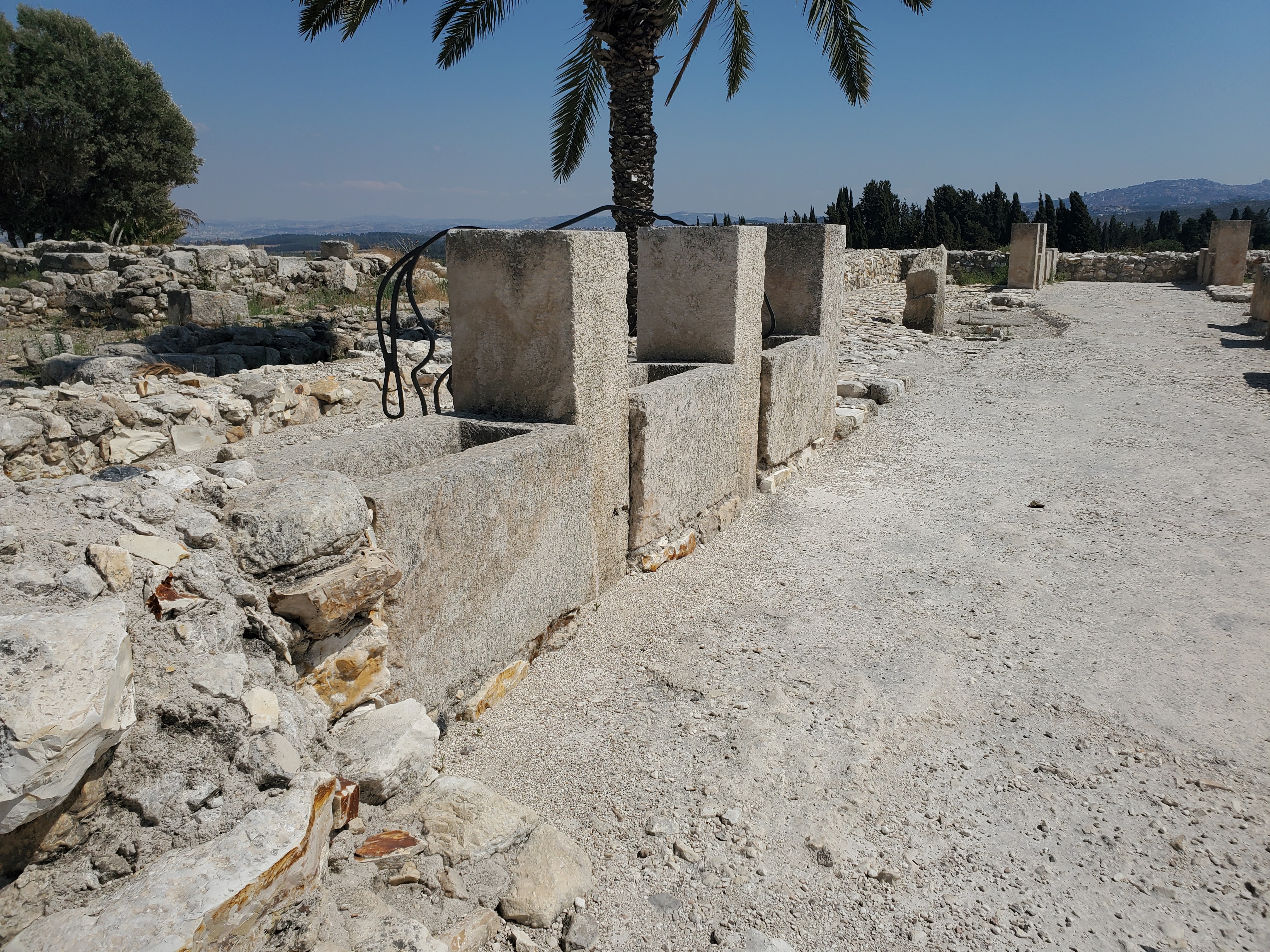
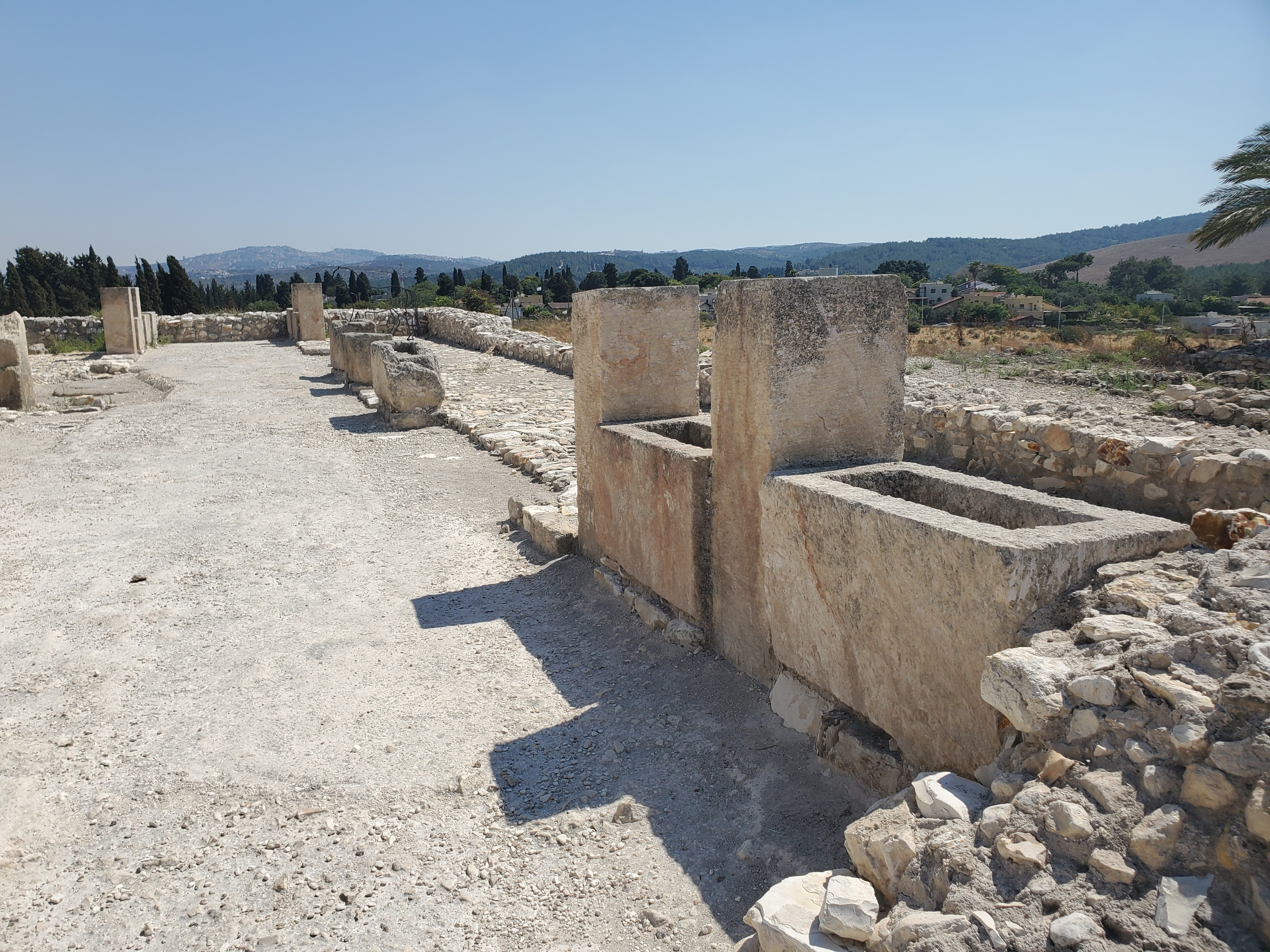
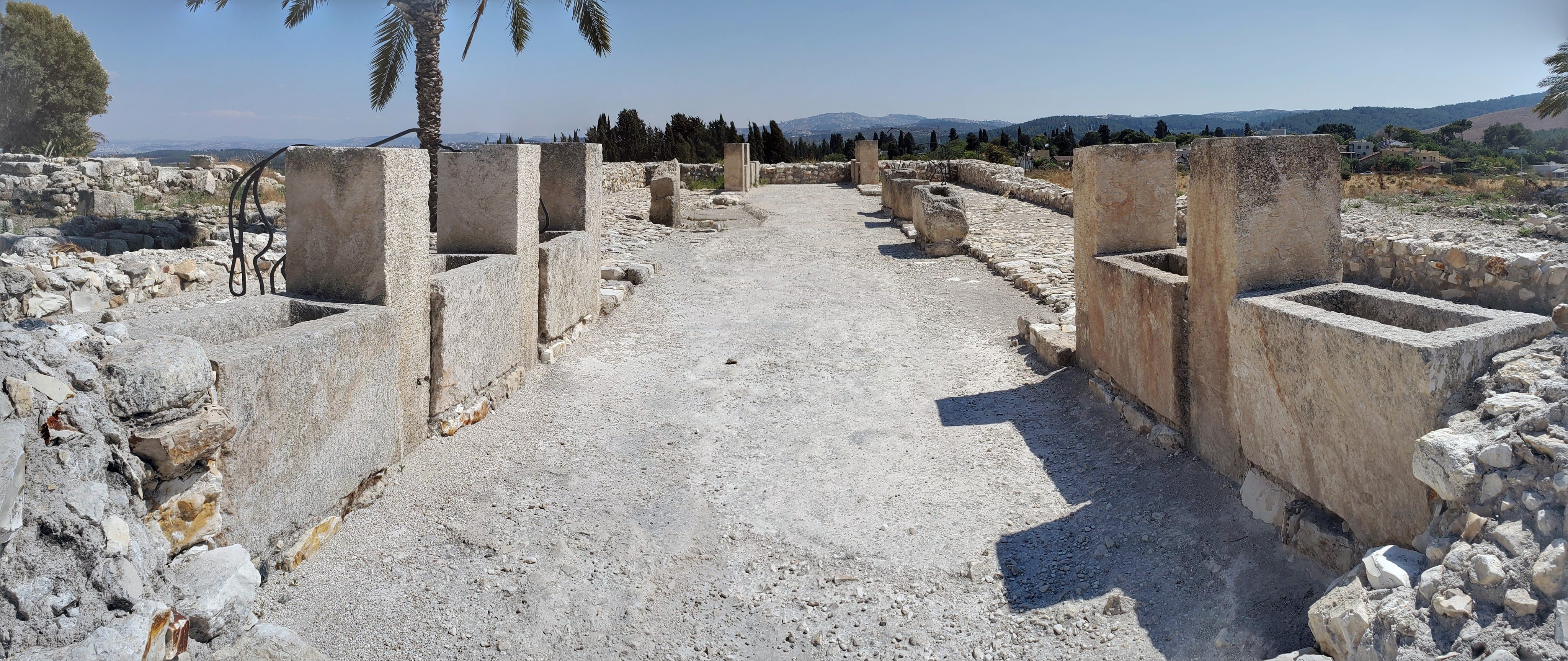
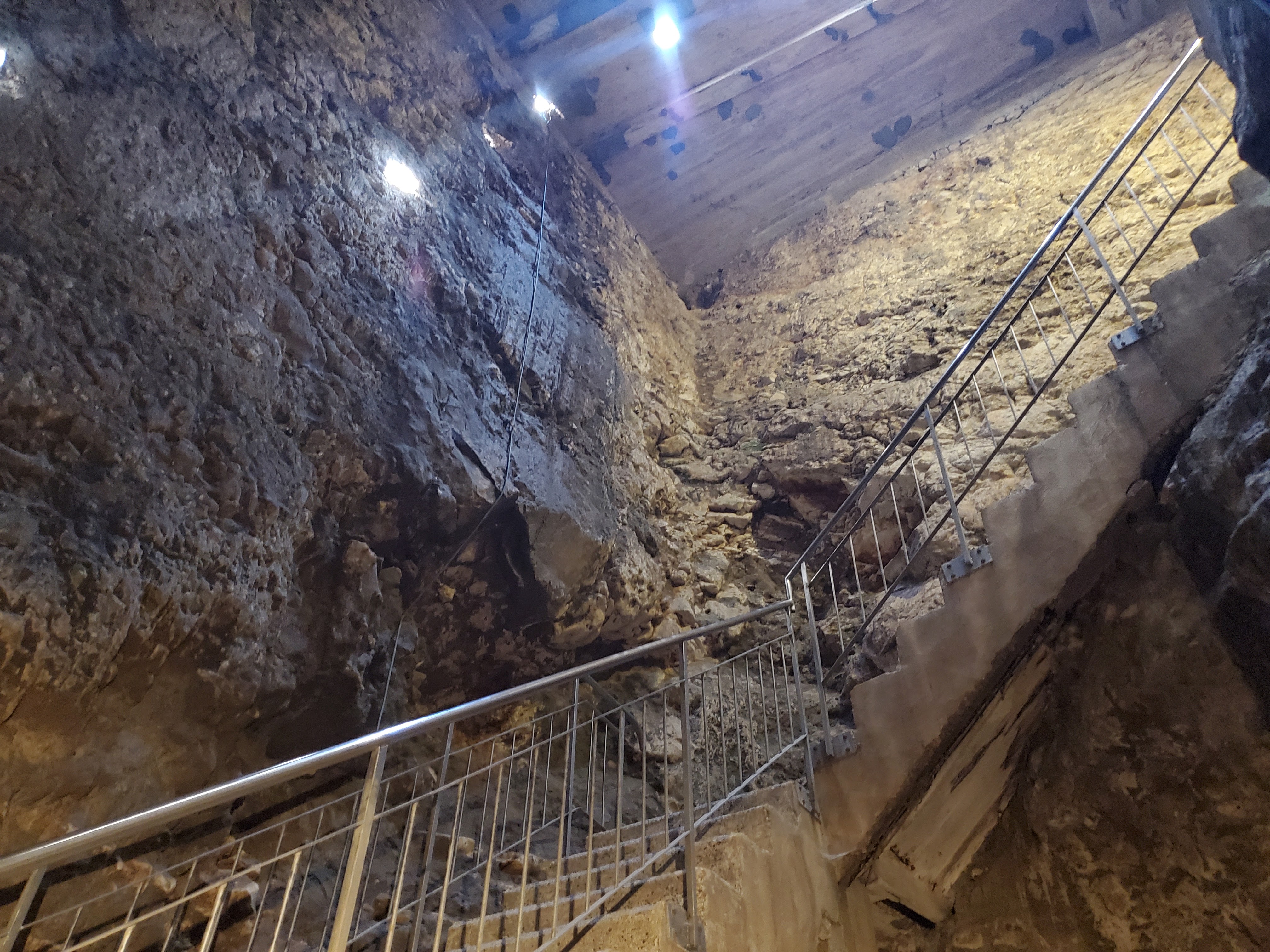
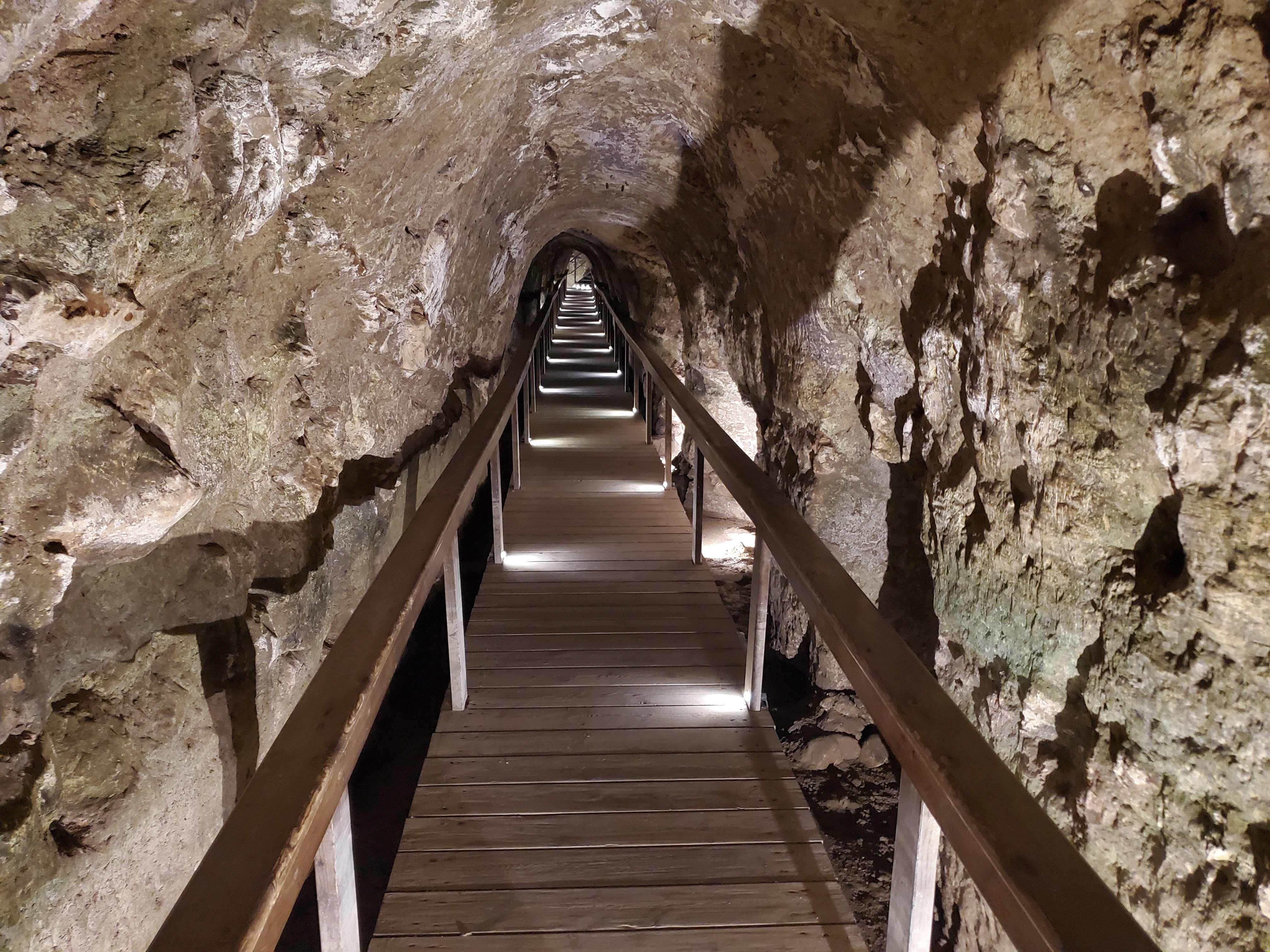
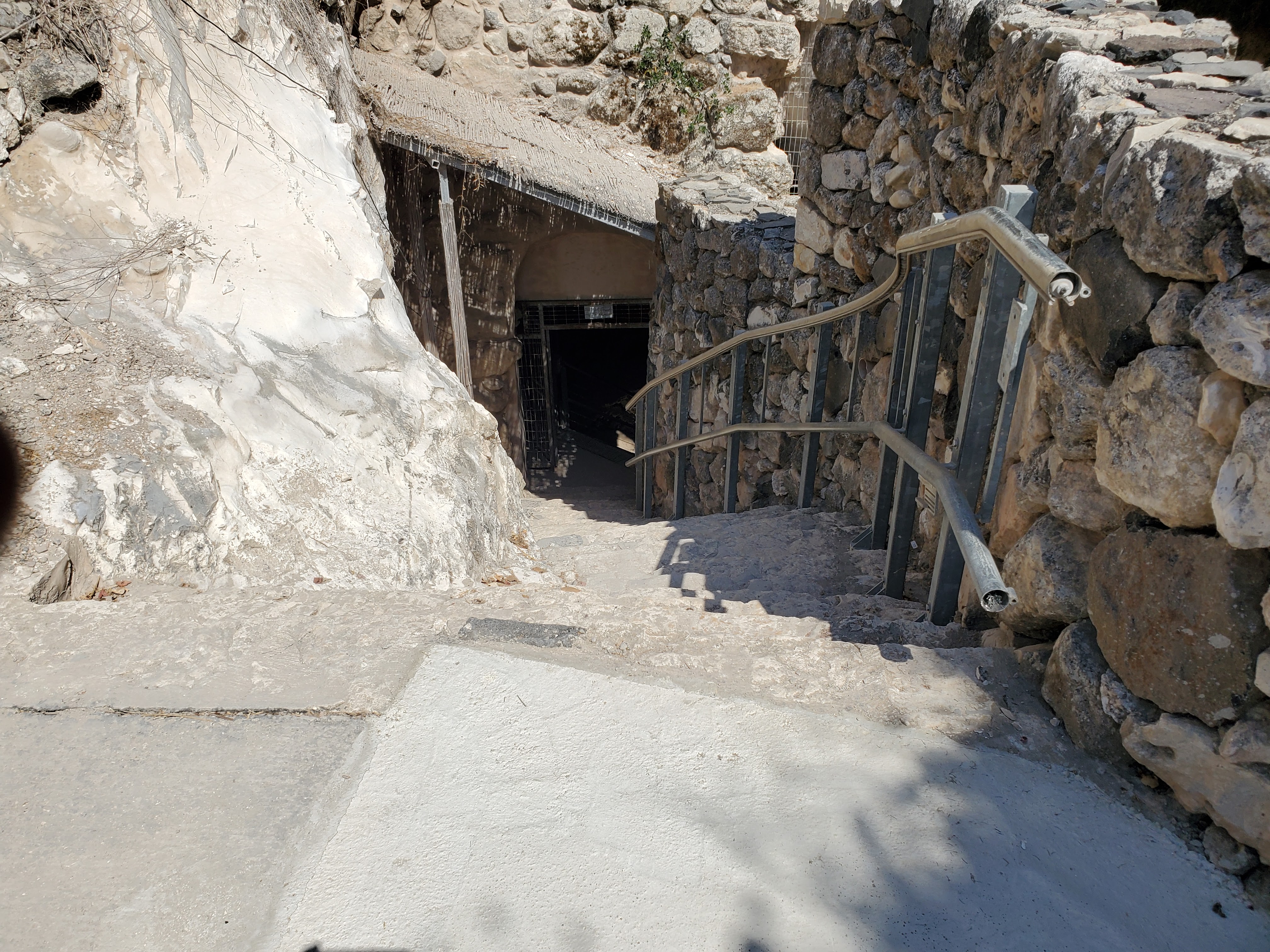
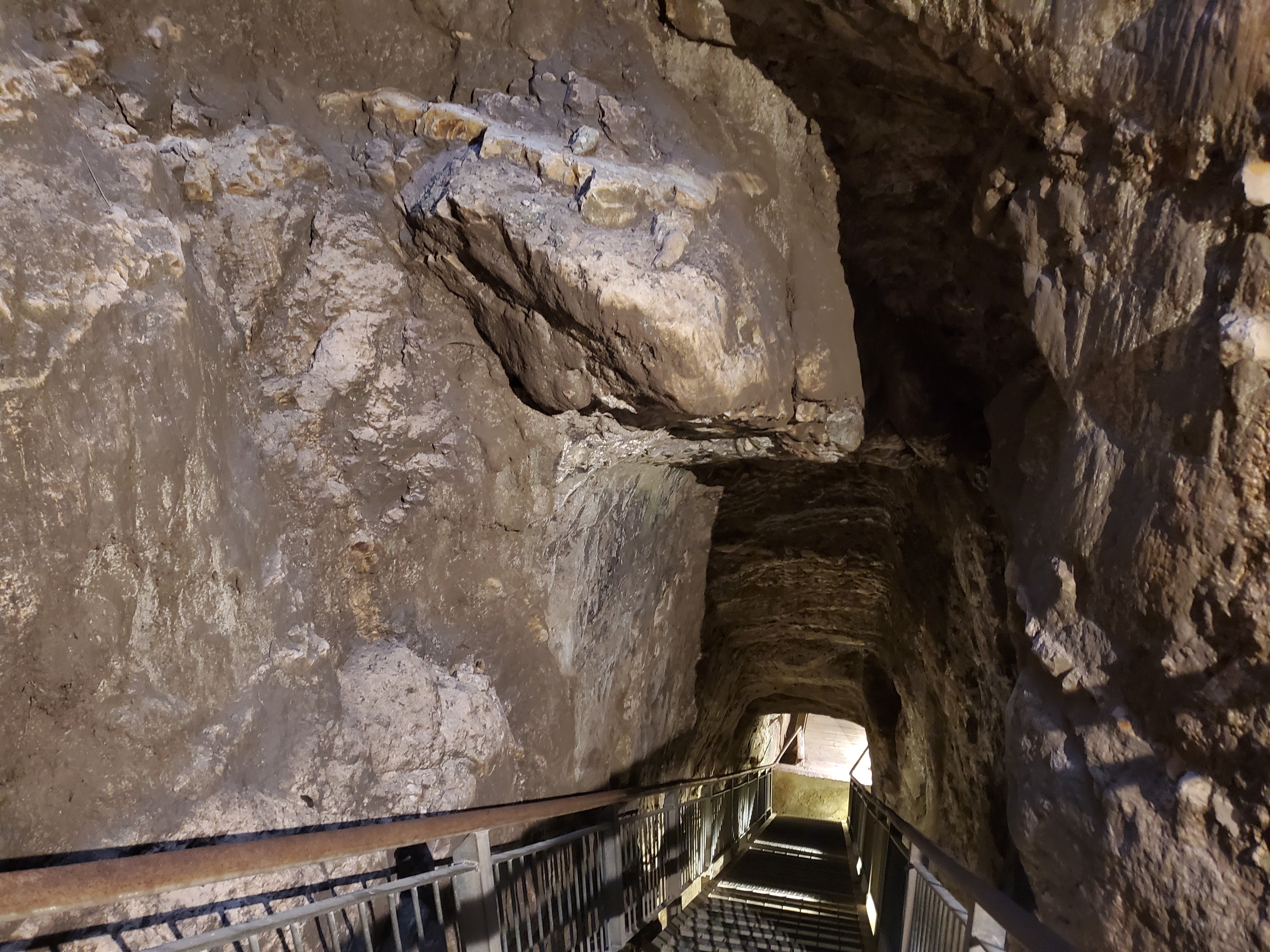
Following Solomon’s time, Megiddo went into a brief period of disrepair before it was expanded and strengthened by Ahab, King of Israel. Most date the construction of the massive stables to Ahab’s reign, as well as the intricate water system, designed to bring water in from outside the massive city walls, making Megiddo almost impervious to siege. The water supply, together with large granary silos inside the fortress could enable it to outlast most sieges.

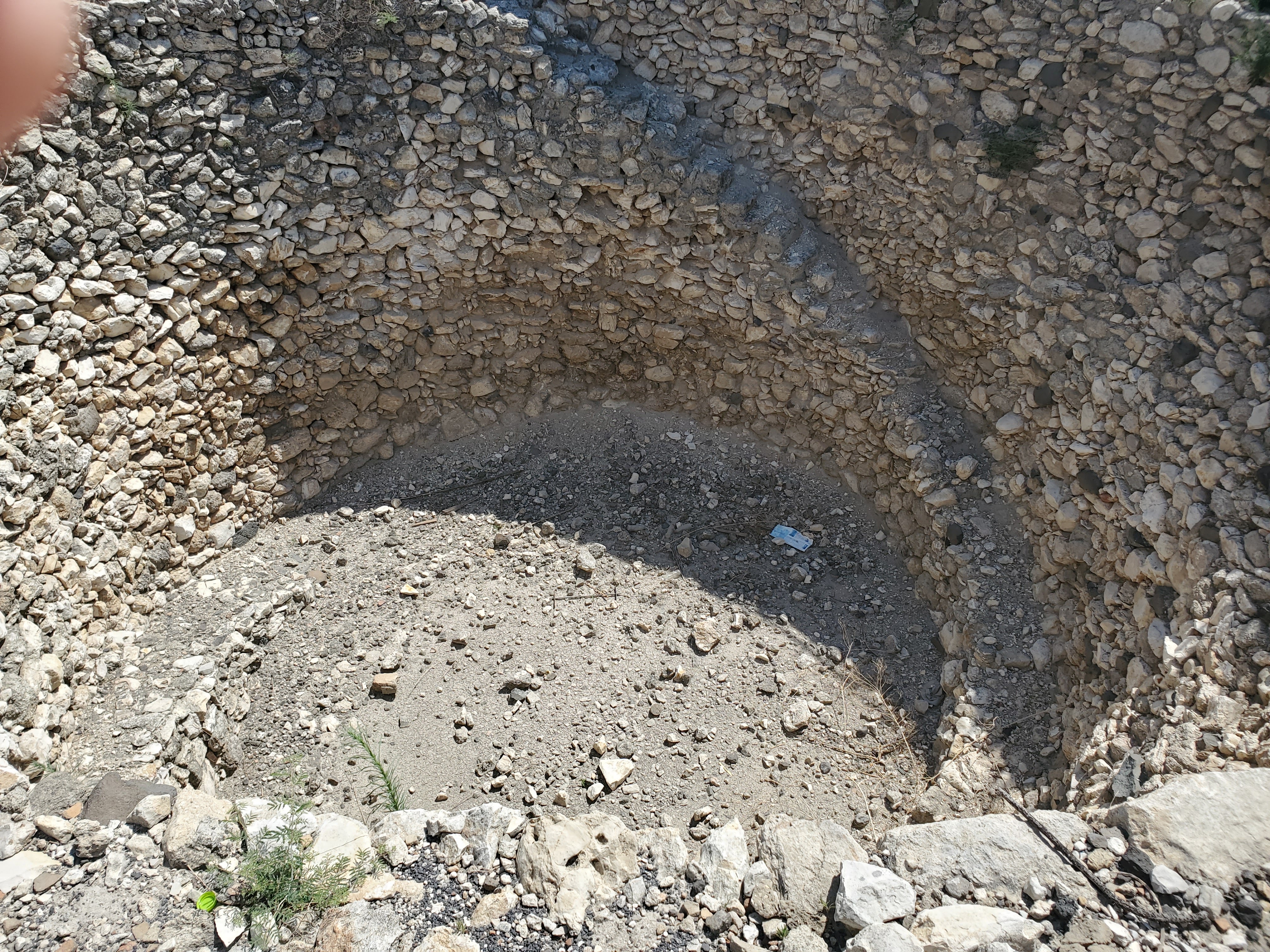
Granary Silo

King Ahaziah of Judah, was wounded in Jezreel, when Jehu assassinated King Jehoram of Israel and fled to Megiddo where he died. Later, King Josiah of Judah was killed at Megiddo in the battle against the Egyptian army led by Neco, Pharoah of Egypt. This led Judah into becoming a vassal state of Egypt. Shortly, thereafter, in 586, when Judah was conquered by the Babylonians, Megiddo was abandoned.

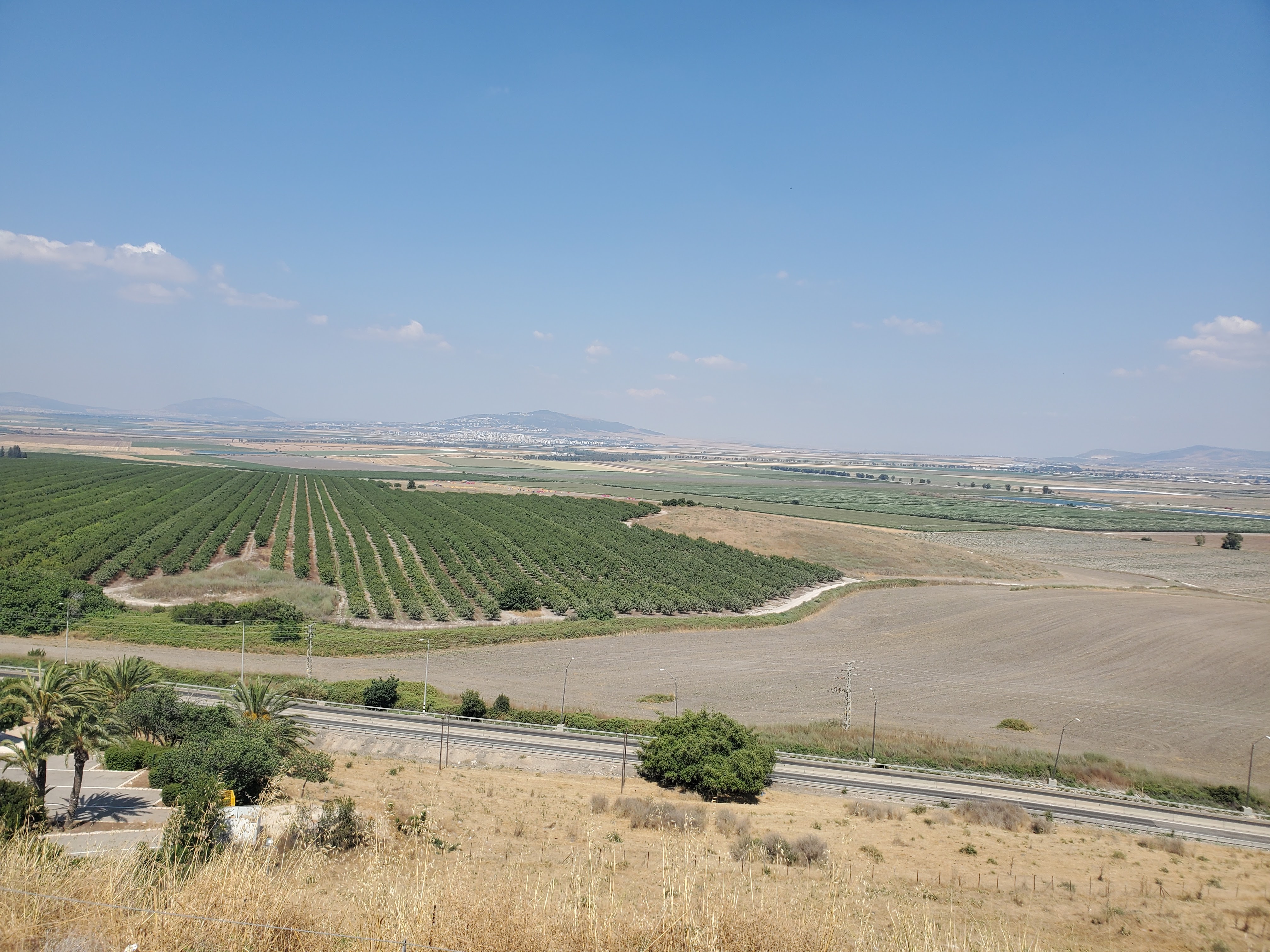
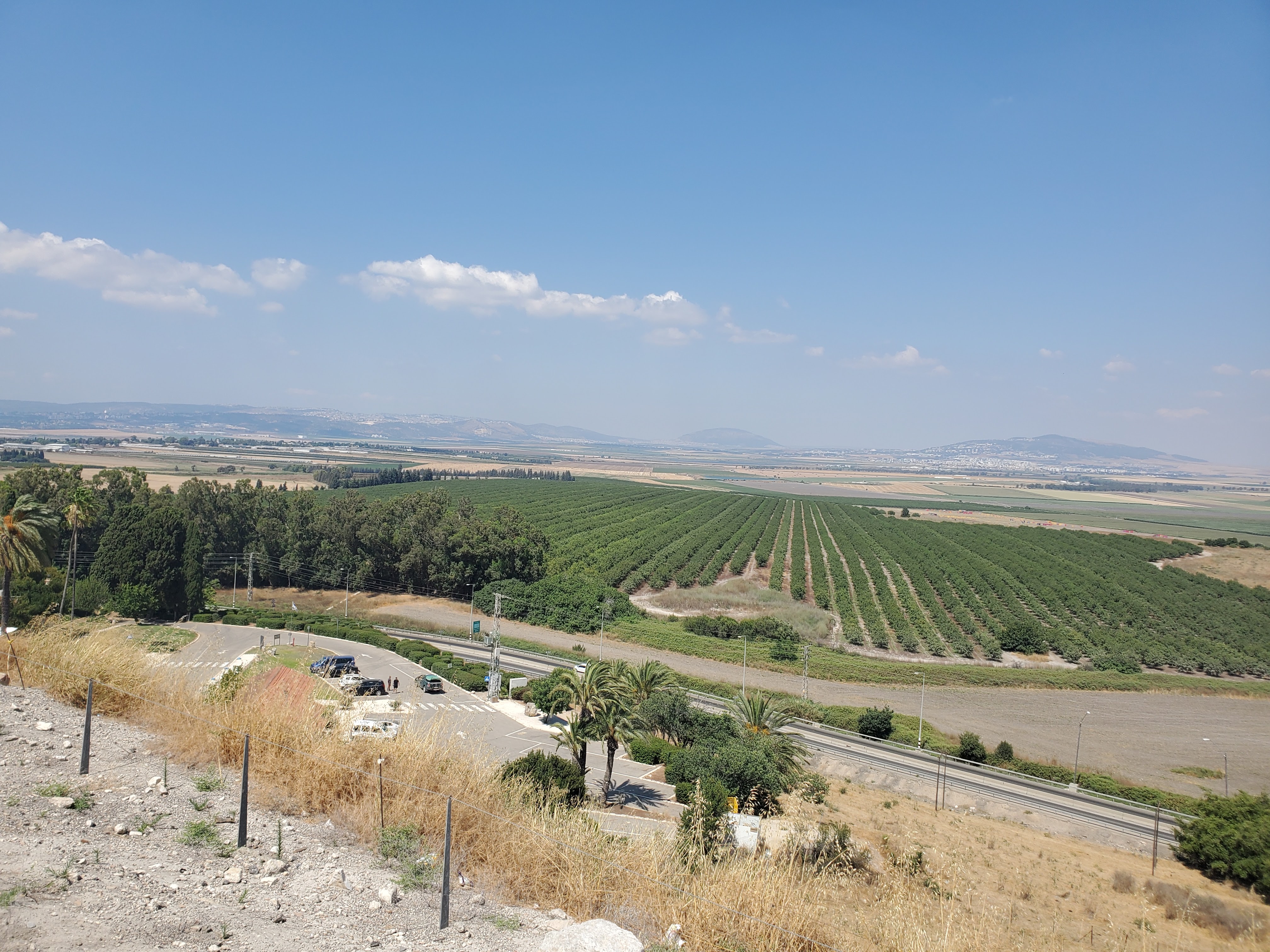
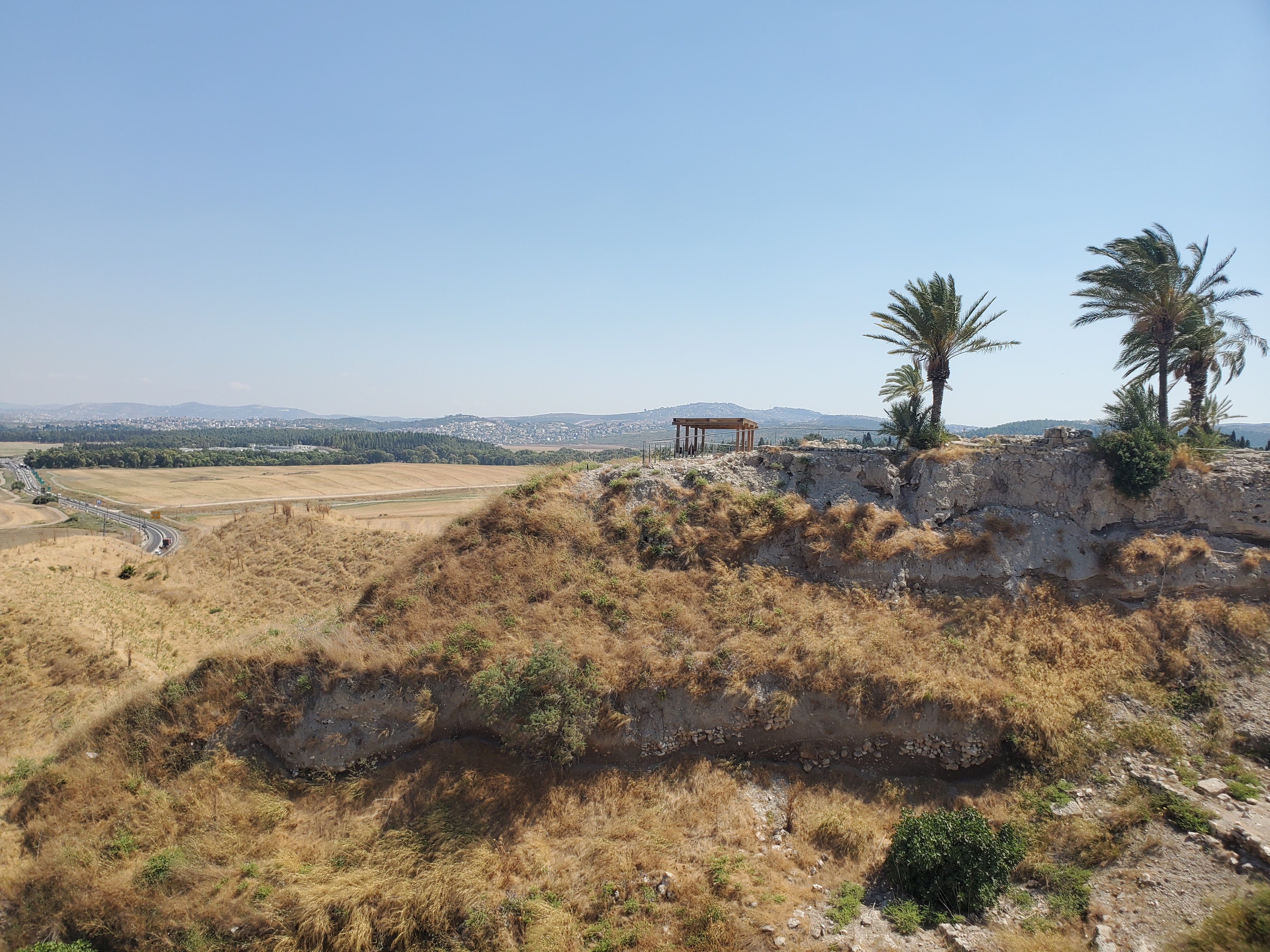
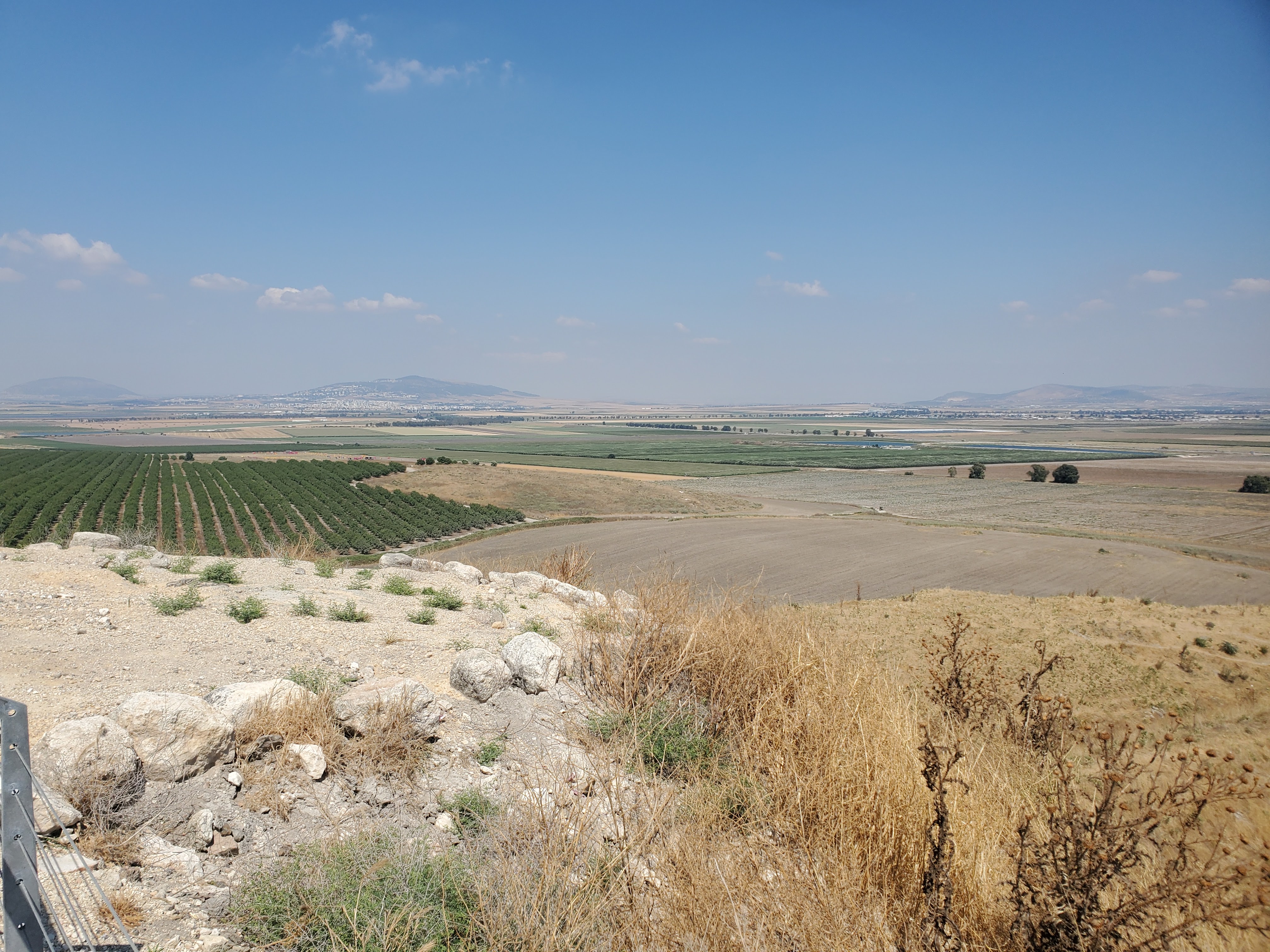
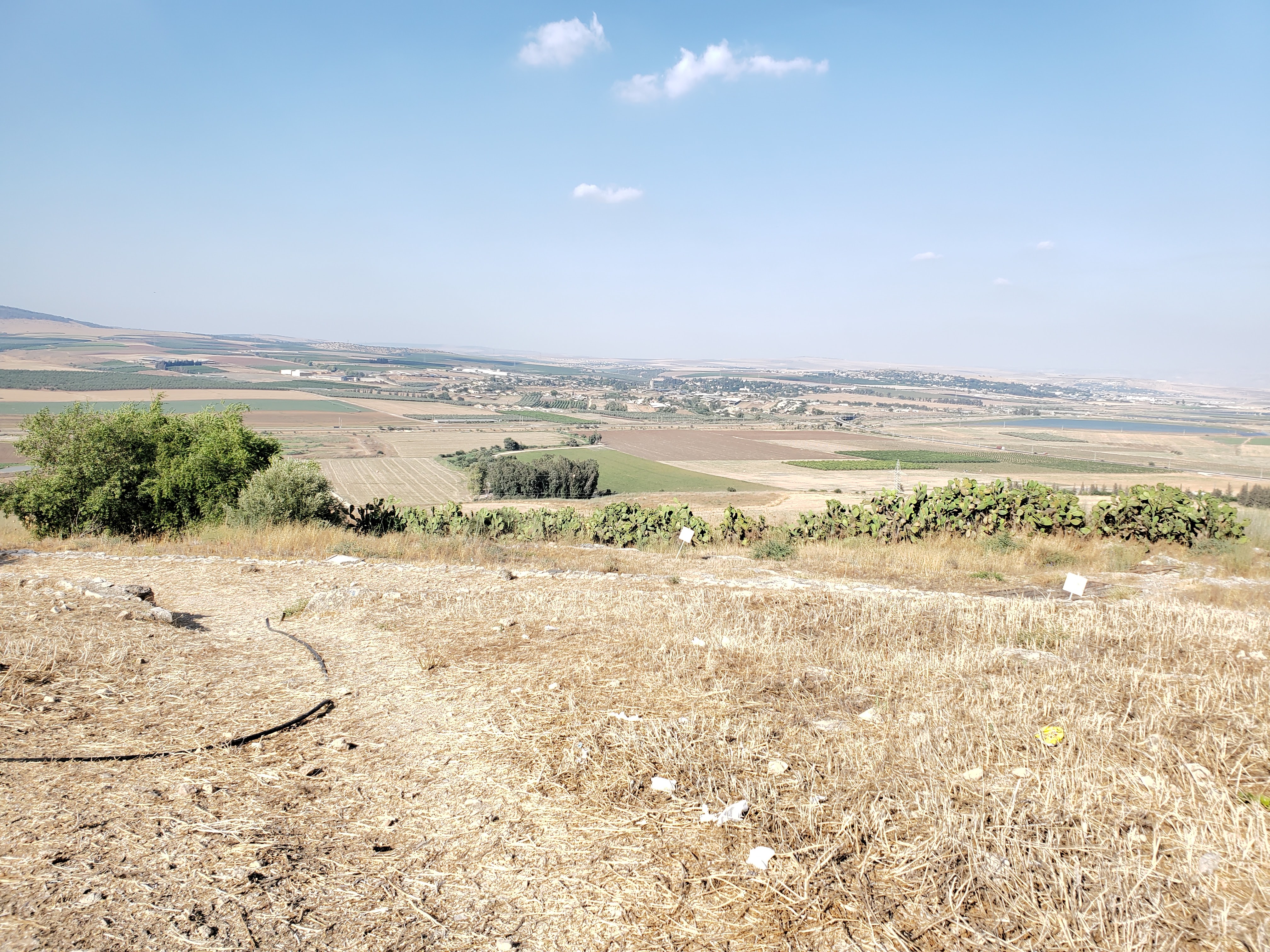
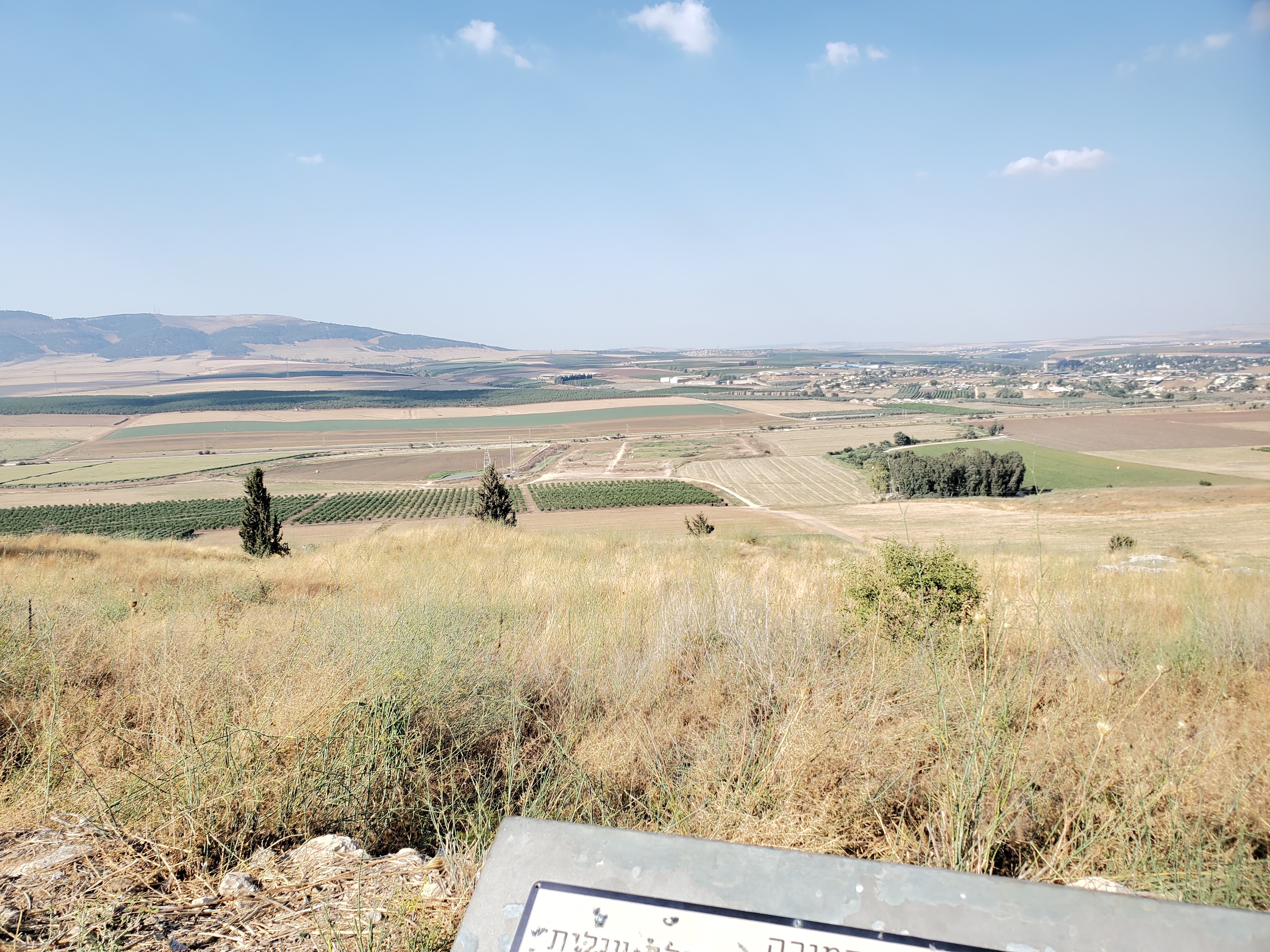
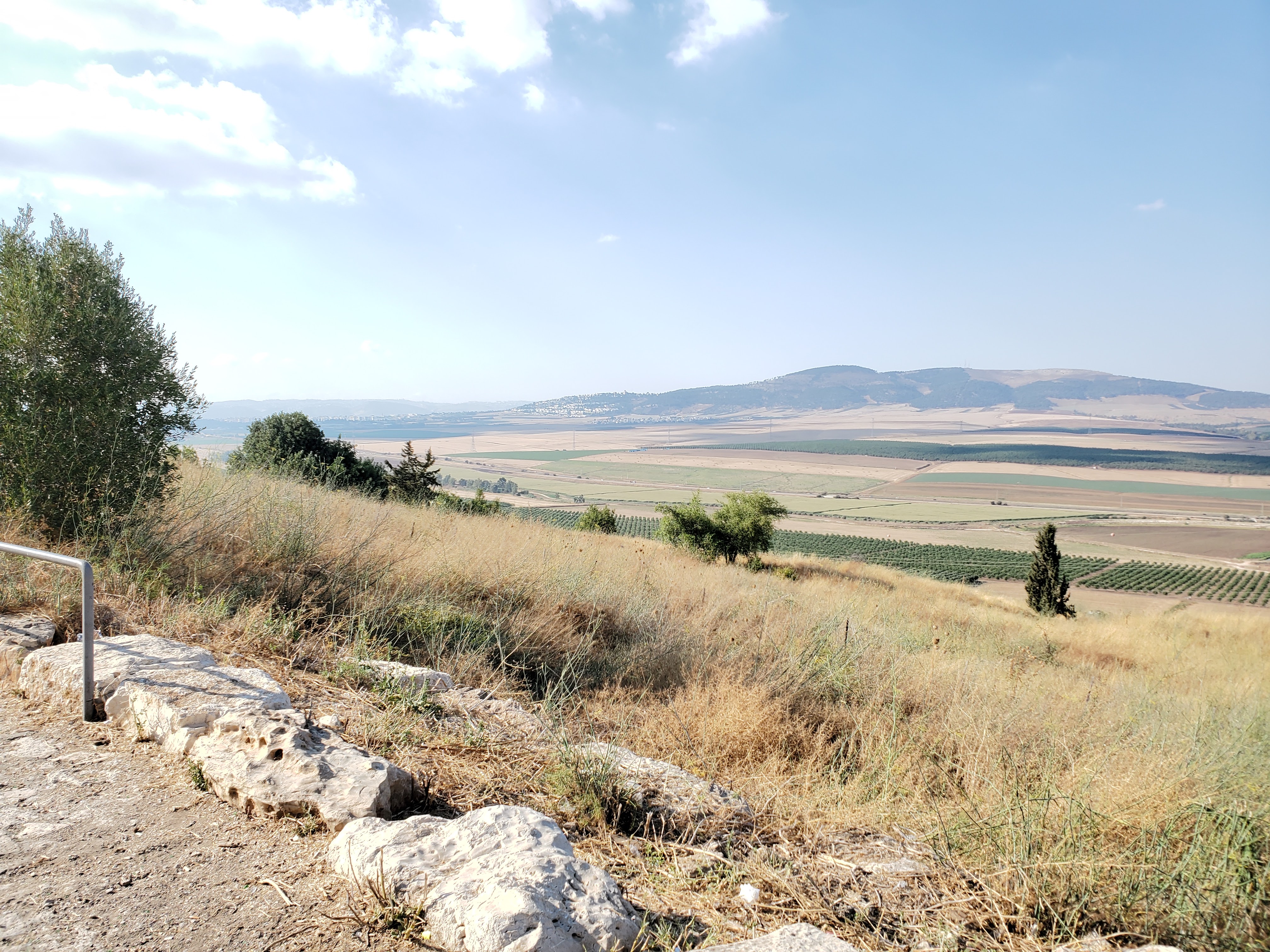
For centuries, Megiddo, held what seemed like an impregnable position at the junction of the Jezreel Valley and the Wadi Ara, but political forces shifted, technology changed, and it became obsolete. It still offers commanding views of the valley below.

The view from Megiddo remains impressive, high above the plain below. Imagining the work required to build and rebuild and rebuild this massive edifice generation after generation after generation staggers the imagination. While the political map changed, Megiddo remained a constant for centuries, until it too became obsolete.

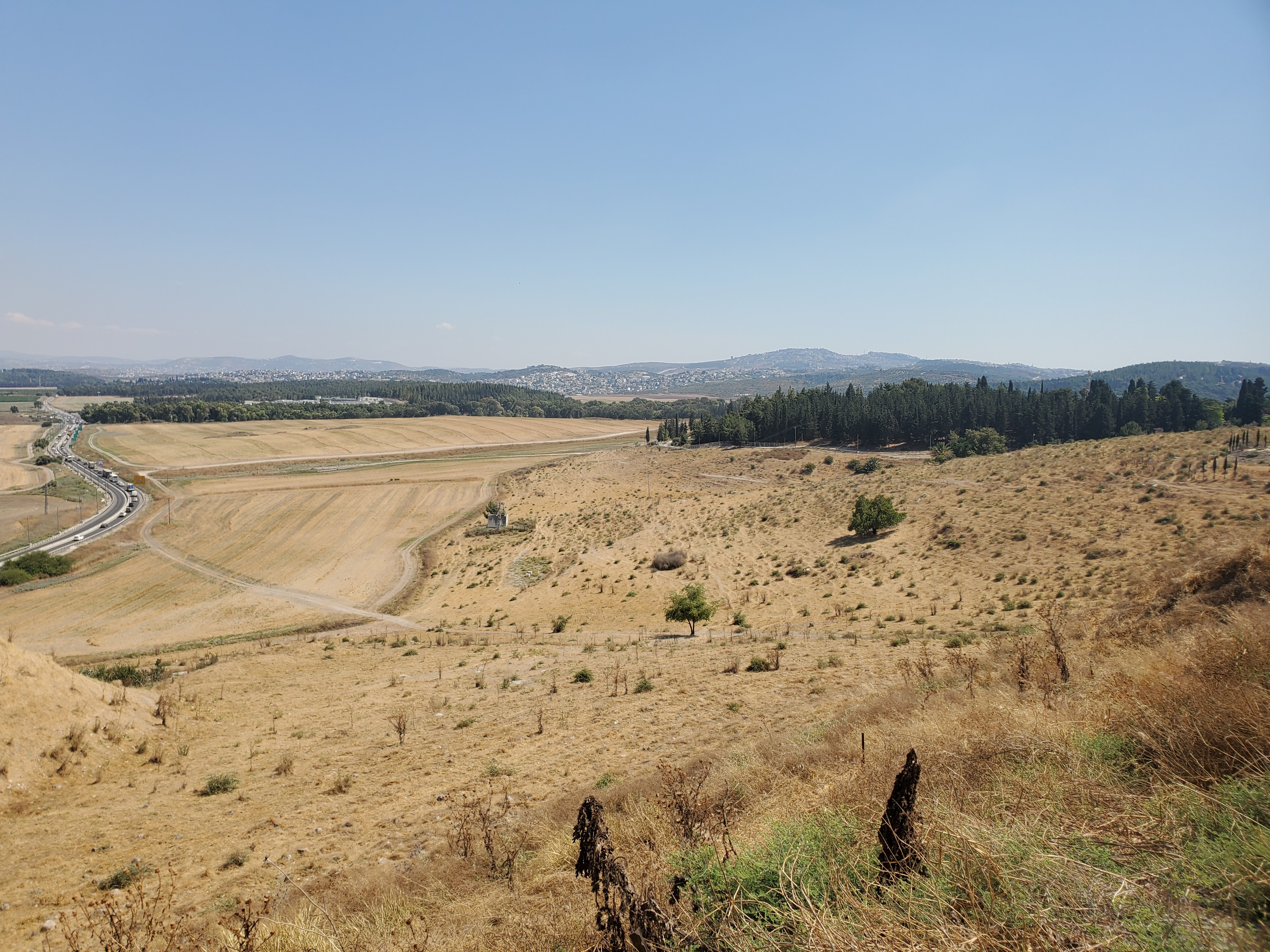
While Megiddo reached its greatest splendor during the reign of the Omride dynasty in Israel, particularly during the reign of Ahab, that isn’t the only Omride site in the Jezreel valley. Tel Jezreel or Tel Yizre’el contains what remains of the city of Jezreel, for a time, the capital and primary fortress of the northern kingdom. It was in Jezreel, that the Omride dynasty ended with the assassination of Jehoram by Jehu. And it was in Jezre’el that Jezebel came to her ignominious end after being thrown from the city wall and having her remains torn by dogs. Jezreel also is the location where Jezebel had Naboth executed so that Ahab could seize his vineyard. The trip to Jezreel was a relatively easy bus ride, albeit one with a long wait, followed by a lengthy walk from the highway to the tel itself.

Not much remains of this ancient capital, but it is still surrounded by rich agricultural lands.

The Omrides reigned for almost 50 tumultuous years in the Israel. They created magnificent structures of their own, building storehouses and cities, and an impressive administrative structure. Today, they are largely forgotten, except for their tales of evil and treachery. They were succeeded by the House of Jehu for almost 100 years and little remains of their efforts as well.

The name of the Jewish state comes from the northern kingdom, probably half of the Jewish people are descended from members of this kingdom (most likely headed south following the Assyrian conquest). A significant portion of the modern state occupies the land once ruled by the kings of Israel. Megiddo and Jezreel serve as reminders that fame and power are transitory. Eventually one technology makes another obsolete, a site once central becomes secondary, one nation replaces another. For a brief afternoon, I spent some time with the ghosts of the House of Omri, remembering glories now forgotten.

Montfort

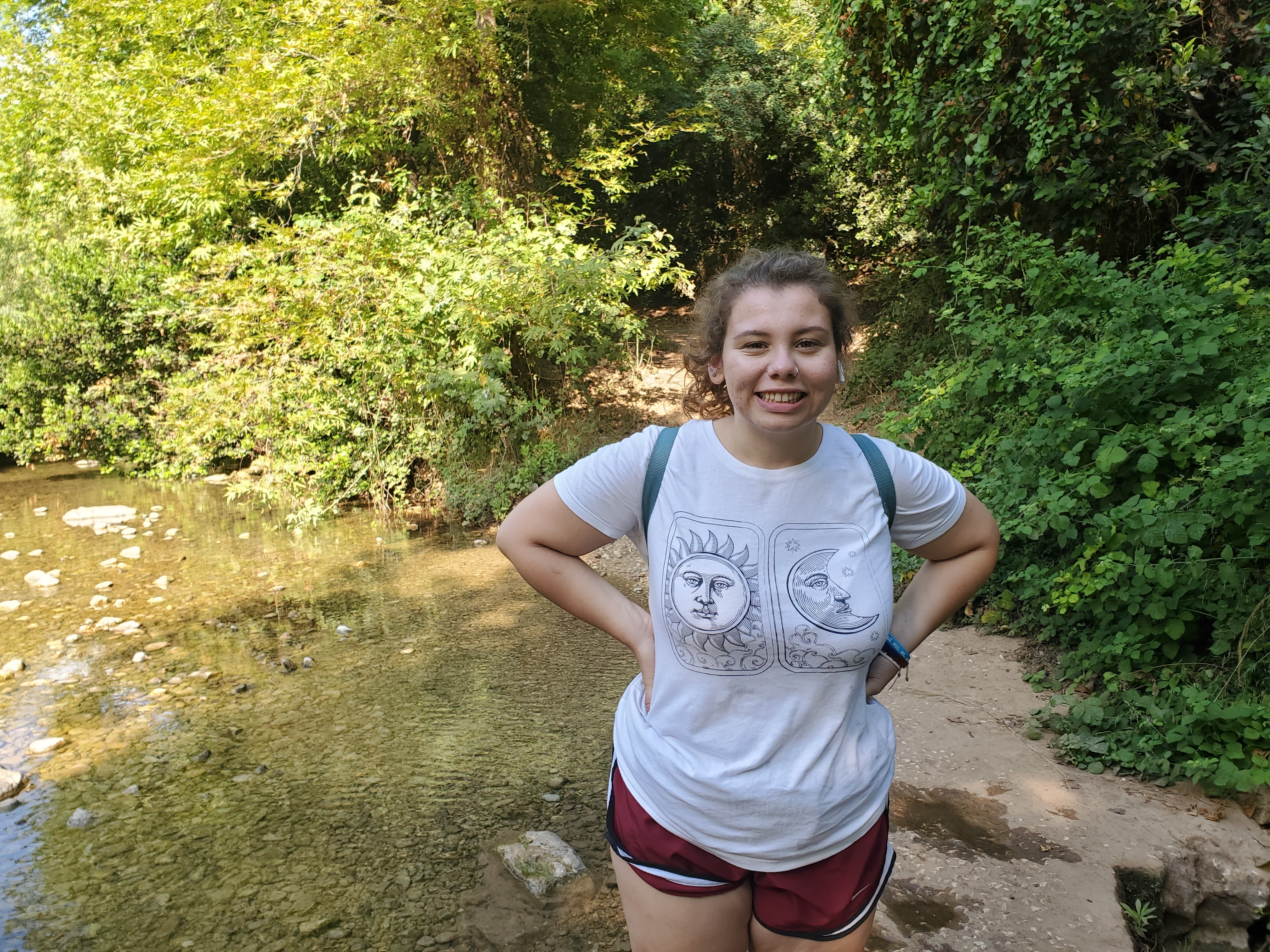
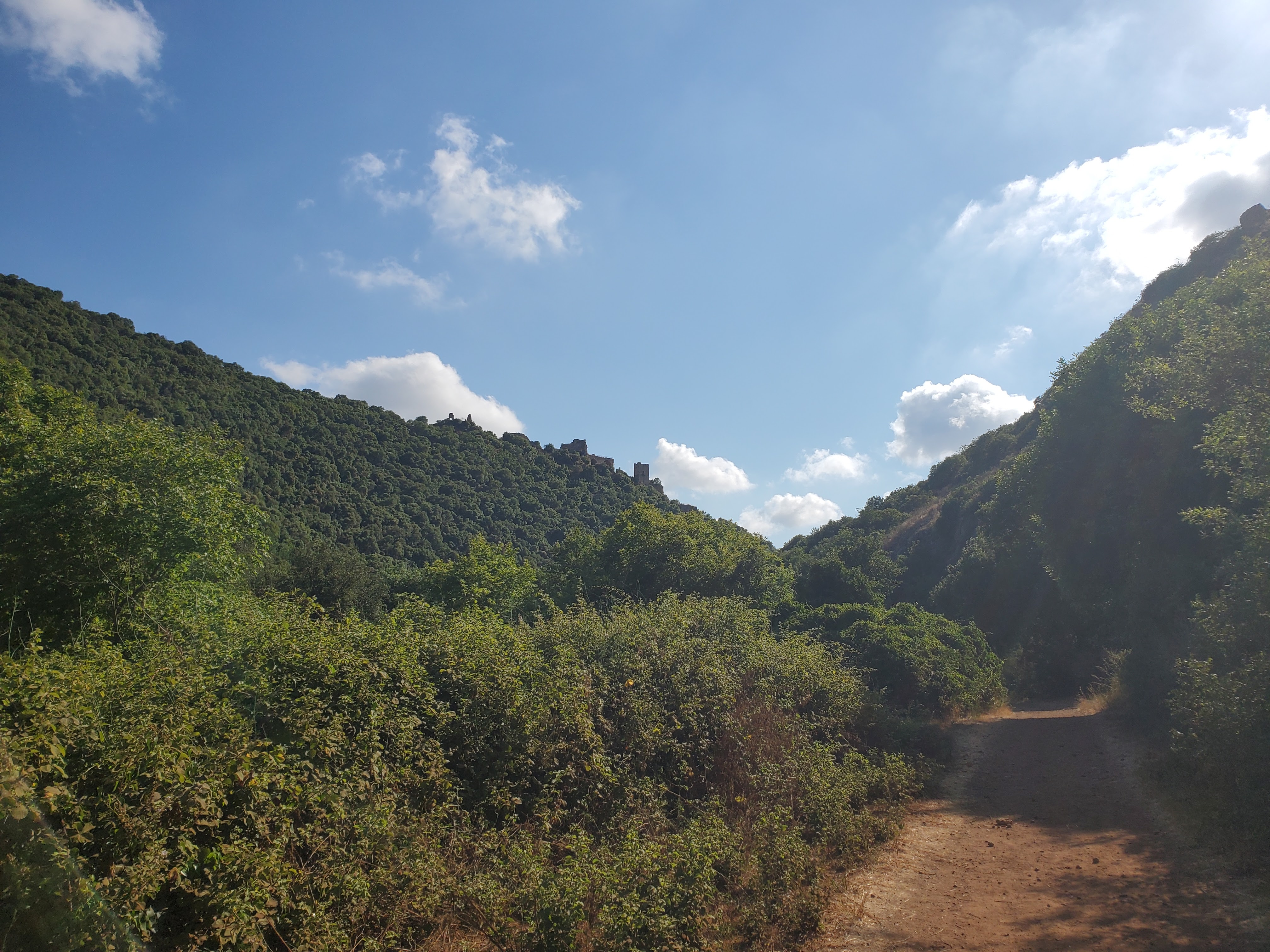
Montfort is a Crusader fortress in the Upper Galilee, only about 8 miles from Nahariya, making it theoretically easily accessible. It is in the midst of the Nahal Kziv , or Kziv Spring Nature Reserve, so the only way to reach it is by hiking down to the Kziv and then back up.

As a castle, Monfort is not among the most significant Crusader sites in Israel. It was the headquarters of the Teutonic Knights, who moved, essentially to the middle of nowhere, to avoid conflicts with the Templars and the Hospitallers in Akko. Construction began in 1228, it was occupied by 1229, and was destroyed by Sultan Baibars in 1271. There isn’t a very long history of occupation.

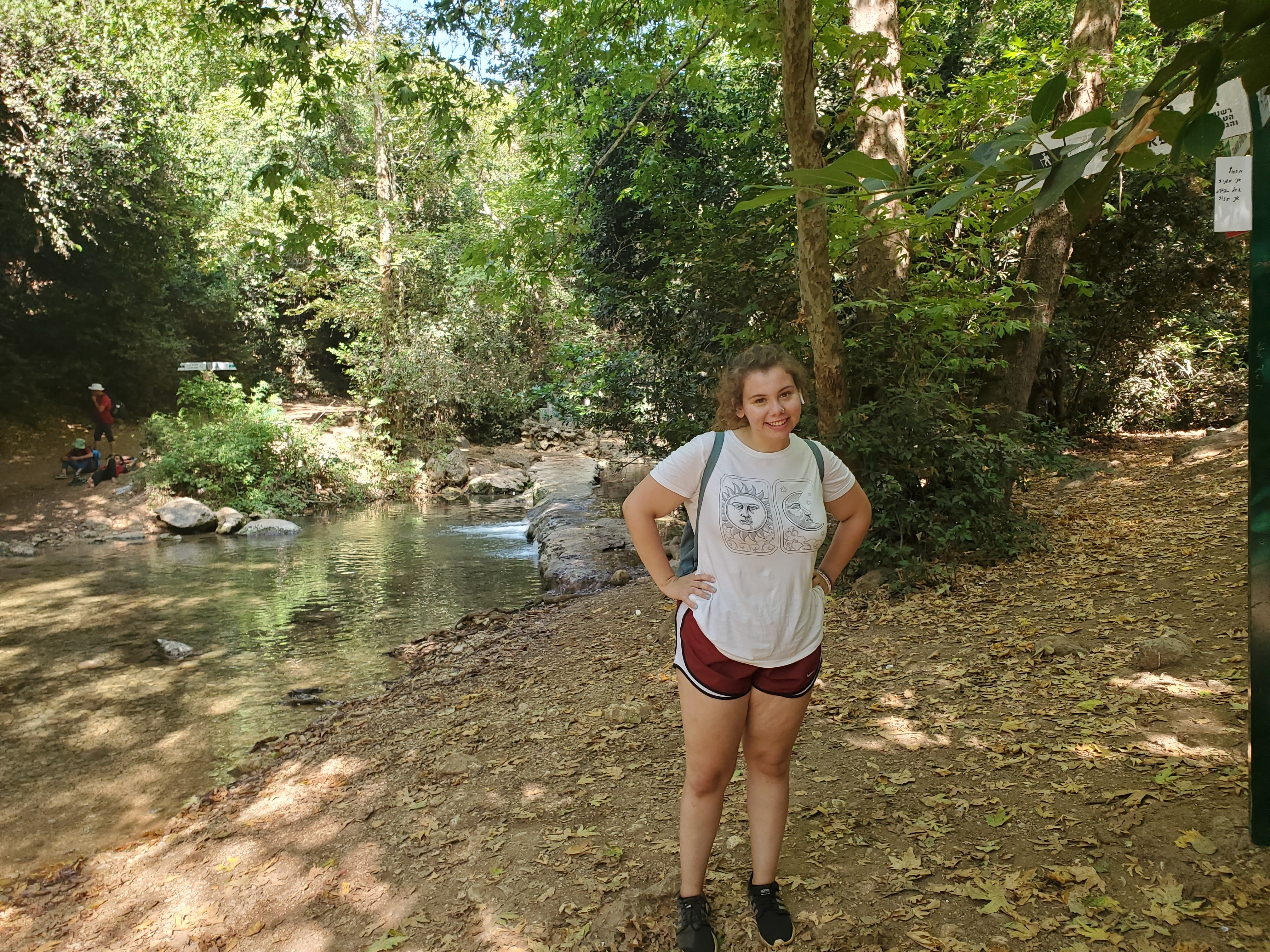
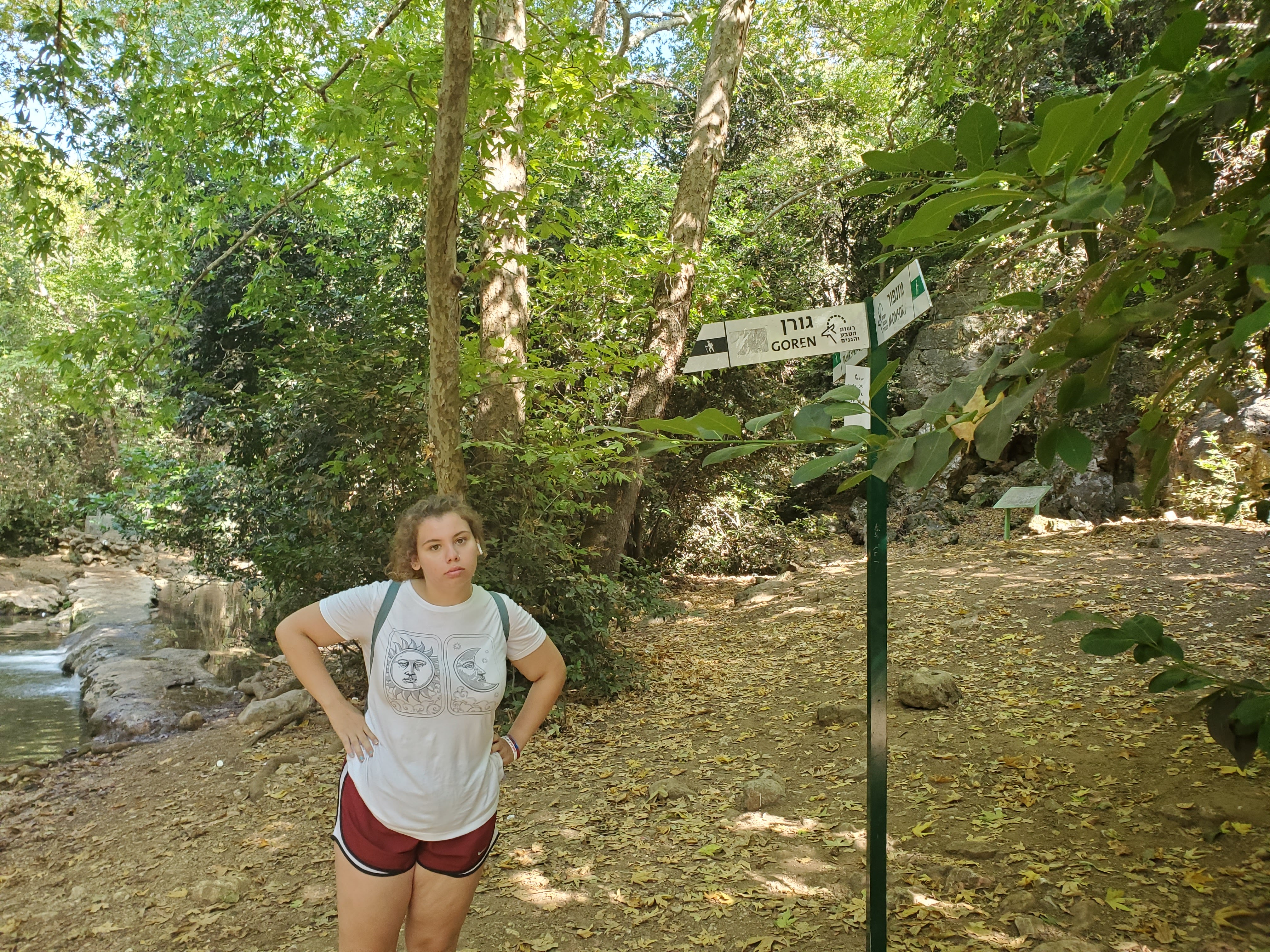
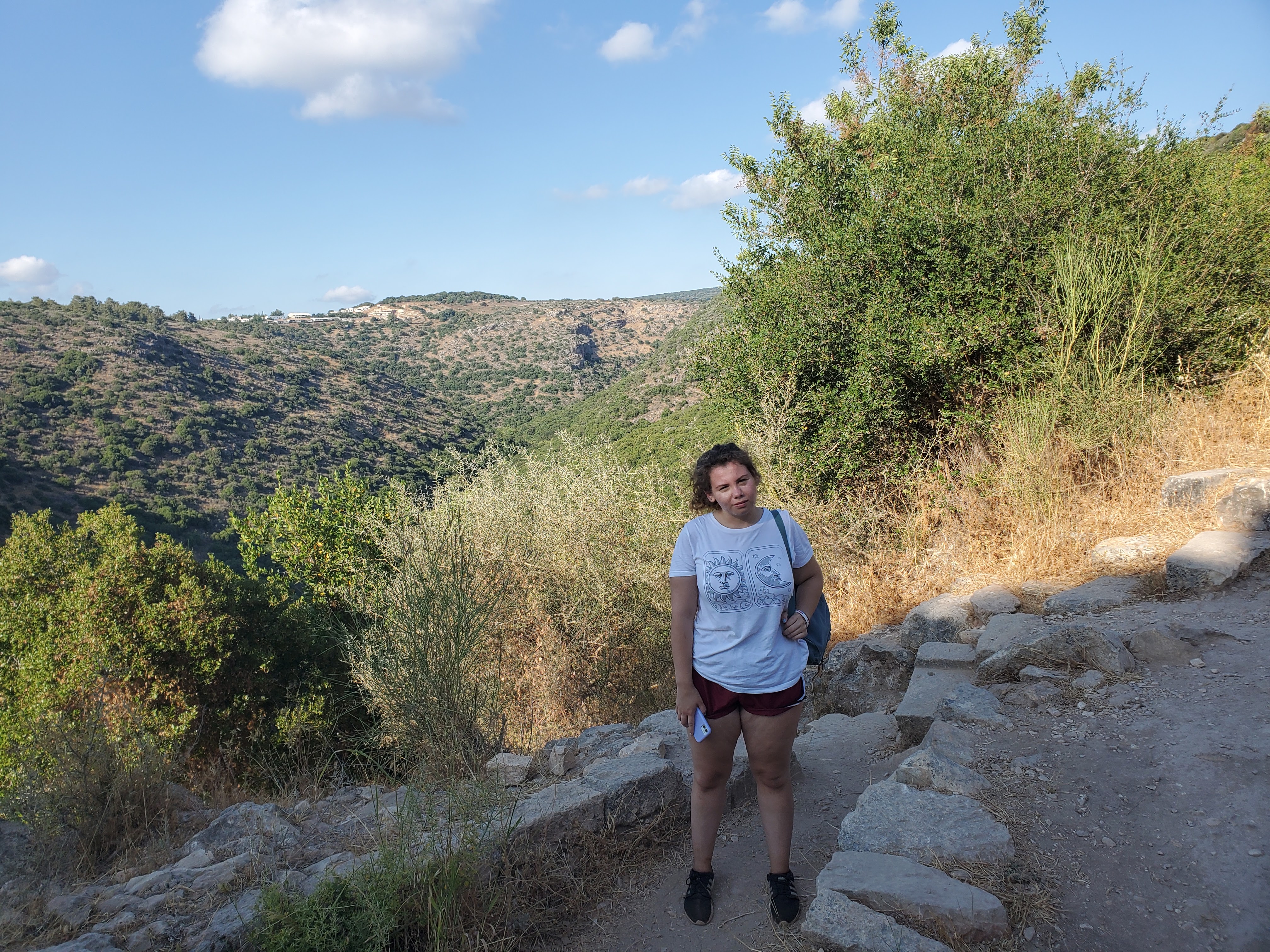
It is significant because of the hike and the magnificent panoramic view from the top. Orli and I had decided that we wanted to do a hike there because she wanted to see the castle (and wasn’t as interested in the other hiking options I suggested). We started a little later in the day than I would have liked (Someone was enjoying watching episodes of RuPaul’s Drag Race a little too much). And we (well one of us) were looking for the fewest number of buses to get us there.

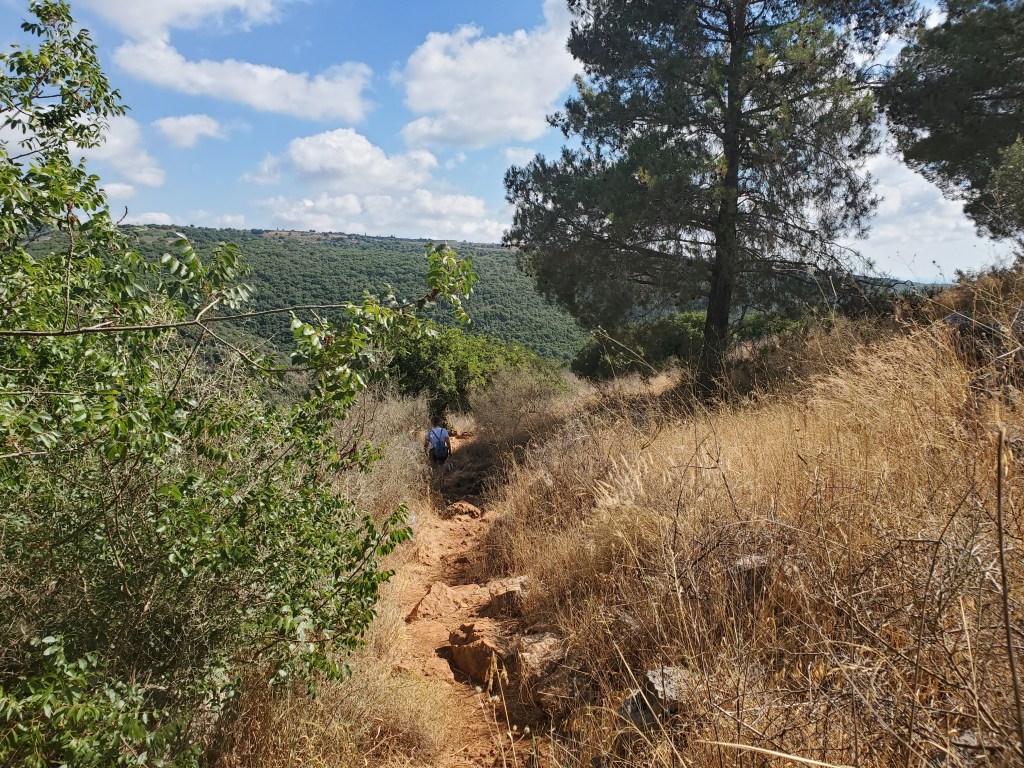
We left for our bus, a little before 3. The bus of course was running a little late due to late afternoon traffic and we made it to Moshav Goren, where we’d begin, relatively quickly. Had we taken another bus route, we might have had a more level hike, instead we headed down a relatively steep and very rocky embankment moving down toward the stream.

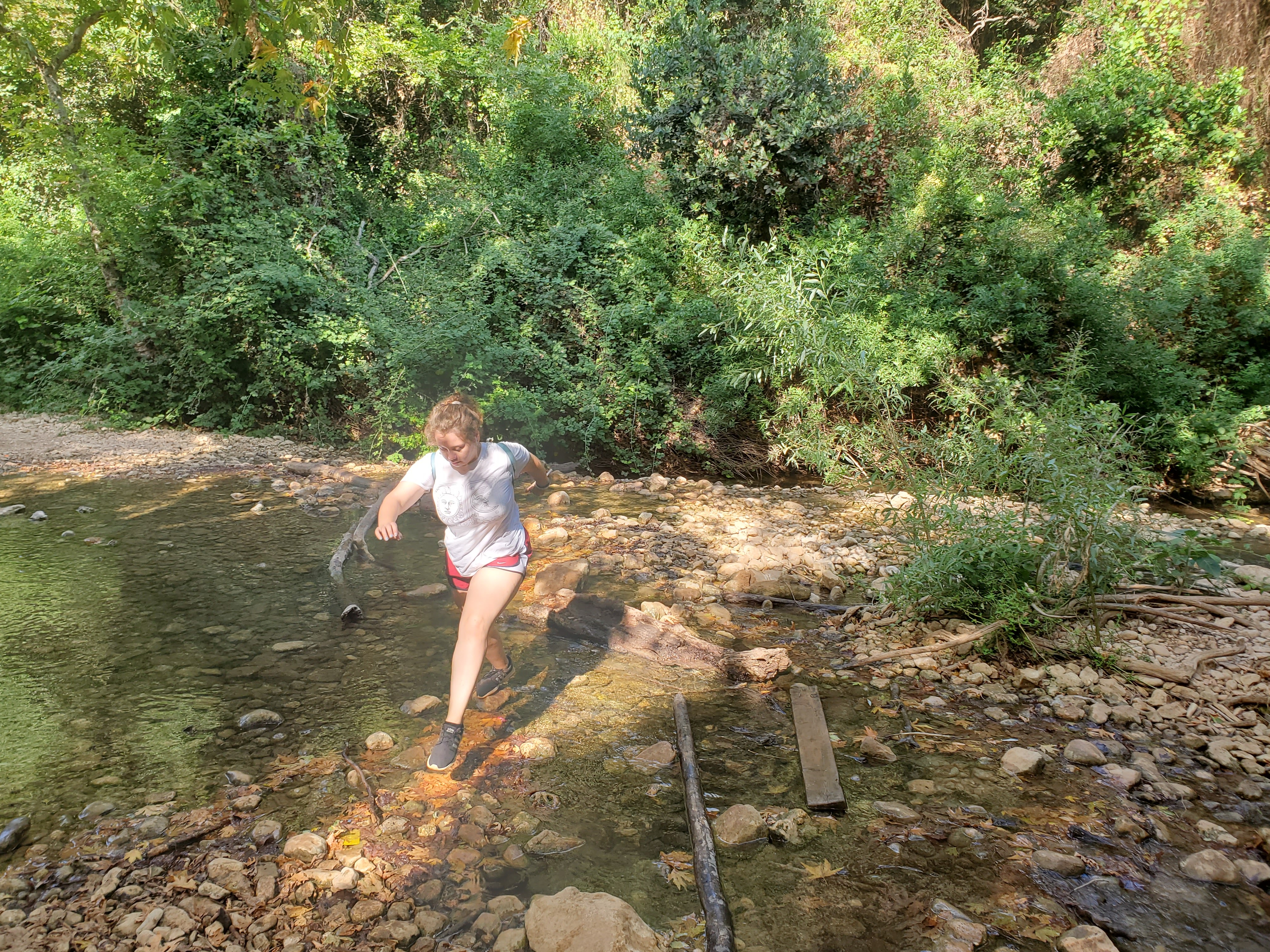
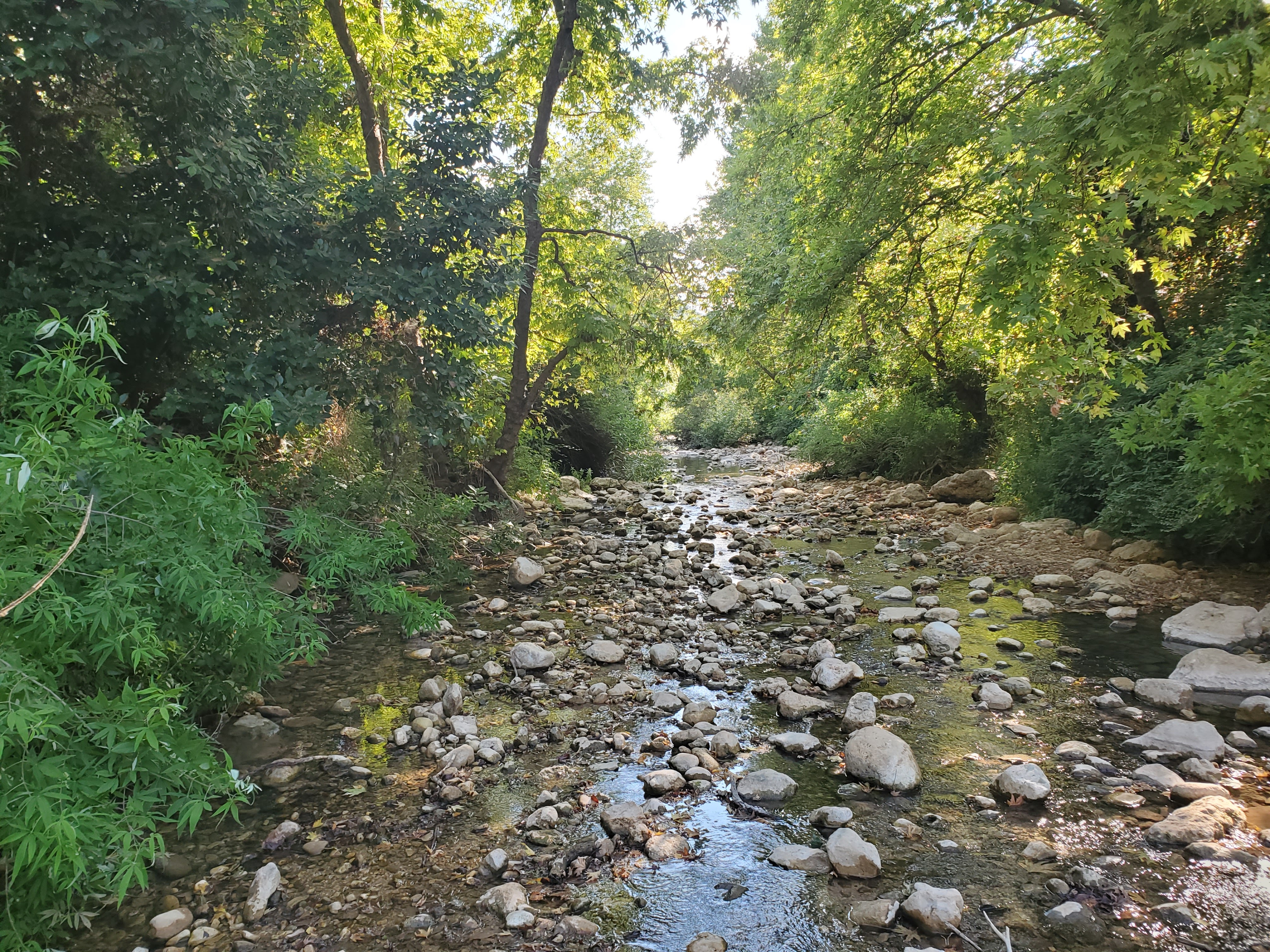
After about 30 minutes we reached the stream and enjoyed the coolness of the canopy, the sounds of birds around us, and the views of the water and flora surrounding us.

The flat part of the trail inevitably ended as we crossed to the southern side of the stream and began the hike up toward the ruins of the fortress. It was more gentle than the original descent, but it was uphill, nevertheless.

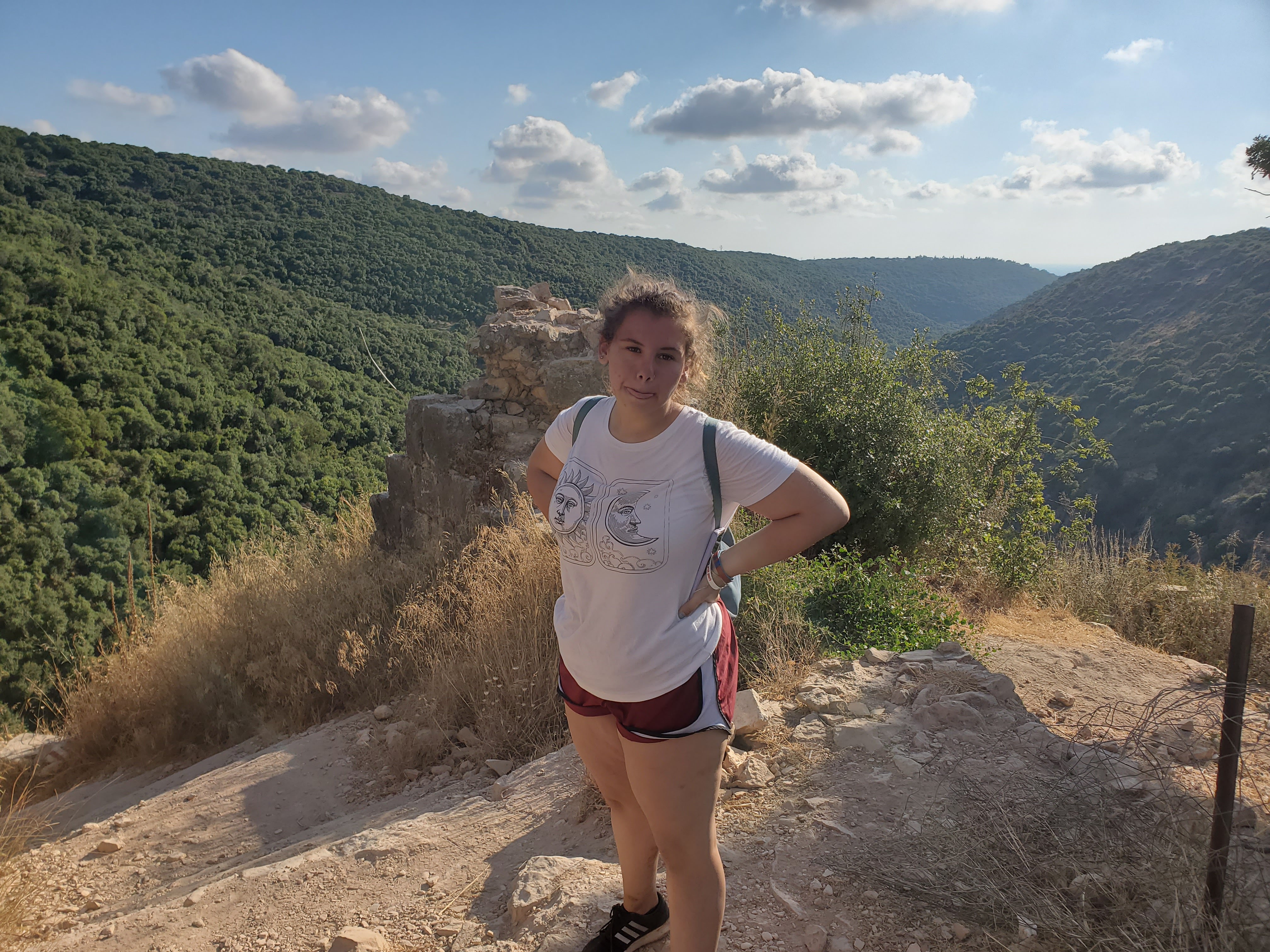
Atop the ridge.

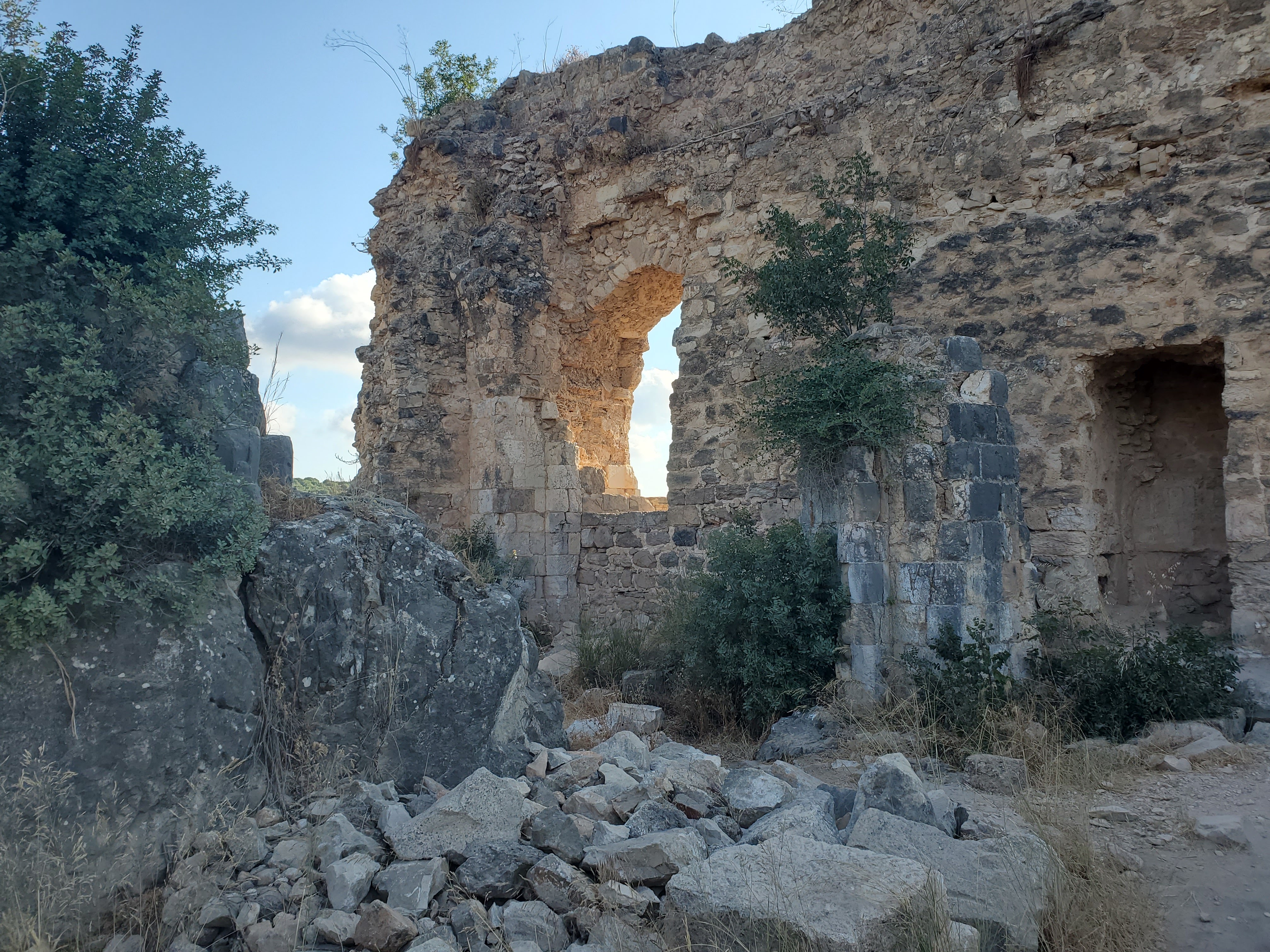
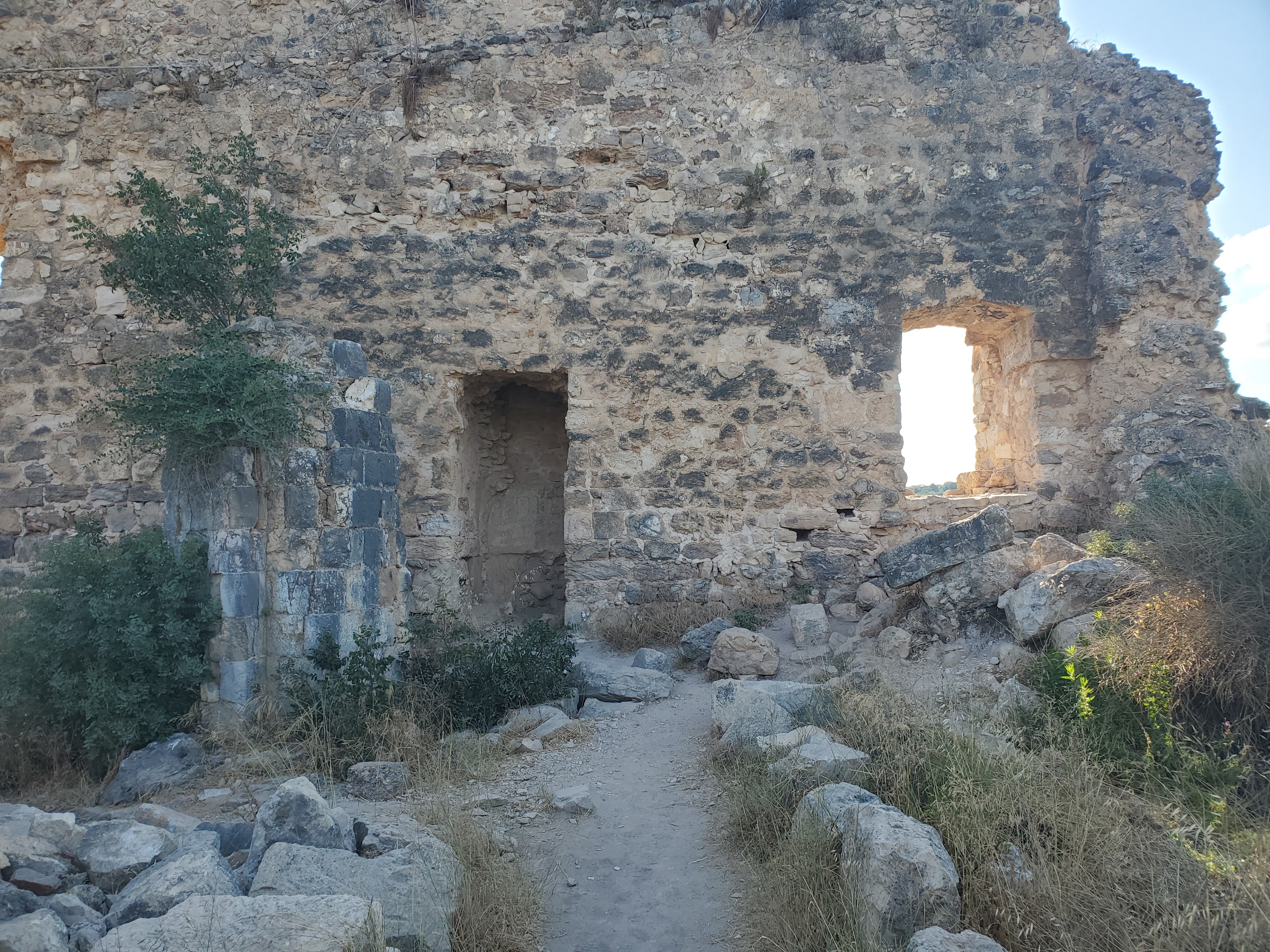
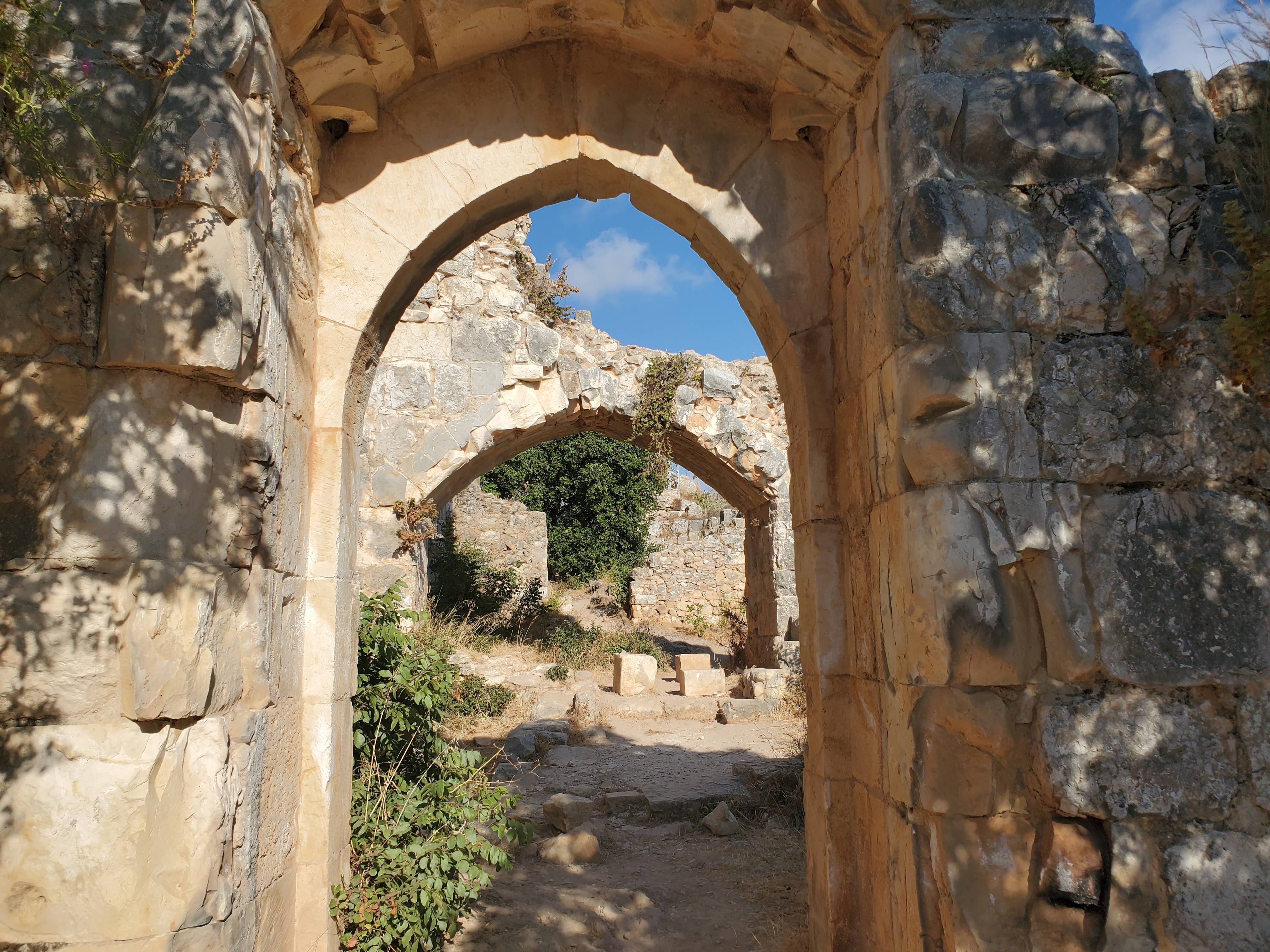
Eventually we did reach the summit and took a few minutes to explore what remained of the building.

We then began our return. Here is where we experienced a slight hiccup. We were going to try and find another way out to avoid the steep climb back and take an earlier bus. We looked over options when we were at the summit, but by the time we reached the base, we had no internet connection. Unsure of the exact route, we returned the way that we had come, up the steep and rocky path. Eventually we did reach the top.

Even pushing ourselves, we couldn’t make the bus we wanted. It was almost two hours until the next bus. I tried repeatedly, actually continuously, to get a cab, but to no avail. After almost ten miles of hiking, we sat for a long time at an empty bus stop.

The bus did come and we made it home without incident. The morals of this story are that RuPaul’s Drag Race will not speed you up, and that the shorter the bus ride, the longer the hike.

Akko

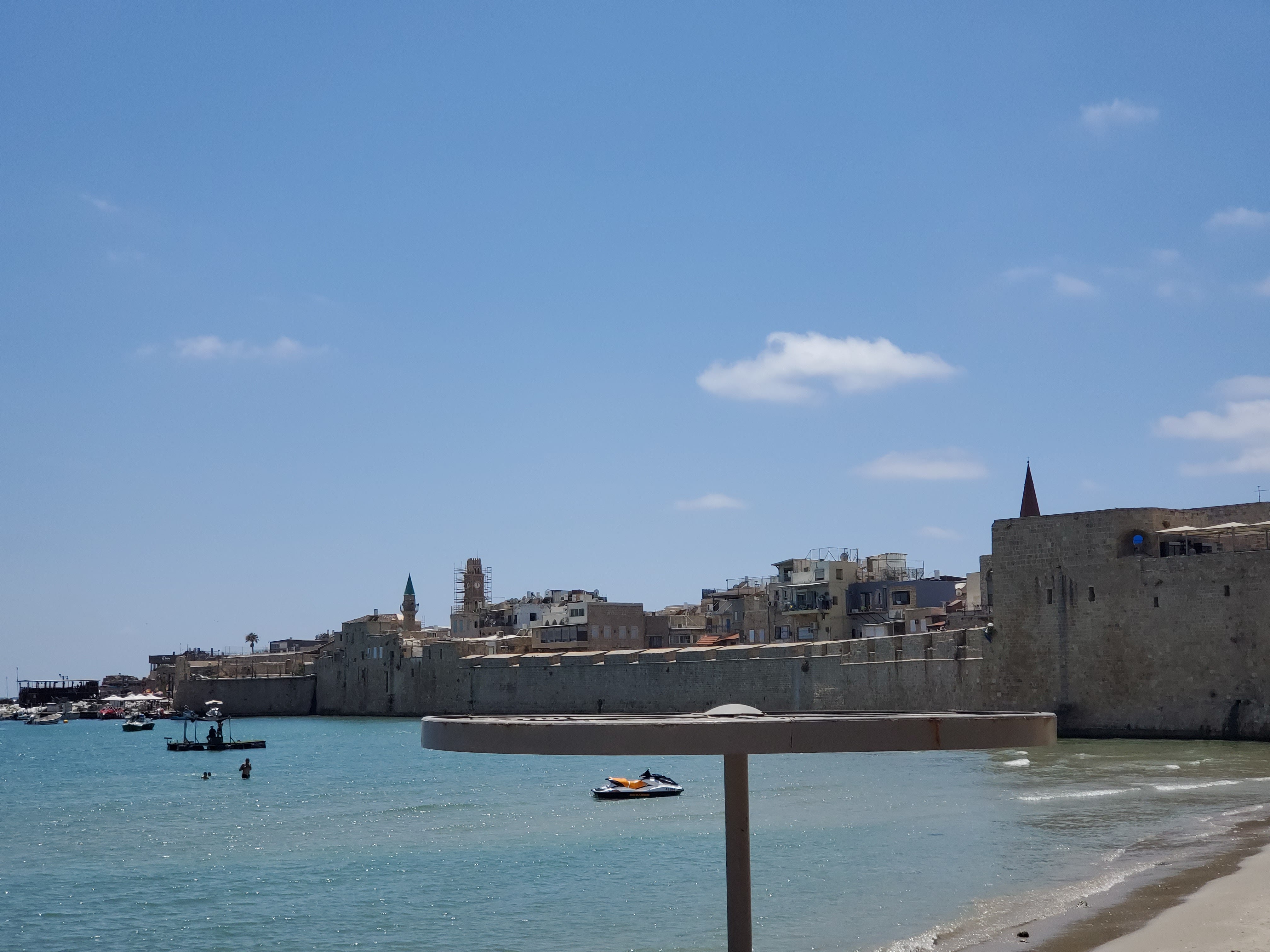
Akko is a mere 9 km, or 5.5 miles, from Nahariya, perfect for a quick trip, at least in terms of distance.  The two communities, of similar size, both having populations of about 50,000 people, are historically almost polar opposites.  Nahariya, founded in the 1930’s is less than 100 years old.  Akko,  although initially founded around 3000 BCE, then abandoned after a few hundred years, was re-established around 2000 BCE, has been inhabited ever since.   This makes it one of the oldest continuously inhabited places on the planet.

Akko’s presence on the coast as a secure and defensible harbor at the terminus of the route from the Jezreel Valley is probably what has sustained it for so long.

While it existed as a port city during the era of the united kingdom of David and Solomon, and continued through the period of the northern kingdom of Israel; it was later ruled by Romans, Seleucids, Hasmoneans, Persians, Crusaders, Arabs, Ottomans, and the British.

The period for which Akko is best known is the Crusader era.  Akko was captured during the First Crusade, in 1104, and remained in Crusader hands until 1187 and Saladin’s conquests.  During that period, Akko rivaled Jerusalem for influence and wealth within the Crusader kingdom and Akko served as the primary port for entry.

Akko fell back into Crusader hands during the Third Crusade in 1191 and remained in their control for the next 100 years.  A tremendous amount of building activity took place during this time period, creating and strengthening the Crusader fortress.

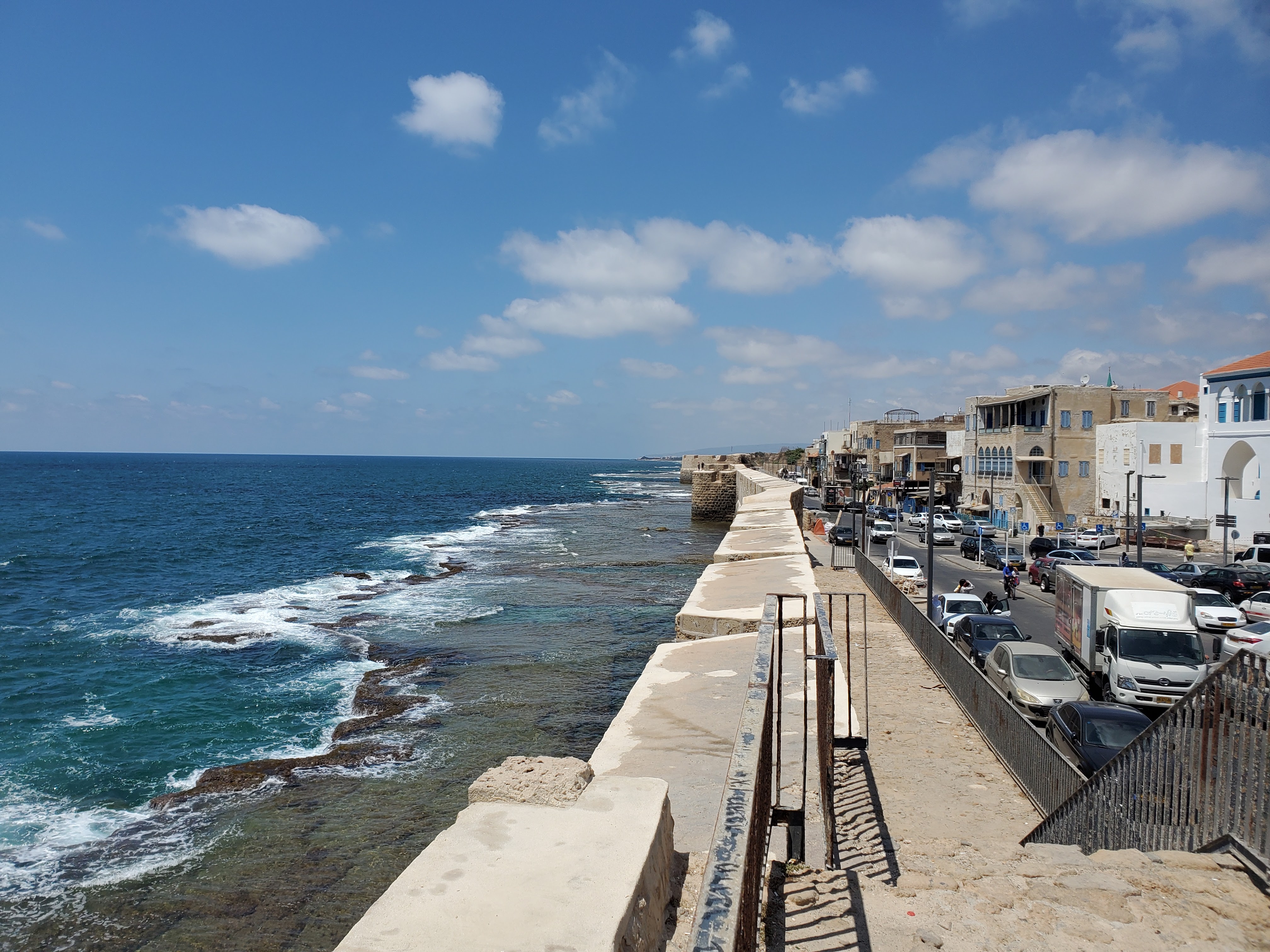
The next significant period in the history of Akko was during the Ottoman period, during the late 18th and early 19th centuries, when the walls were strengthened,  and the Khan al-Umdan and the al-Jazzar mosque were constructed.

Orli and I took the brief train ride from Nahariya to Akko, in fact, it took longer to walk to the train station, than to actually travel to Akko.  From the train station it was a short (and thanks to the bus driver, very fast) bus ride to the Old City of Akko.

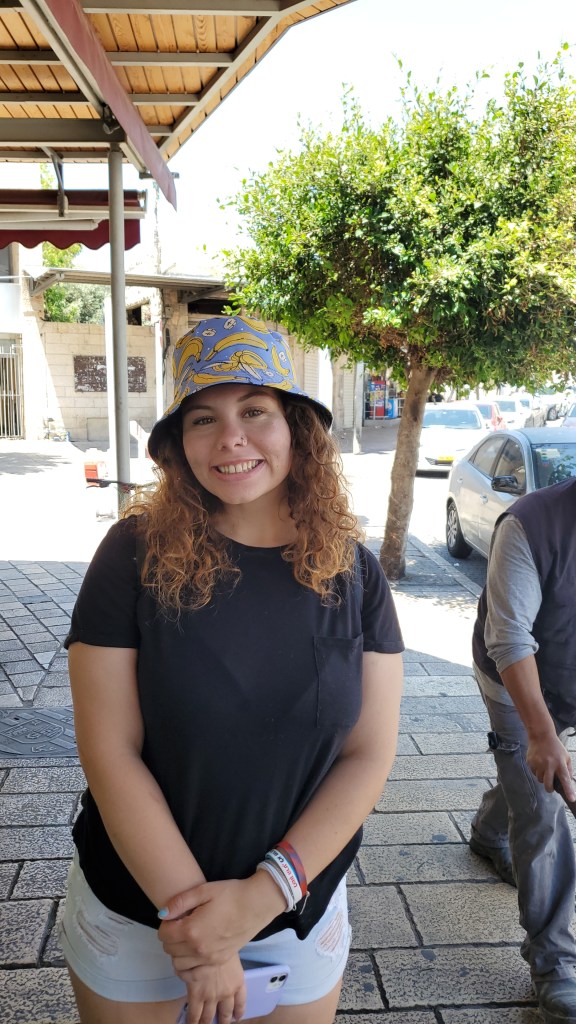
We began with shopping.  Orli selected a hat.

She wanted me to get one as well, but banana just isn’t my style; I’m more of a mango.

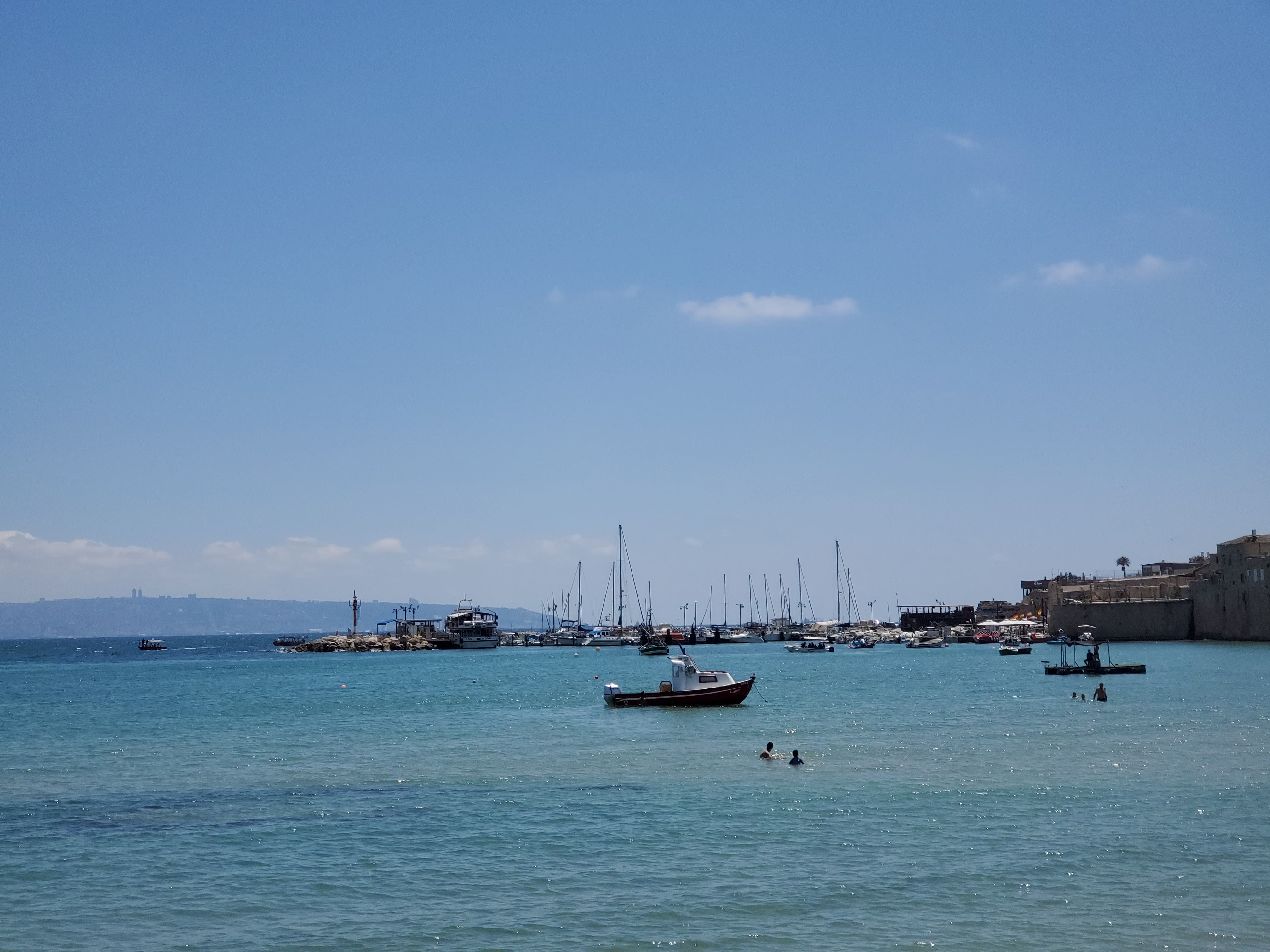
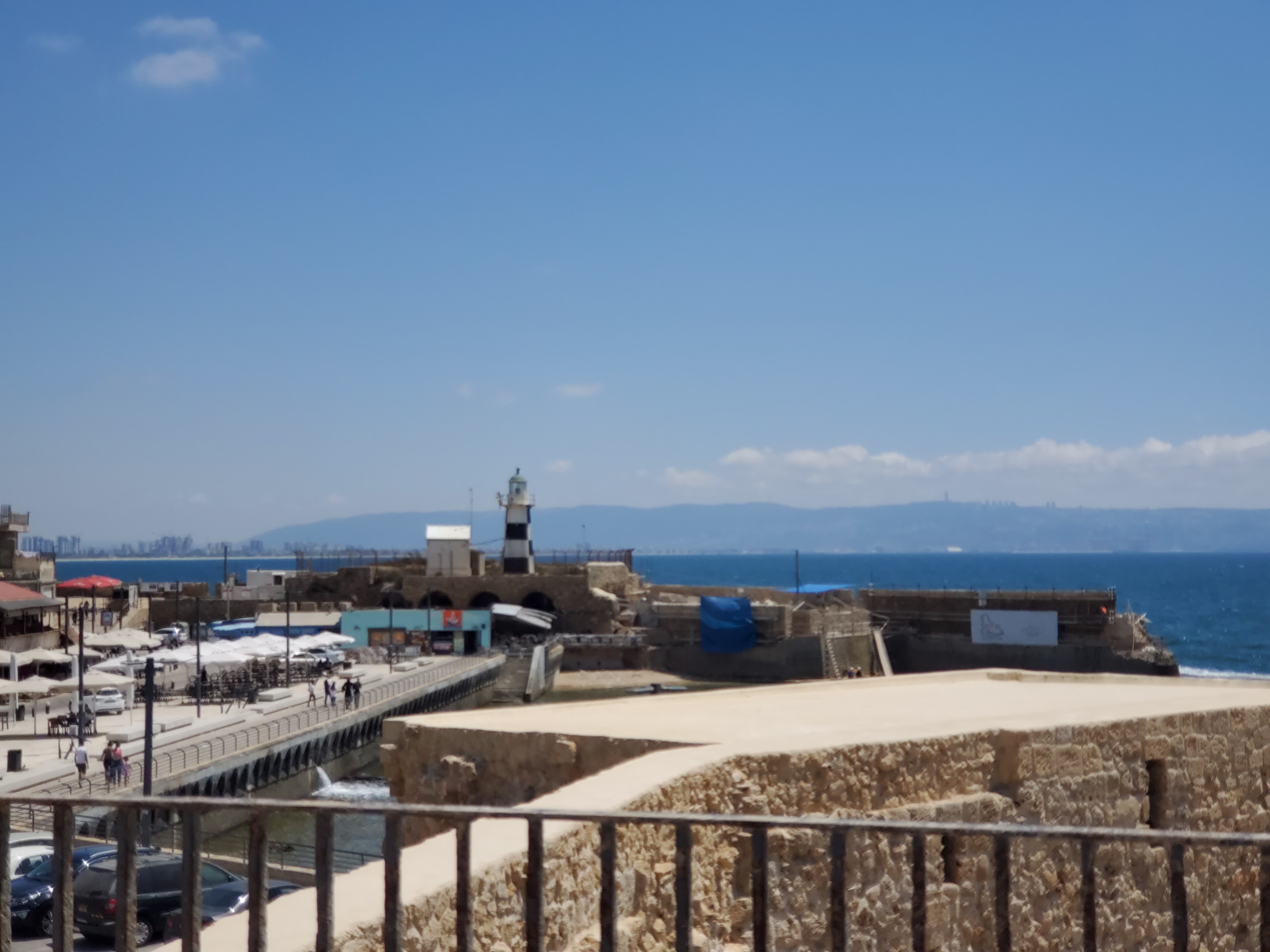
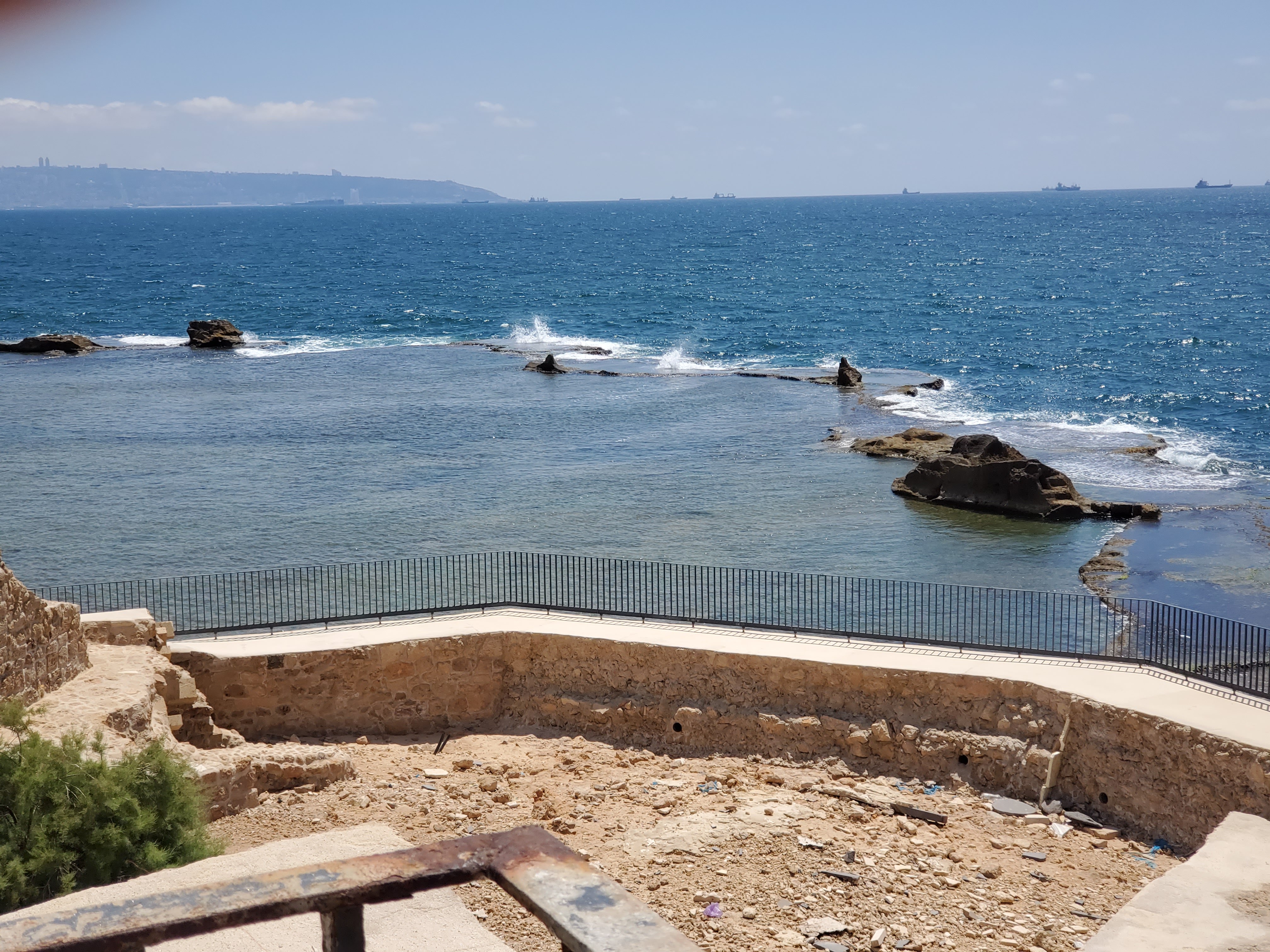
We explored the views of the port and the harbor.

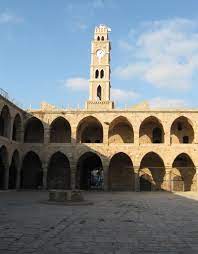
We then saw the Khan al-Umdan, the inn built in the late 18th century by Jazzar Pasha, the largest of the mercantile facilities built in that era.  The clock tower, similar to the one in Jaffa, was added in 1906.

We then traveled through the Crusader tunnels that run beneath Akko and are currently under restoration.  Remaining bent over in the semi-dark passages was somewhat of a challenge for me, but I did survive.

The  Citadel of Akko, originally built by the Crusaders and then reinforced during the Ottoman period, was repurposed by the British during the mandatory period as a prison, as well as a gallows.   In May, 1947, the Irgun broke a large number of inmates, their own members and others, out of this prison and avoided their execution by British authorities.

We walked around a little bit more and then headed back to Nahariya by bus, a nice afternoon soaking up some of the history of Akko.

A Brief Family Reunion

My son, Ari, was able to come up to Nahariya on Saturday evening.  He arrived a little after 6 pm with his friend, Sammy, taking the bus from Nahalal to Nahariya.

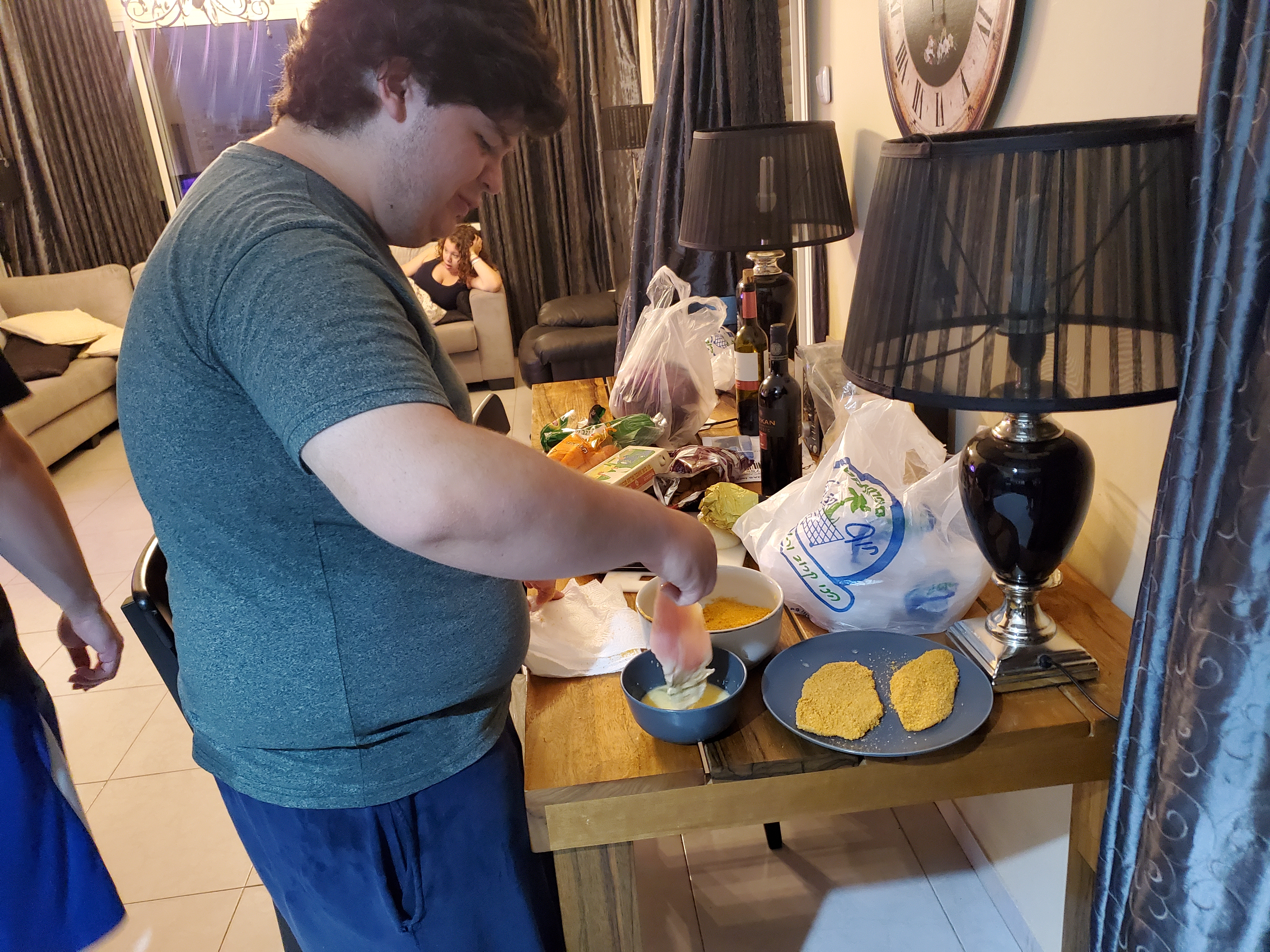
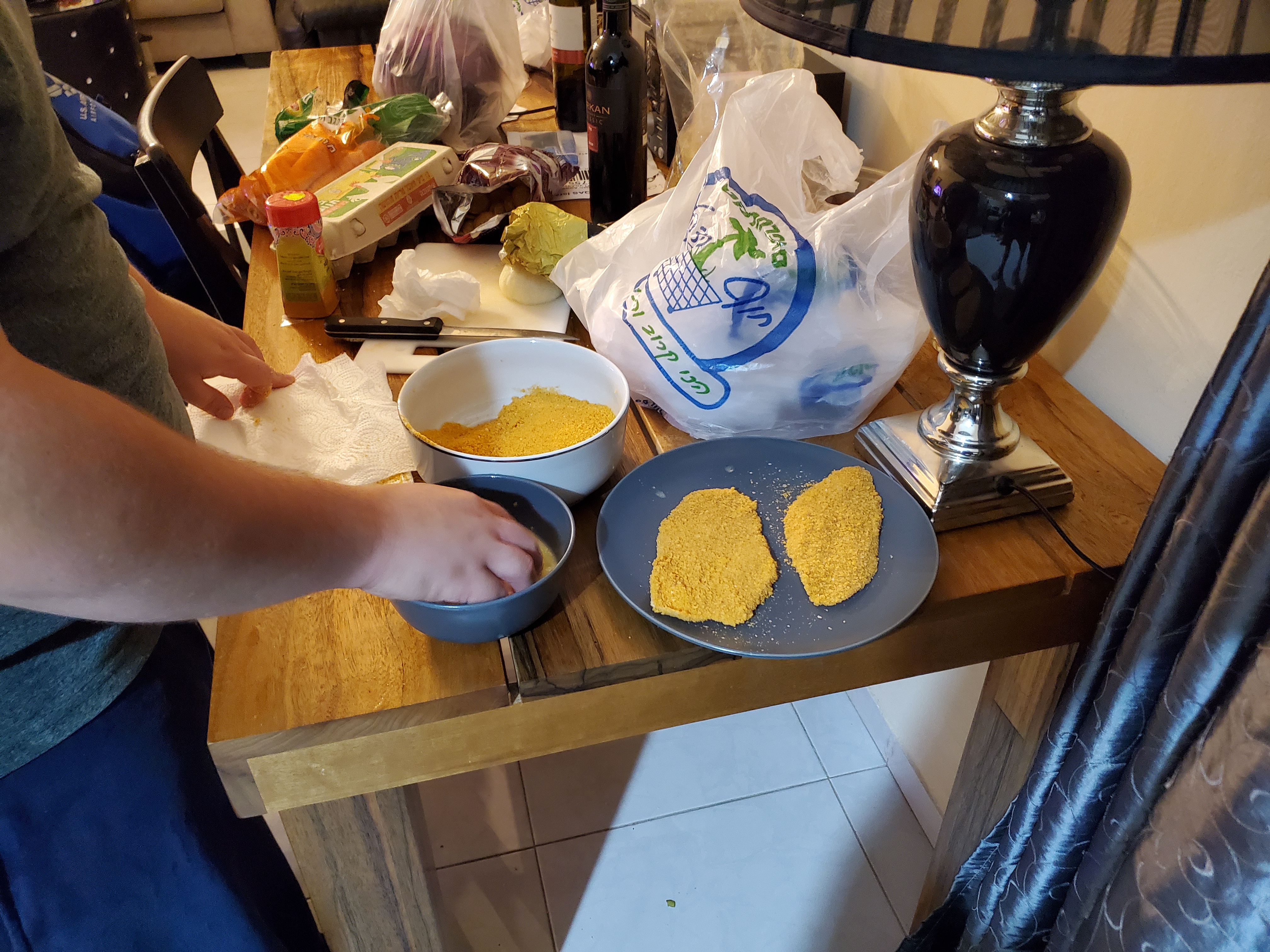
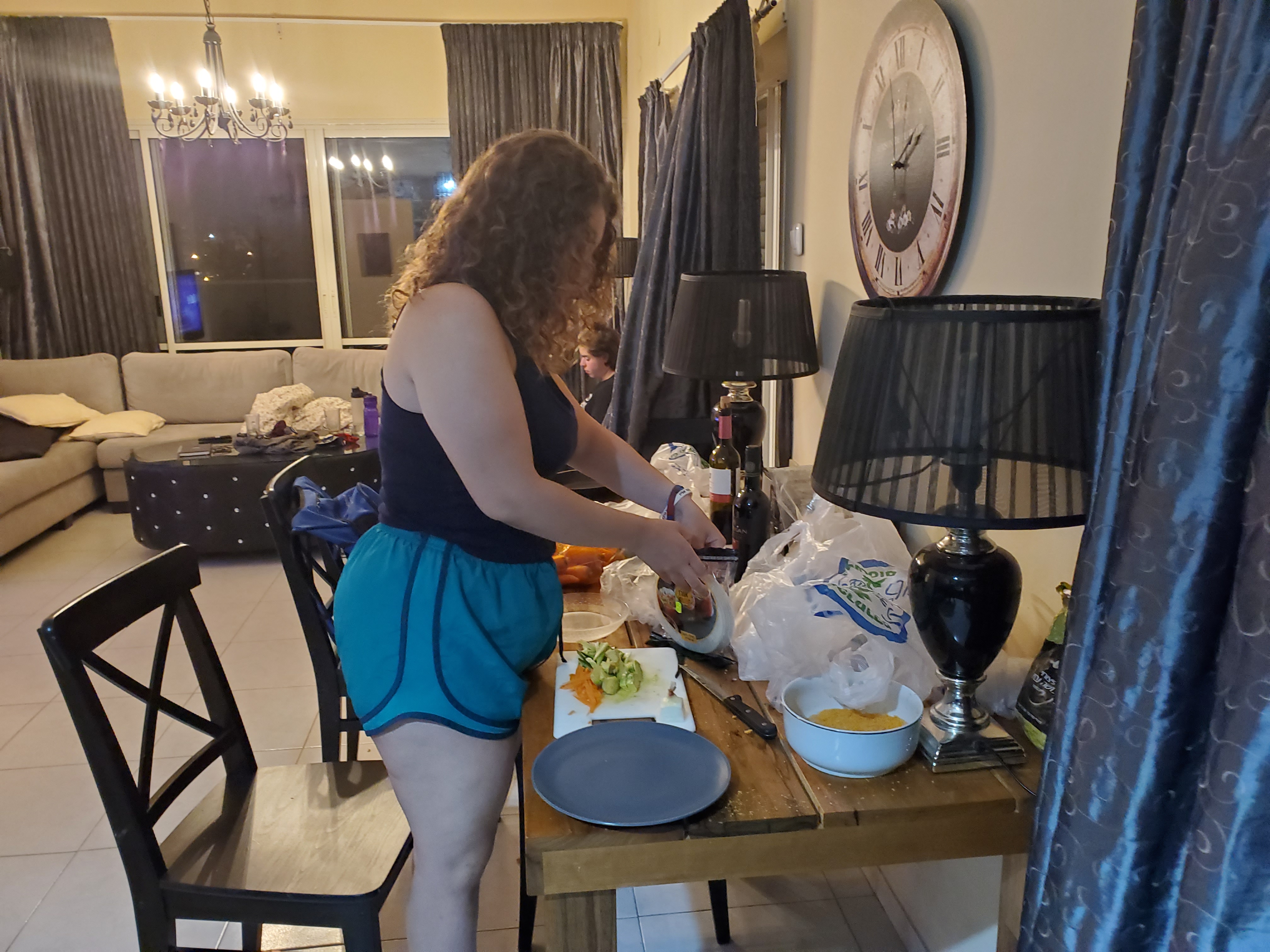
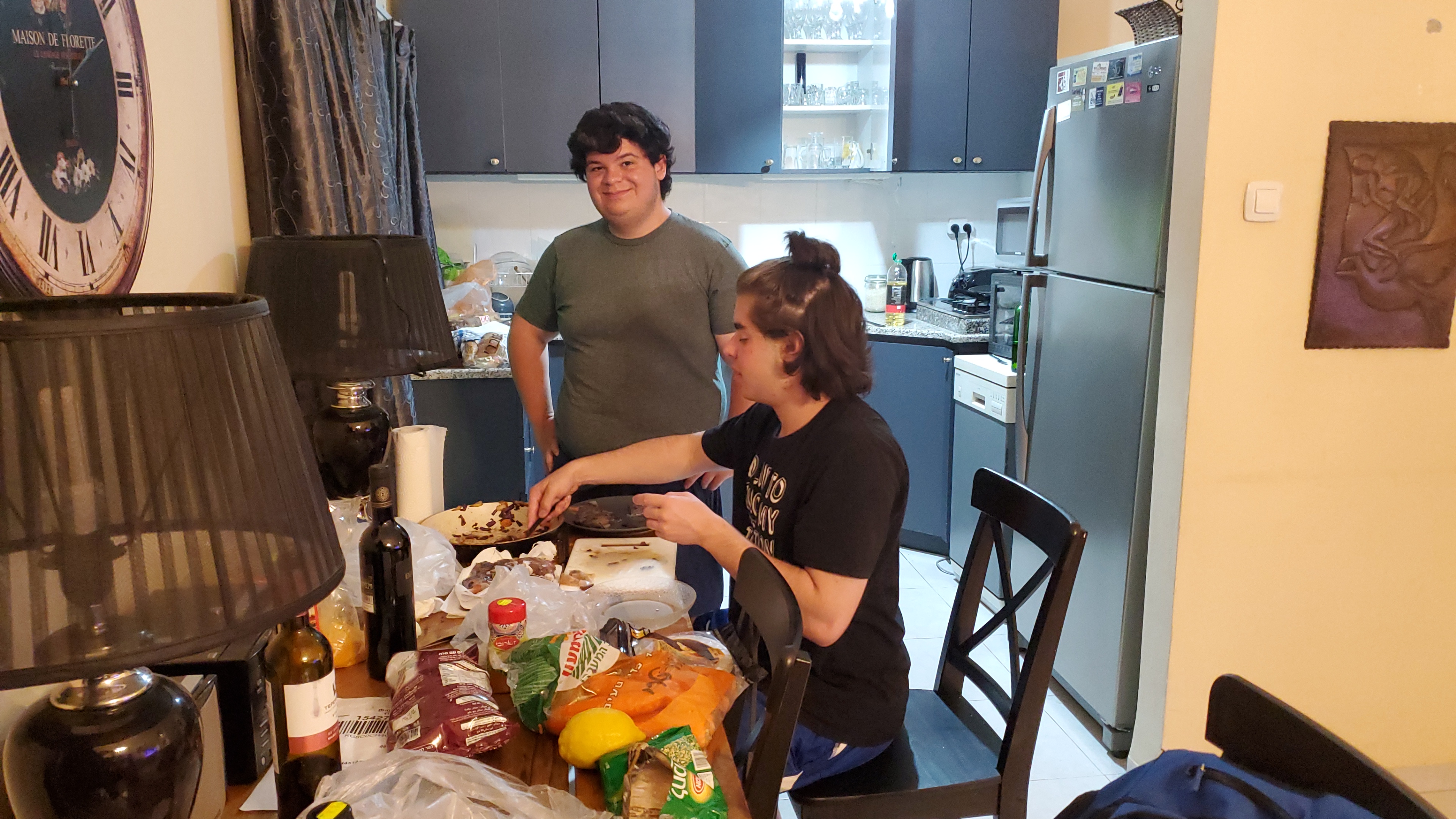
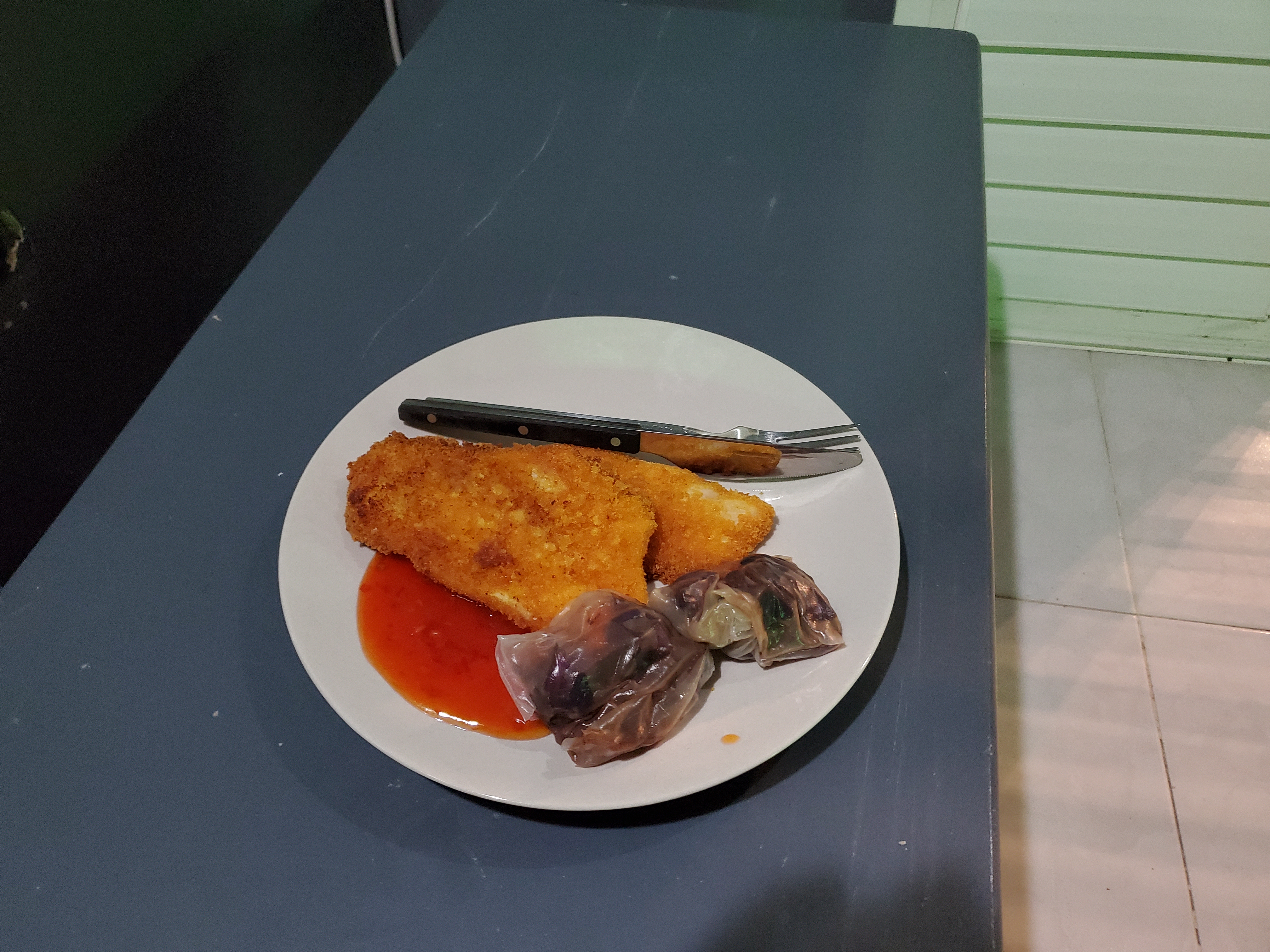
Although they live in the same country, a few hours apart, my chikdren hadn’t seen each other in over a year and a half. If anyone was expecting an emotional reunion, they would be disappointed. They did acknowledge each other’s existence, engaged in some sarcasm and we began to plan dinner. Ari decided he wanted to use the chicken filets to make a chicken katsu and use the rice paper to make veggie wraps. Orli agreed reluctantly to the tilapia I had (she’s a vegetarian or pescatarian and picky).

So, it was back to the supermarket, this time with Ari and Sammy, and another list from Orli. We found most of Orli’s list easily, but struggled to locate the tofu. We picked up some cabbage, carrots, panko, sesame oil, soy sauce, sweet chili sauce, cheese, crackers, and chips.

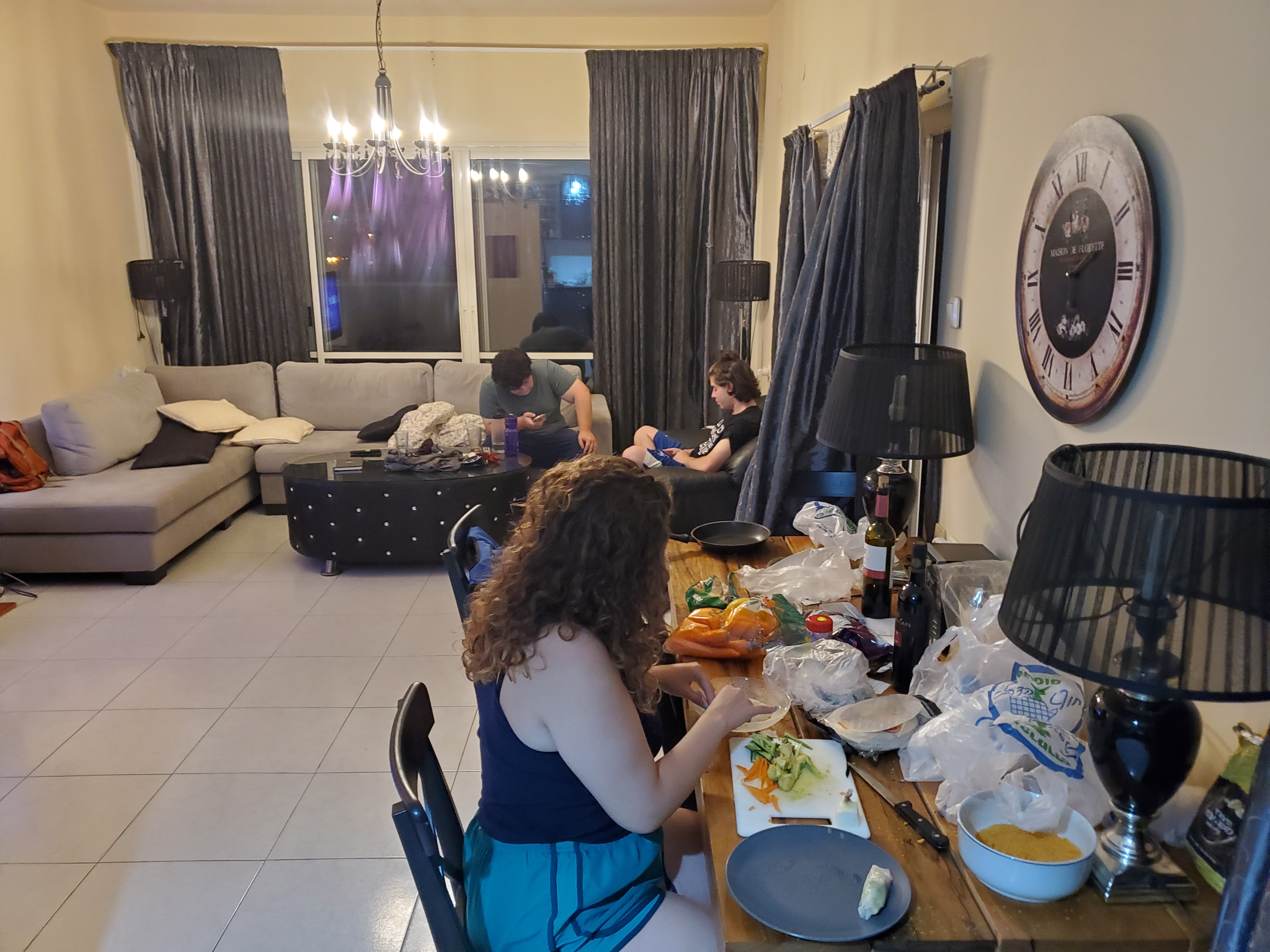
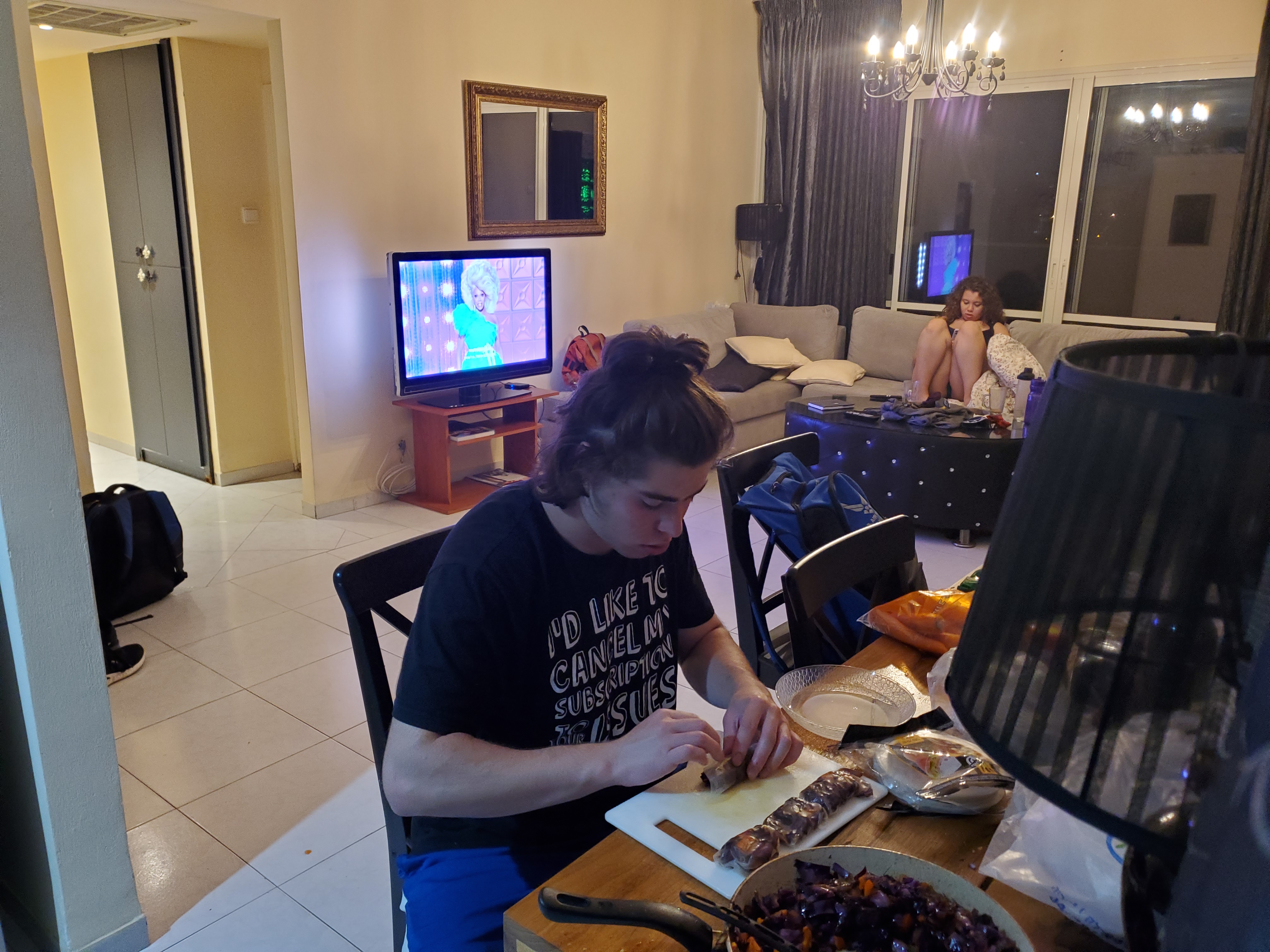
Once back in the apartment, everyone chipped in to do some food prep and cooking.


Dinner turned out to be very good. Some time later, Sammy, Ari, and I decided to walk into town for dessert. Orli was tired and stayed home.

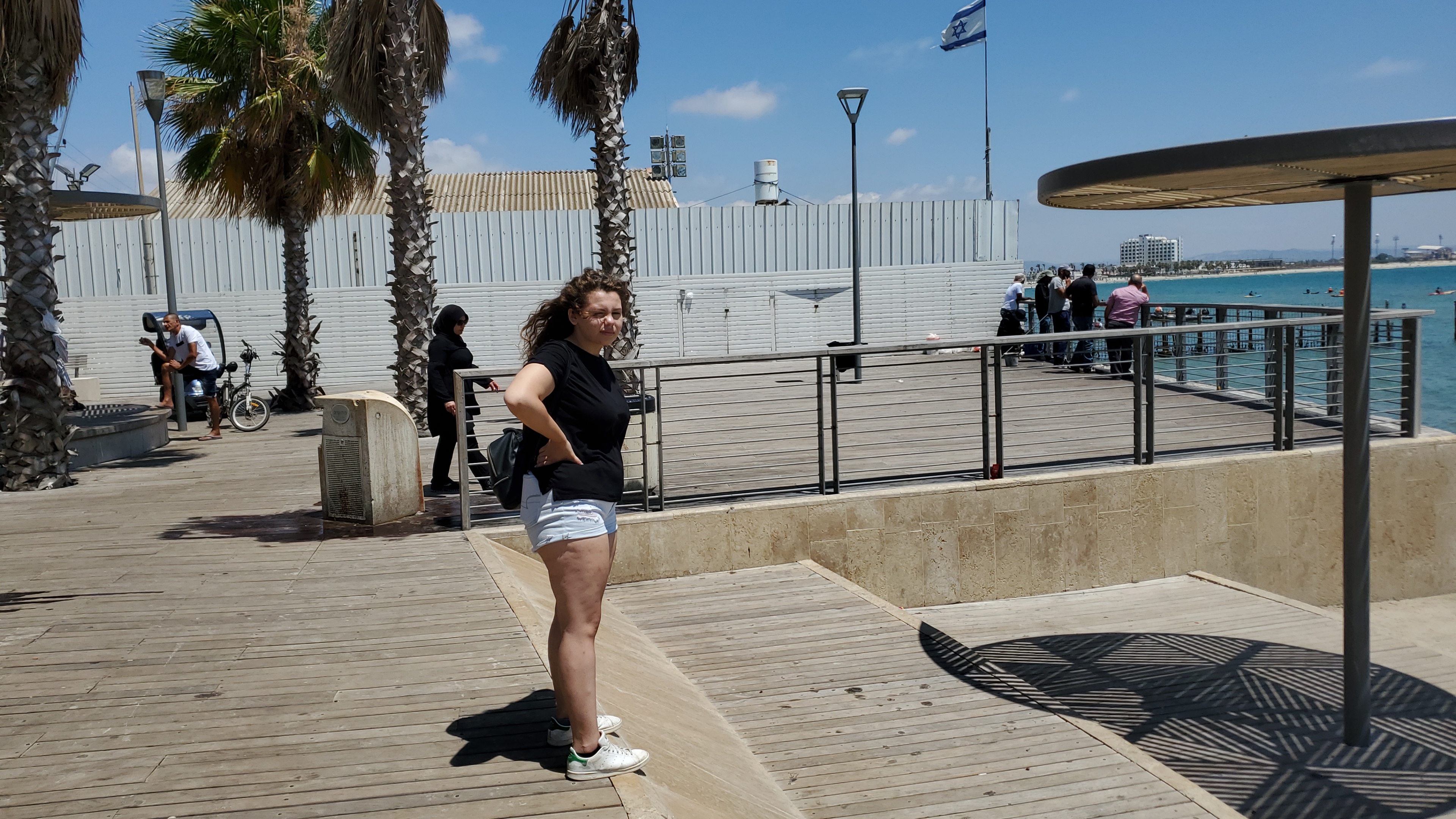
We walked along the tayelet, saw the crowds of people wandering, and paused to watch the large group of people dancing. We maneuvered up Ga’aton Boulevard, found a gelato shop without a big crowd, got our dessert and then returned to the apartment at the end of a full evening.

Friday Night in Nahariya

My daughter, Orli, arrived in Nahariya, on Friday afternoon, having taken a similar combination of bus and train that I took the day before.   She should have been traveling a little bit lighter, since on my two previous trips to her school, I’d taken a small suitcase and a large one.   She still had two large back packs and a bag and complained bitterly about their weight and the walk from the train station and how I has nothing in the apartment to eat.

When I explained that I planned to go shopping with her, I was informed that she was tired and hungry and that I needed to go on my own and go now.

Fortunately, the supermarket is about a block away and is large and well-stocked.  Unfortunately,  we’ve learned over the past year that my daughter has developed a severe reaction to gluten, as well as being somewhere between allergic and sensitive to lactose.  She’s also very picky.

To add an additional complicating factor, not only do I have to scan labels, looking for gluten free and lactose free in Hebrew, I also have to try and figure out the internal logic of an Israeli supermarket.  I know that in the United States, for example, if I can find cookies, crackers will be nearby.  If I get to the peanut butter, I’m not going to be far from the jelly.

I don’t expect to find the herring next to the pudding or the tofu in cardboard boxes, rather than the see-through plastic top.  Finding gluten free crackers, gluten free rice cakes or corn cakes, or the correct choice of the 18 different varieties of soy milk (why can’t she just learn to drink her coffee black), was a little bit of a challenge.  Ok, it was an extraordinarily frustrating challenge.  But fortunately, even shopping trips eventually come to an end and I was able to find most of what she wanted.

Once home, and after she’d gotten a little food, I started working on dinner.  Cooking is a little bit of a challenge.  In the kitchen, I have a 4-burner gas range on the countertop with an electric starter for each burner, a small oven, that looks like an oversized toaster oven, and a microwave.  There is also a refrigerator and a small dishwasher. There are only three outlets for five appliances, meaning I have to rotate what gets plugged in.

I thought it was prudent to keep the refrigerator working, and being able to start the burners also seemed to be a good idea, so I alternated the third spot between the oven and microwave and ignored the dishwasher.

For dinner, we had roasted salmon with some salt, pepper, zaatar, and onion, pan fried potatoes with onions and garlic, and a chopped salad of tomatoes, cucumbers, peppers, and red onions. It was a relaxing Shabbat dinner after a stressful trip to the store.

Graduation, Part 3

By now, I should have the whole graduation thing down, after all, the third time should be the charm. My trip from Nahariya to Hod Hasharon was relatively uneventful. Evidently, practice does make for perfection. I had a twenty minute walk to the train station, then rode the train to just outside Haifa, transferred to a bus and rode to Hod Hasharon, probably about a 10 minute walk from campus.

Parents had volunteered to bring food to the reception following the event, so I headed toward a supermarket to pick up some salads, along with pita and gluten free options. Since my daughter is the one who has issues with gluten, I knew that I needed to make sure she had something with which to dip. So in addition to pita, I picked up some gluten free crackers , and corn cakes to go with the humus, eggplant salad, and potato salad.

Some of the parents had arranged to meet at an ice cream place before the ceremony began. We sat around and talked about the years gone past, what we or the school administration would have or should have done differently over the course of four years, especially when compared to other schools in Israel and boarding schools in the United States. There was no sense of real regret, just an evaluation of a program into which we and our children had invested four years.

One of the things that I realized was the differences in our journeys. Parents had different expectations of high school, of boarding school, of Israel. Those expectations were colored by our own high school experiences, the eras in which we had grown up, and where we had grown up.

Nostalgia was expressed for American high schools in the 1980’s, comparisons were made to contemporary high schools in the United States, dissatisfaction was expressed about one aspect or another of our kids’ experiences.

But those experiences were their experiences; these were their high school years. They have no other yardstick of experience with which to compare. I can’t say whether or not my daughter’s (or my son’s) high school experience was better or worse than my own. The time, the place, the expectations of society and of students is different. But the experience is authentically theirs.

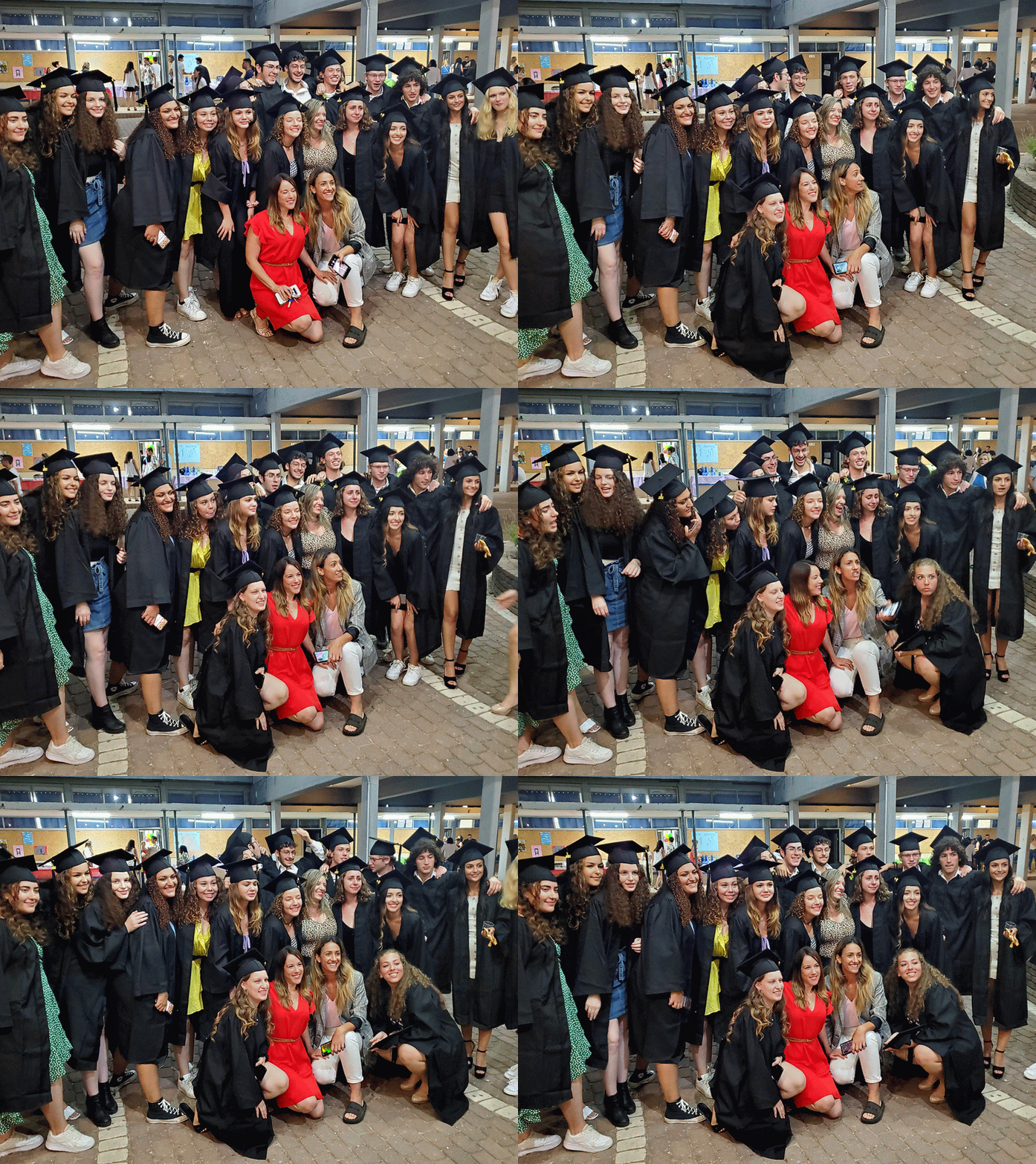
Back at the campus, the students were finishing up their graduation assembly which was limited to students, teachers, and staff. Parents and students met in the classrooms, breaking the entire grade, Israeli and new immigrant, into their thirteen classes.

The students had their presentations about the past year and years. The teacher spoke. We shared videos from the parents. Students got to guess whose baby picture was whose and who knew their classmates best. Some awards were presented with certificates of achievement(Orli received one for best academic achievement over four years), some final words, a closing song and then high school was over.

Well, it was almost over. The next day, the day after graduation, they had their end of the year field trip and then they’d have to vacate the dorms by Friday morning. And then they’d have to make their way back in a week or ten days to get the school’s assistance in completing paperwork once they had the formal certificates of graduation. Classes are over, exams are over, paperwork continues with a life of its own.

This has made me think about my own high school years:: friendships, awkwardness, conflicts, part-time jobs, youth groups, class work, homework, and more. Some memories are clear, as if they happened but yesterday, others are a little more cloudy. I don’t really remember how to balance a chemical equation, but I do remember Dr. Swicker. I can’t tell you the formula for the volume of a pyramid, but I can remember who I was seated next to in geometry. I can remember Coach Moran’s technique of screaming at new drivers in Driver’s Ed or the feeling of dread of having to approach Brother Adrian to get permission to miss half a day of school for a youth group event.

My children won’t have these memories. They’ll have their own. Different generations, different places, different memories, but still united in that process of figuring out who you are and where you’re going. Theirs just comes with more paperwork.