For Want of A Horse…

“For want of a horse the rider was lost, for want of the rider the battle was lost.”  So goes the proverb  that hearkens back to the days when horses and their riders met on the field of battle from the Middle Ages through early modern times. 

The contemporary battles with which we are most familiar typically don’t involve horse and rider or even military conflict, but the struggles of everyday life, the average person subjected to the the whims of large, impersonal corporations.   Today’s battle hearkened back to my summer trip to Israel,  when I dealt with delayed, cancelled, and rescheduled flights brought about by weather.  Today it was a four hour delay in Louisville brought about by the need for a second flight attendant.    I was legitimately afraid that lightning might strike twice.

We were scheduled to depart from Louisville for La Guardia at 3:30 pm and  then shuttle to Kennedy to catch an 11:40 flight to Tel Aviv.   While waiting at the gate, we were told at first that we would have about a 45 minute delay and that a flight attendant was inbound.  Many of us witnessed a flight attendant stop by the desk at the gate and informed the agent that she was available, but was not willing to work our flight.  We continued to receive updates and the delays increased.  Eventually we learned that the airlines was Ubering a flight attendant in from Indianapolis.  So, our departure moved in stages from 3:30 to 7:15 pm. 

While we were waiting , we contacted a shuttle service to get from La Guardia to Kennedy and continued to call and update as our arrival time kept getting pushed back. We were also trying to make alternate arrangements should we not make it in time. Neither the gate agent, nor customer service over the phone could do anything for us, but tell us the next available flight would be 24 hours later.

I will admit that we were moving between panic, anger, and resignation that we would miss our flight.

7:15 came and went. We boarded and eventually took off around 7:45. When we landed at 9:45, my wife agreed that I should get out as quickly as possible and get to the baggage claim in order to get to the van and to Kennedy as quickly as possible. I was seated in row 18. I was the first person off of the flight. We got our luggage without incident and headed out the door to meet our van. We called. It was on the way. We waited. Still no van. It was after 10 pm and we still had a 20 minute ride, so we chucked the nonrefundable van ride and caught a waiting Uber.

We made it to JFK at 10:30. I shepherded the suitcases inside, turned the corner and saw a line of 50 or more snaking its way toward the ticket counter. My heart sank.

Desperate times call for desperate measures. I bypassed the line and asked the first ticket agent I came to if she could listen while she input a customer’s information. She responded that she needed to focus on her customer. I apologized for intruding, thanked her for her time and found another agent who was wrapping up with her current customer. I explained to her that our flight from Louisville had been delayed for 4 hours and we had just arrived from La Guardia and asked if there was anything she could do to get us on our flight. She explained that the flight was now closed and all the baggage had already been loaded on it, but she would see what she could do.

She went off in search of a supervisor and a few minutes later, they motioned me and my wife Karen down to a counter on the far end of the ticketing station. They quickly checked us and our baggage through, led us through security and whisked us to the gate., Karen by wheelchair and me, on foot. We were the last to board the plane. After getting settled, the plane soon began to taxi down the runway and then upward, beginning the long flight to Israel.

The trip began with the lack of a flight attendant and then the lack of a replacement. The actions of two people were impacting the plans if dozens of others who had planned to attend weddings and funerals, family gatherings, and spring break trips. The unselfish actions of others saved those experiences: the flight attendant who Ubered an hour and a half so that we could take off, the desk agent who put forth the extra effort to get us on the flight, and the supervisor who made certain we’d make it. The small choices that we make can have an enormous and unexpected impact on the lives of others. It all starts with showing up.
The Journey Continues

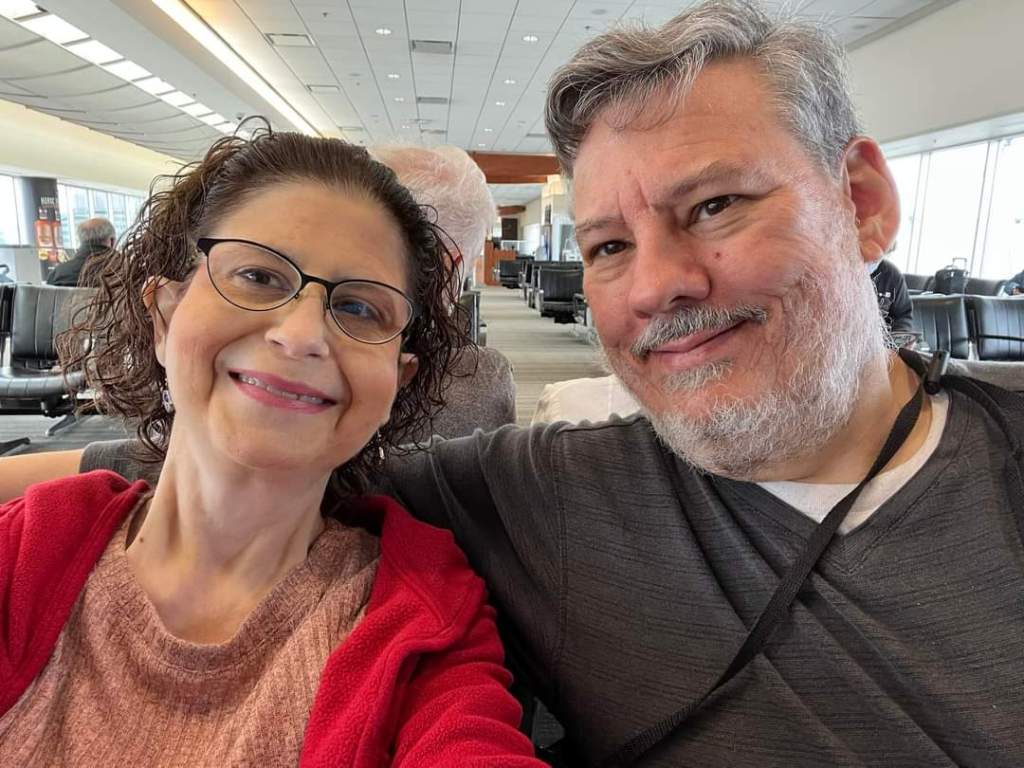
My kids have been back in Israel for for 8 and 6 months, respectively, both serving in the Israeli military.  As lone soldiers, soldiers without immediate family in the country, they are entitled to 8 days off for a family visit.  So, I’m heading back to Israel for a fast visit with them.

My summer trip began with a concatenation of delays and cancelations resulting in my making it to my daughter’s graduation with 5 minutes instead of 24 hours to spare.   The pace of most of the rest of the trip was quite leisurely.  We don’t have any pressing deadlines for getting there, but once we do arrive, we’ll have to fill every moment with this abbreviated sojourn.

I say we, because for this trip, my wife will actually be able to make the trip. She was battling some health issues over the summer and wasn’t able to travel then. We initially planned on going in January, but the Omicron wave delayed our trip. We thought about pushing it back to summer time, but the ticket my wife had purchased last June will expire sometime in May. So, we leave today.
My father-in-law was initially going to join us on the trip, but concerns over a growing wave of Covid infections in Israel and the possibility of being stuck or quarantined, led him to postpone his trip.

So, we are spending our 22nd wedding anniversary in airports and airplanes, feasting on the finest of airline cuisine, shoe-horned alongside the multitudes of our new best friends while commiserating about the food, the service and the general state of airline

But, this is the price we pay for the week ahead: seeing our children, exploring Israel with them, enjoying the comfort of two very nice Airbnbs, and taking in the sights, sounds, and tastes of Israel.

Last morning in Haifa

I woke up on my last morning on Haifa and had my coffee on the balcony and waited a while before texting Orli. I sent her links to a few places for breakfast, but she was not interested in getting out of bed quite that early. I decided to go in search of breakfast. I wandered around, looking for something light, since I knew that Orli would want lunch in the not-too-distant future. I wandered a little through the German Colony, but those places that were open had big, full breakfasts. I started to head toward where we had ice cream the day before, near the port, but decided that I really didn’t want to walk quite that far. So, I headed toward Wadi Nisnas.

I knew that I wanted some coffee and also wanted to purchase some from Cafe Haifa, so I headed there first. I noticed a much bigger crowd than I had seen the previous day. I tried to slip inside the tiny store and found myself in the middle of a tour group, just as their presentation was about to begin.

No one seemed to object to my presence, so I stayed and listened to the presentation. The group was Israeli and the entire presentation was in Hebrew, but I was able to follow most of it. Mustafa, the owner explained his process of roasting the beans, grinding them, then mixing in the hel or cardoman. He brews the perfect cup of coffee.

There is more than coffee in the tiny shop. He sells a halvah that is incredibly smooth. Normally halvah has a gritty texture, but this halvah is almost velvety. He explained the creaminess is due to the addition of potato starch in the halvah. he was able to slice small pieces off of the log, crush it with the side of the knife, and then spread it back onto the log.

Next, we sampled a sweet known as the Garden of Eden. It is a log made of carob, date, and pistachio, that is incredibly sweet and delicious. From there. we were able to sample locally produced techina, that was nutty, creamy, and smooth.

He also showed us carob syrup, olive oil, and olive oil infused with coffee. At the end of the presentation, I brought some coffee to bring home with me.

After leaving Cafe Haifa, I started on my way back to the hotel. I stopped by a bakery a bought two small pastries, one a cheese filled one, another a triangular one filled with zaatar, onions, and other spices. Both were delicious and enough to tide me over until lunch.

Back at the hotel, I repacked my bags to be sure that everything would fit. It was definitely a tight fit, largely due of course, to the franchise-worth of pumpkin seeds I was carrying with me. Orli and I put our bags behind the desk in the hotel and went out for lunch.

She chose the Butterfly Cafe, about a 20 minute walk for us. It featured a breakfast/brunch menu. We selected the breakfast for two. Two eggs for each us us, sharing nine small side salads. The food was ok, the service did leave a little to be desired. The server got our drink orders wrong, in terms of what type of coffee we each wanted, I received scrambled eggs, instead of an omelet, and we only received eight, not nine side salads. We also received three, not four rolls. The side dishes (labneh, Bulgarian cheese, hummus, techina, avocado, jam, salmon, and cream cheese were all tasty, but nothing was a wow. We finished up, wandered back to the hotel, and waited for our cab to the airport.

The cab arrived, we loaded all of our stuff into the trunk and we were off to Lod, to Ben Gurion Airport. We gave ourselves a little extra time and arrived almost an hour before our scheduled COVID test for departure. We waited, and waited some more, had our tests performed and then began the several hours of waiting prior to departure. My time in Israel was nearing its end.

Graduations #4 & #5

The end of graduation season had finally arrived.  My son, Ari, had his second and third graduation ceremonies scheduled to start at 5:30 pm.  I  looked over the buses scheduled in Moovit and saw that there was one scheduled to leave at 4 and including the walk to the school, we should be there by about ten minutes after 5, giving us 20 minutes to spare.

I let Orli know to be ready to go by 3:45.  She complained that her stomach was hurting and didn’t want to go.   I told her that she needed to go anyway.  I knocked on her door around 3:40 and she said she was almost ready.  I continued to prod her to leave, 3:45, 3:46, 3:47, and she was finally out the door.  We made it to the bus stop and boarded in time.  An easy bus ride, a relaxed walk, and we’d be there.

By this point in time, I really should know better.  We followed our route  through Haifa in moderate traffic and then turned onto the highway, or should I say, parking lot.  Traffic was alternating between a crawl and a full stop.  I texted Ari to let him know we might be late and let my wife know, as well.

We finally seemed to clear the jam, and sailed through several stops along an open highway and then, just as quickly, traffic was back to a standstill.  There was absolutely no way we were going to make it in time.

The bus didn’t reach the stop until 5:35 and we still had a walk from the bus stop to the moshav and then to the dining hall.  I let Ari know we’d made it to the stop.  He called and I told him where I was on the route in and he said he’d meet me on the road near the dining hall.

And there he was, standing with his friend Sammy, waiting for us.  When we made it to the dining hall, I found out that it was just dinner until 6:30, so I could relax a little. 

A long buffet was set up outside  and there were a variety of salads, grilled vegetables, hummus, rice, potatoes, and then chicken and beef.  I loaded up my plate with salad and veggies.  We sat with his friends and ate.   I was the only North American parent there and very few of the parents from Russia, Belarus, Ukraine, or other former Soviet bloc states, were there either.

The speeches soon began, and then songs performed by students, and counselors, and then one last closing song, that all the students were called up for and it was over.  That was the pnimiyah, or boarding school, graduation.

We had a little bit of a break before the school graduation.  Orli still wasn’t feeling well, so she decided to take a bus back to Haifa . 

The school graduation was in a large outdoor amphitheater.  The program began at 8 with a student dance performance, followed by speeches, and more speeches, interspersed with musical or dance performances, skits, and videos. This included an elaborate video created by the Israeli parents with song and dance and overhead shots. All of the program was emceed by students.

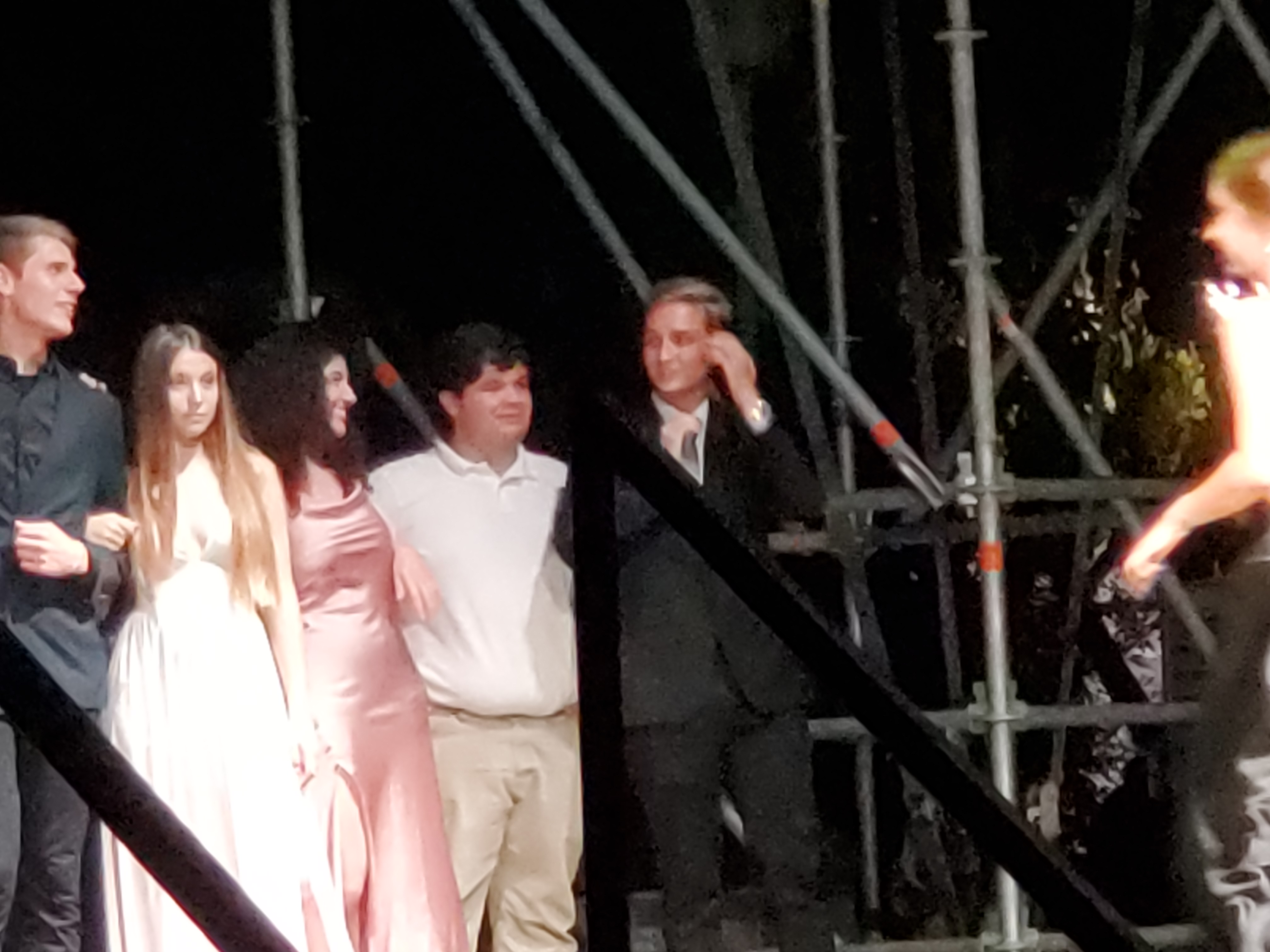
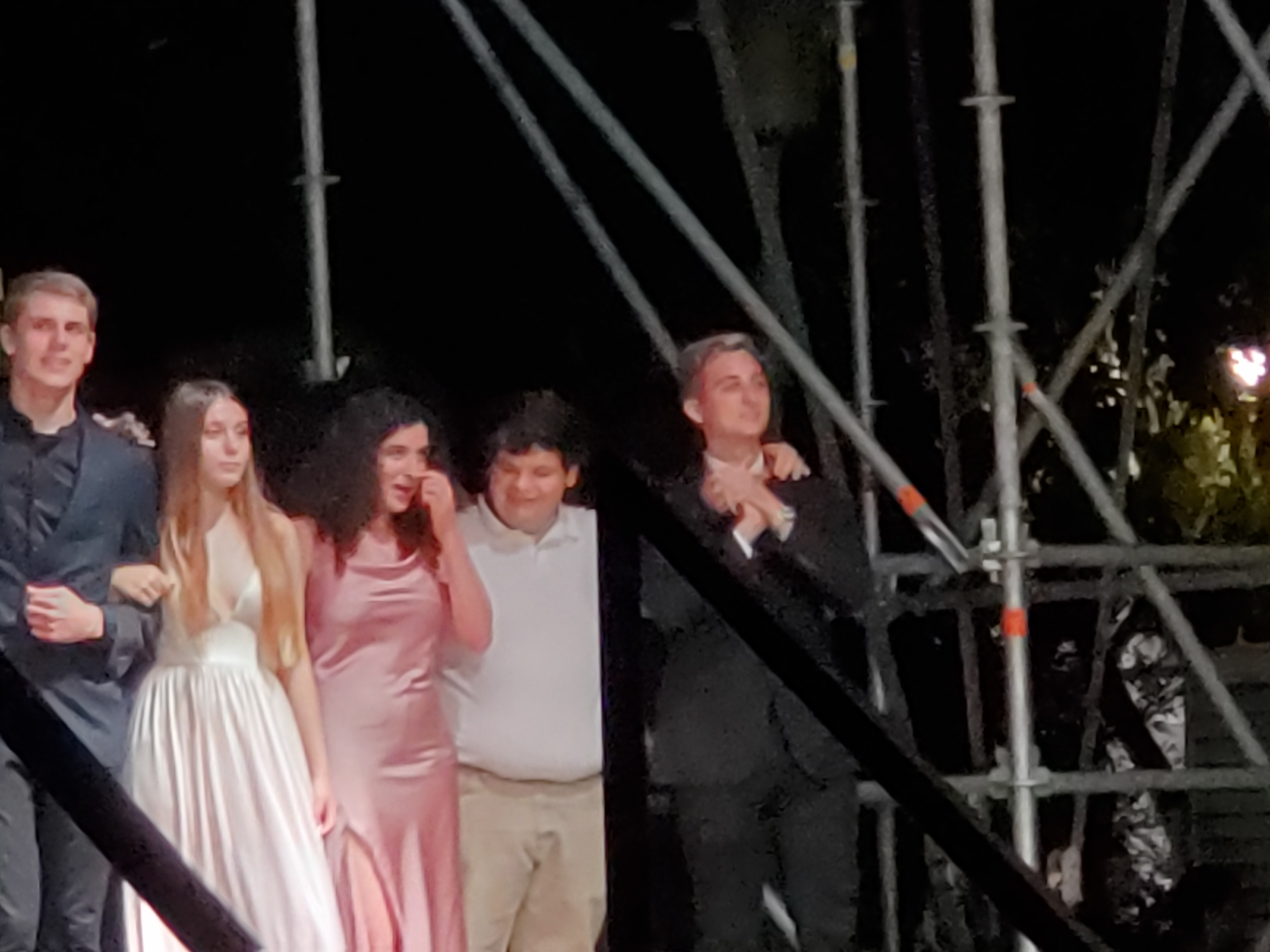
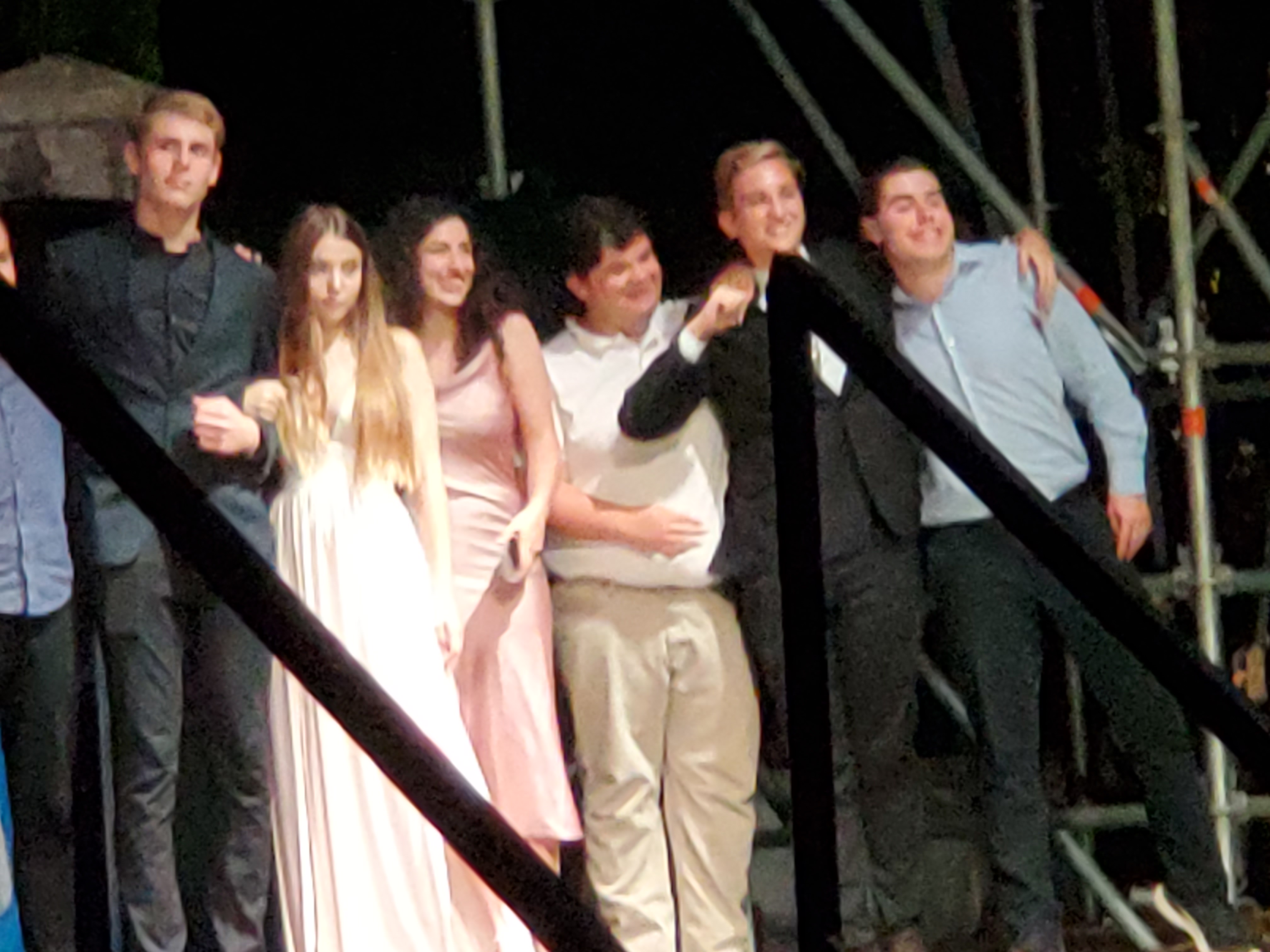
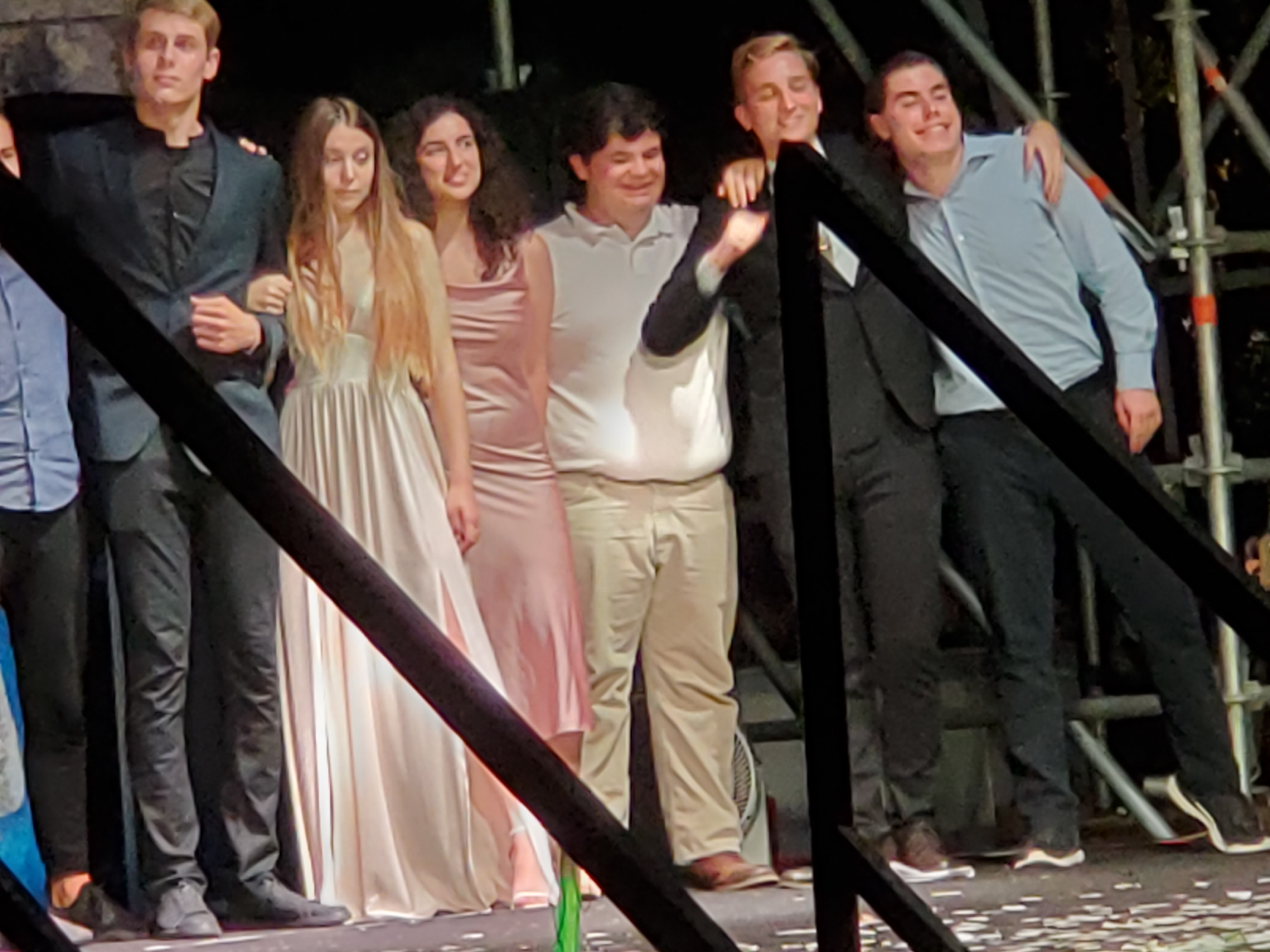
Finally, the time came to call the students up to the stage.  There were no caps and gowns, no diplomas or certificates, no recognition by administration or teachers. Each of the nine home rooms was called up two students selected from that class. They began with some humorous remarks, usually in rhyme, extolling the virtues of their class, then calling up students, frequently with nicknames and humor. Ari was in the ninth and final class and he and his classmates had their moment on the stage.

I thought it was over. Maybe one last speech or performance. I was wrong; almost 45 minutes of skits, dances, and videos. It ended around 10:45 with a fireworks show. Afterward, Ari walked me to the bus stop(fortunately this was the close stop). I told him how proud I was of him and sent him back to his friends. I had about a 30-minute wait for the bus, followed by a 45-minute ride back to the hotel. The German Colony was very much alive when I returned after midnight. I walked for five or ten minutes just to see a little of life on the street, and then headed to my room.

Five ceremonies later, both of my children had graduated from high school. After four years, they spoke Hebrew fluently, had passed all of their classes, navigated school and Israeli bureaucracies, made lifelong friends, and achieved a great deal of independence. I could not be more proud of both of them.

Exploring Haifa

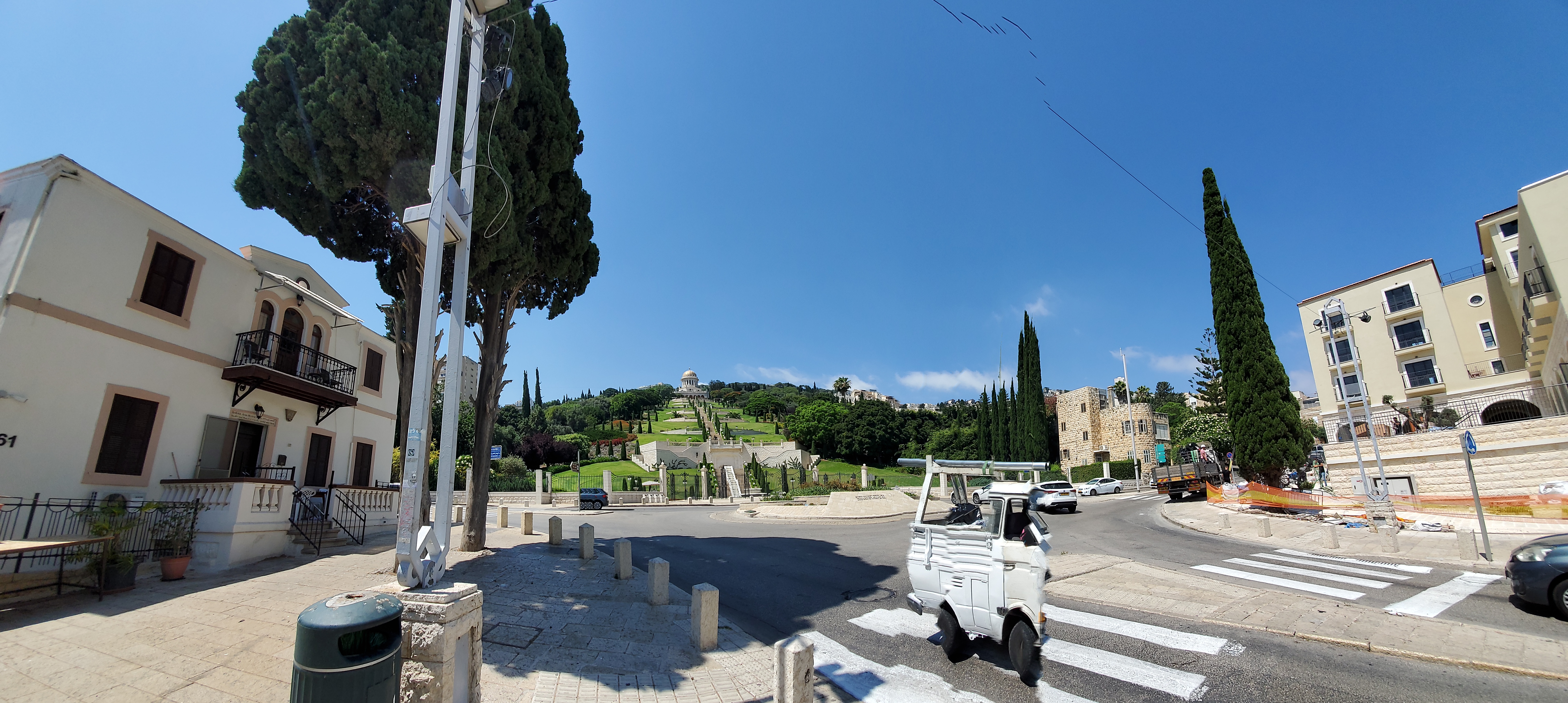
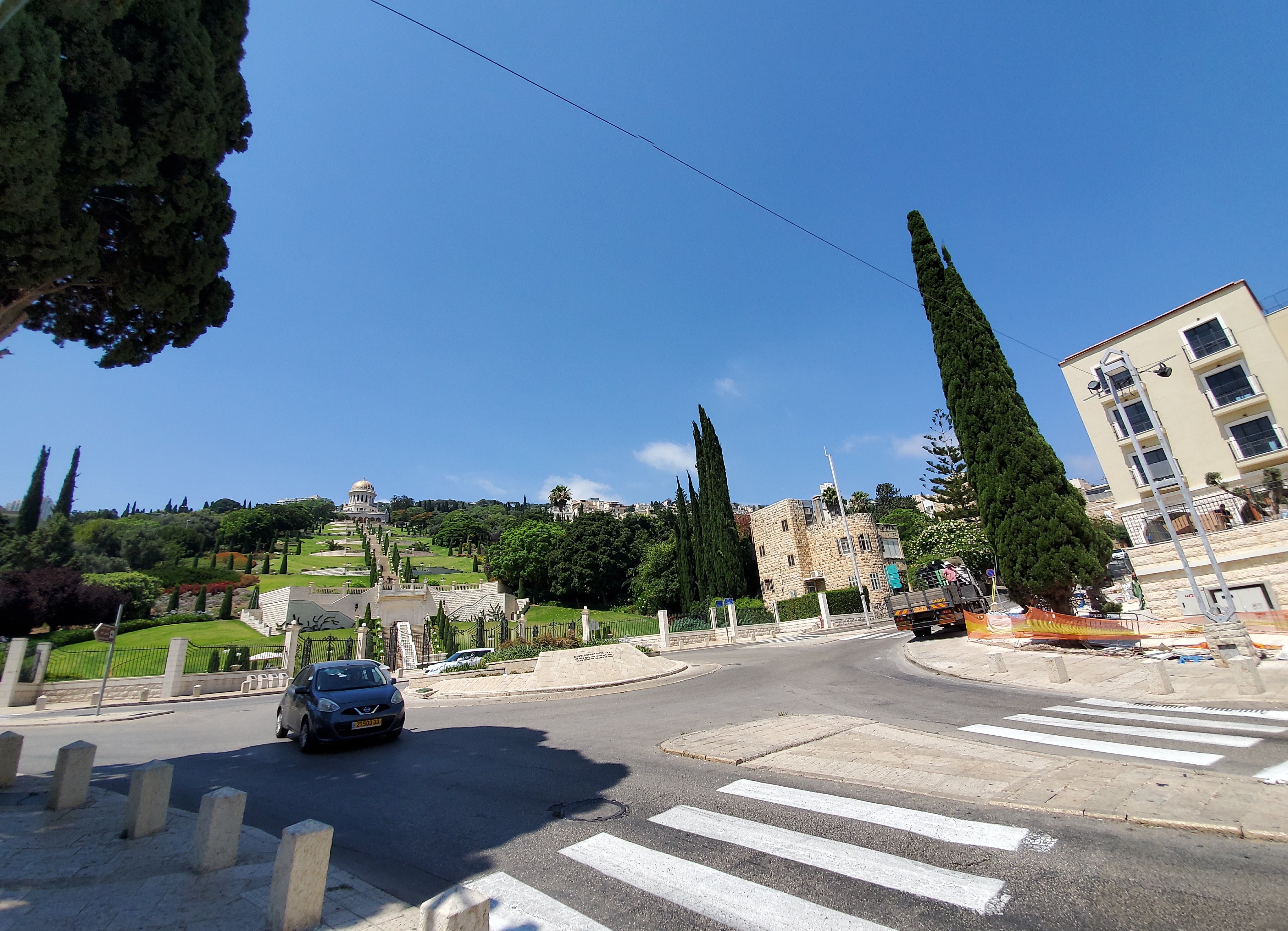
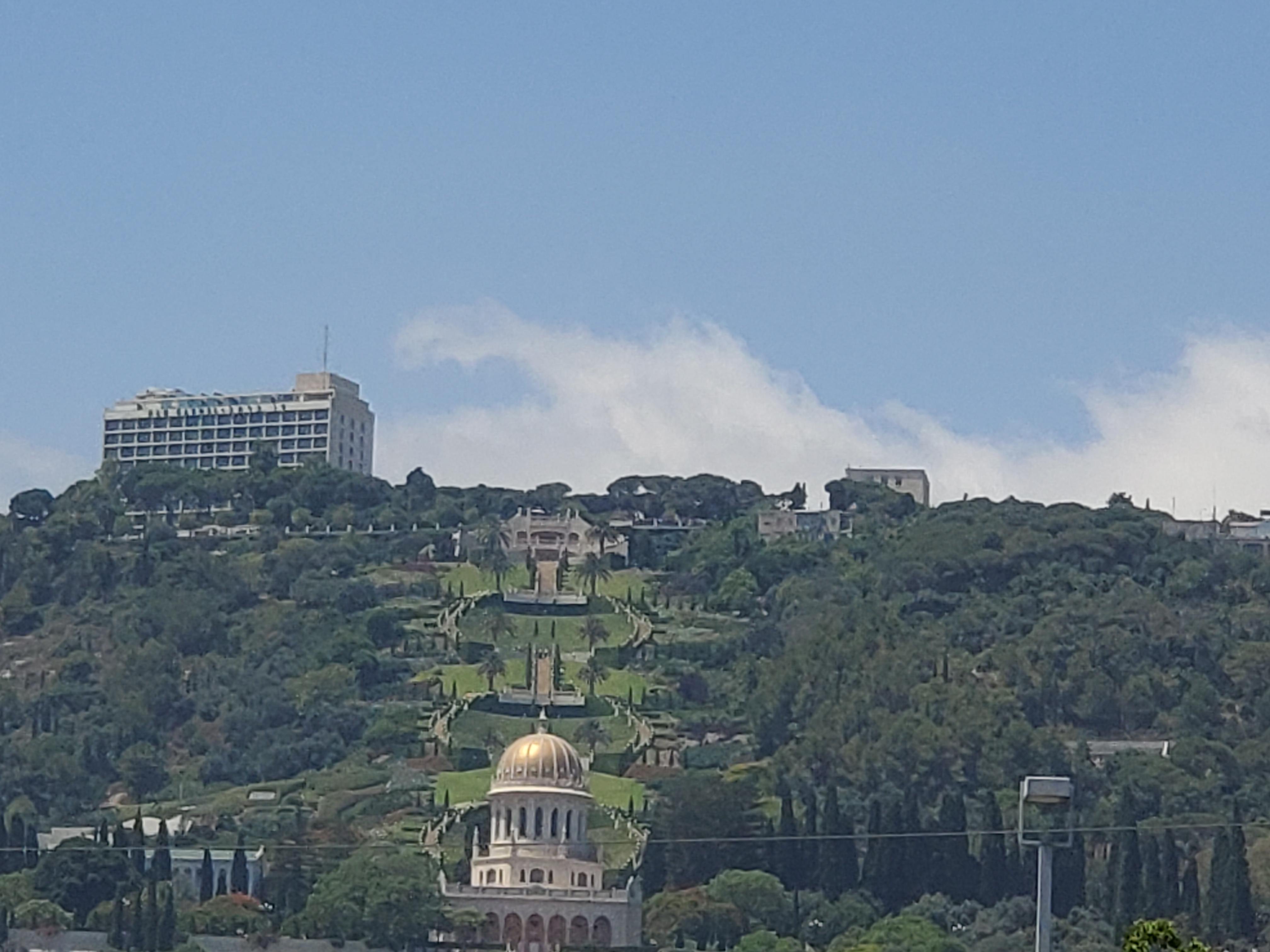
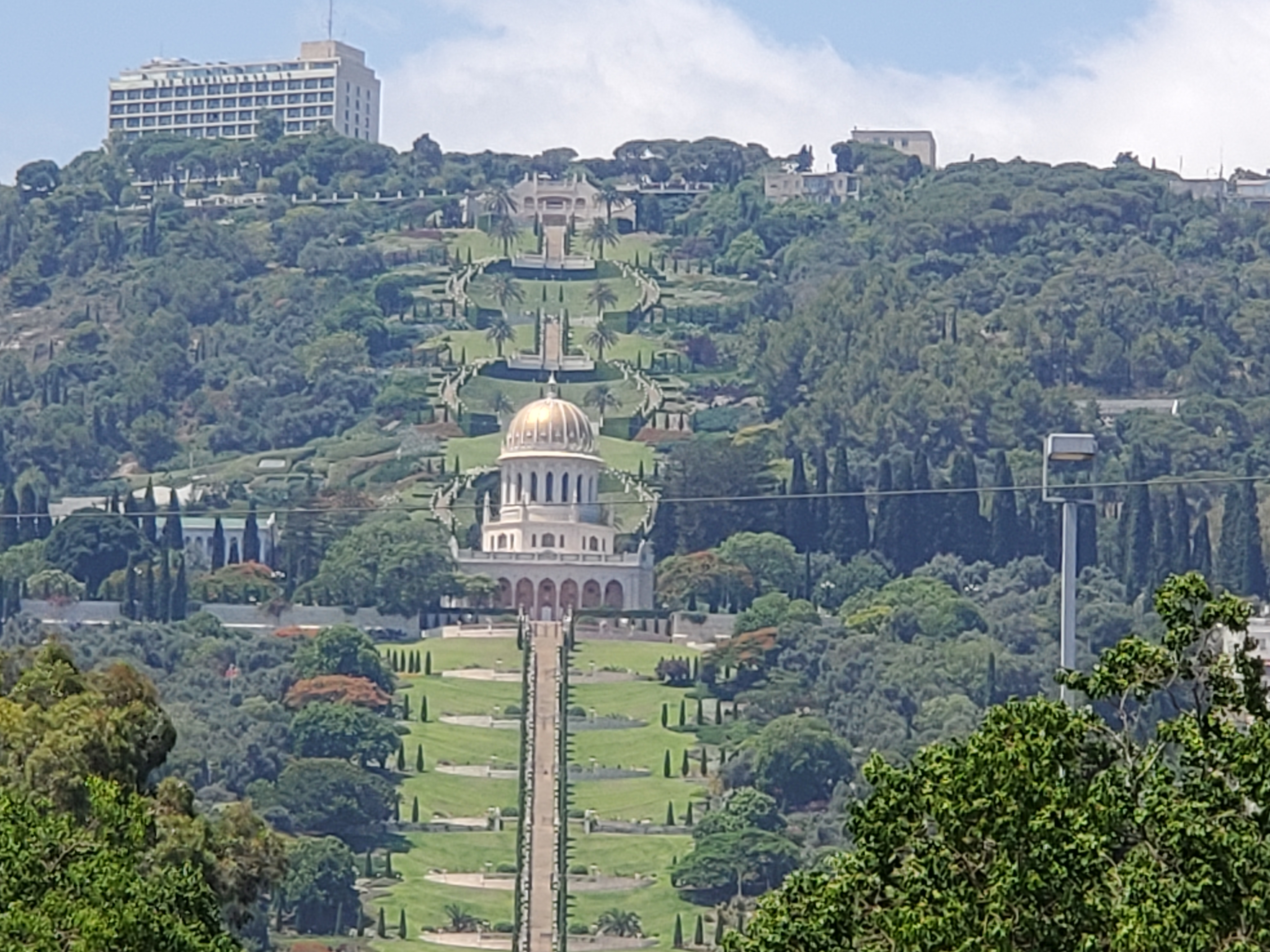
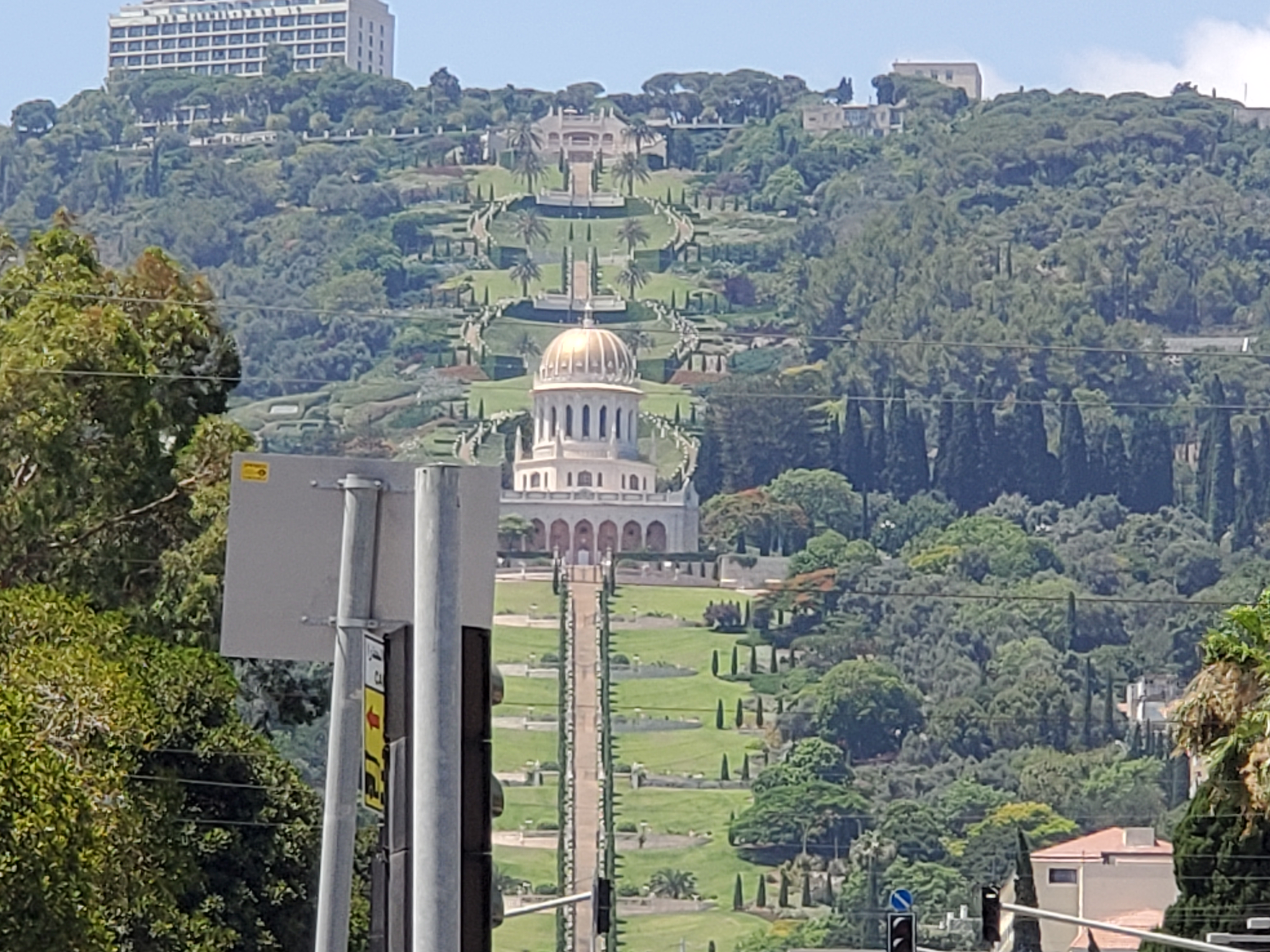
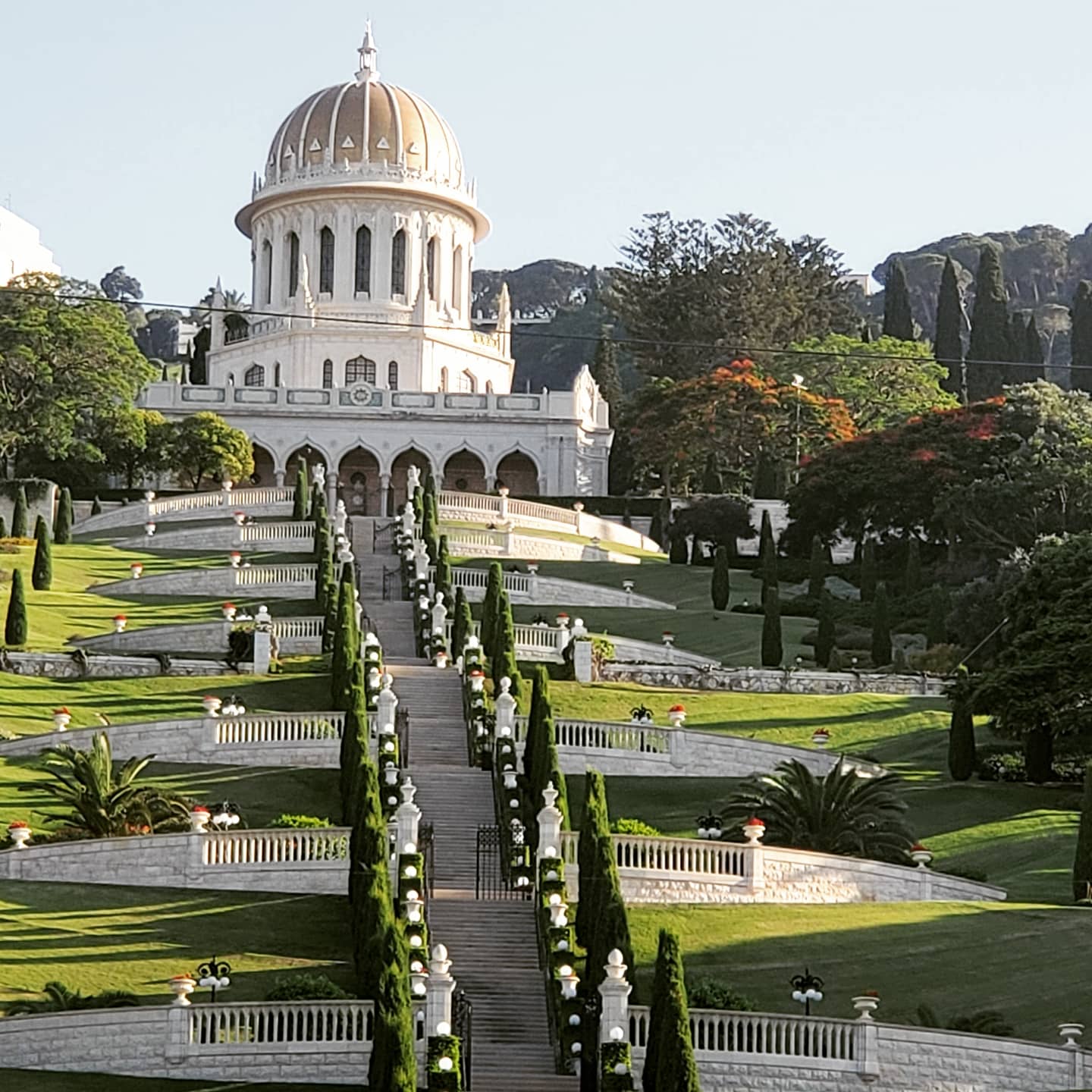
After Orli returned to the hotel, I continued all the way to the foot of Sderot Ben Gurion where it flowed into the port.  Looking backwards, the landscape was still dominated by the Bahai Temple and Gardens.

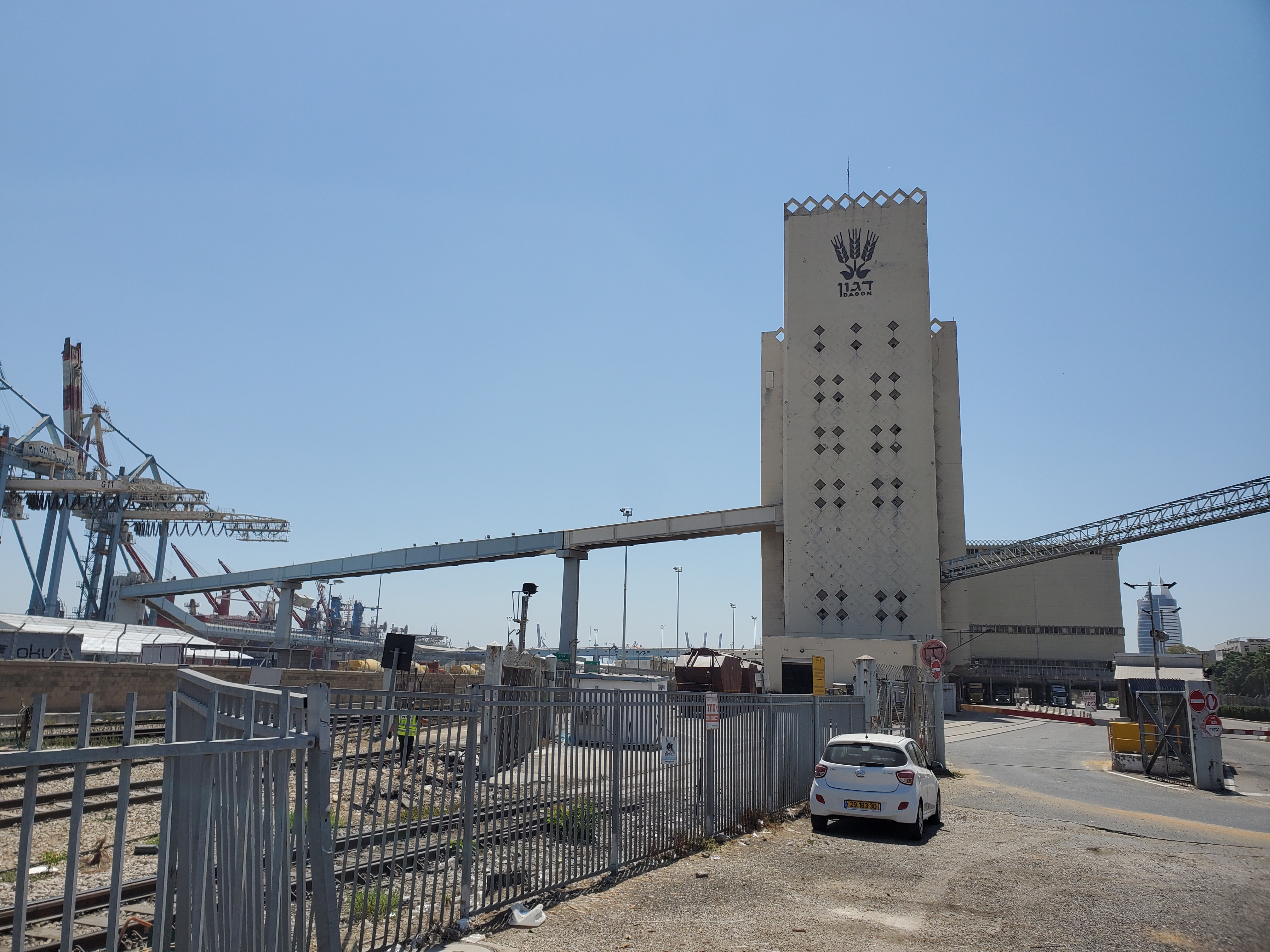
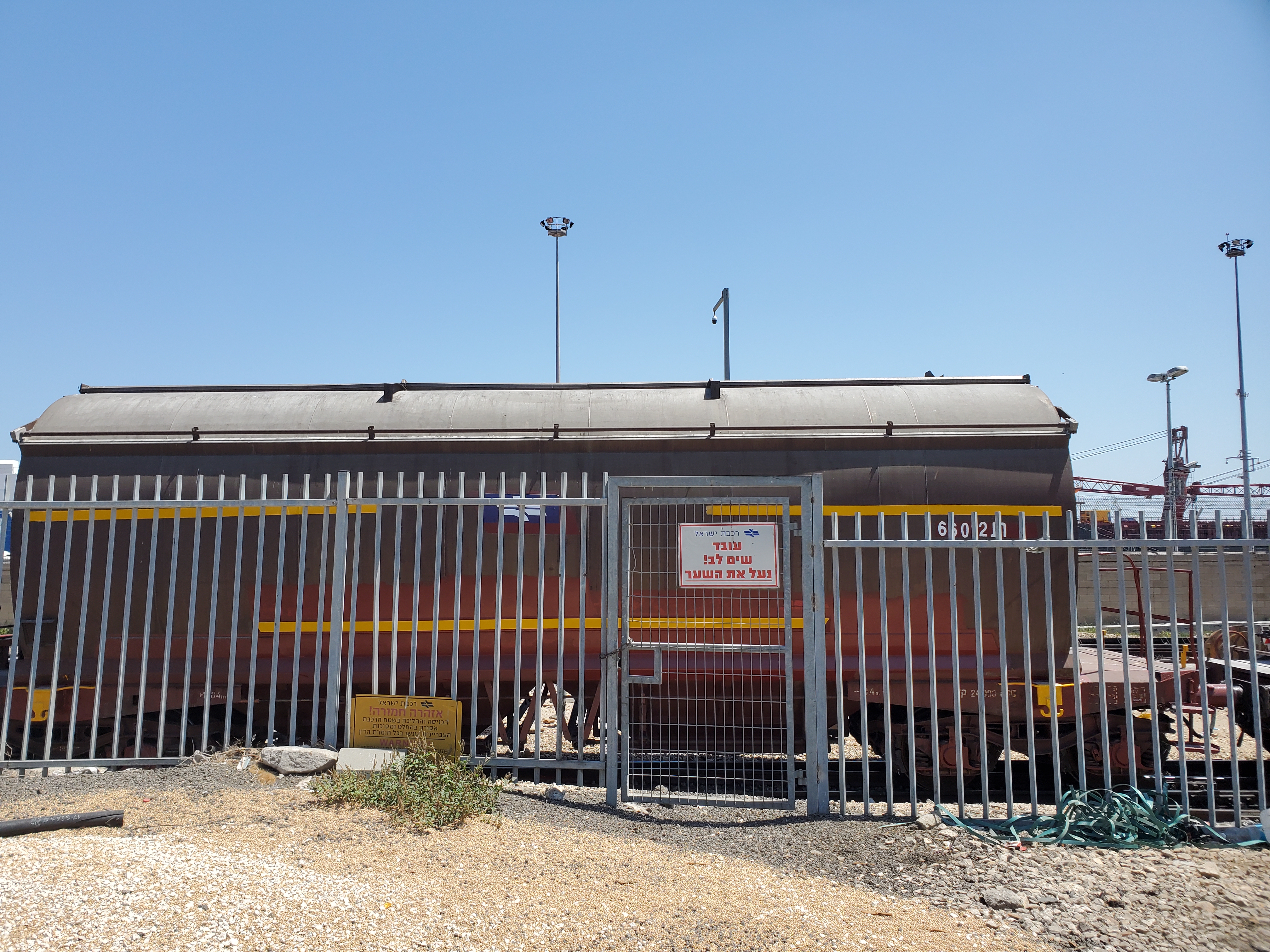
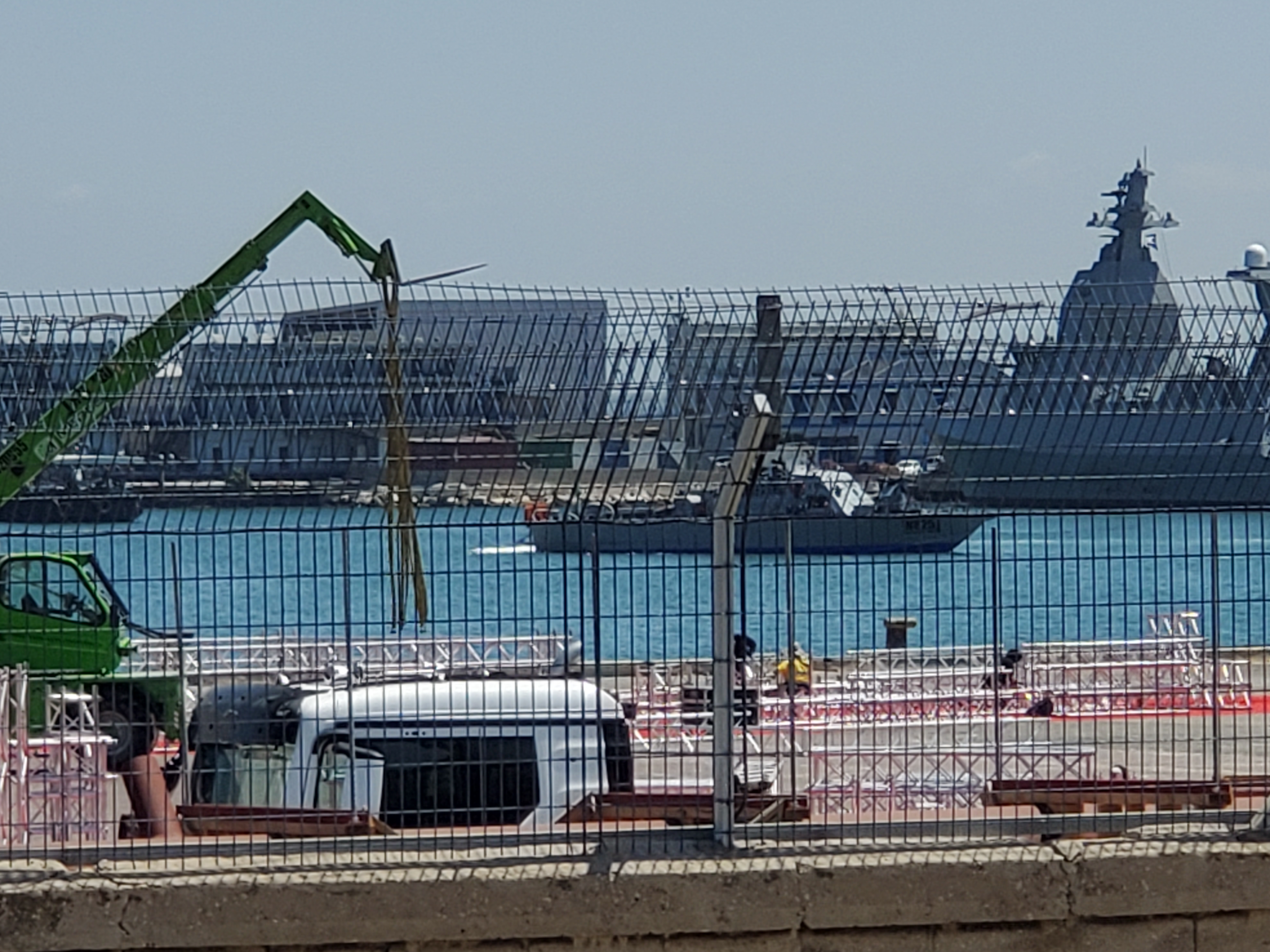
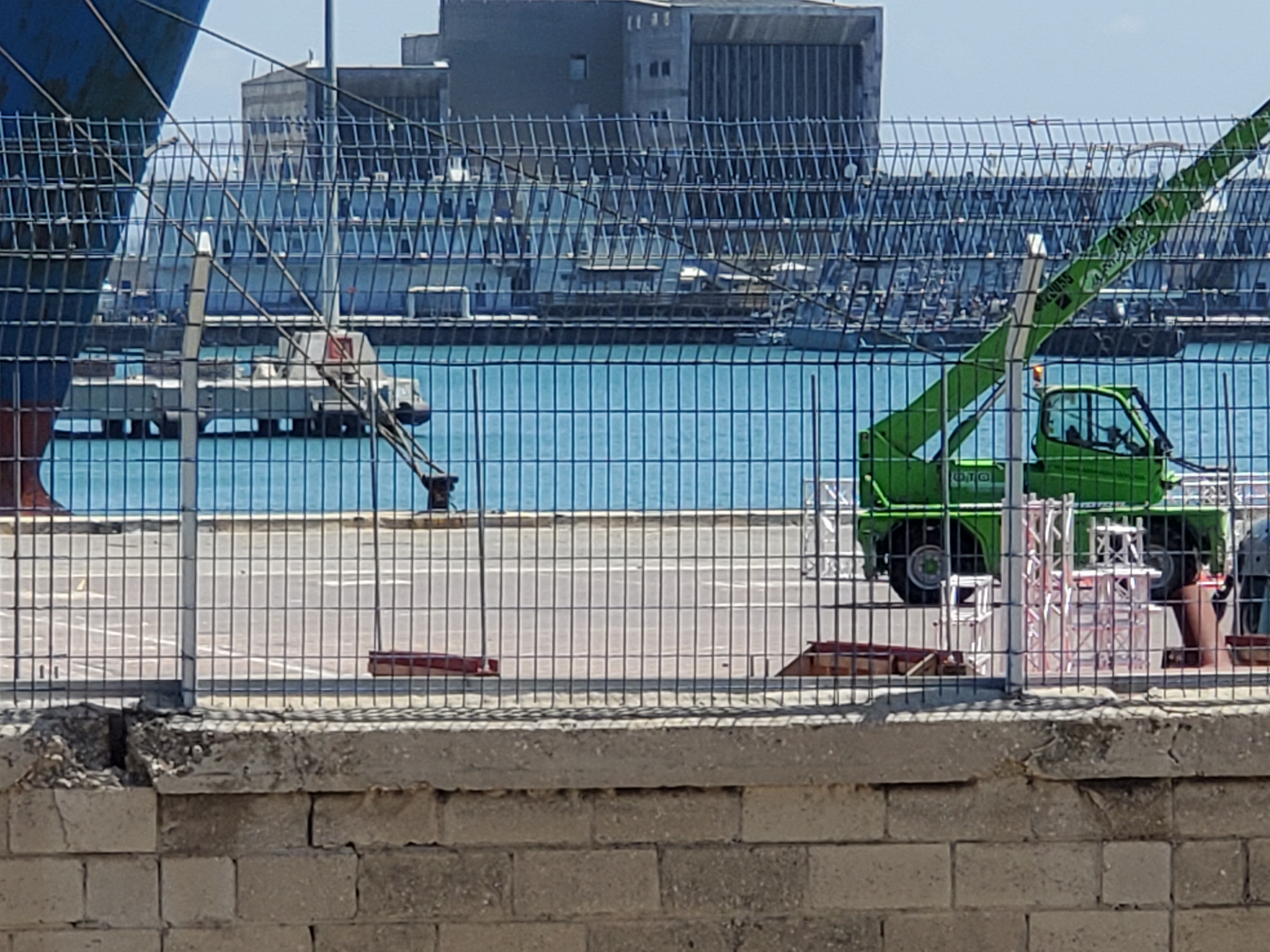
In front of me was a busy port.  Ships were being unloaded.  Containers were being moved by rail through the shipyards.  And trucks were constantly entering and leaving.  After watching for a few moments, I moved on.

Heading back up the hill, I paused to snap a few more pictures of the Bahai Gardens.

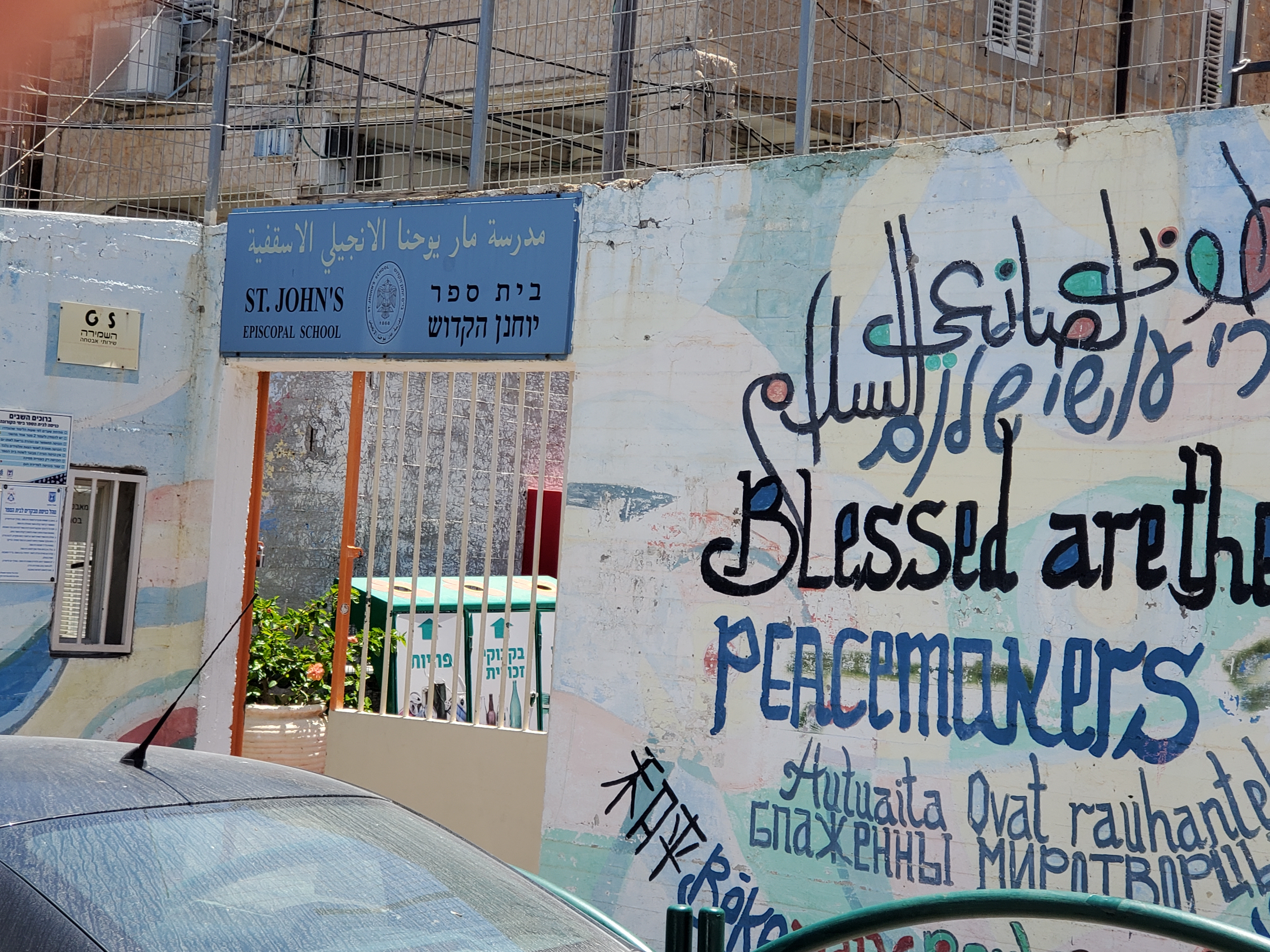
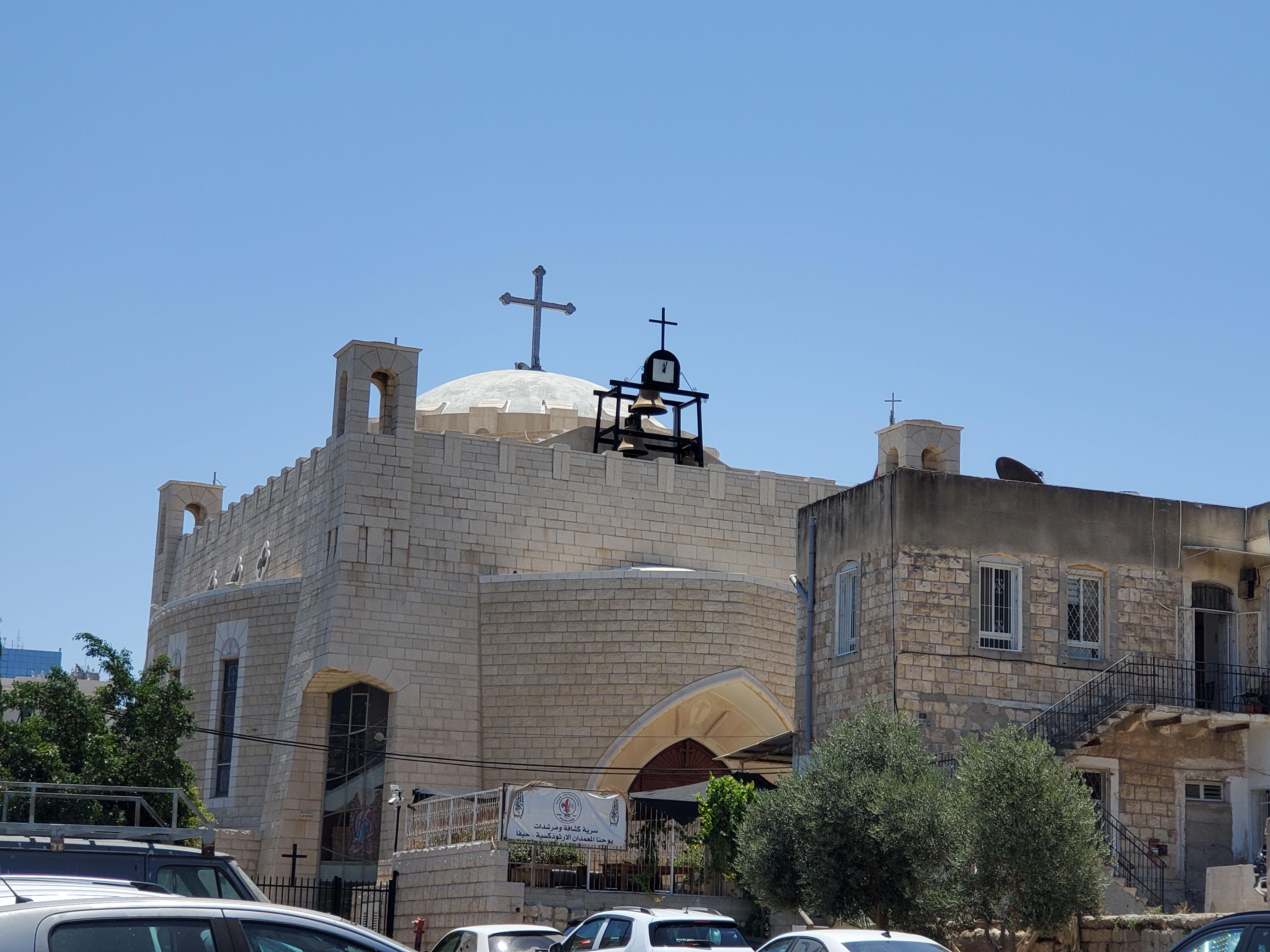
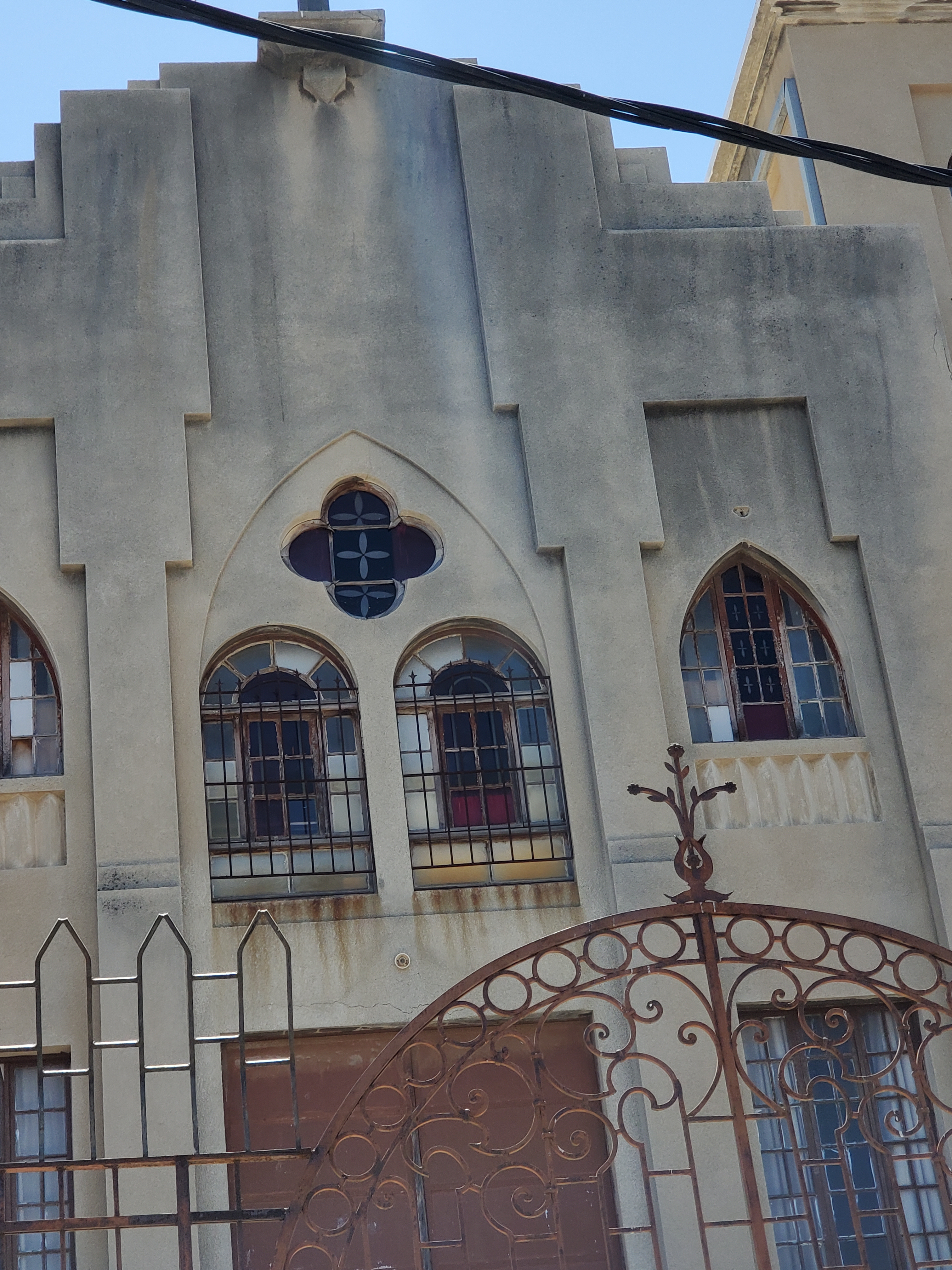
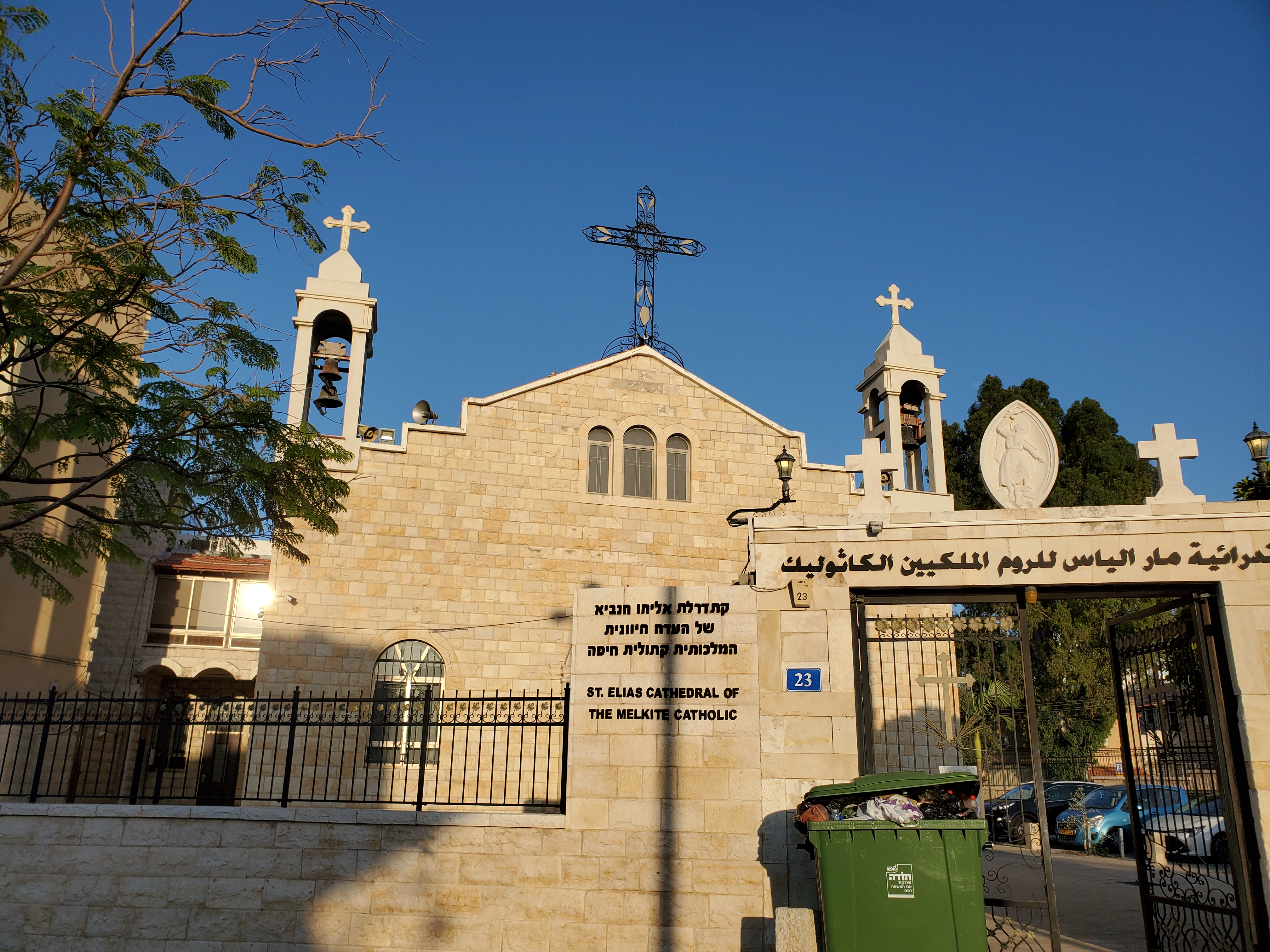
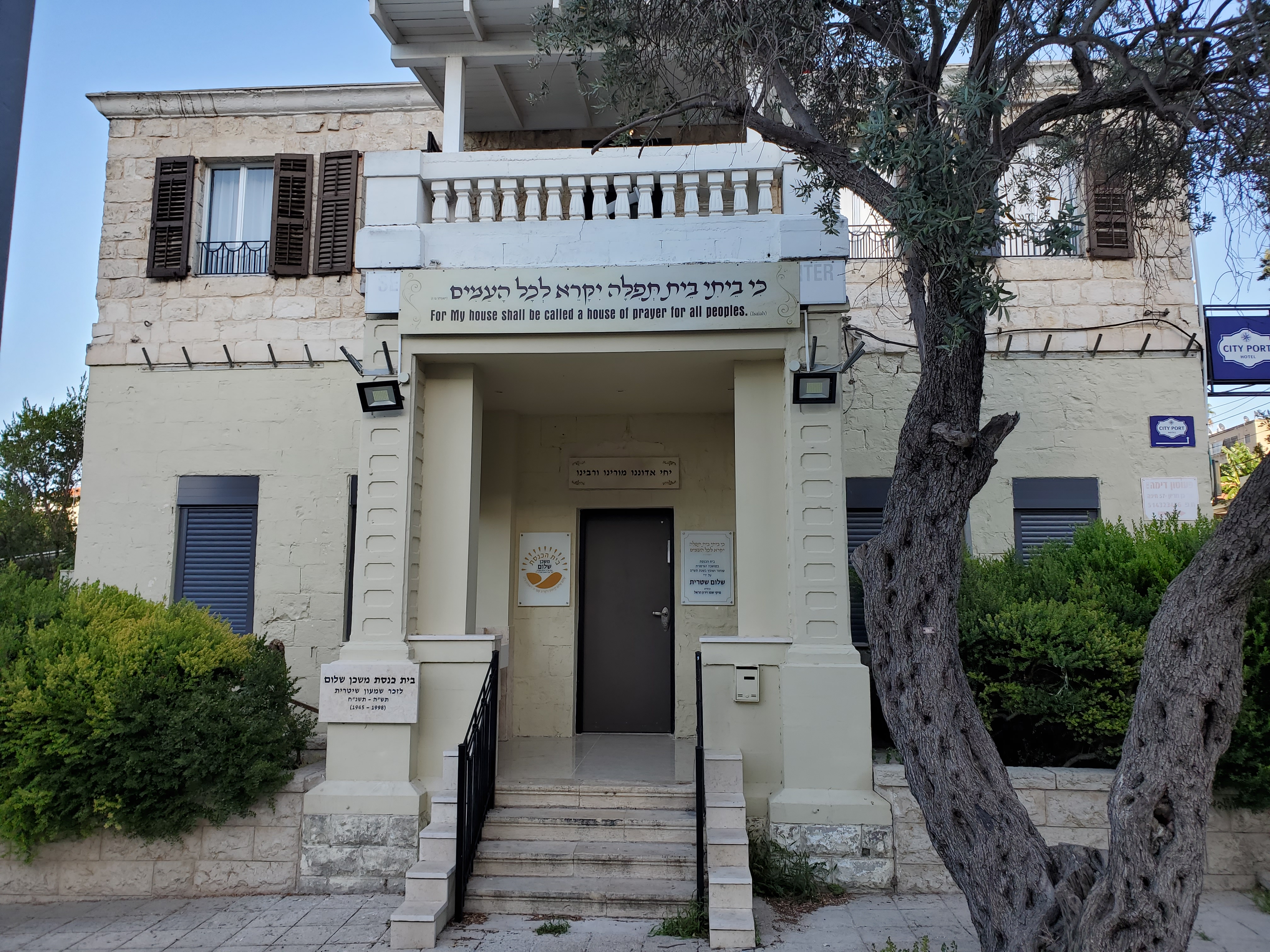
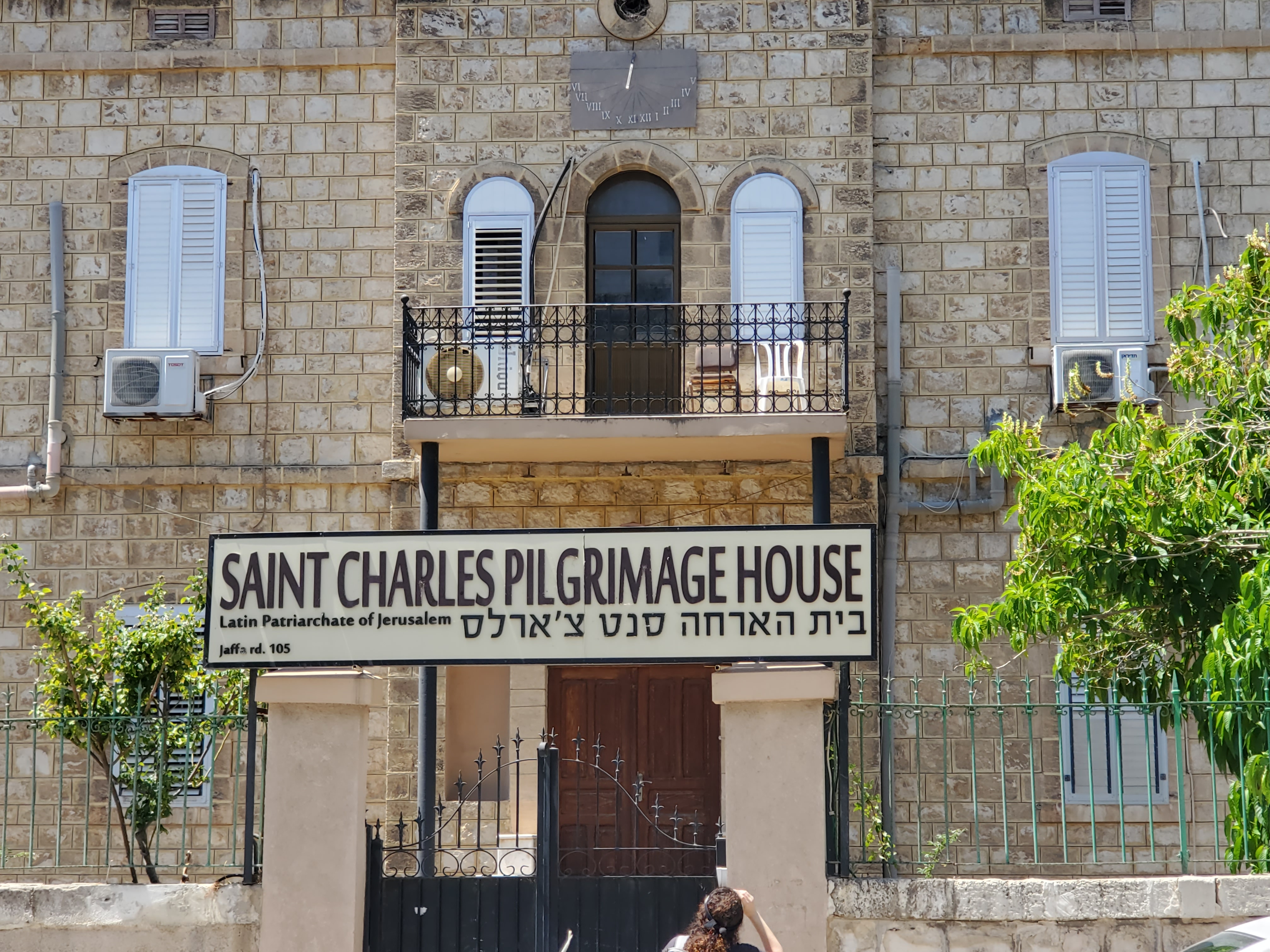
As I wandered through the nearby neighborhoods, I was struck by how many different faith communities were represented.  I saw a few small synagogues,  an Episcopal Church,  a Melkite Catholic Church, a Greek Orthodox Church, an Armenian Cburch, property owned by the Latin Patriarch of Jerusalem, a Sacred Heart complex and there were probably more that I missed.  It is an extremely diverse neighborhood.

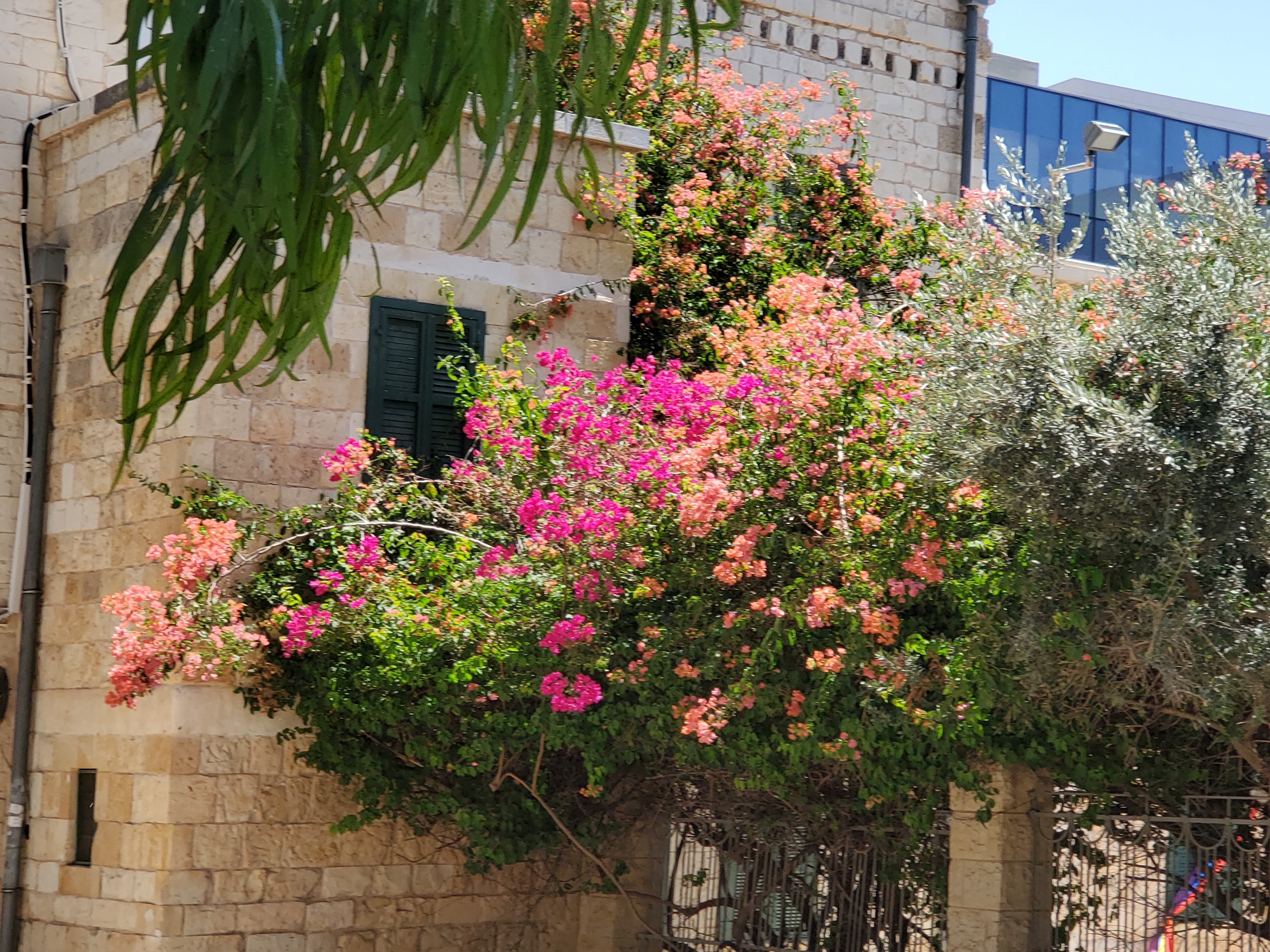
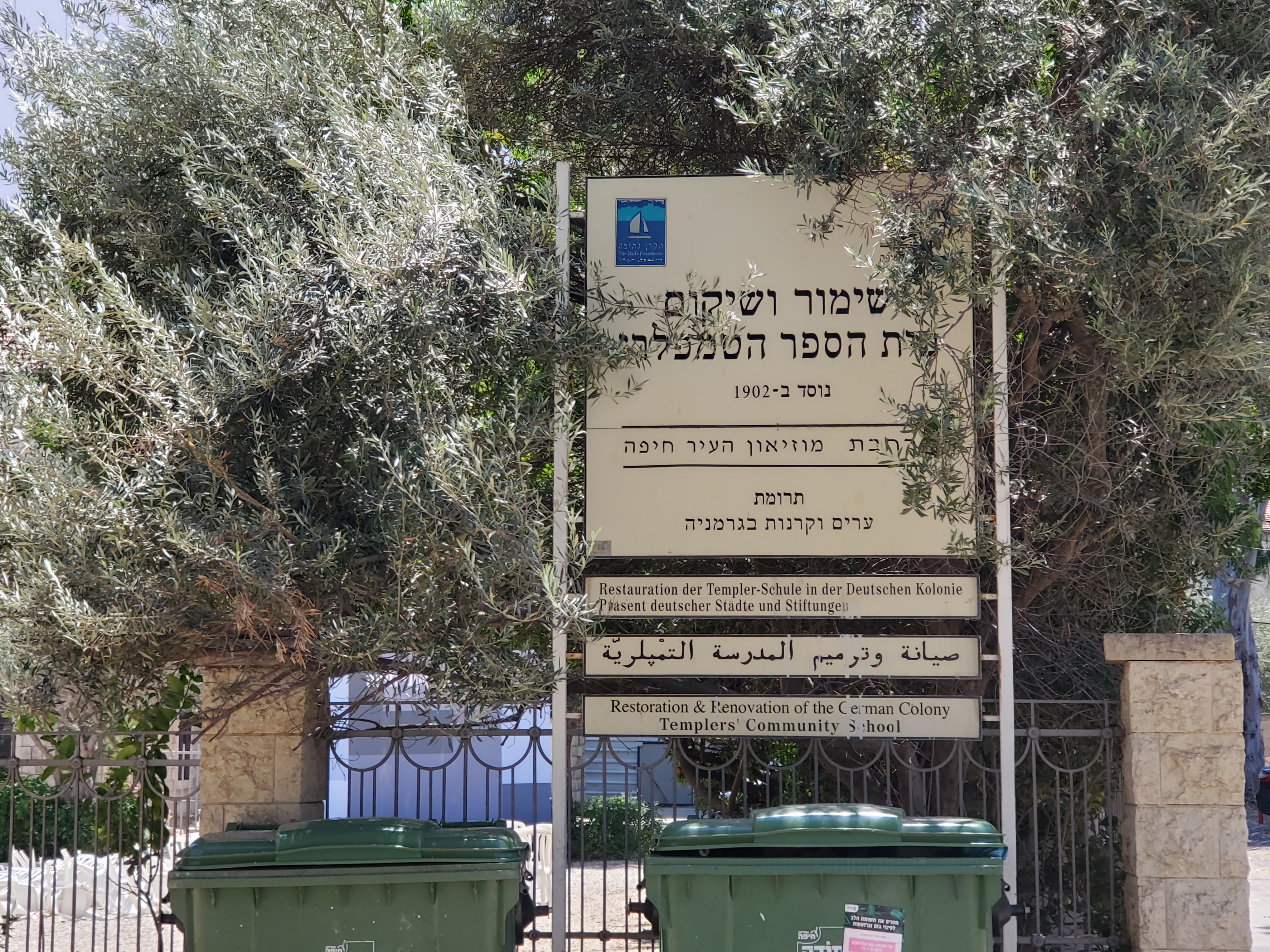
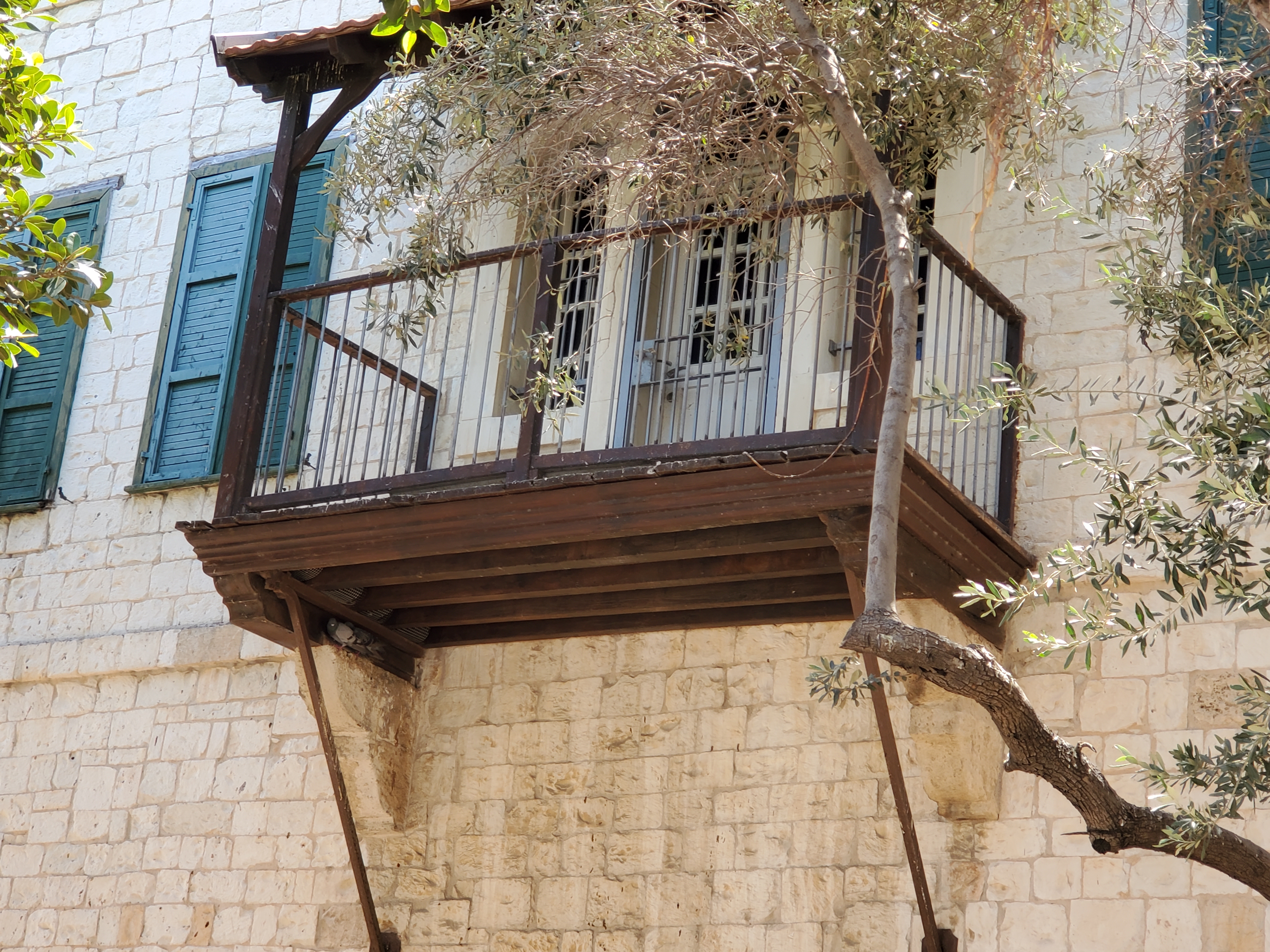
I wandered back through the German Colony looking at the original and renovated structures that were built in the late 1800’s through the early 1900’s when the Templars had their colony in Haifa.  The Templars were a German Protestant denomination that began in Germany in the 1800s.  They moved to Palestine to hasten the coming of Jesus.  Their buildings have become the Haifa City Museum, as well as numerous boutique hotels, restaurants, and bars.

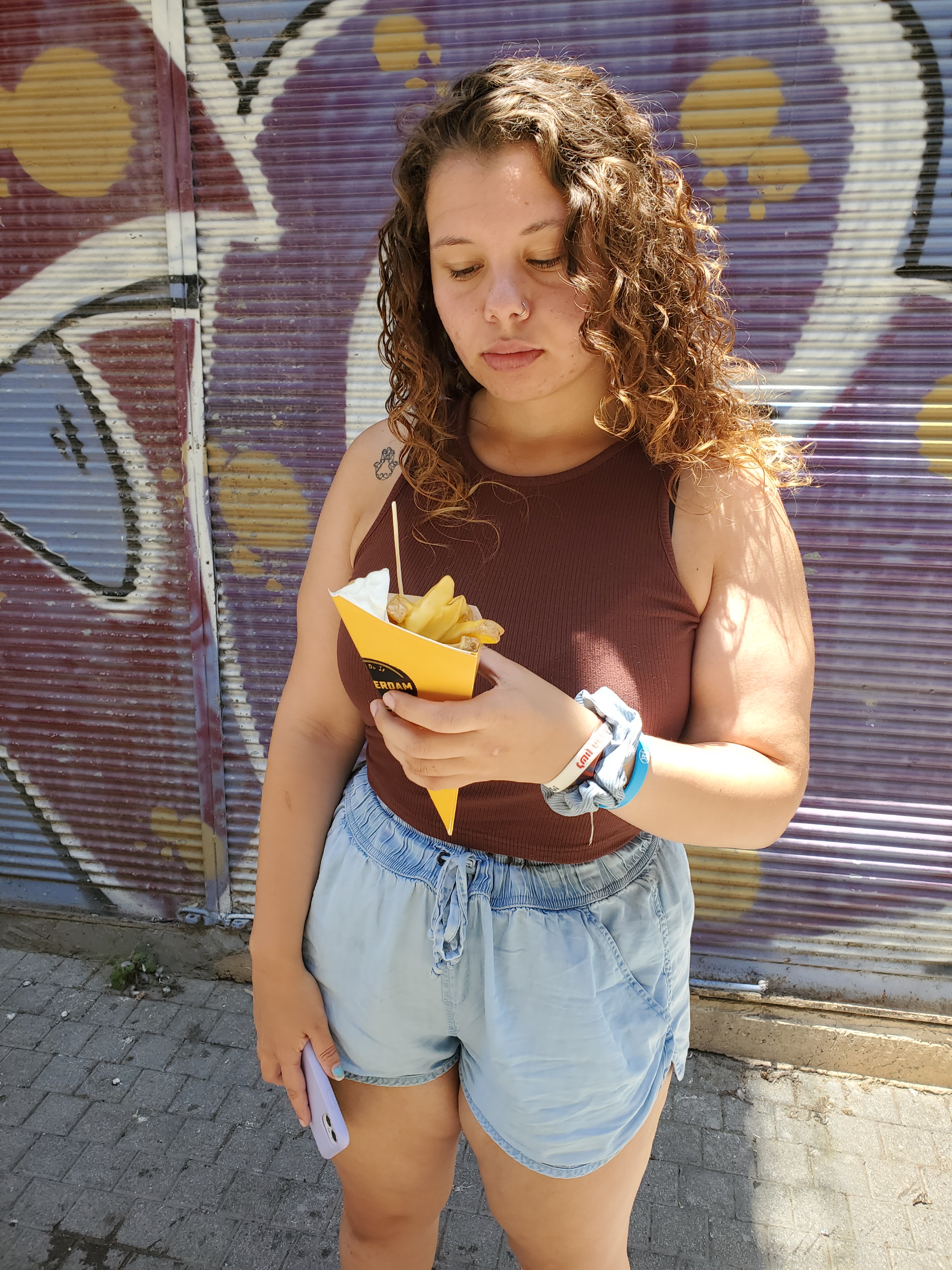
By now, it was early afternoon and ice cream shops were open.  I texted Orli and we decided  to walk about 20 minutes away to Golda’s, an Israeli chain.  Orli got  dark chocolate and mango, while I got the flavor of the week.  It tasted like a candy bar, but I still can’t figure out which one.   Orli was still a little hungry so we walked across the street to Amsterdam Fries, where she got French fries with 2 dipping sauces, mayo, and cheese.

We then headed back to the hotel to cool off and rest for a while.

Shuk Wadi Nisnas

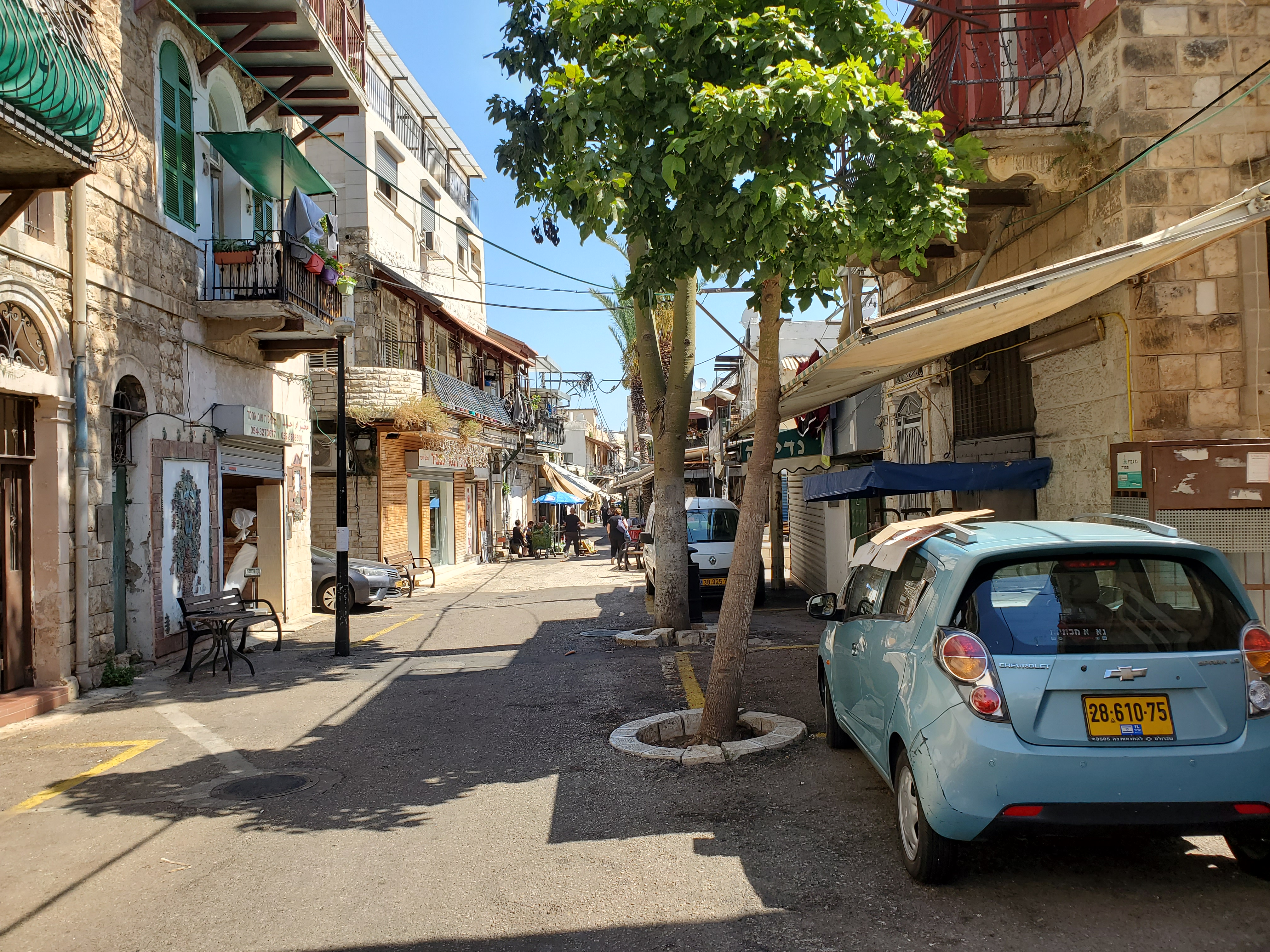
Not far from my hotel is the Shuk Wadi Nisnas or the Wadi Nisnas Market.  Wadi Nisnas, is a largely Christian Arab neighborhood of Haifa. Nisnas is the Arabic word for mongoose,  which must have been prevalent in the area at some time, however, I saw no urban mongooses (mongeese?).

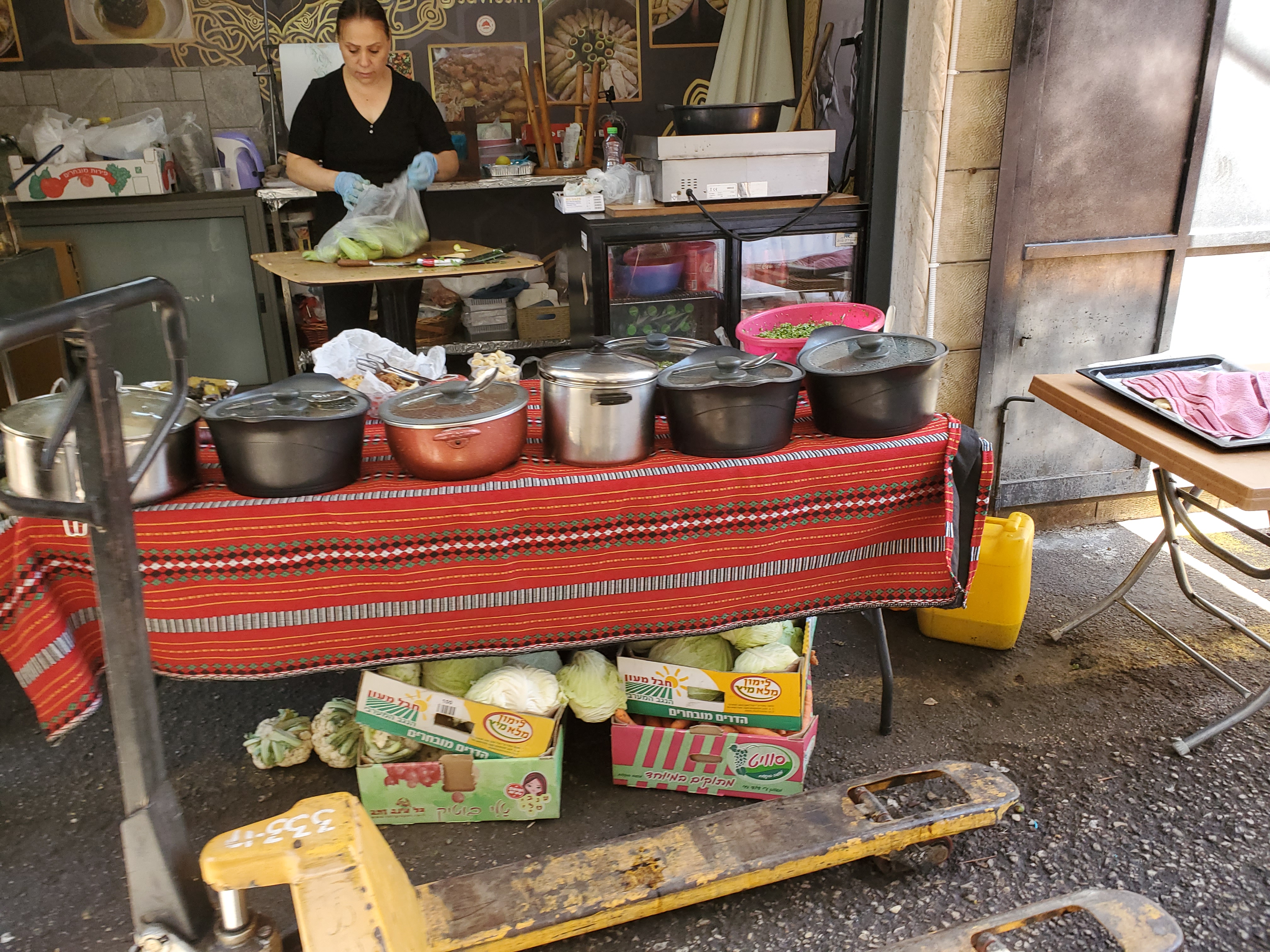
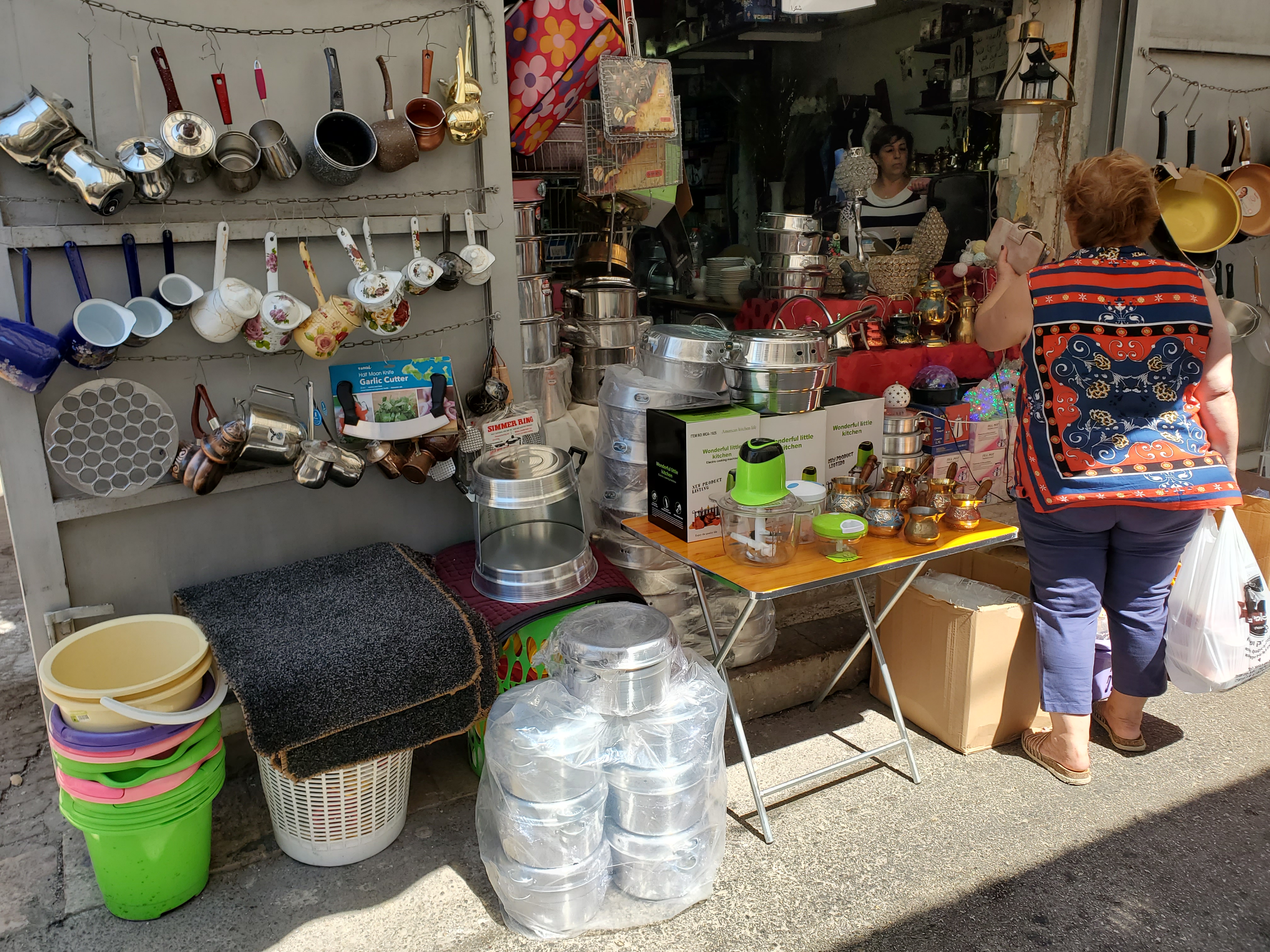
The neighborhood is a maze of alleyways and twisting streets filled with stalls, stores, bakeries and restaurants.   Many of the stalls featured home cooked foods enclosed within Dutch ovens or crocks atop tables at the front of the stall.  There was a good representation of the usual produce: onions,  peppers, tomatoes, cucumbers, melons, plums, and more.  But knowing that I would be in Haifa for a little more than 24 hours longer, I didn’t spend a lot of time focused on fresh produce.  I also had Orli with me.  Where I like to wander and see what I might find, Orli likes to have a clear objective and travel from point A to point B.

I decided as a result of both of those factors to take greater interest in some of the restaurants and shops in the shuk.  Three falafel shops, Falafel George,  Hazkenim Falafel, and Michelle Falafel all had consistently high reviews and were described by customers as the best in Haifa.  Two were across the street from each other, the third was about half a block away.  I decided to try Falafel George. 

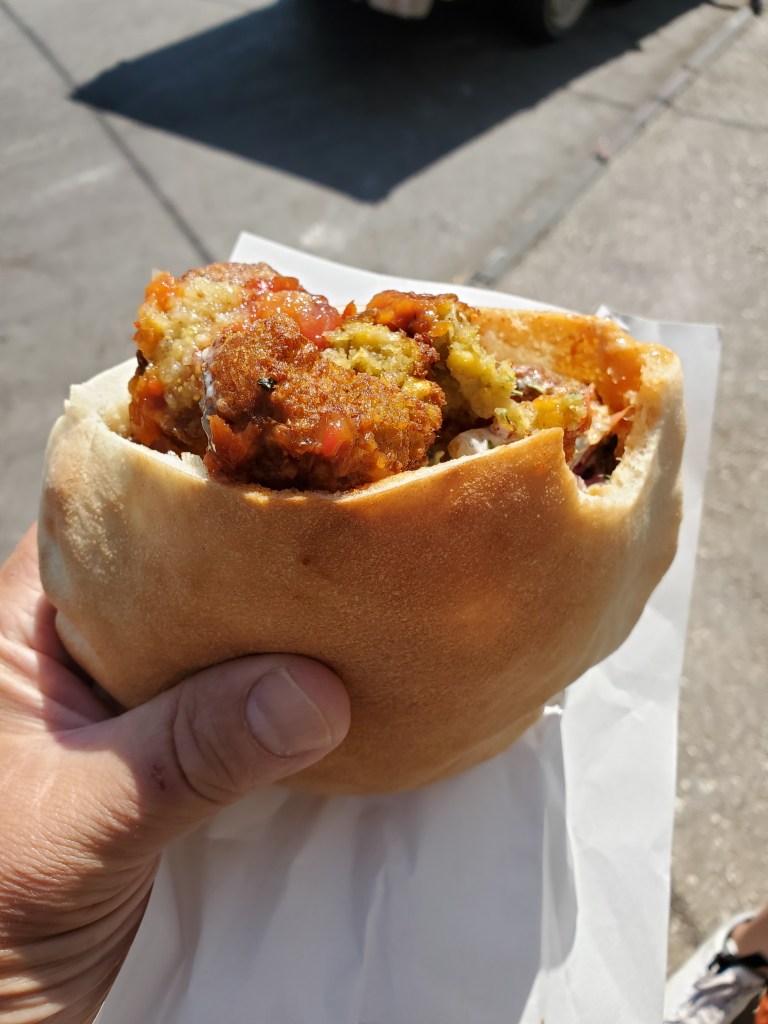
I’m glad I did.  I can see why so many rate it as the best in Haifa and some as the best in the country.  The pita was filled with falafel.  I lost count of how many.  The falafel were crispy, well-fried, but not over-fried.  And they were well seasoned on their own.  I had mine with hummus, techina, Israeli salad, spicy salad, cabbage and onion.  To that, I added in sections on top, garlic sauce, lemon sauce, harissa (North African spicy sauce), and zhoug (Yemenite spicy sauce).  The falafel was amazing.  All the ingredients were fresh and tasty.  The pita didn’t get soggy and fall apart.  And with each of the little sections I topped with one of the additional sauces, none of the sauces overwhelmed the taste of the falafel, but complemented it.  It was truly one of the best falafel that I had ever eaten.

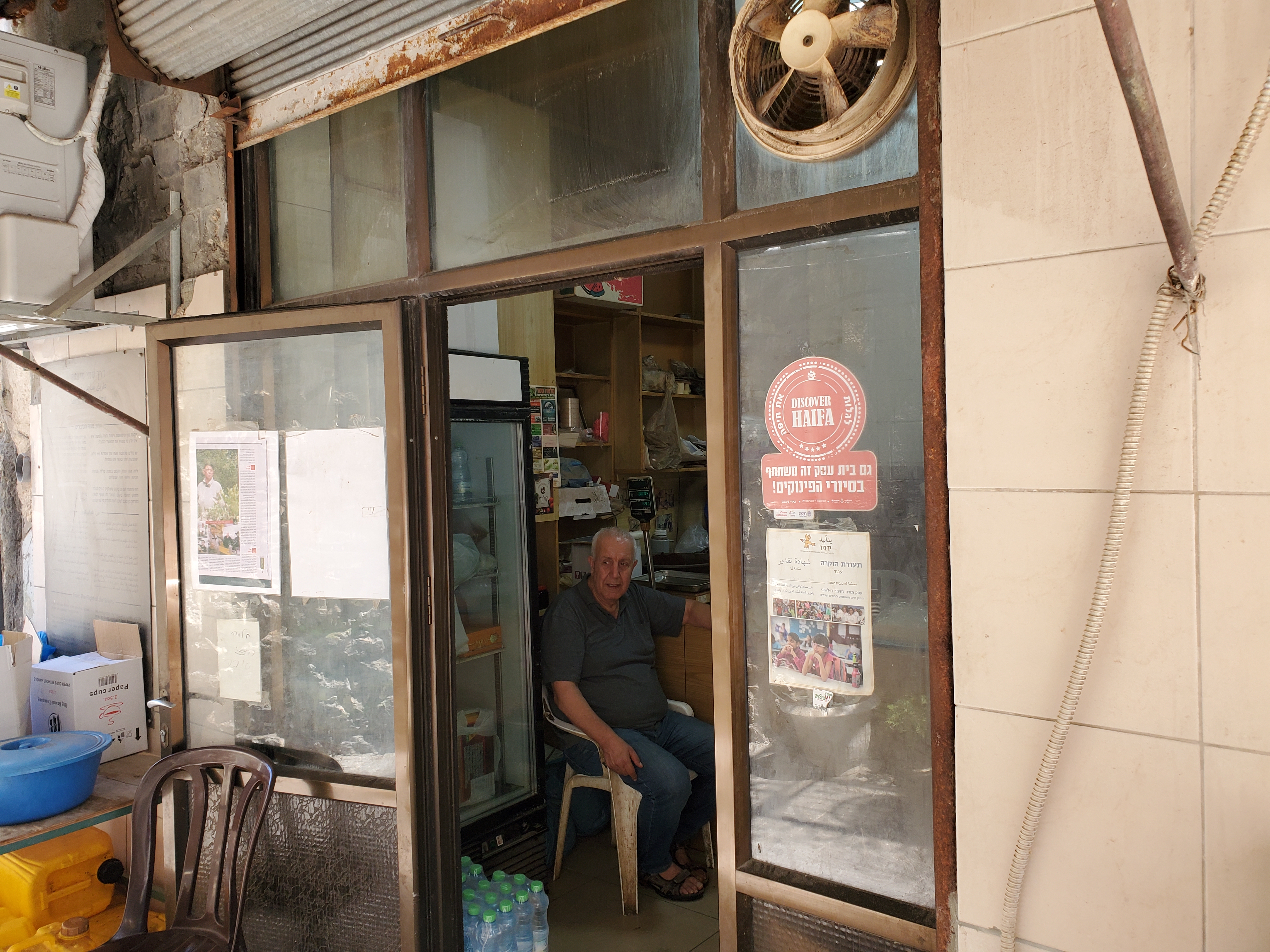
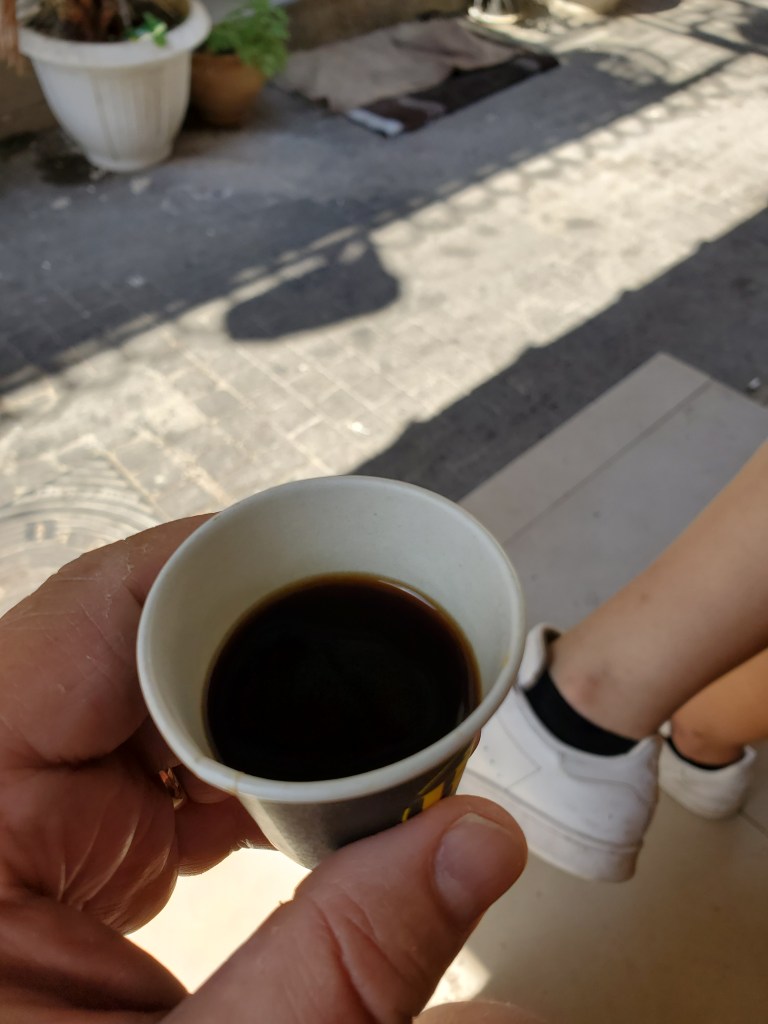
From Falafel George I went up the street, past Hazkenim Falafel and Michelle Falafel, to an alley that appeared unmarked.  In the middle of it  was a tiny shop, Café Haifa, in which the owner, Mustafa, roasted, ground, and served coffee, as well as selling spices, and sweets.  It was a tiny cup, but it was without a doubt, the best coffee I had ever had.  It was strong without being bitter, sweet, but not cloying, and the cardoman added flavor and aroma without being too perfume-like. 

I had wanted to try the hummus at Hummus Elsham, but had absolutely no room left for more food, so we wandered around the neighborhood for a few minutes more and headed back toward our hotel to tour the Bahai  Gardens. 

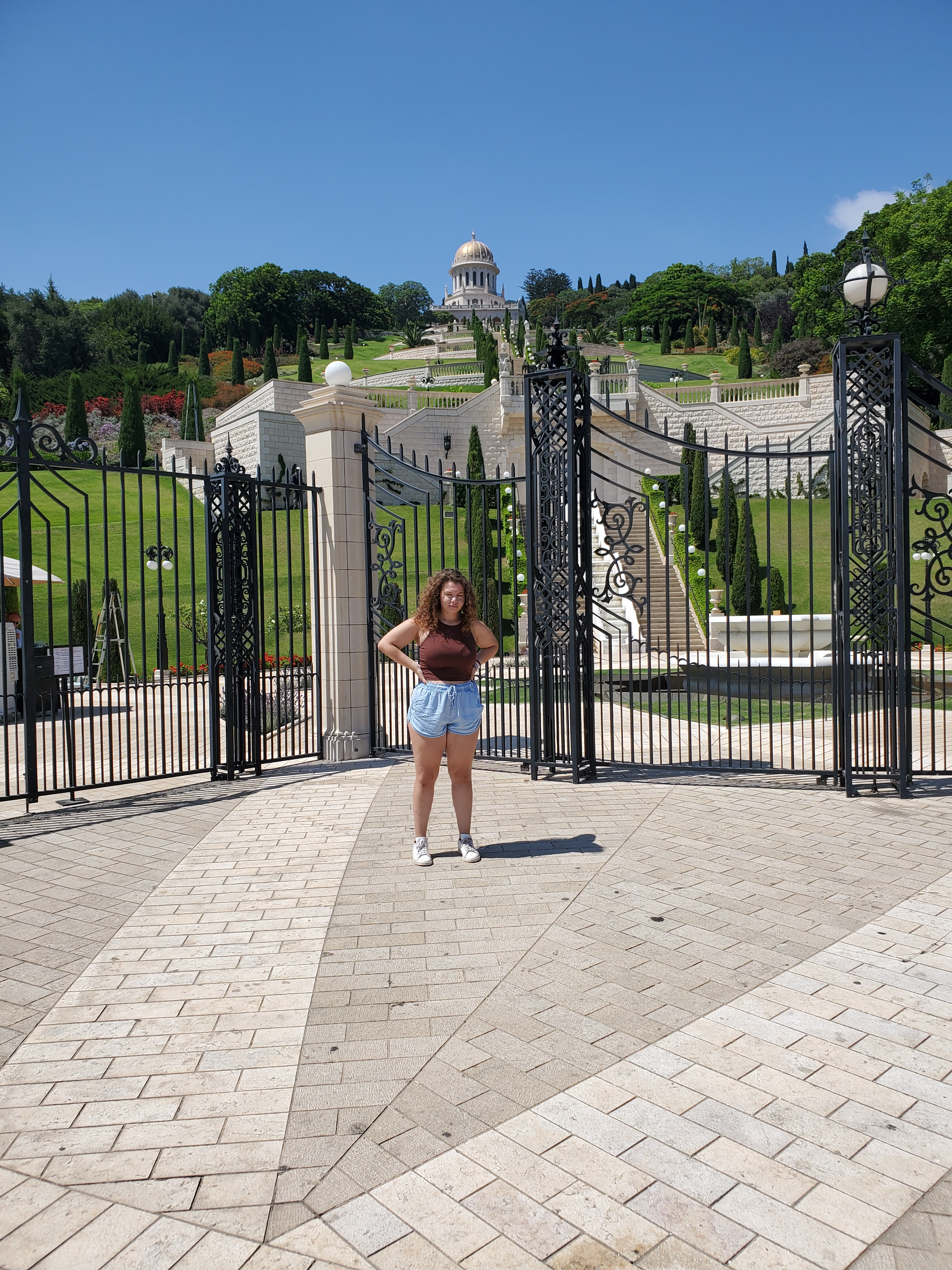
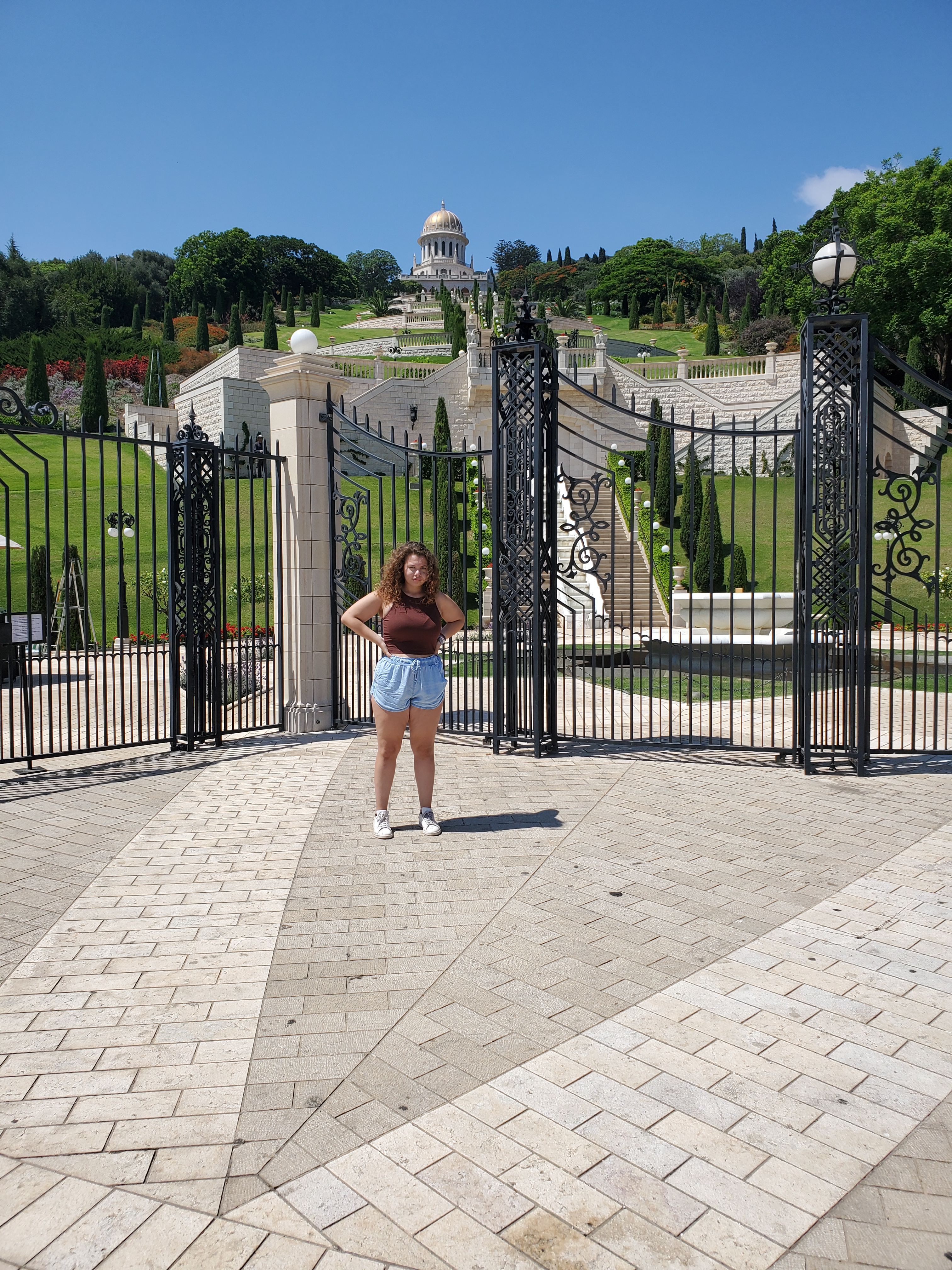
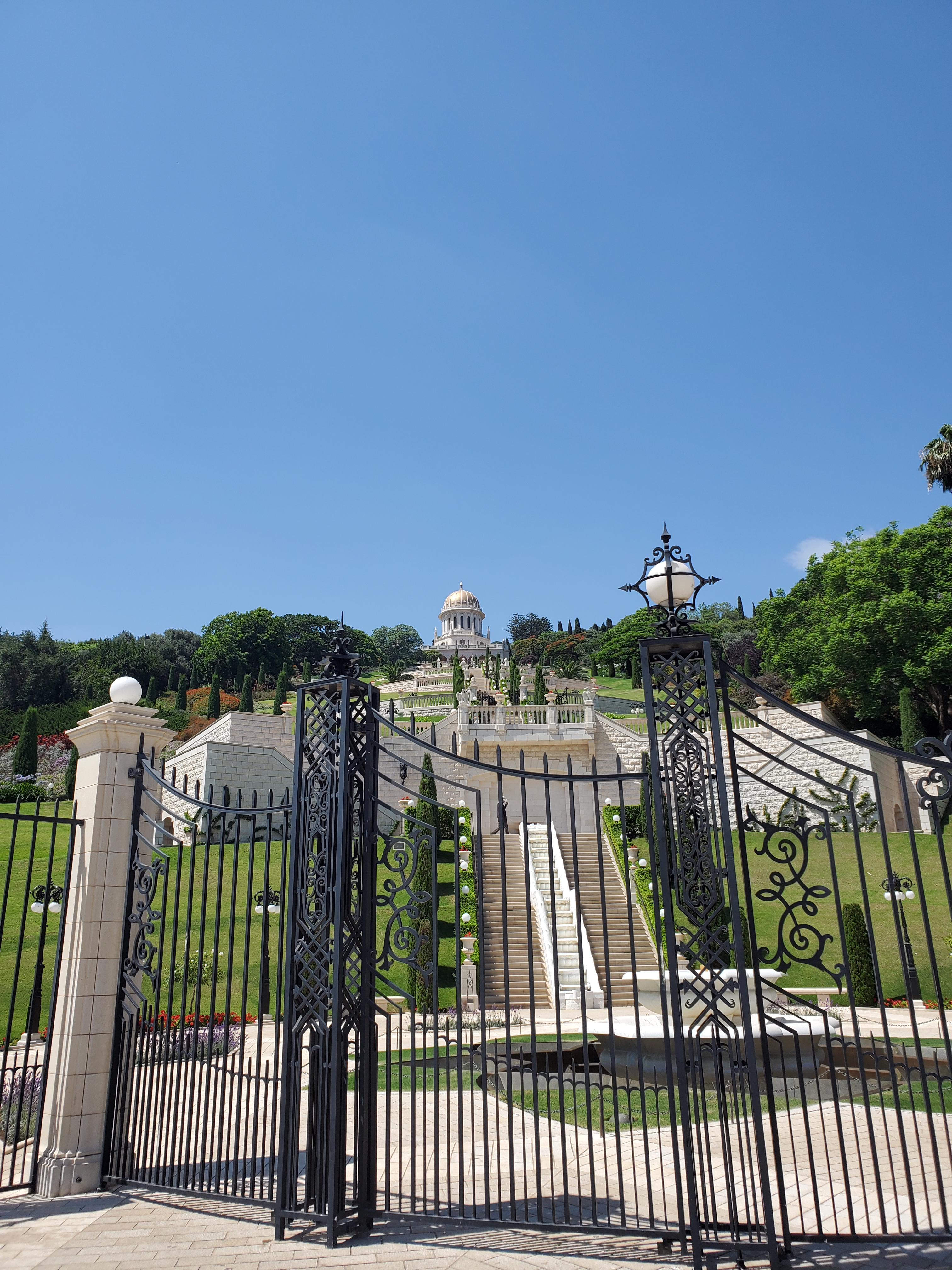
When we reached the gate, we learned that the gardens were closed to the public as a Covid precaution.  We snapped a few pictures, and then Orli wanted ice cream.   Most ice cream shops aren’t open before 11, so she headed back to the hotel and I continued to explore.

Leaving Nahariya

The time for my stay in Nahariya had come to an end.  We had to be out by Wednesday at 2.  I had my coffee and a light breakfast on the balcony, watching the early morning light reflecting off the waves and seeing the tayelet come to life with its joggers, walkers, and dog walkers. 

I finished folding the last of my laundry and trying to fit everything in a suitcase or bag and once I had most things packed away, I decided it was my turn to walk the tayelet one last time.  I did some walking, spent a little time in the water, recorded some final views of Nahariya, and then headed back home for a quick shower.

By this time, Orli was showing signs of life.  We finished off as much of the remcaseaining food as we could, packed some of it to go and looked at how much stuff we had to transport.  I had swapped out suitcases with my son Ari and instead of an enormous blue bag, I had a large yellow bag.  A large yellow bag filled with enough pumpkin seeds to ransom a mid-level potentate.  I also had a backpack  and a carry-on bag.  Orli had a large suitcase, a medium sized suitcase, and a backpack and we had some food to carry with us.  I agreed with Orli, pay a little more and take a taxi to Haifa.  It was just too much to maneuver on and off a train.

Our cab arrived at 2.  It took a few trips to take everything downstairs for the cab and then we were off to Haifa.  Haifa is only about a 40 minute drive, so we were soon at our hotel for the last few days of our trip. 

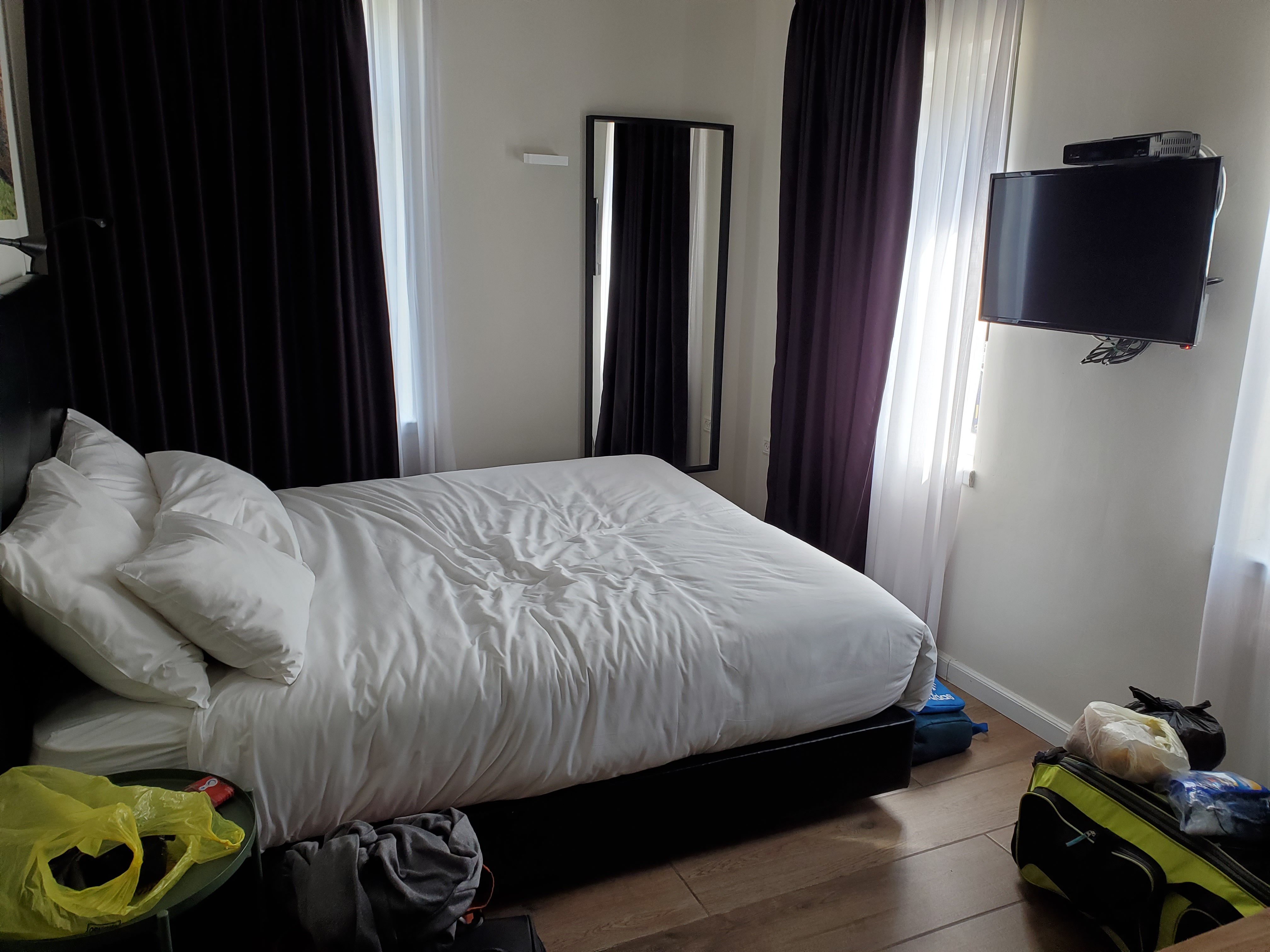
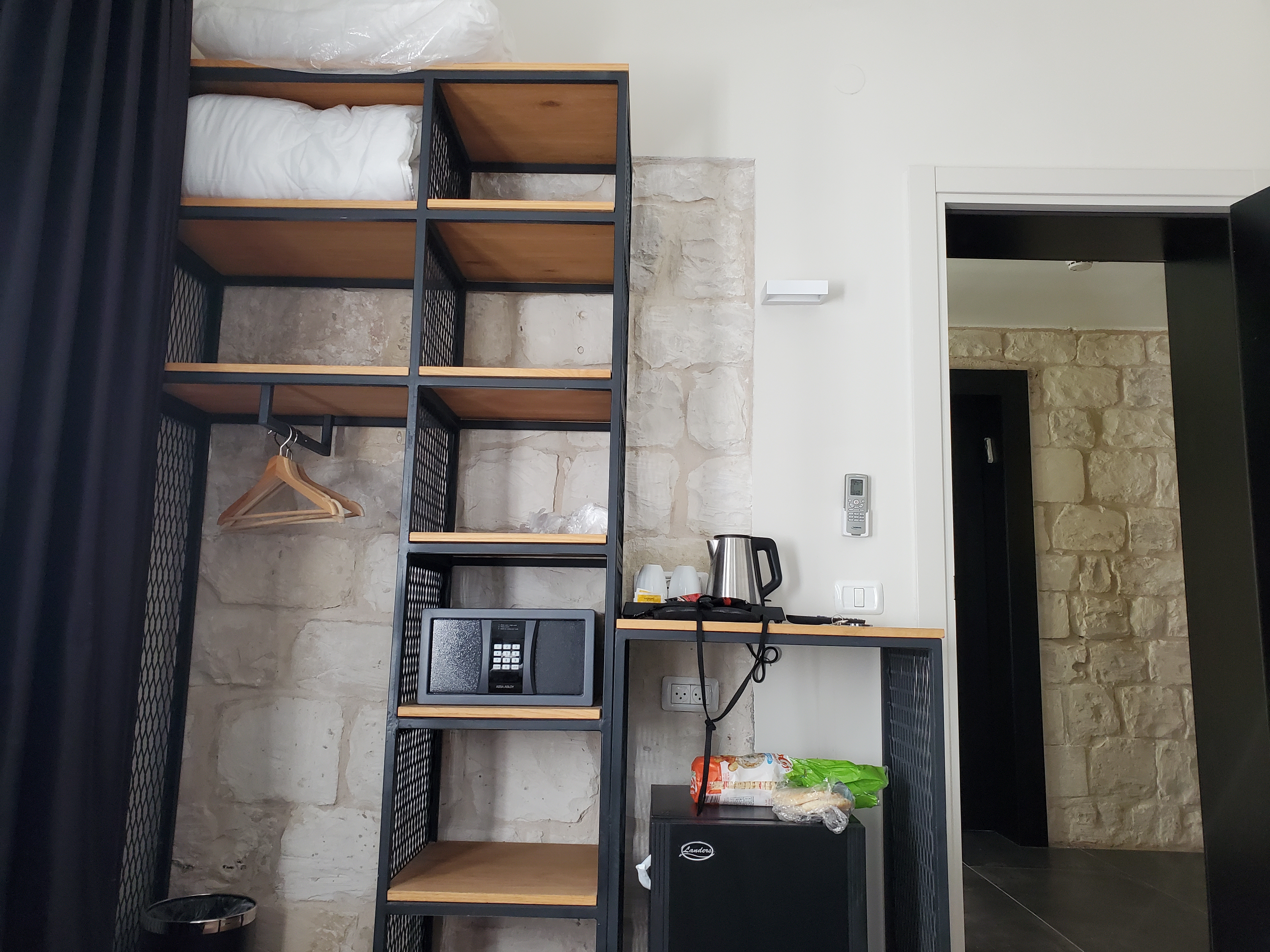
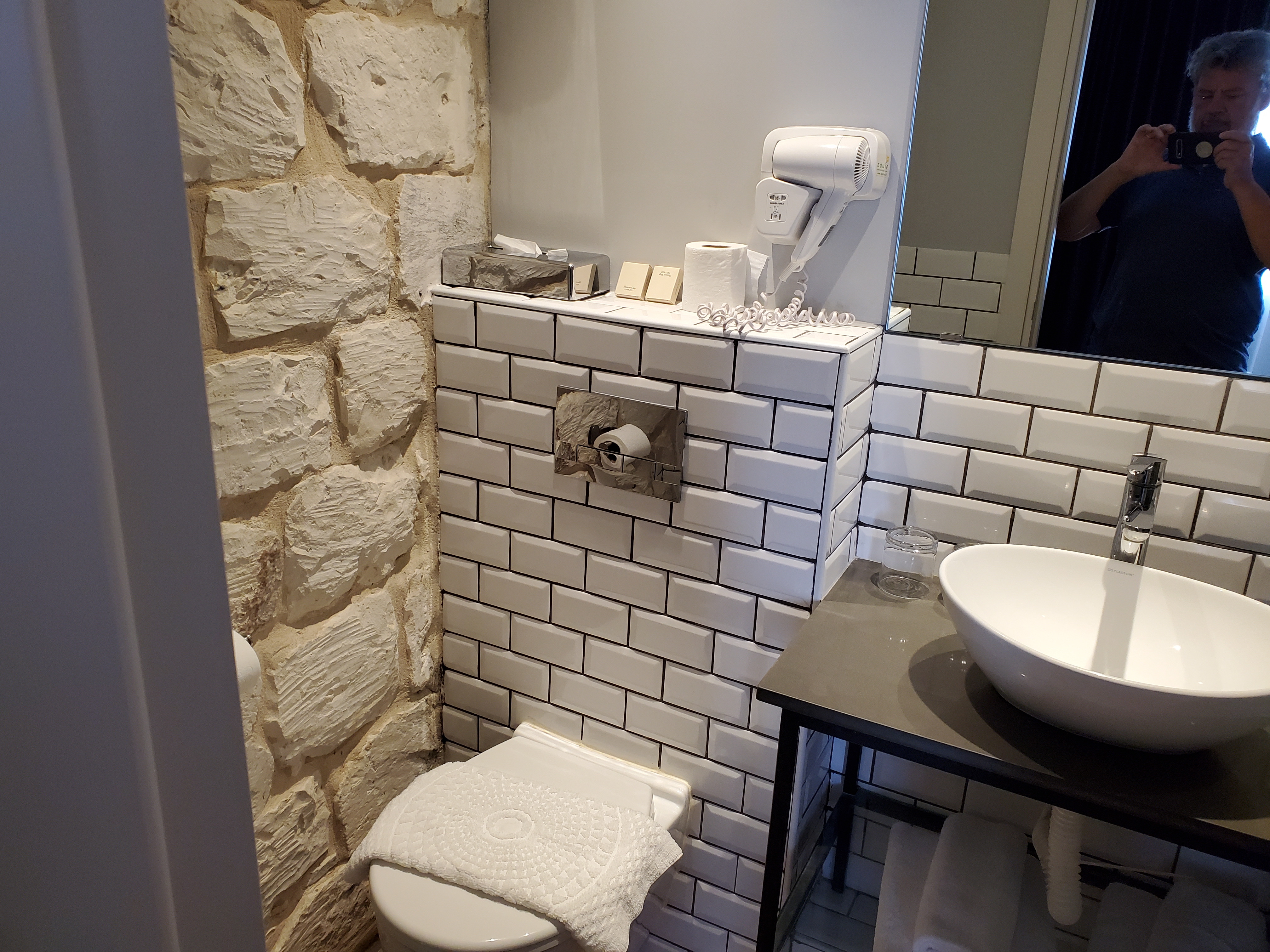
Now I picked the hotel online, by looking at what would be close to a bus line that could take us to Nahalal and would be affordable.  I really lucked out.  The City Port is in the German Colony, a stone’s throw from the Bahai Gardens, with plenty of restaurants along the same road. It’s also a beautiful small hotel. I had originally asked for a room with two twin beds. I received a phone call offering me a second room at half price if I wanted instead. I said we’d take a look at the rooms and decide then. The rooms were beautiful, but small, so we opted for the second room.

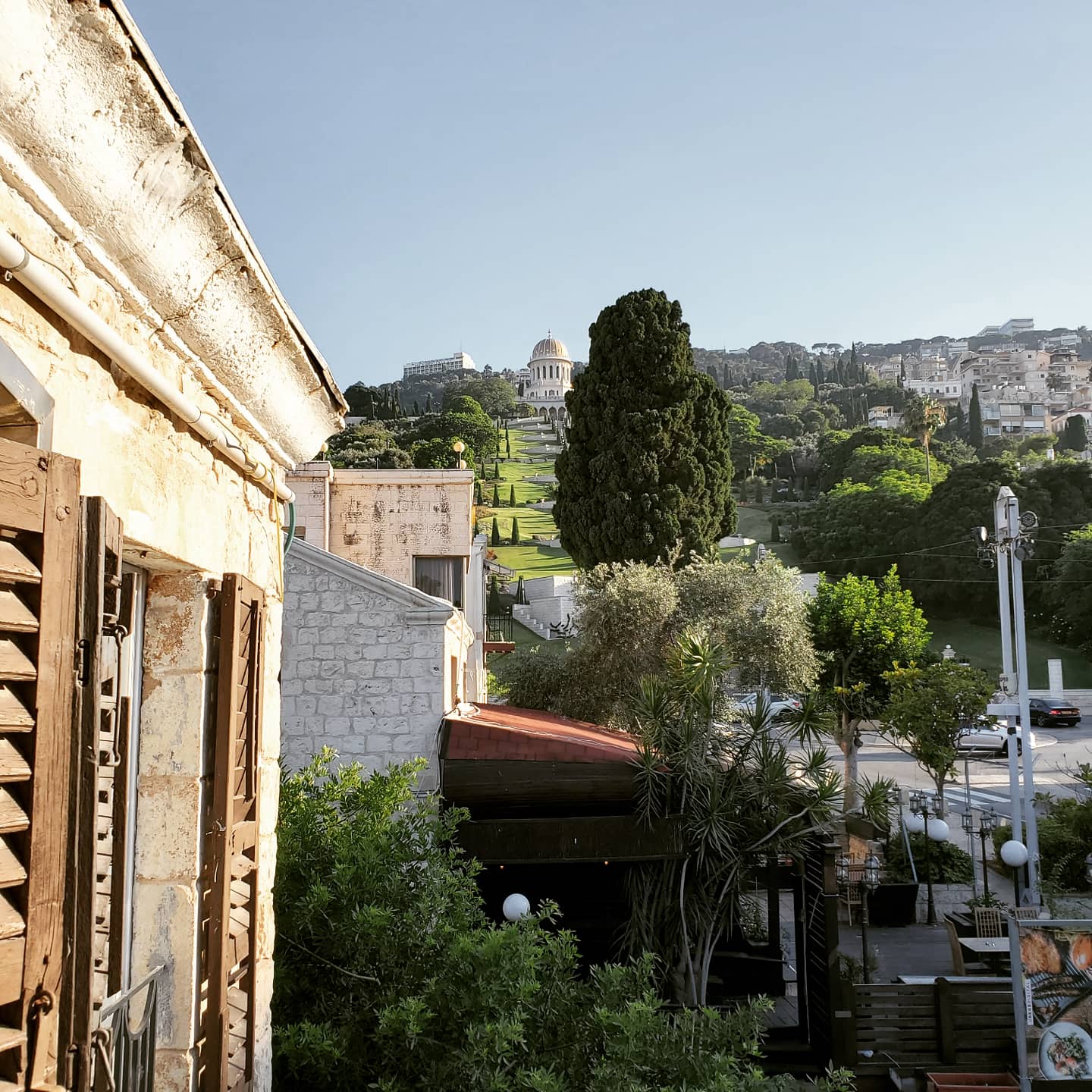
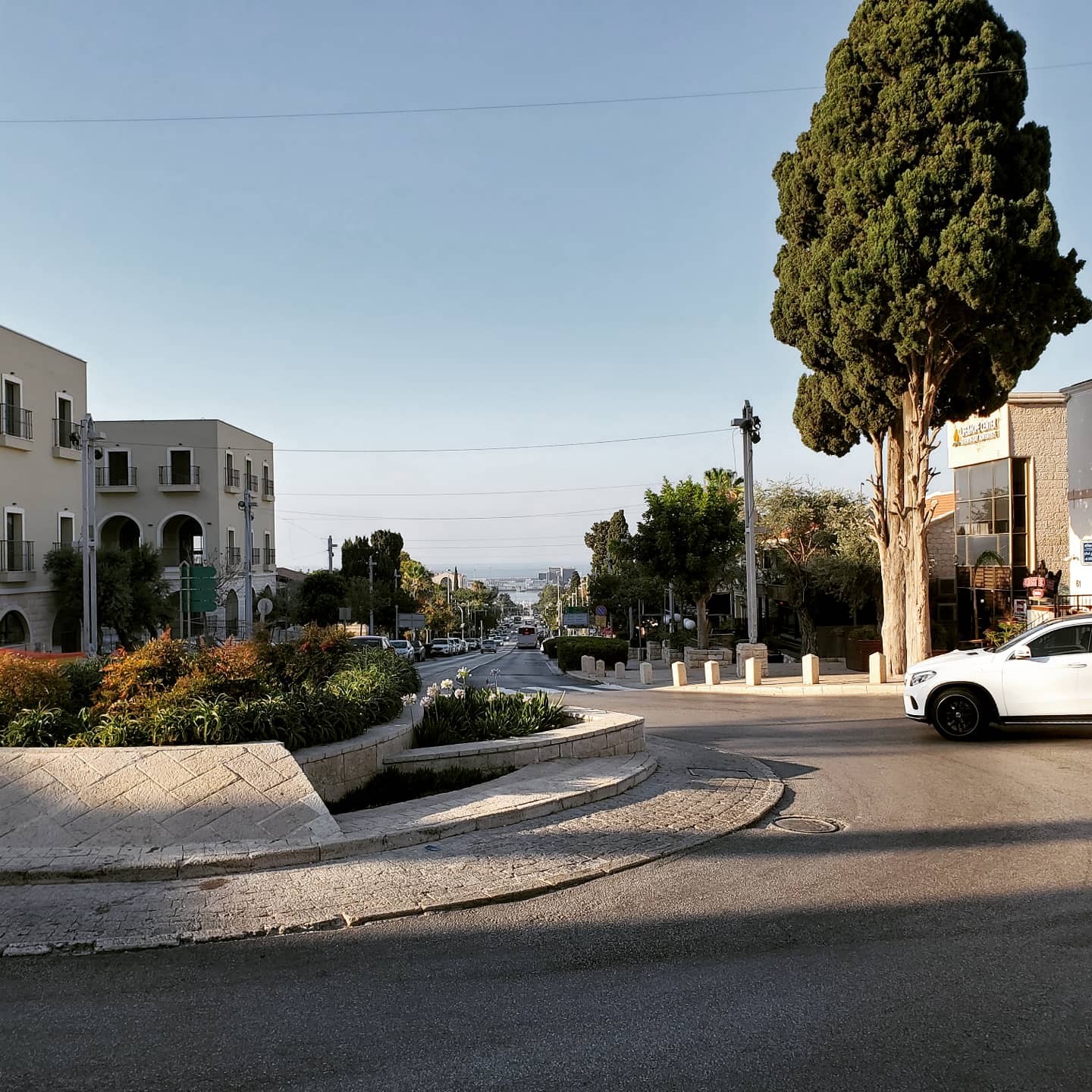
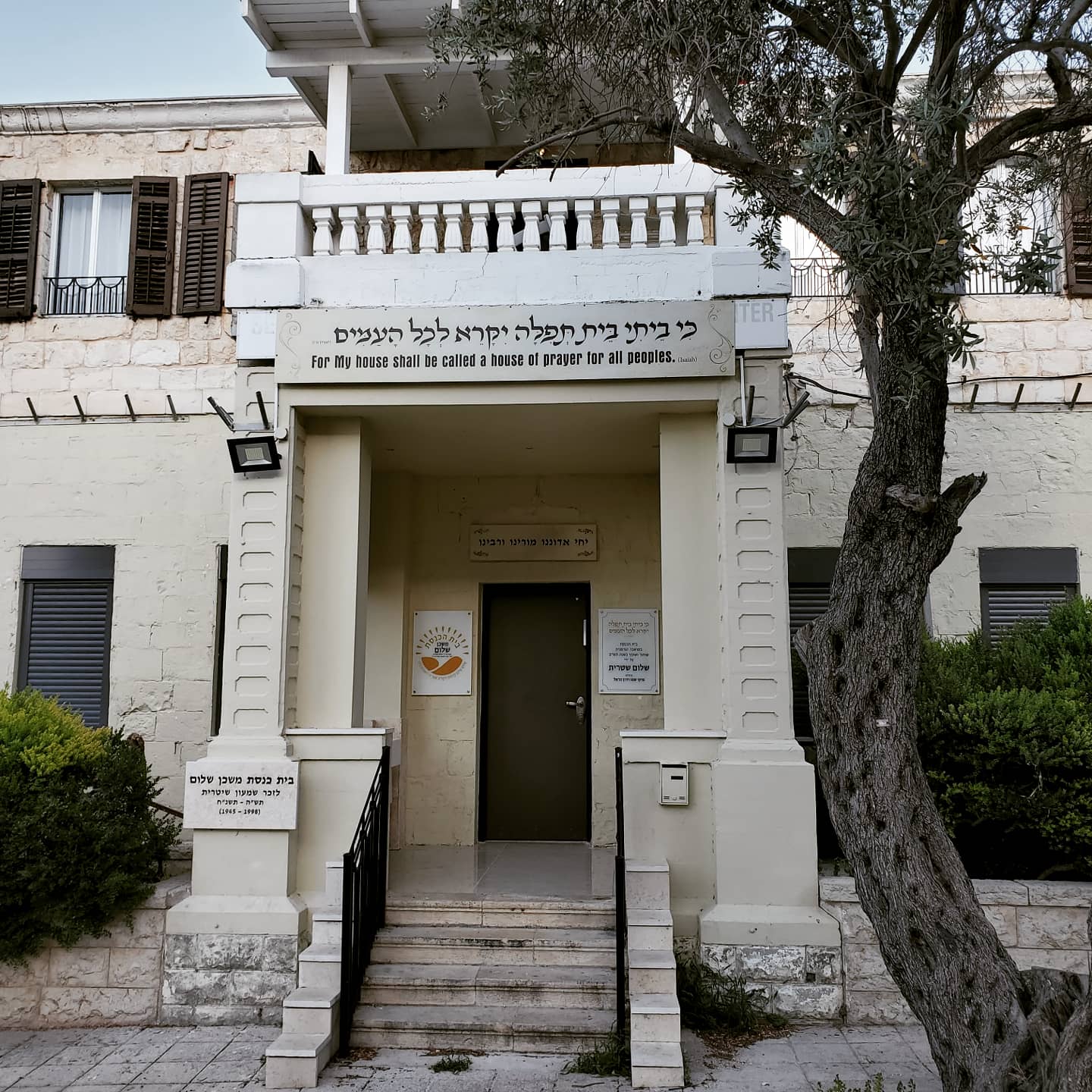
The view from the hotel was also beautiful, looking almost directly across the street, I could see the Bahai Gardens and at the base of the street was the port. Beneath it, was a synagogue that had closed 20 years earlier.

I wandered around the area for a while, while Orli rested. Then we went out in search of dinner. Orli wanted sushi (Orli always wants sushi) , but I was more in the mood for some other type of fish. I found a spot where we could both be happy.

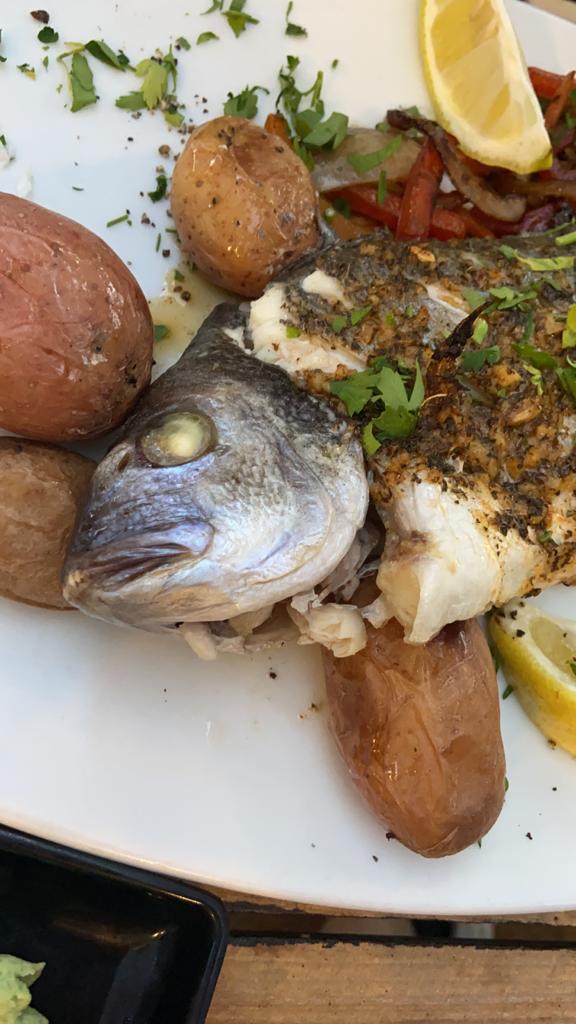
At Dream Nemo, just down the street from the Hotel, Orli could get sushi and I could get fish. Orli.ordered a sushi sandwich with salmon in between 2 layers of rice and I got a sea bream (Denis fish) cooked whole with sautéed vegetables and boiled small potatoes. Both were excellent.

I wanted something sweet, but Orli wasn’t as sure. We walked down the street to La Goffre Ice Cream. Orli didn’t like the dairy free selection, but I wanted to try the salted caramel. It was very good. We headed back to the hotel at the end of a very busy day.

A Tale of Two Beaches

While staying in Nahariya, the beach is ever-present. I’ve described in previous posts the movement of people up and down the tayelet, as well as the orientation of Sderot Haga’aton in leading people through the heart of downtown onto the beach. I’ve also mentioned the large number of restaurants and bars along the beach.

I haven’t talked much about the beach itself. Large areas of the beach have signs posted forbidding swimming in that area. You still might find a few people sitting or sunbathing and occasionally someone ignoring the signs. But, there are at least two areas near me where swimming is permitted.

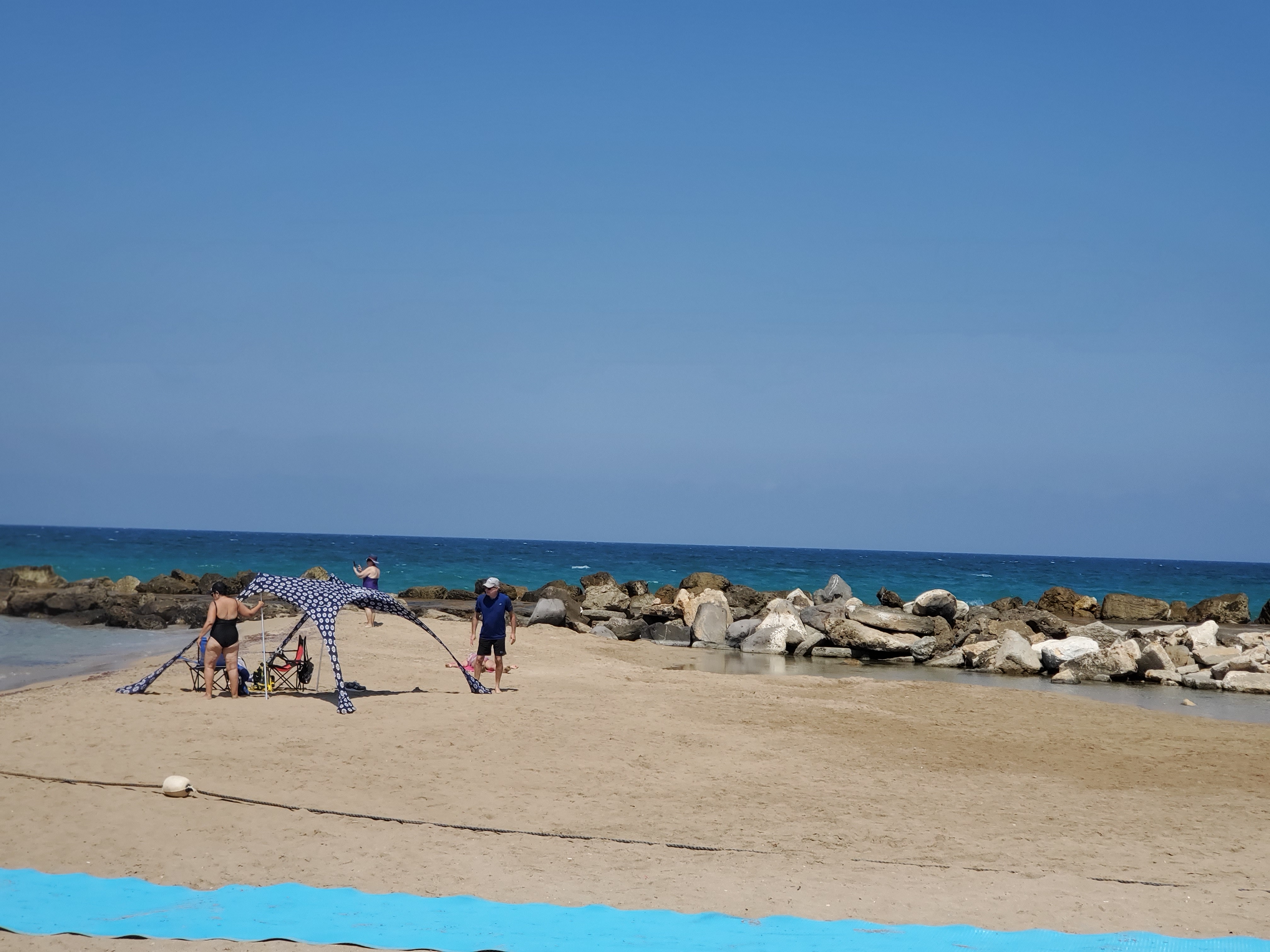
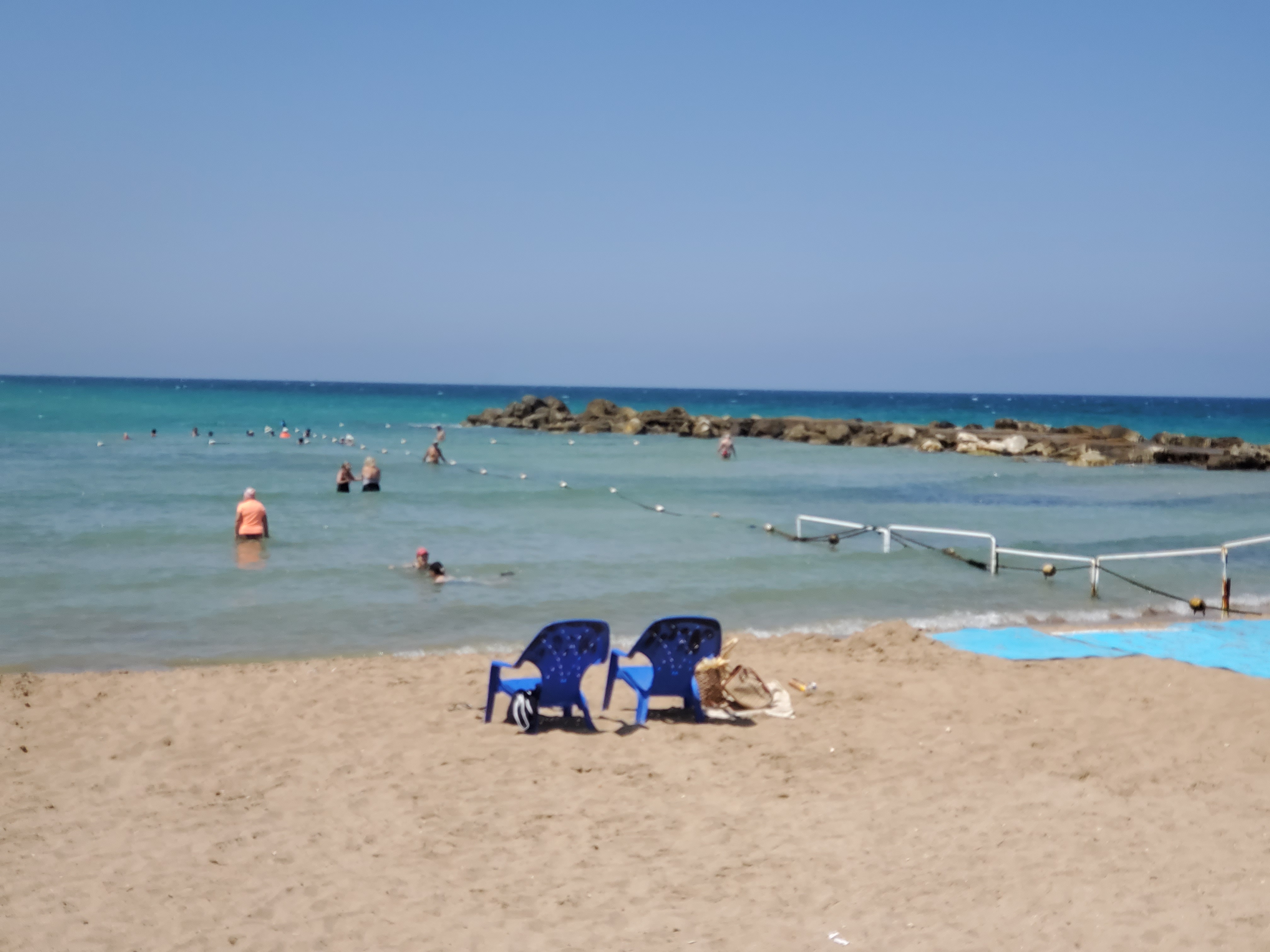
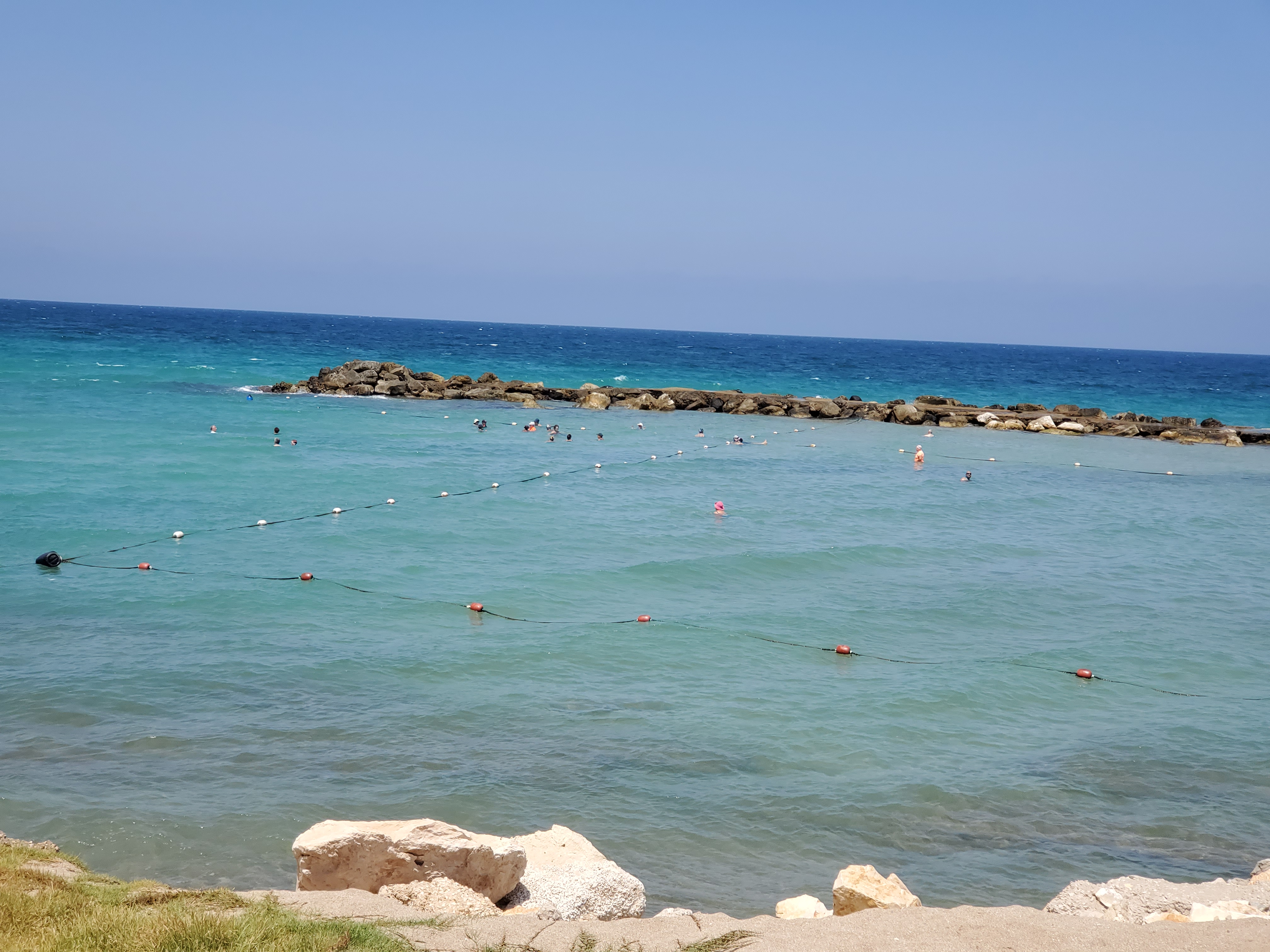
In one area, the sea is very calm. A rocky outcrop acts as a sea wall and creates a small cove, where one can walk 50 or 60 feet into the water. The waves are gentle and you can swim or float or just stand and let the water pass through you. Young families let children experience the ocean close to shore, older people walk out into the cove to talk in groups or swim and exercise.

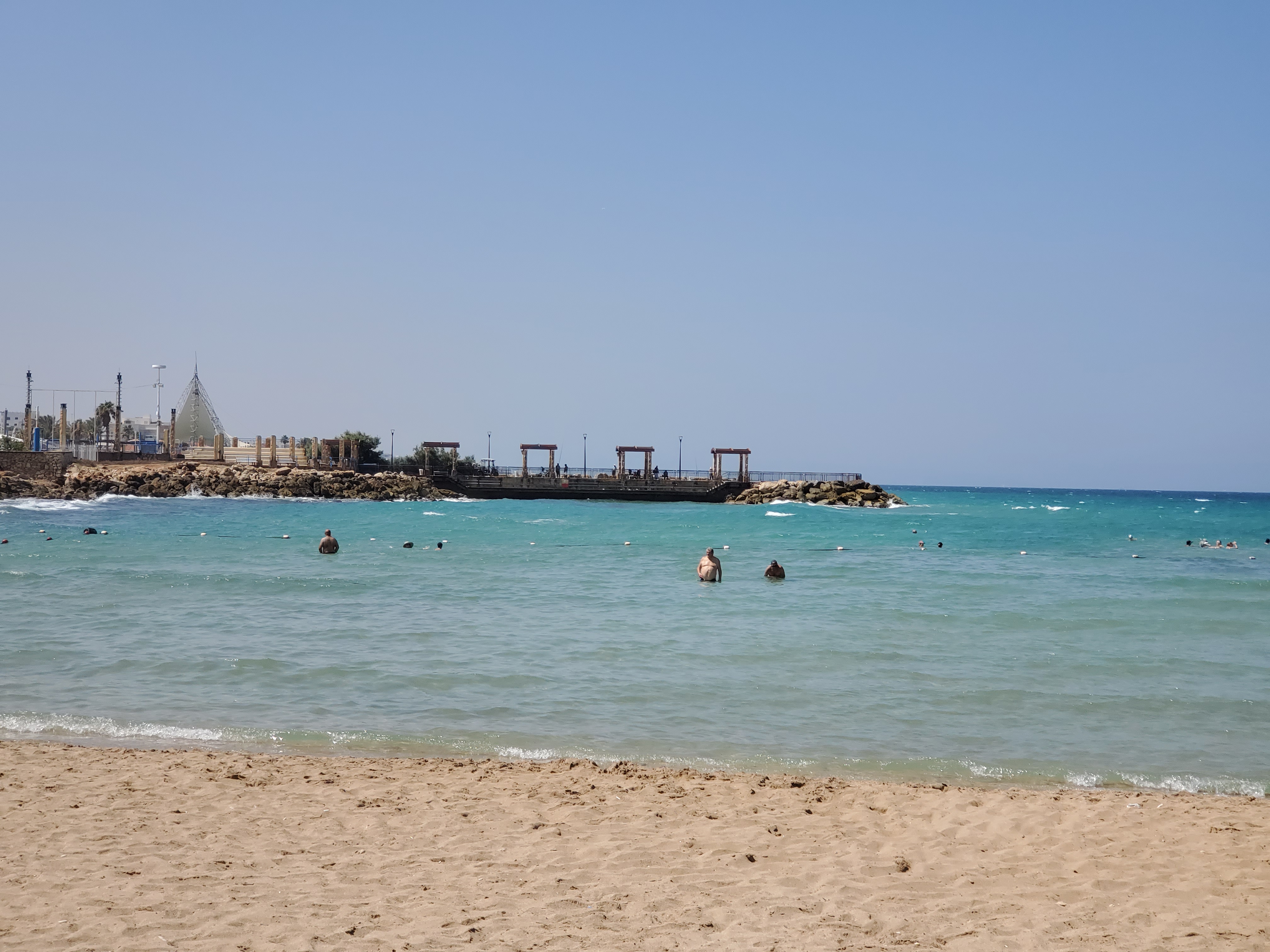
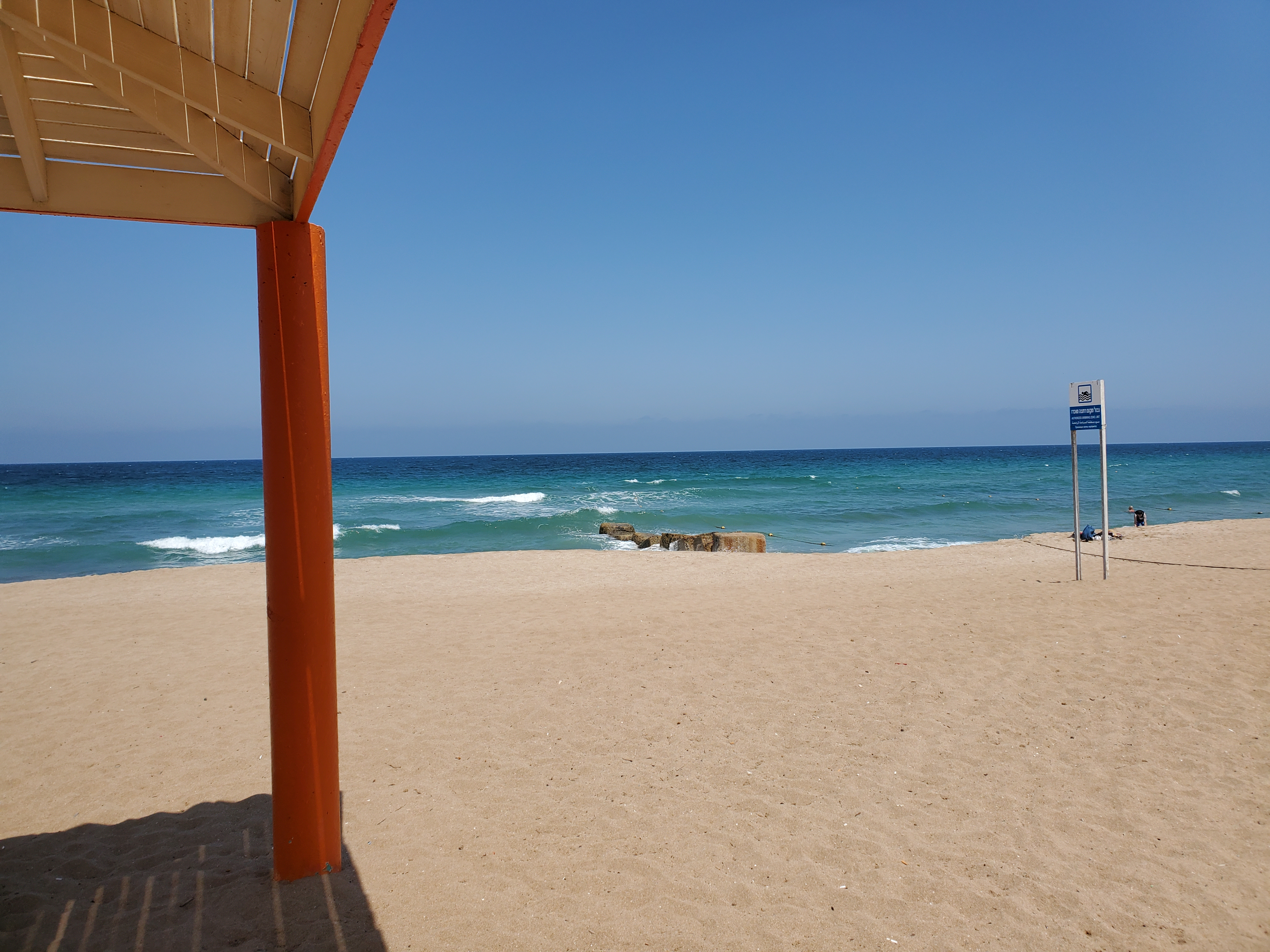
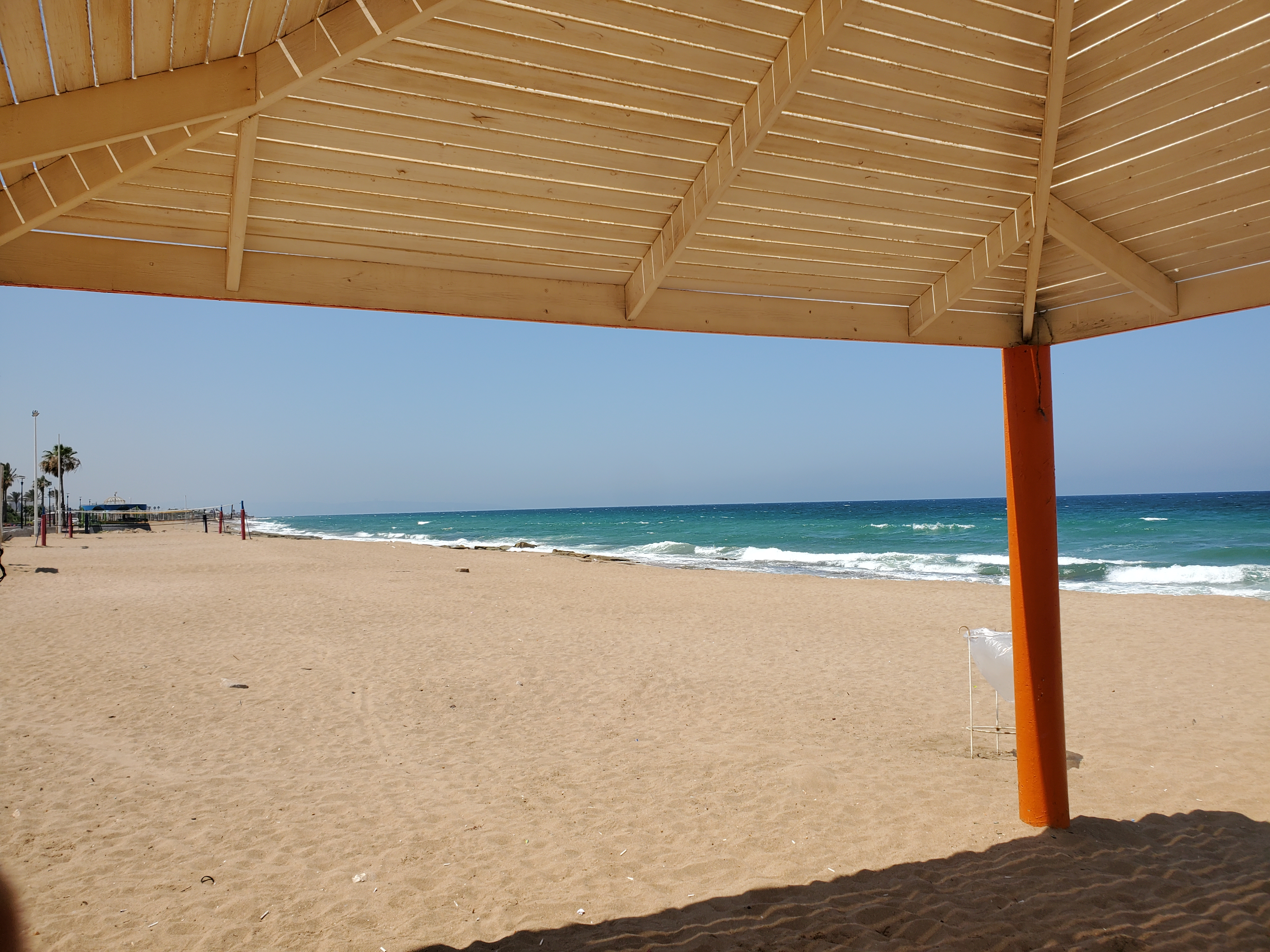
A little farther down the beach, near a section of restaurants and bars there is another section where swimming is permitted. You have a much greater sense of the power of the sea. The waves come crashing against the shore and you probably can’t wade more than 20 or 25 feet out. You can ride the wave back in toward the shore or just feel it battering against you in contradistinction to the people lazily resting under the canopies nearby.

I’ve had both experiences during my time in Nahariya. I’ve been able to lazily loll around the apartment, relax on the patio, or stroll on the tayelet or Sderot Haga’aton. I’ve also had the opportunity to push myself on longer hikes exploring nature or history. Finding the balance between struggle and relaxation, between pursuing life or waiting to see what life presents is the secret to not only a good trip, but to life itself.

This doesn’t look like Kentucky

Beit Shearim is only a few minutes, from Nahalal where my son Ari has been in school for the last four years. I had planned on going to visit later in the afternoon, but I didn’t think it would matter if I showed up a little earlier.

School has been out for a couple of weeks in Nahalal. I really don’t know why there is so much of a delay between the end of classes and graduation, but there is. Lack of classes doesn’t mean that Ari hasn’t been busy. He still works about 5 hours a day in the stables.

Nahalal is a moshav, a collective settlement in which people maintain the rights to private property and own their own farms, but collectively determine the distribution of resources for the community. Nahalal was the first moshav in Israel in 1921.

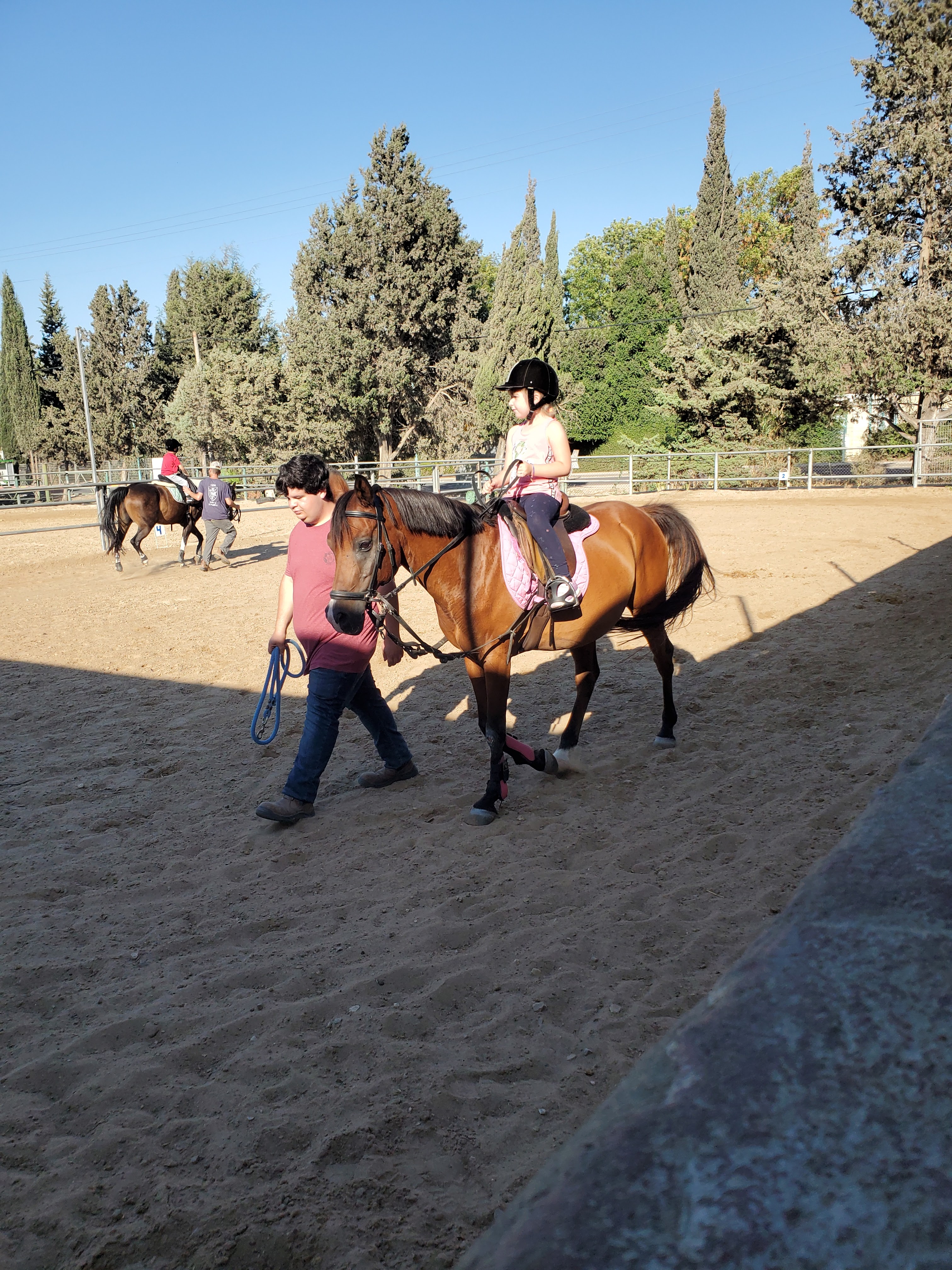
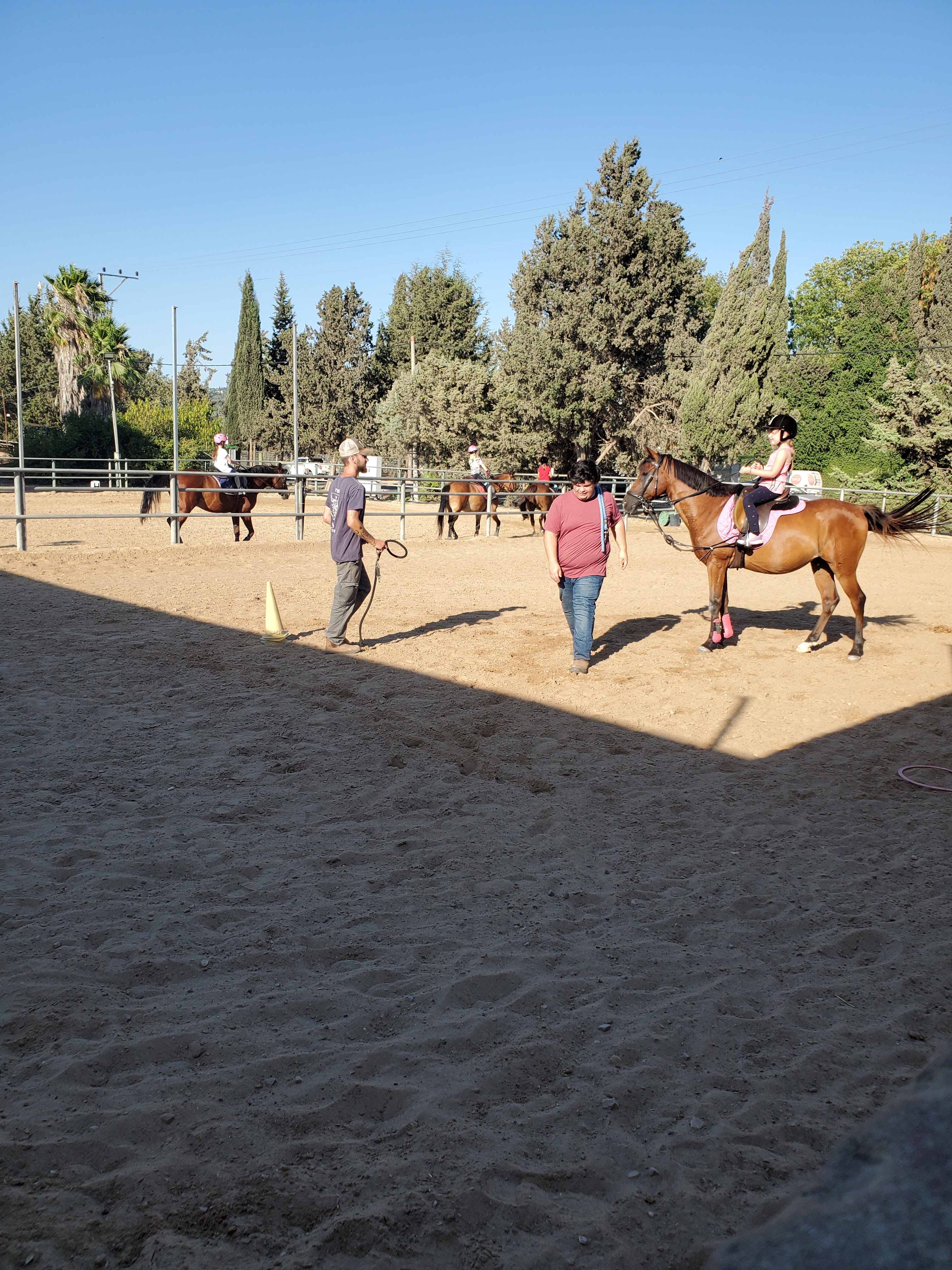
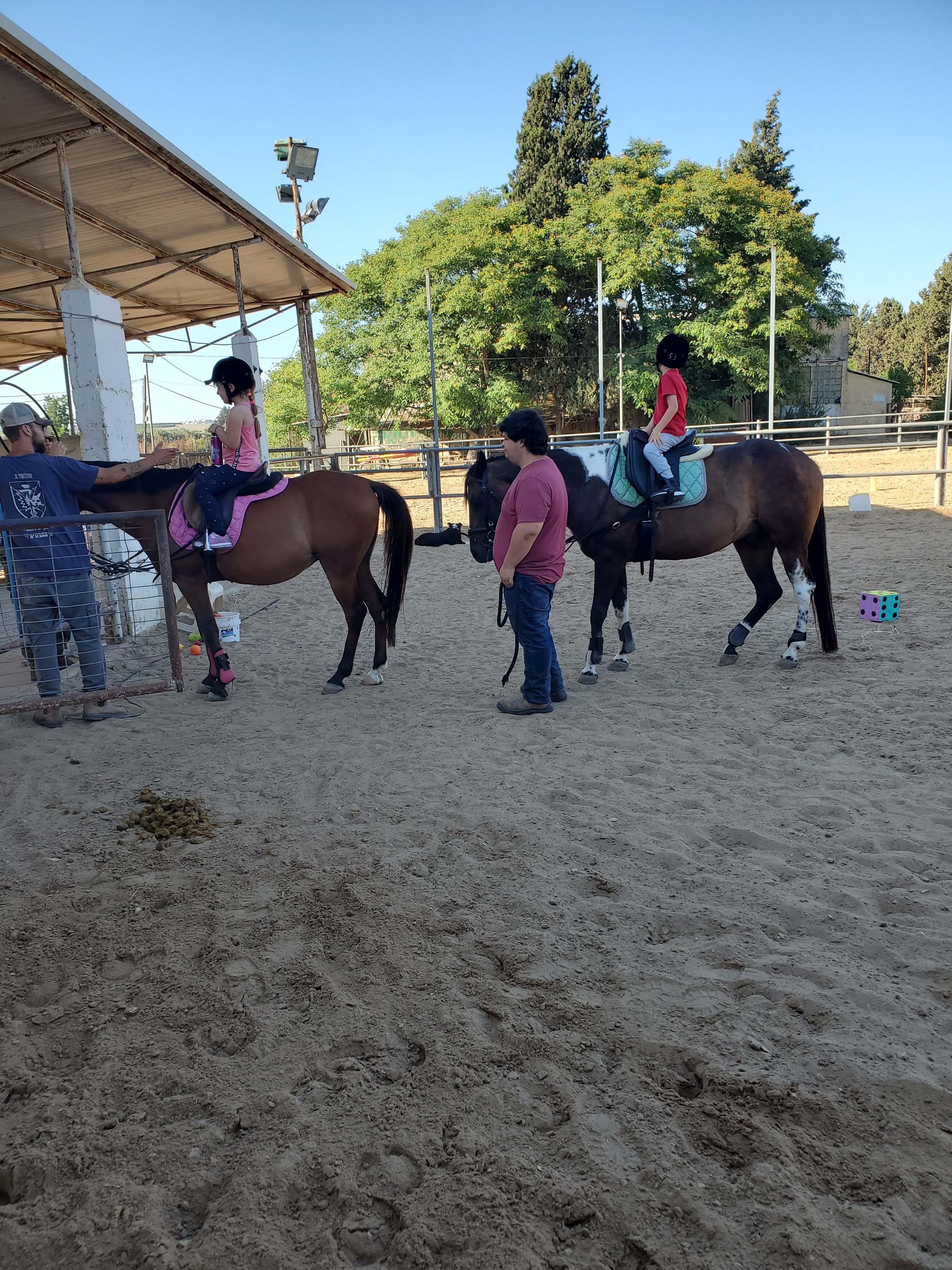
Within the moshav is a Youth Village, established by the Women’s International Zionist Organization (WIZO). The school is in the youth village, as is the stables. The stables offer riding lessons and Ari takes care of the horses before and after lessons.

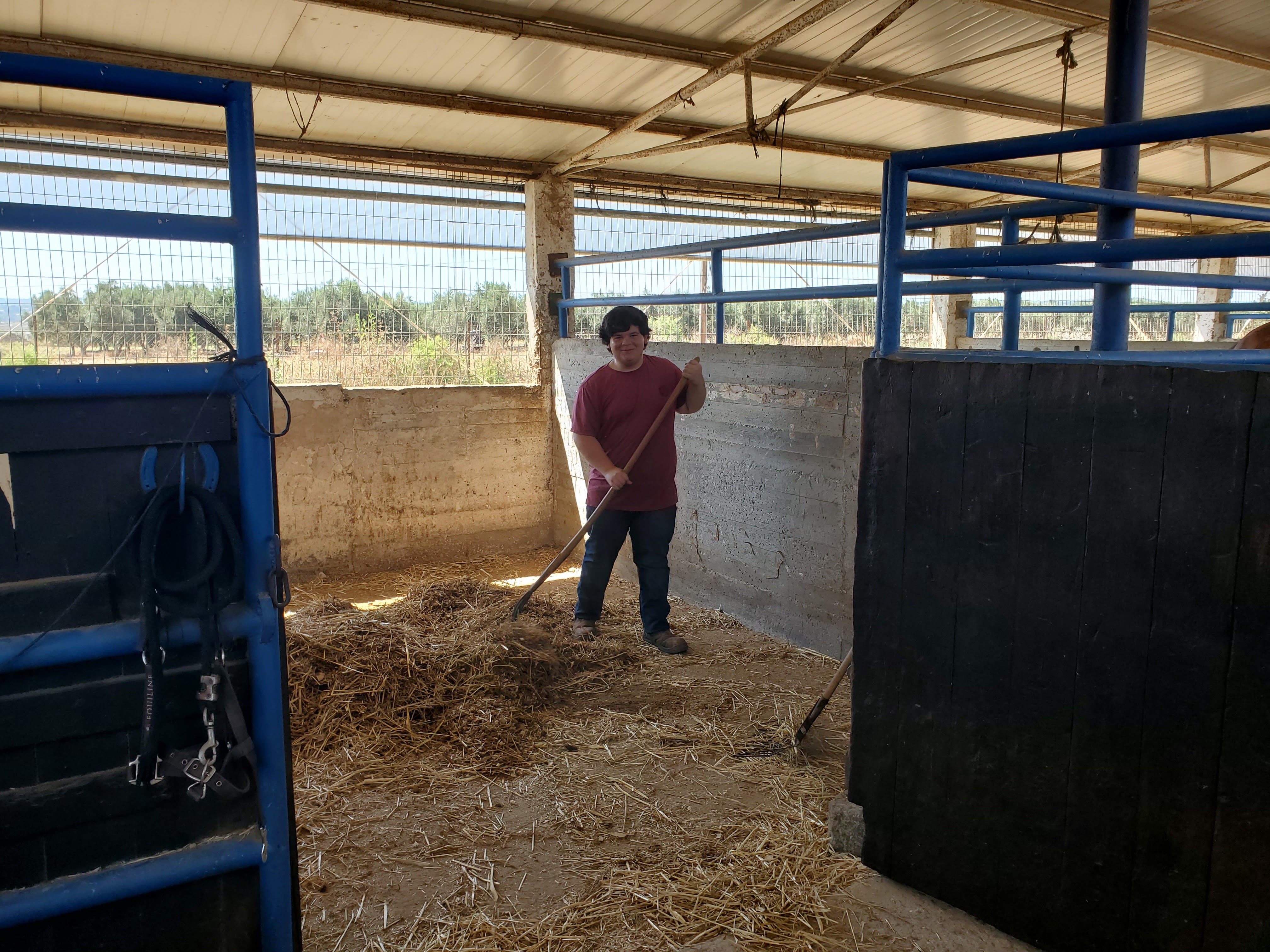
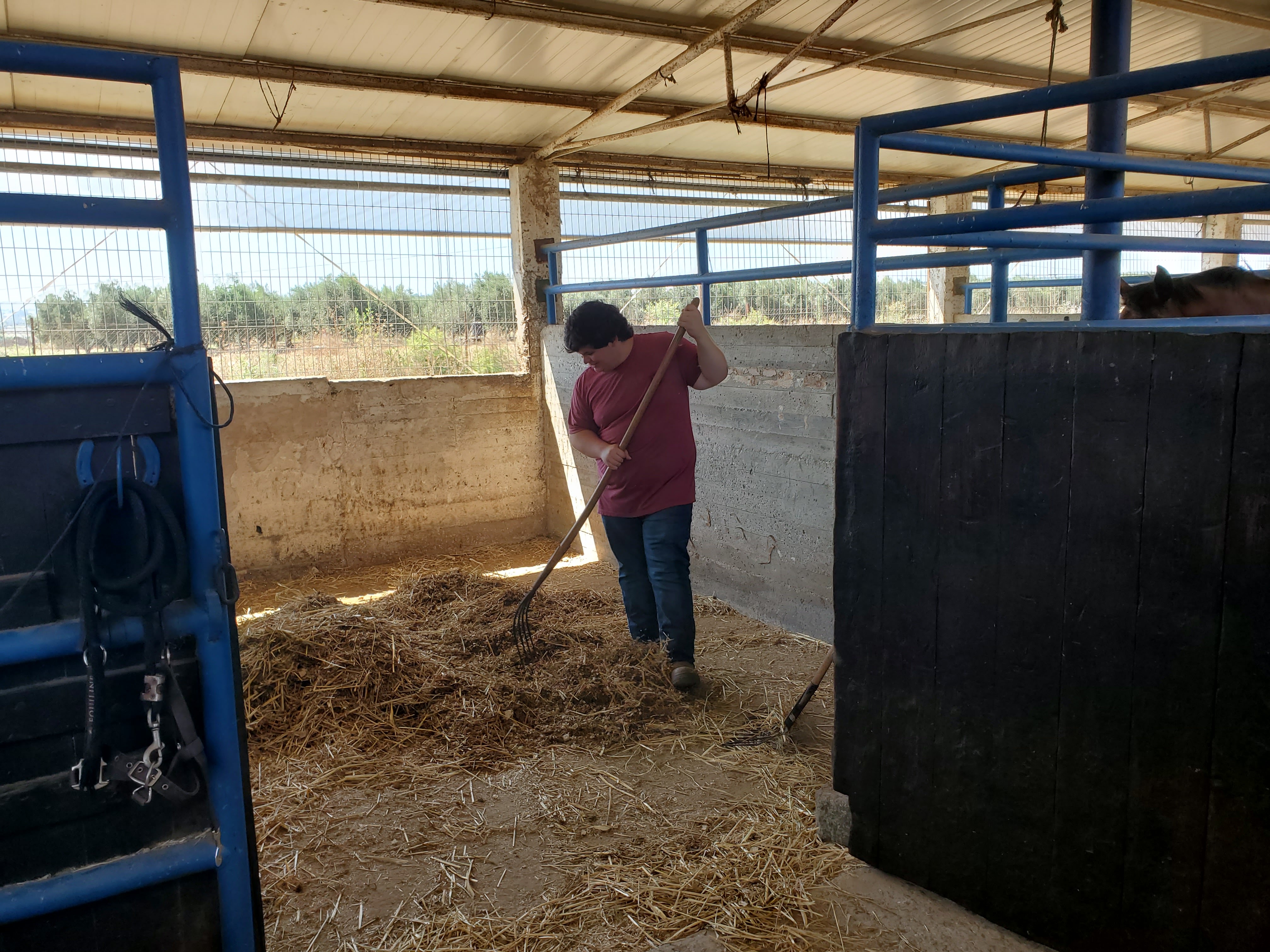
After having lived in Kentucky for almost nine years, I should know something about horses, if only through osmosis. I don’t. Ari has learned everything he has just through working there over the last two years. When I arrived, he was mucking the stables. I offered to help. He brought me a rake an pointed to the two wheelbarrows outside the stall. If the hay and ground covering was wet with urine, it goes in one barrow, if it has feces, it goes in the other barrow, and if its dry, it stays. After cleaning the stall, we emptied the barrows and then brought in fresh material for covering the stall. Dumping it in the middle, we then spread it out as a square.

Once all the stalls were clean, it was time to feed the horses. Portions were taken from bales and hay and brought to each horse. Some of the smaller horses received two portions; larger horses received three or four portions.

Then he began to prepare horses for lessons, getting them properly dressed. Following that, Ari assisted with the lessons. Once the lessons were over, it was time to clean the horses. And after that there would still be a few more hours of work to do. While doing all of this, Ari was also explaining the routine and teaching more junior workers what to do. He was the last experienced stable hand and needed to train his replacements.

I had reached the end of what I was able to do to help or of what he was able to teach me, so I said my farewells and began to make my way back to the bus stop, which was the first stop for my journey back to Nahalal.

I am very proud of Ari. He has become knowledgeable and responsible and clearly cares about the horses and his young students. The work requires physical effort and it is rather repetitive, but he does it happily. I’m glad I got the chance to spend some time with him while he worked.

The Day of the Dead

If this trip has taught me anything, it has taught me to be flexible with my plans. Over the last couple of years, I have been reading about the newest trail in Israel, the Sanhedrin Trail. The trail traces the movements of the Sanhedrin, the reigning academic/judicial body in the generations following the destruction of the Second Temple, across the Galilee. In the course of five days of hiking, one hikes from Beit She’arim, just a little outside Haifa, to Tiberias. The trail is supposed to be interactive, matched with an app that enables to hiker to enter the virtual reality world of the first and second centuries of the common era. It was near the top of my list of things I wanted to do and see during this trip.

I had searched and searched for the app, googled Sanhedrin Trail and visited every site I found and discovered no link leading to an app. So, I thought, maybe there is something to connect to at the various sites with a link through a QR code or something similar. Meanwhile, while this was near the top of my list, not so much for my children’s lists. My daughter said no more hiking and that she didn’t want to wake up early, meaning before 11. My son was still working in the stables at Nahalal and had to be back by 3. While that was doable, he also wasn’t keen on getting out of bed before the sun was almost directly overhead.

It looked like I’d be on my own again. I walked to the train station, took the train to Haifa and a bus to Kiryat Tivon. From there, it was about two-thirds of a mile walk to Beit Shearim, where the trail was supposed to begin.

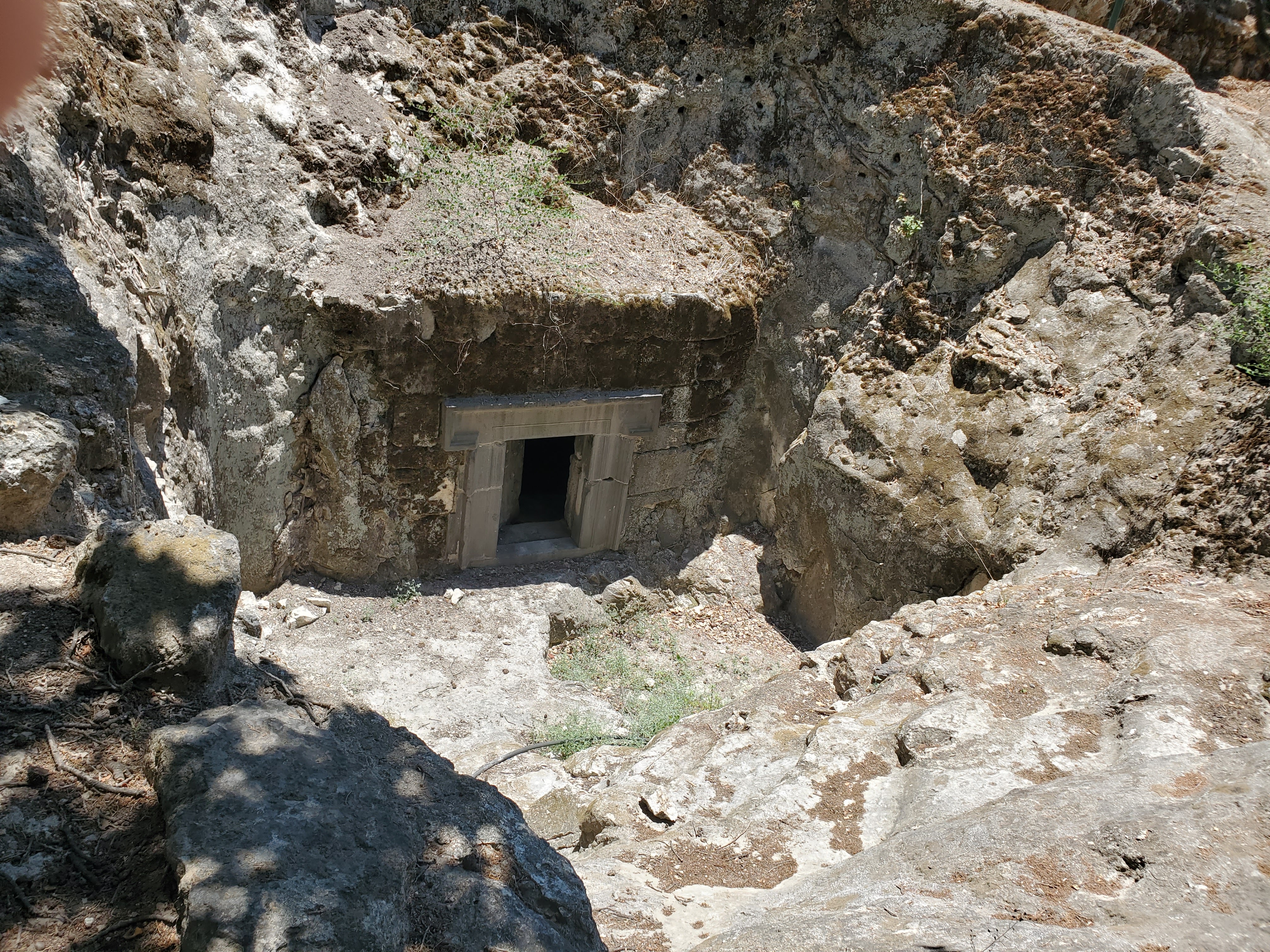
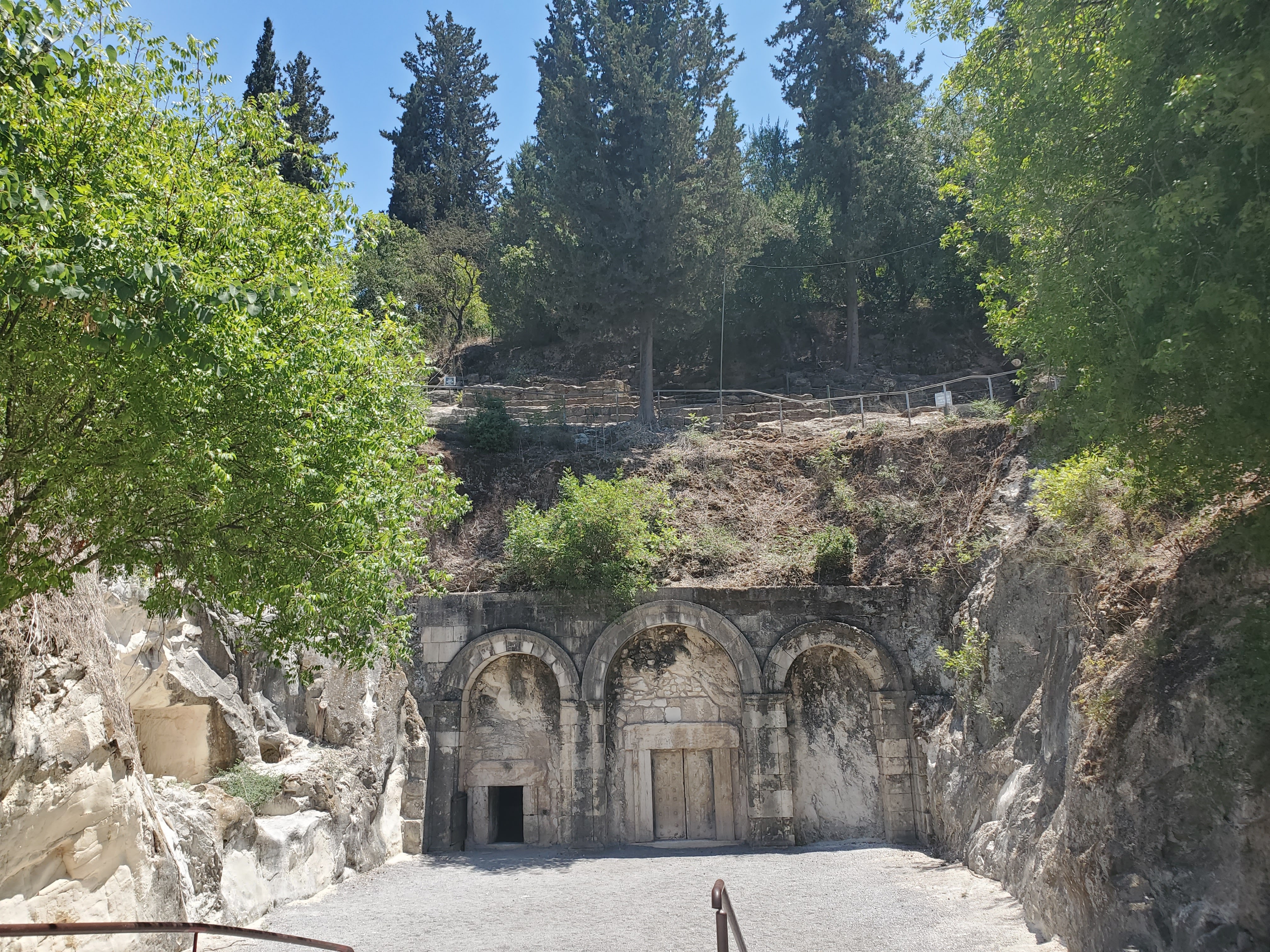
I arrived in Beit Shearim, paid my admission fee, received my pamphlet guide to the park and no mention of the Sanhedrin Trail or of any interactive experiences. Following my pamphlet, I walked over to where the trek through the park should begin and saw nothing other than the cave and a small placard describing it.

A word about Beit Shearim. Beit Shearim was a village in the lower Galilee to which the Sanhedrin moved in the late first century. It became known as the preeminent burial location once access to the Mount of Olives was cut off and is the largest known necropolis from the time of the Mishnah and Talmud, the first several centuries of the common era. In addition to being a national park, it is one of nine UNESCO World Heritage Sites in Israel.

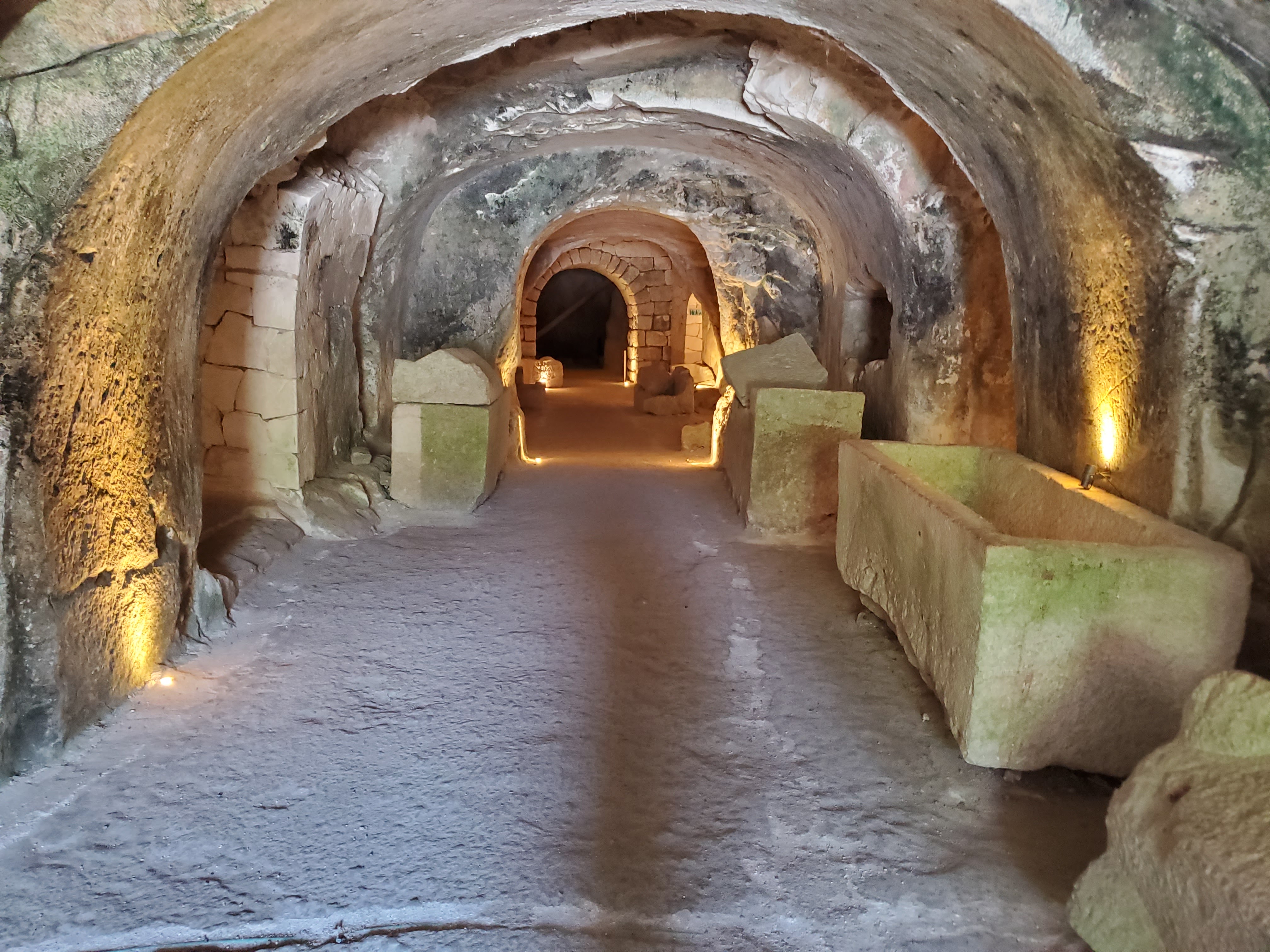
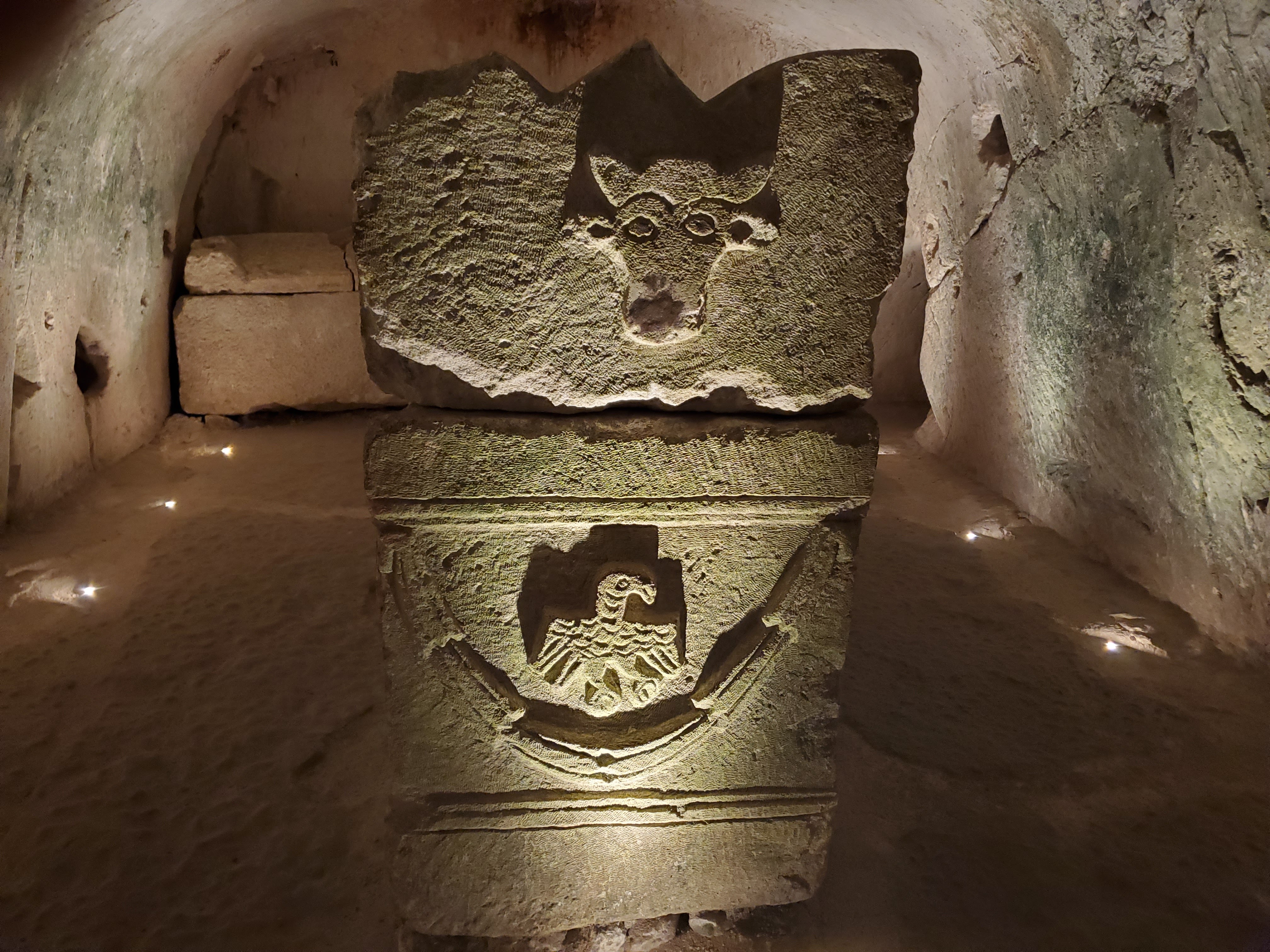
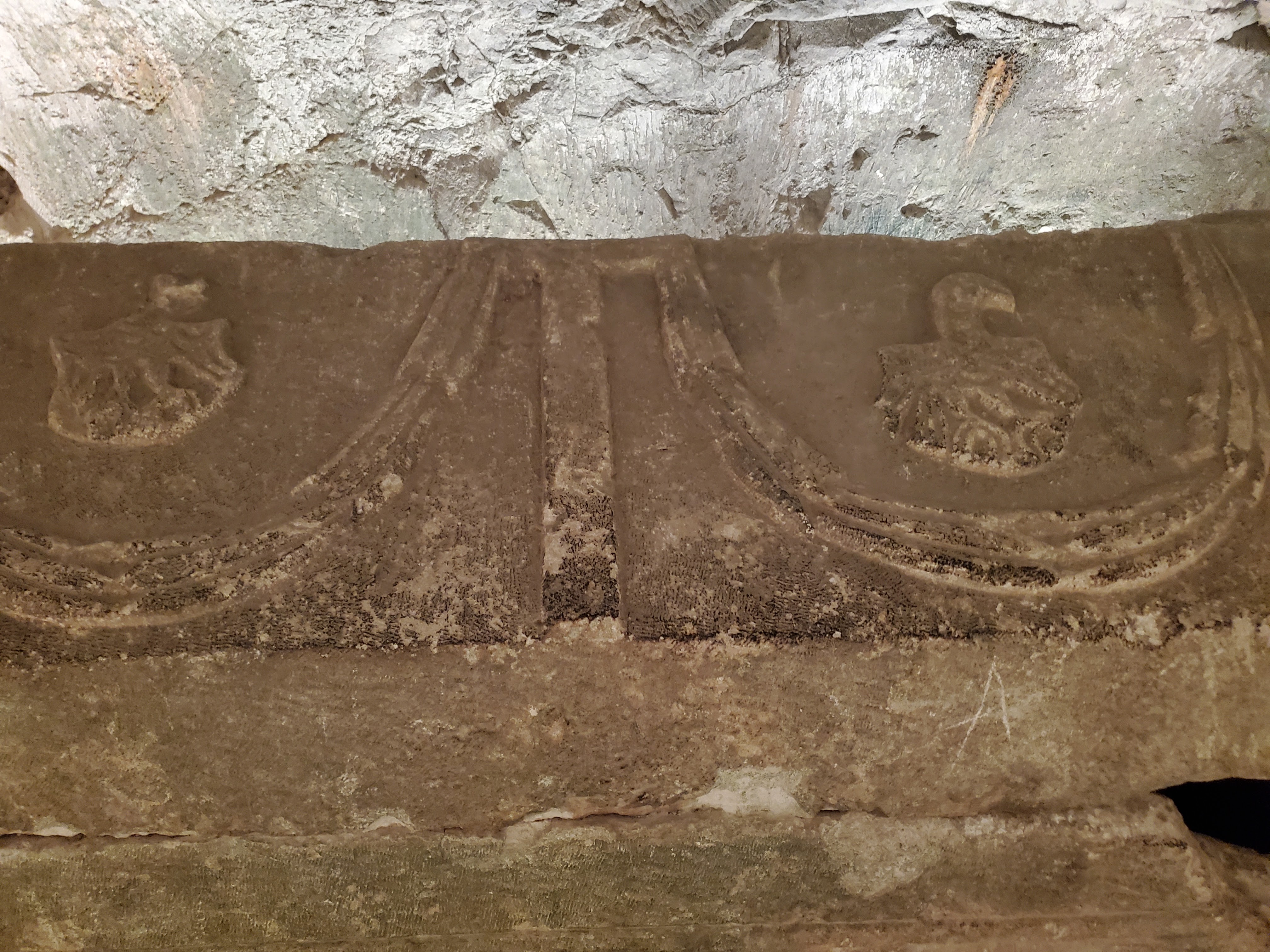
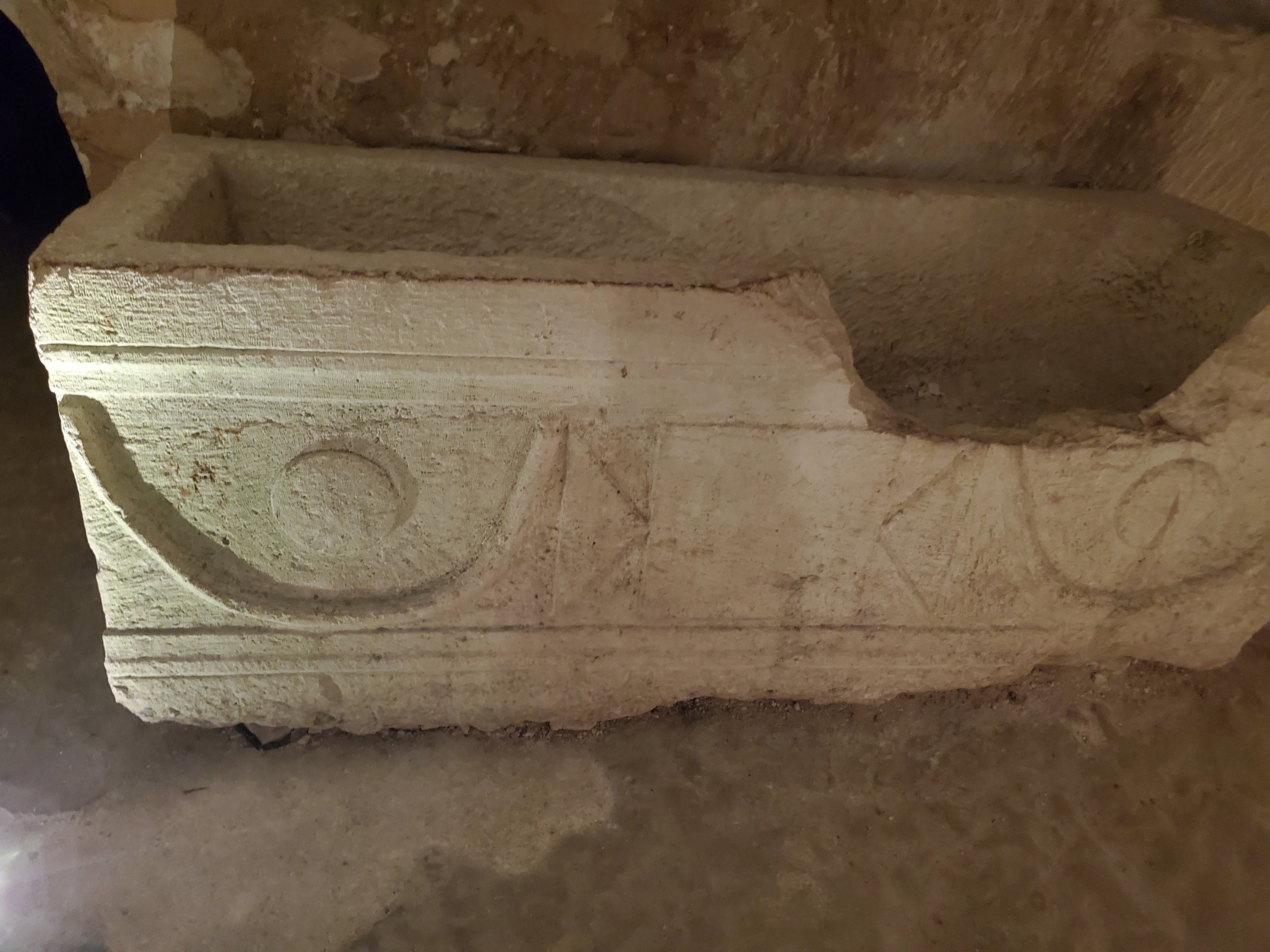
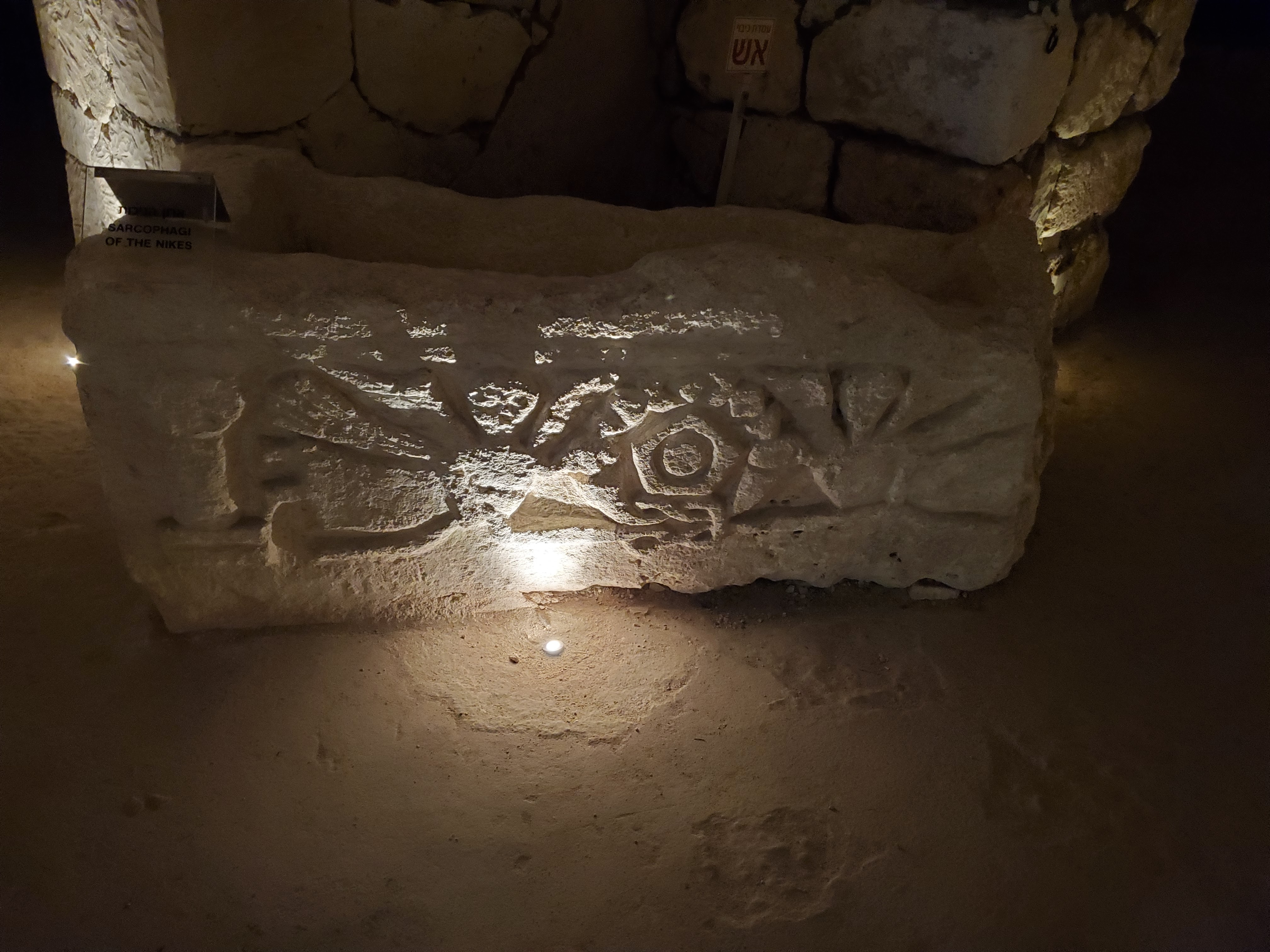
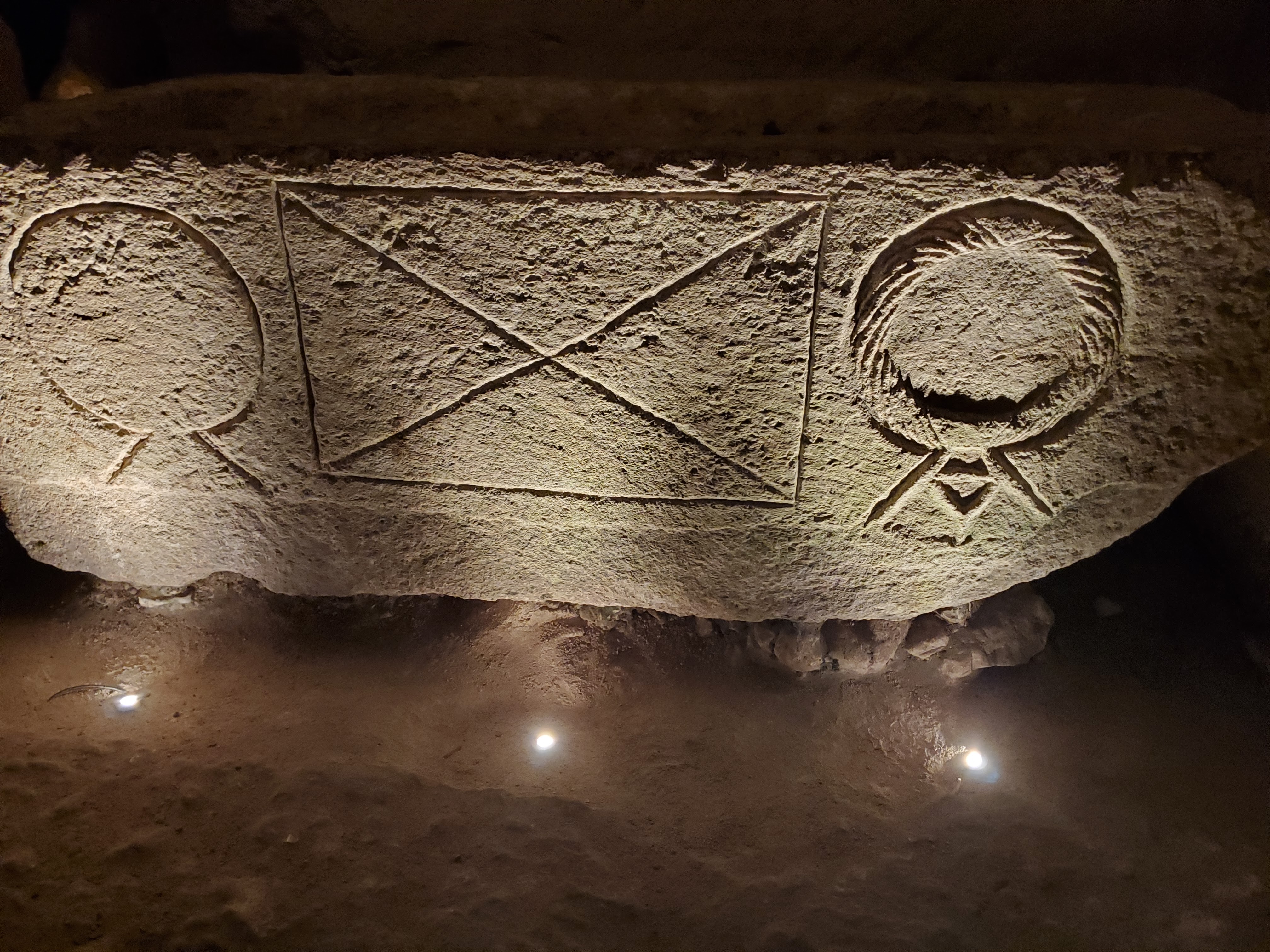
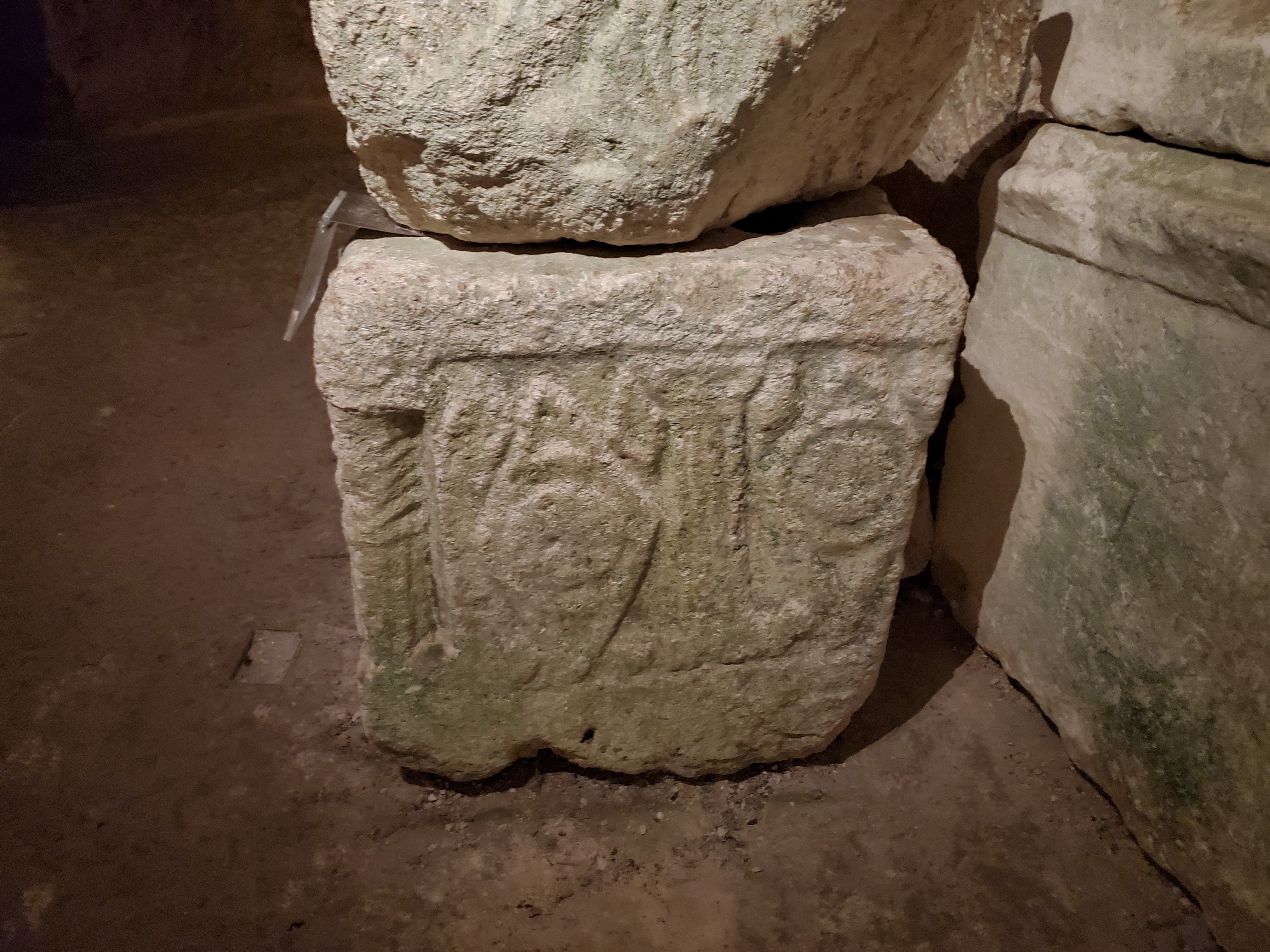
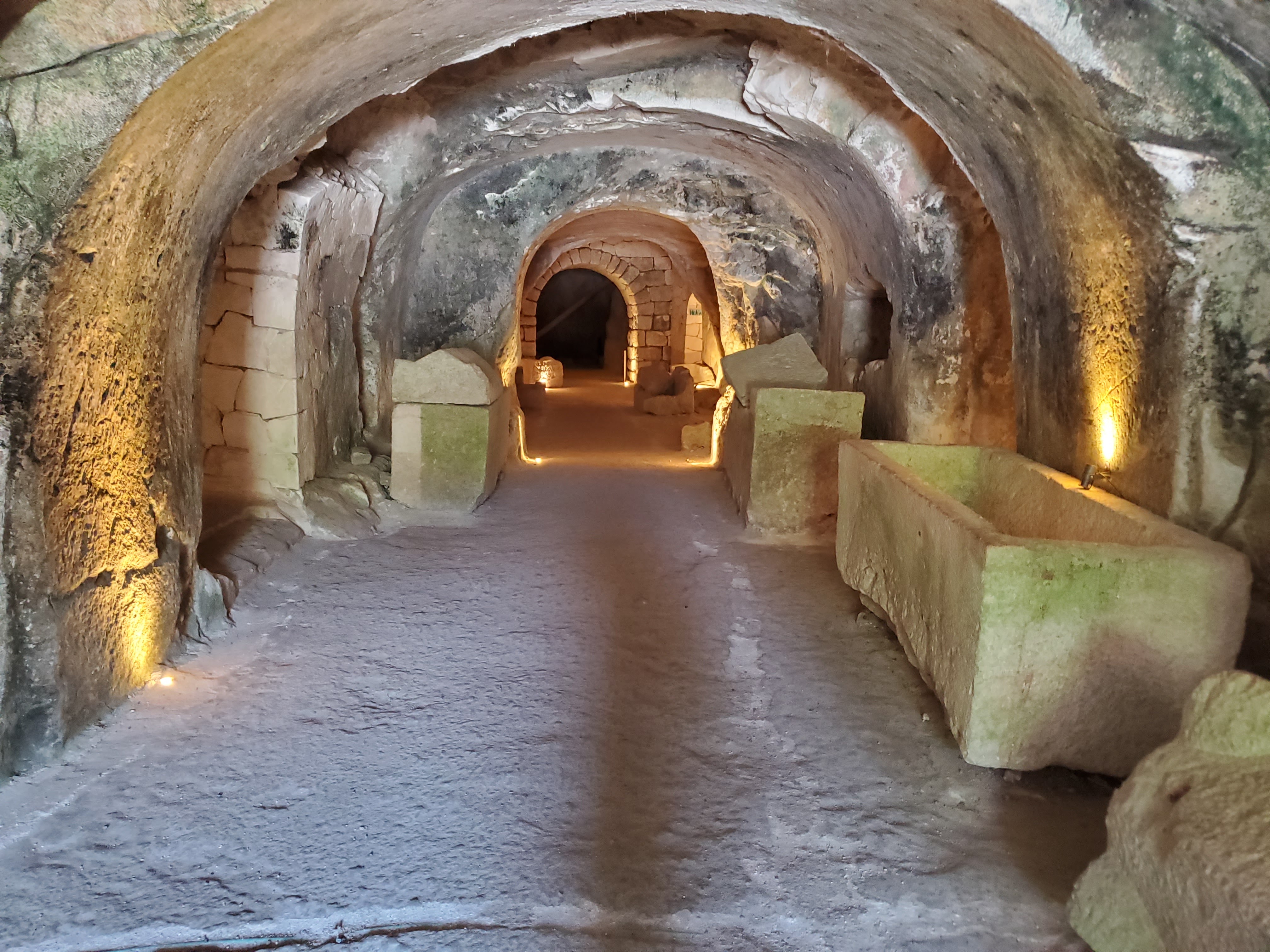
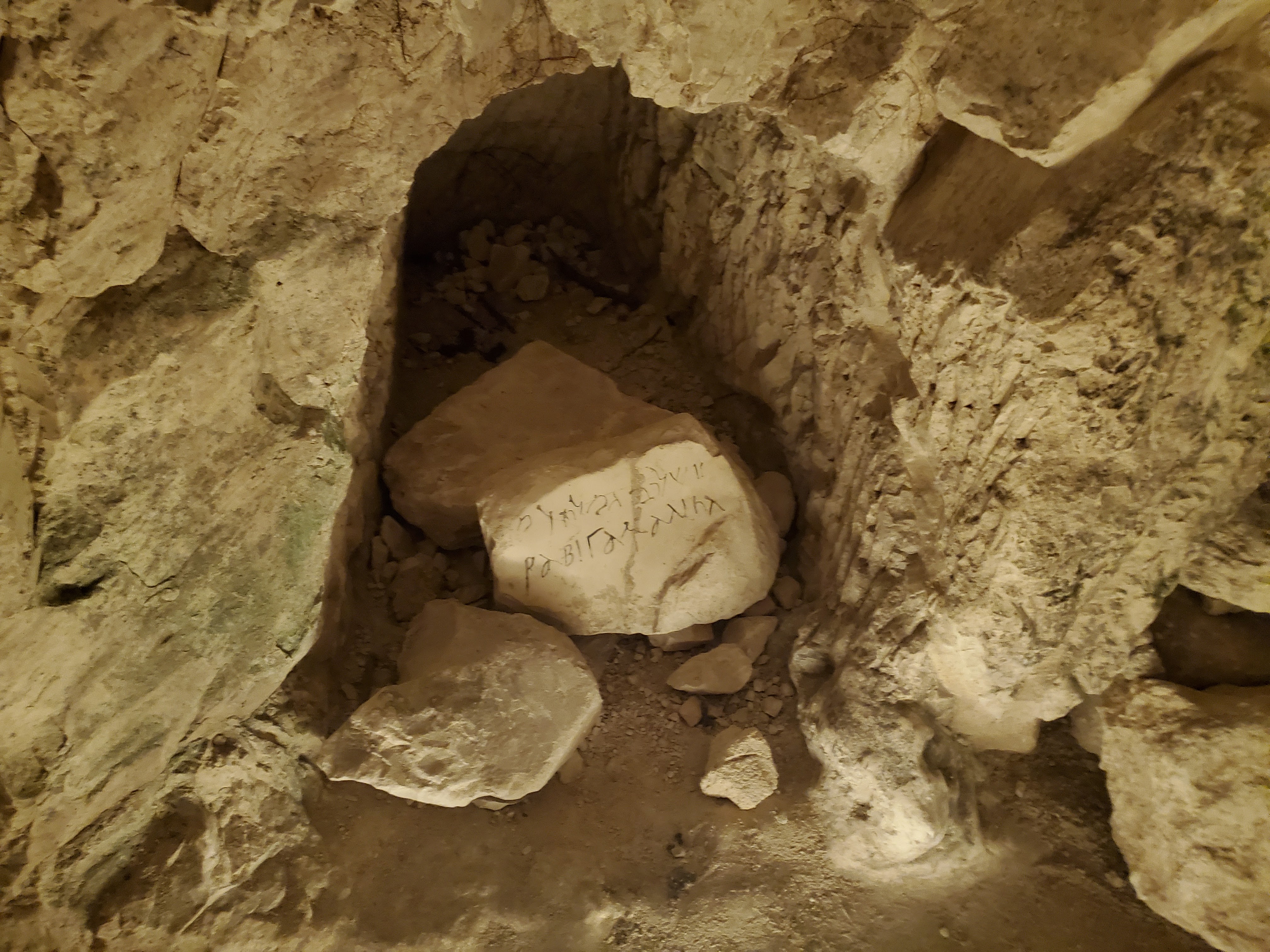
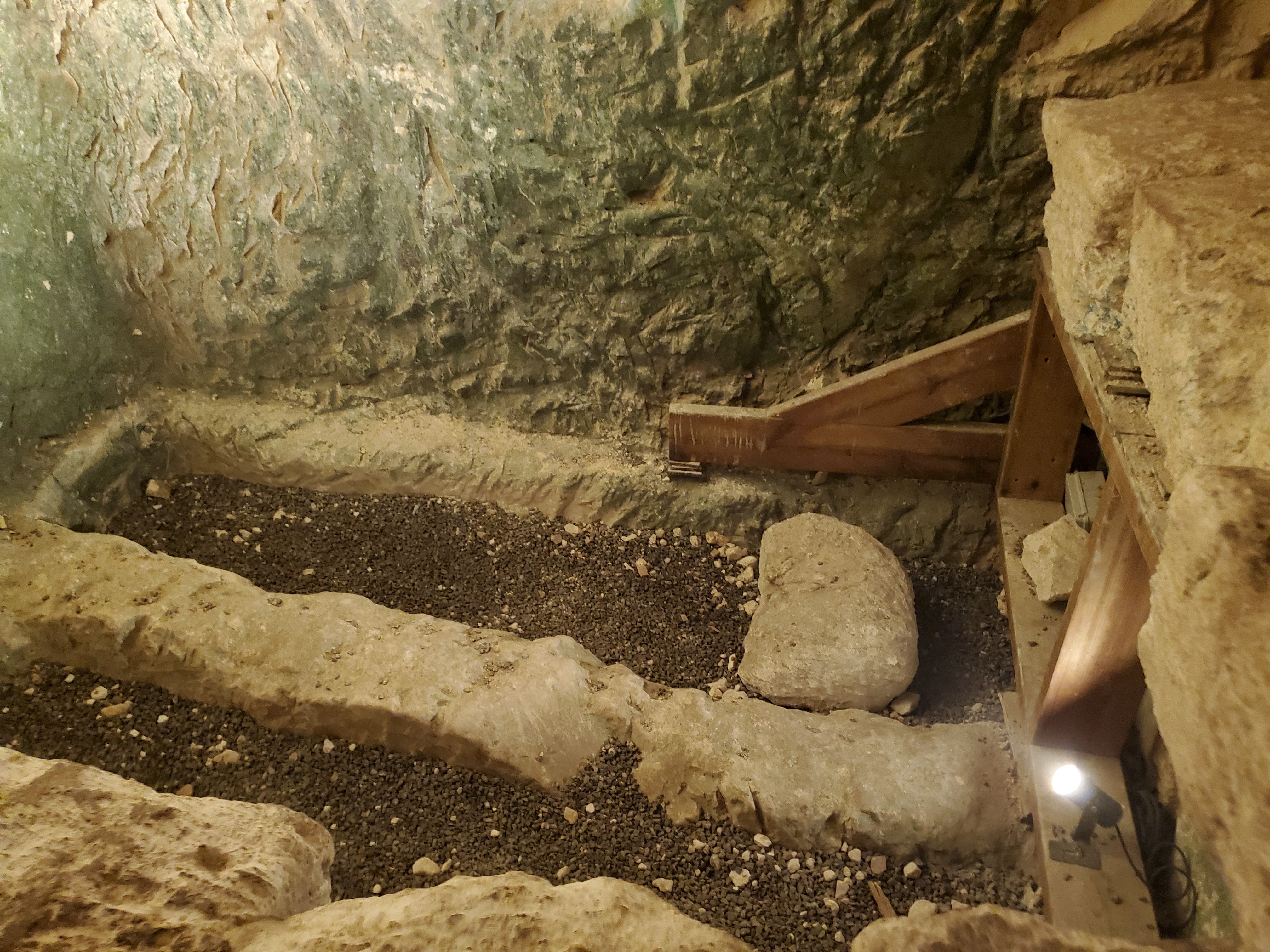
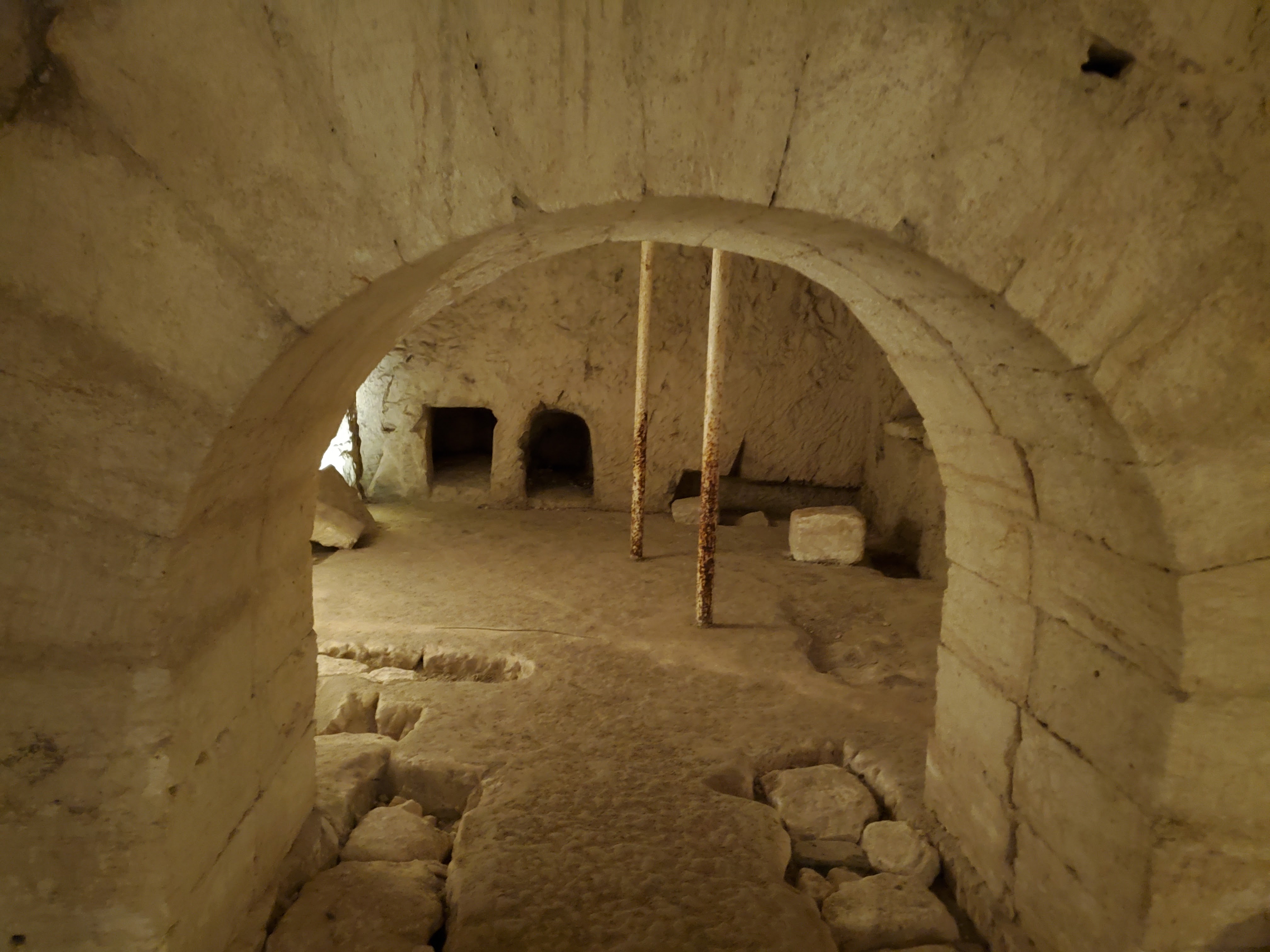
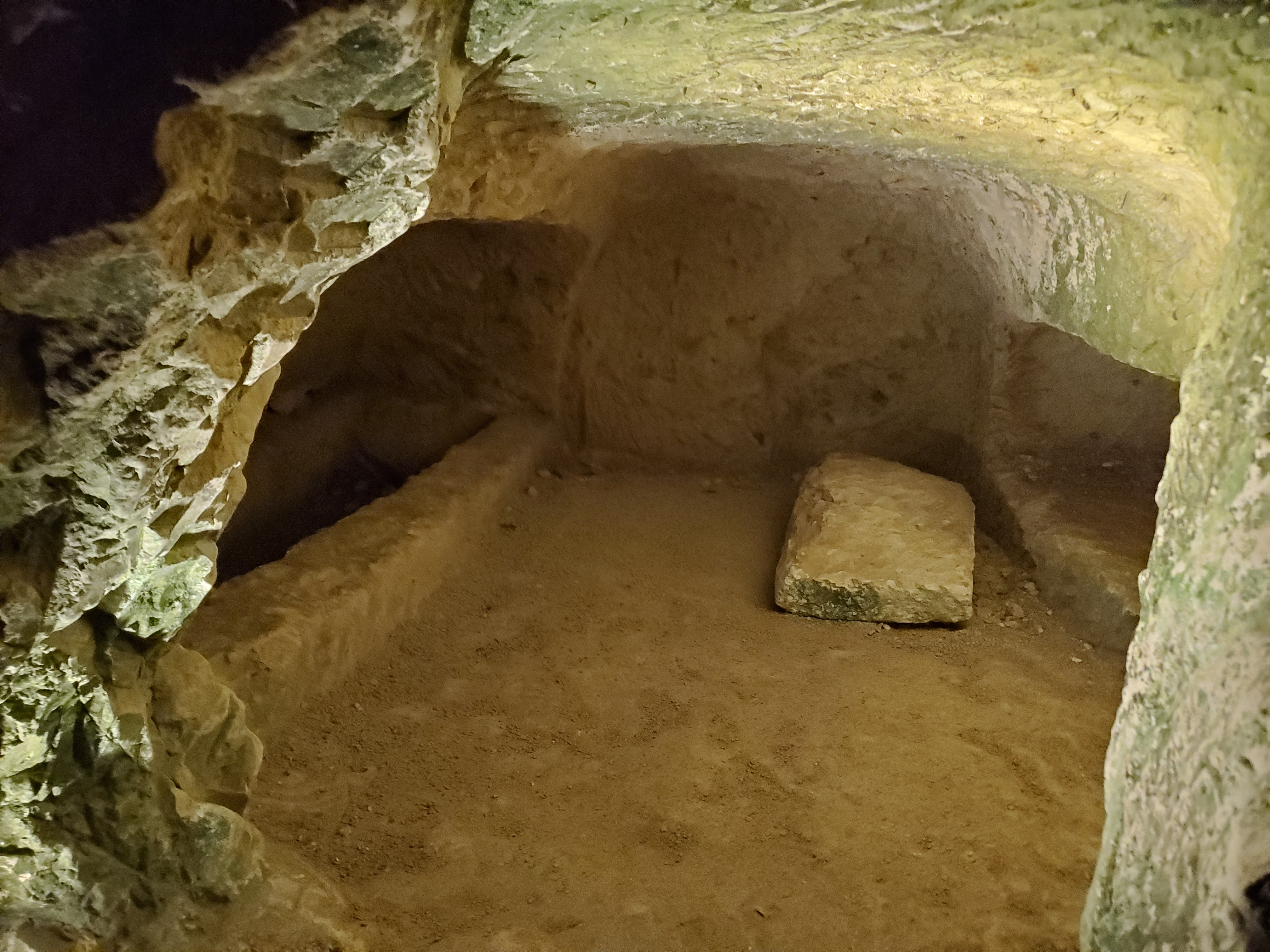
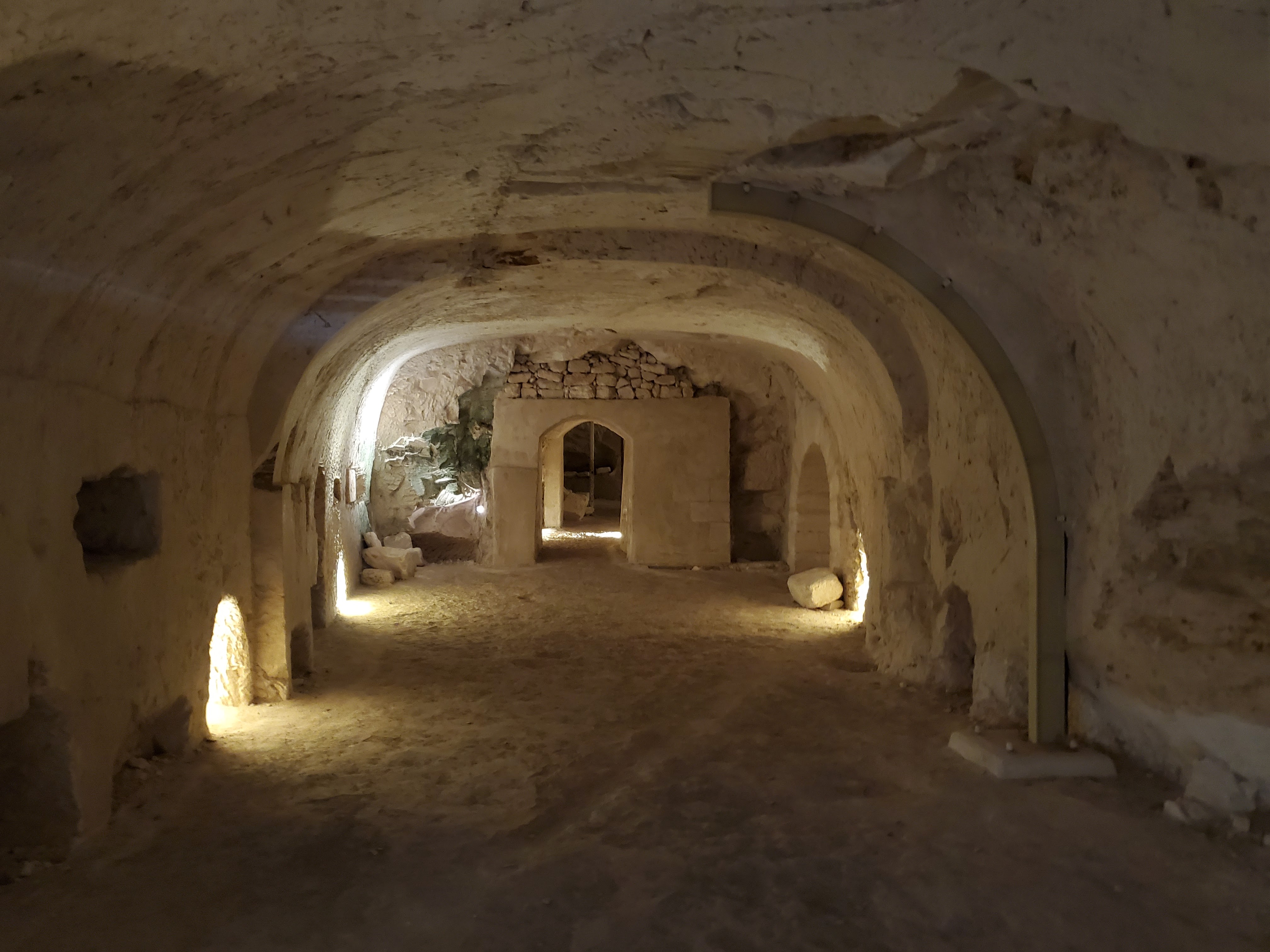
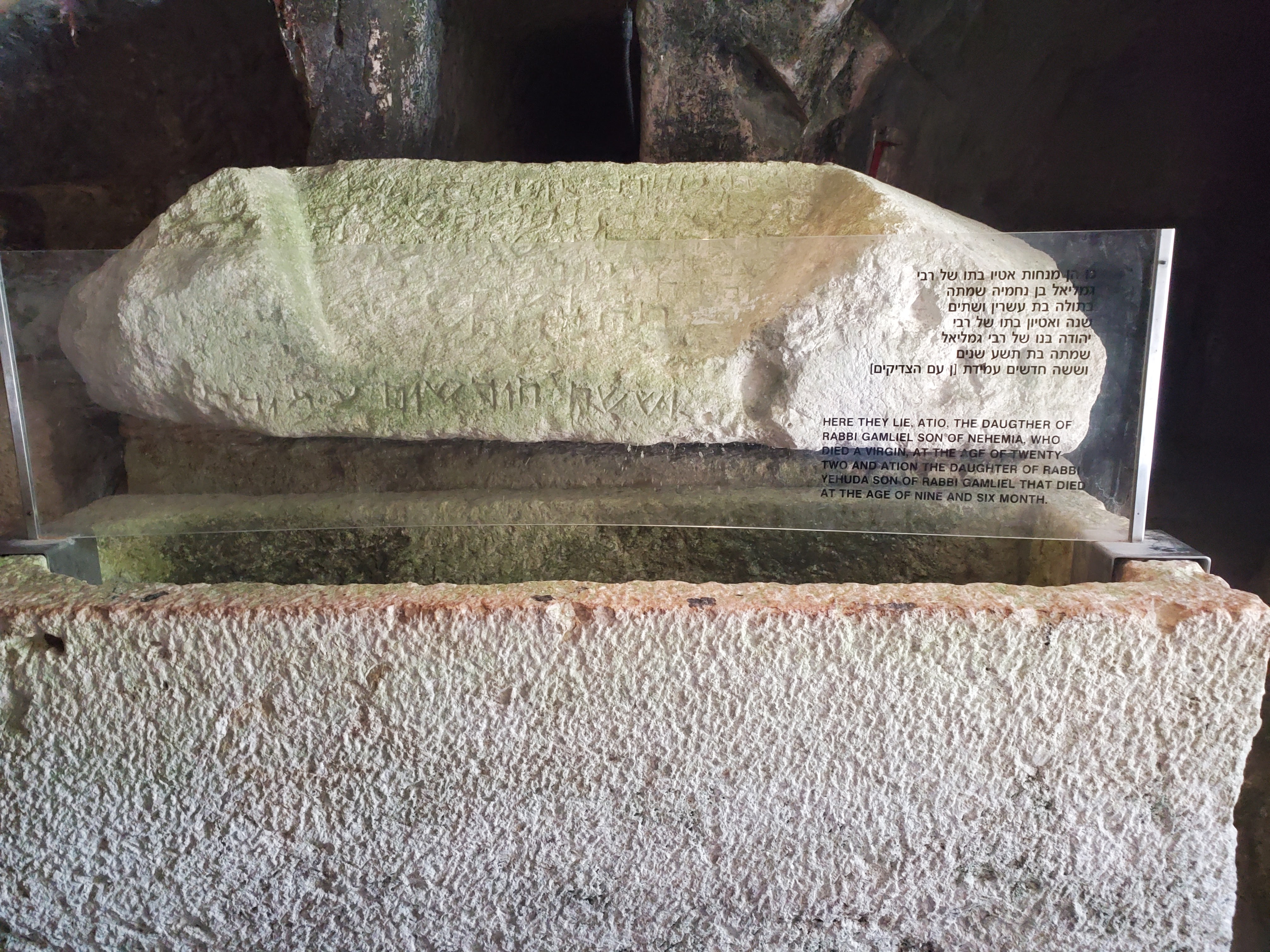
It consists of a network of limestone caves, most containing multiple niches, into which were placed sarcophagi, frequently decorated with elaborate carvings and inscriptions. Most of the sarcophagi were damaged by grave robbers over the centuries, but one can still see the care and artistry used.

There are more than thirty catacombs currently uncovered, but the westernmost section, the Menorah caves are only open to the public through pre-arranged tours. There is still plenty to see in eastern section of the park.

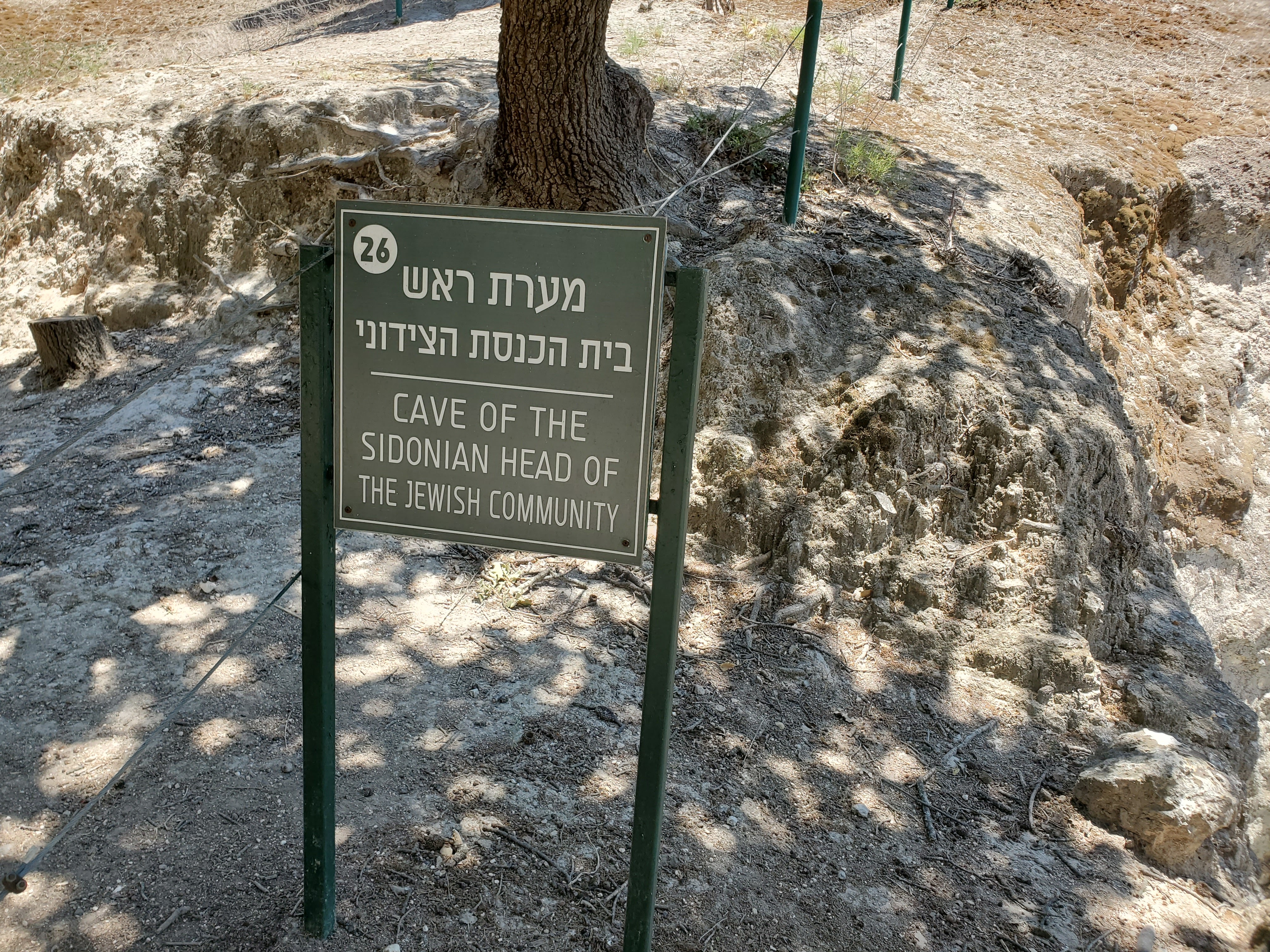
Rather than lead you on a cave by cave description of the park, let me just provide some highlights. One of the signs of the significance of this location is the distances traveled by some to be buried here. The inscription for one cave indicates that the cave is for the head of the Jewish community of Sidon, in present-day Lebanon and his family.

The largest cave, containing over thirty sarcophagi, known as the Cave of Coffins, contains the remains of Jews from Himyar, in present-day Yemen. At one point, between 390 and 525 BCE, Himyar was a Jewish state, ruled by a Jewish dynasty. Many of the elite members of Himyarite society were buried in Beit Shearim. Many of these had elaborate carvings on their sarcophagi, frequently depicted animals and geometric shapes.

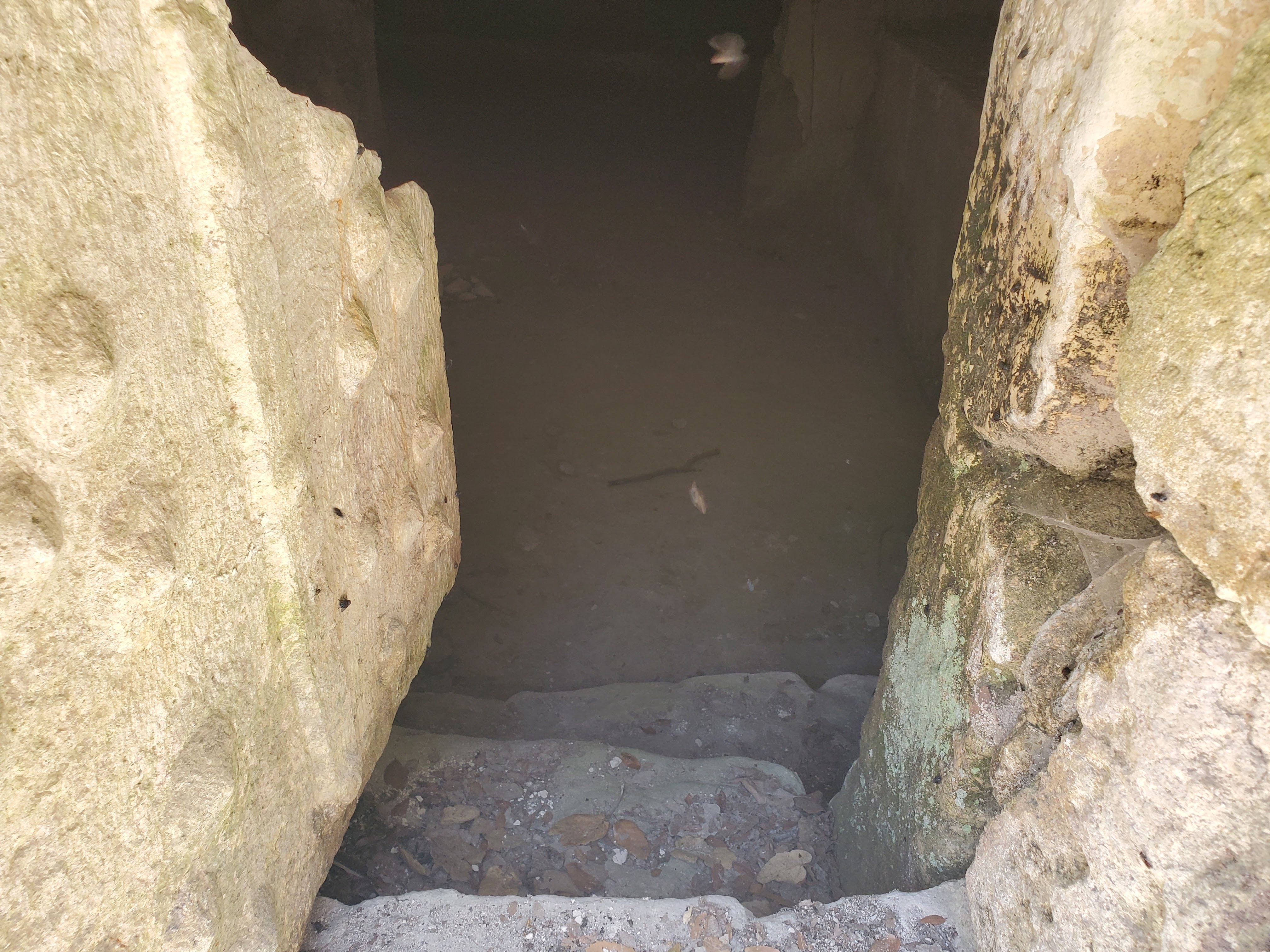
The Cave of Curses, contains inscriptions on its walls cursing anyone who might open this tomb. It was appropriately at this tomb, that I attempted to get a better picture inside the tomb. I didn’t want any of the grating on the gate, so I slipped my phone inside the gate to snap a shot. Almost immediately, a business of flies swarmed around me. These were very large flies, some of whom were fully saddled. Startled, my phone hit the grating of the gate and fell just inside the tomb and just out of reach of my hand. I headed back to the office, explained my predicament and asked if anyone had a key to unlock the gate. One of the maintenance crew left with me for the tomb, unlocked the gate, and I retrieved my phone and thanked him repeatedly.

Finally, the central cave is the burial site of Rabbi Judah Hanasi, and his family. Rabbi Judah HaNasi compiled the Mishnah in the late 2nd century C.E. and was the leader of the Sanhedrin. He lived for a time in Beit Shearim, but moved to Tzipori for the last seventeen years of his life for health reasons. He was buried, however, in Beit Shearim.

After a few hours exploring Beit Shearim on the hottest day of the year, so far, and without the interactive experience, I decided that I just wasn’t up to three hours of hiking. I bid my farewells to the departed and headed back uphill to the bus stop at which I had arrived.