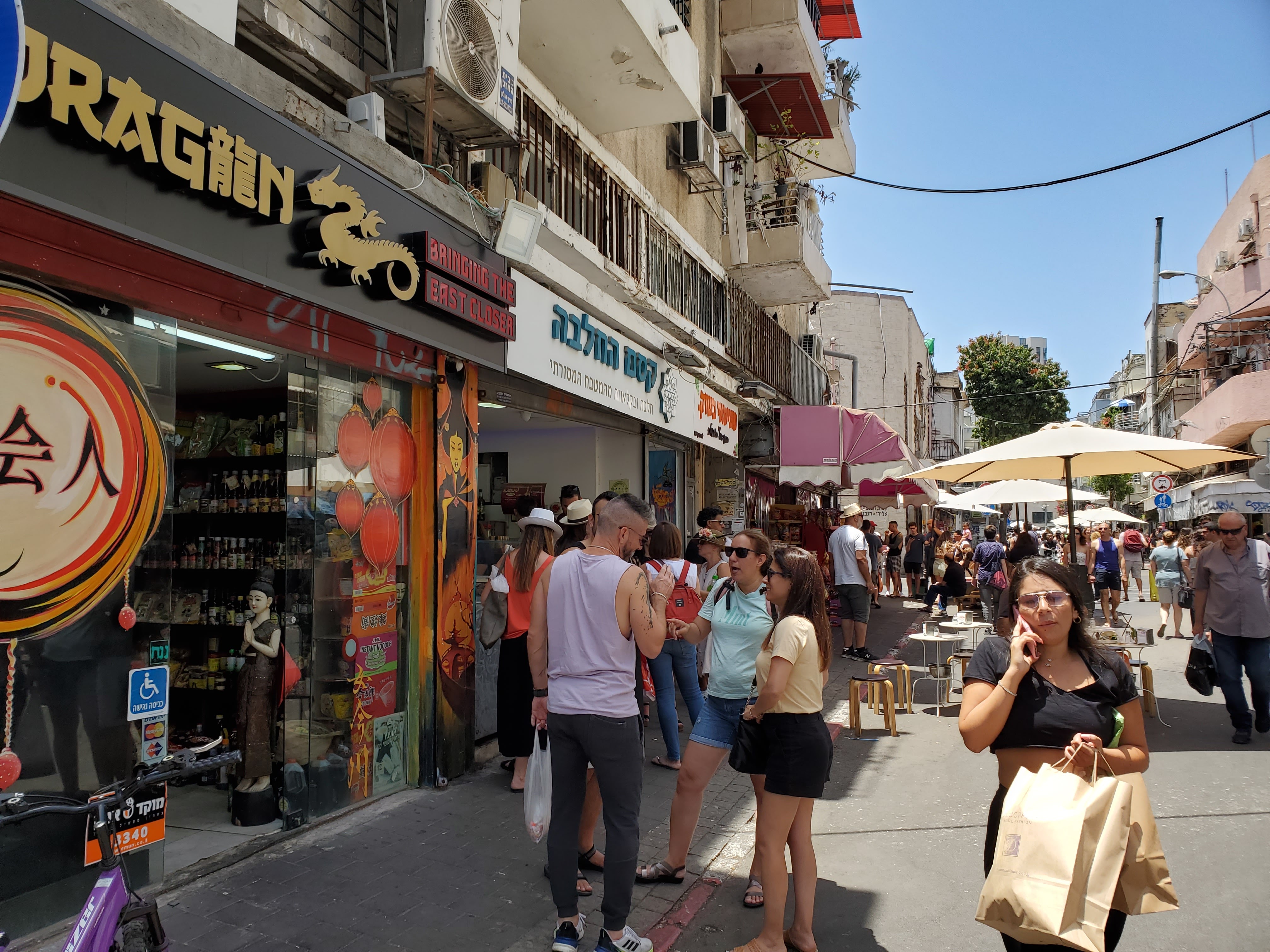
Shuk Levinsky, the Levinsky Market, is another of the famous food markets in Tel Aviv. Shuk Levinsky was founded in the late 1920’s in the Florentin neighborhood of Tel Aviv, by Jews who immigrated from Salonika in Greece. They were soon joined by immigrants from Turkey, the Balkans, and shortly thereafter, Persia. What began as a spices market expanded into a market filled with vegetables, nuts, sweets, restaurants, and more.
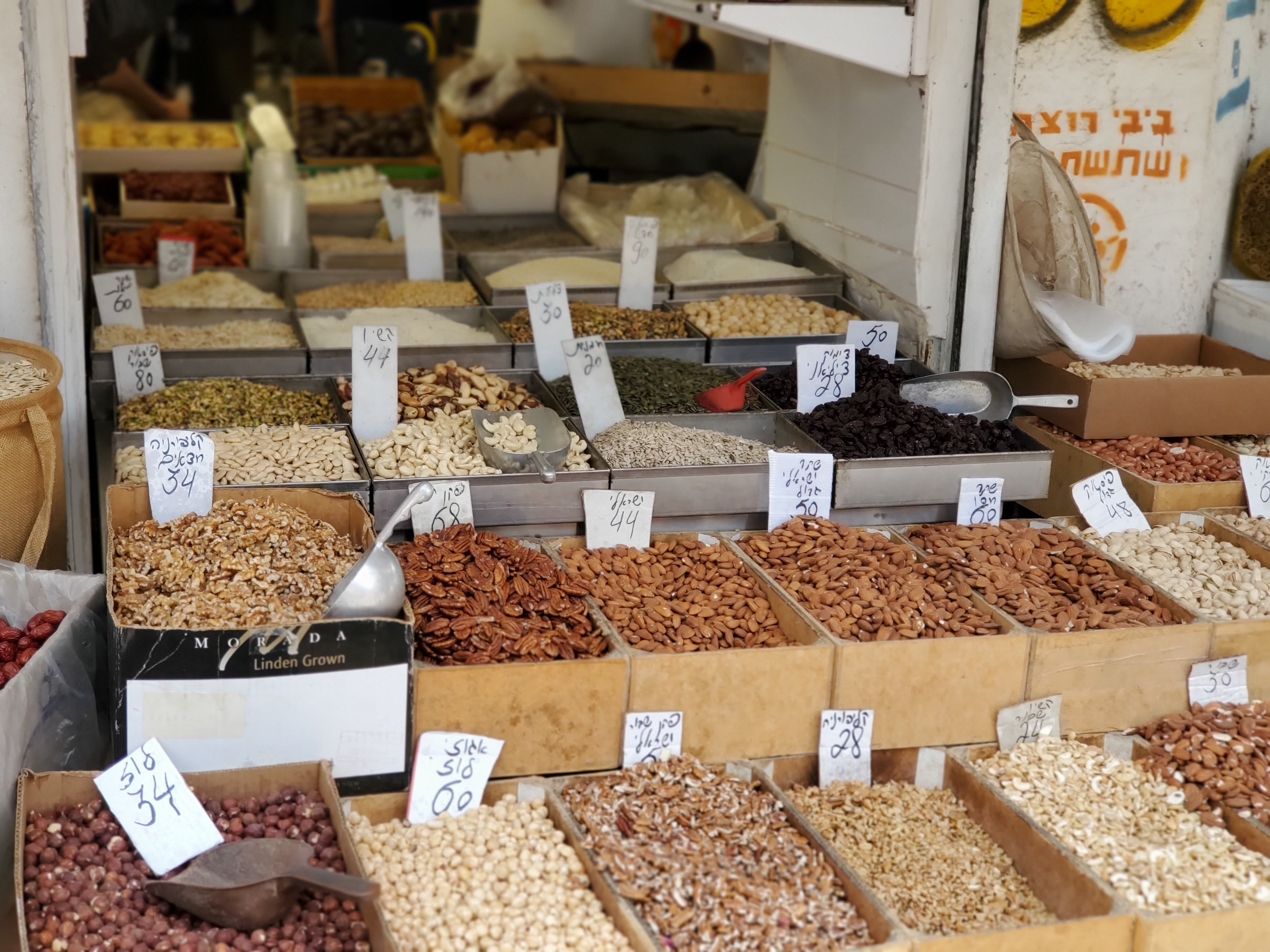
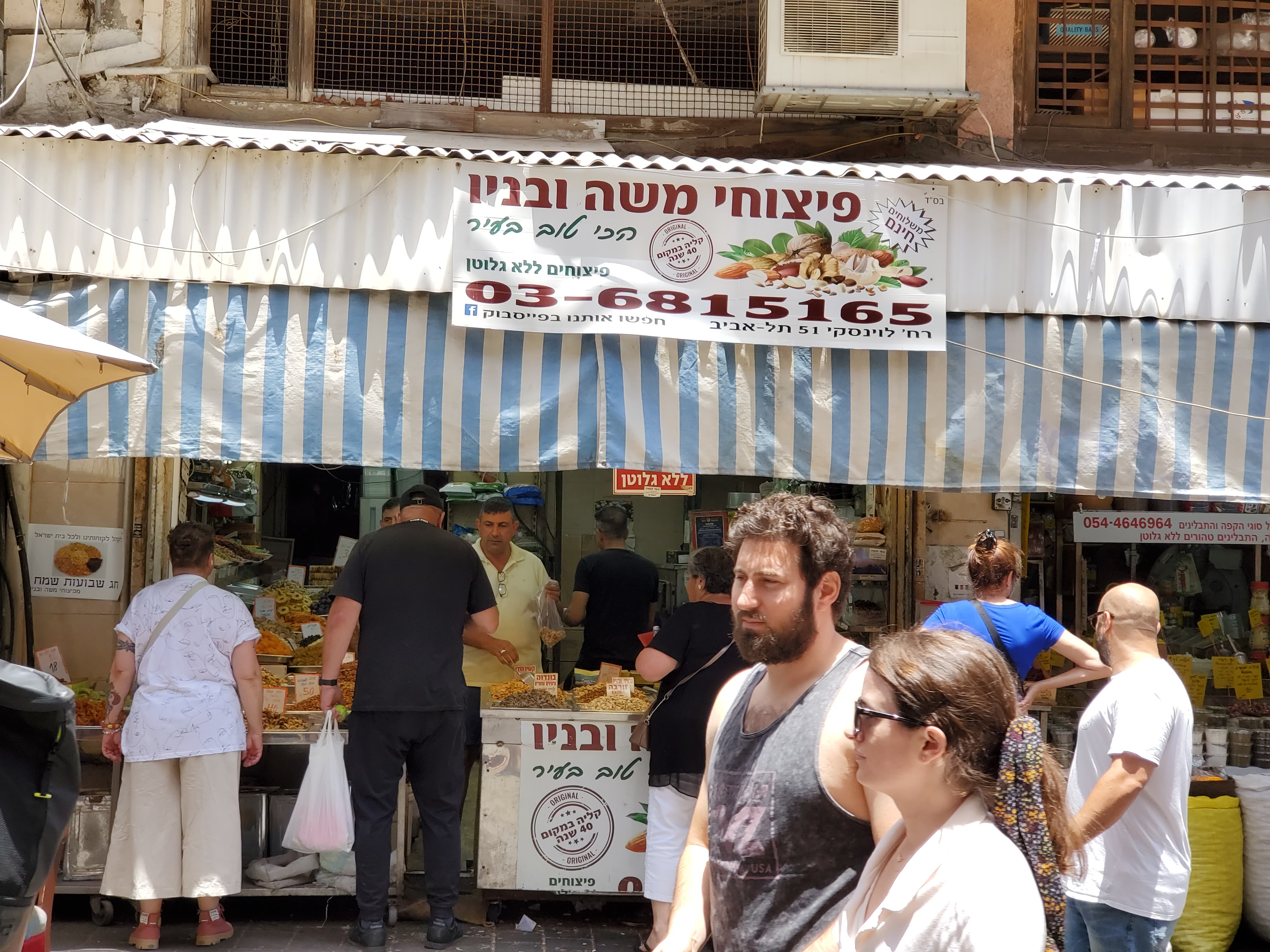
For my visit to Shuk Levinsky, I went with my daughter Orli. Not known for her patience, I knew this would not be quite as leisurely a stroll as my excursion to Shuk Hatikva, but we did a brief walk through to get our bearings and then headed back through to do some shopping. Our first stop was at Pitzuchei California or California Market. Pitzuchim, literally things that can crack, refers to seeds and nuts, like sunflower seeds and pumpkin seeds, which one can crack the shell open with one’s teeth, as well as peanuts, almonds, cashews, and pistachios. Pitzuchim generally also have a selection of dried fruits and other goodies. We sampled some of the nuts and Orli decided to buy some dried mango for a snack.
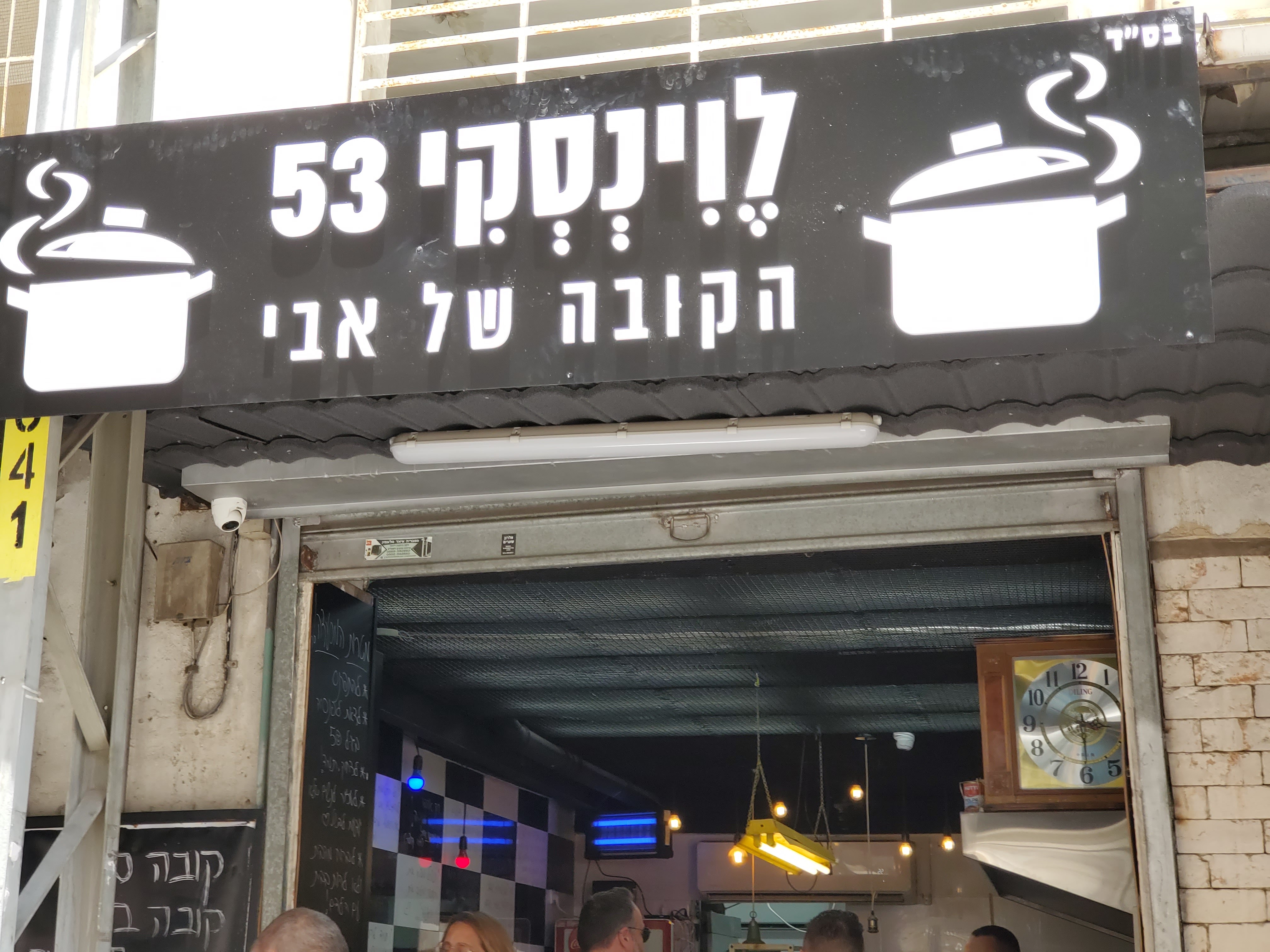
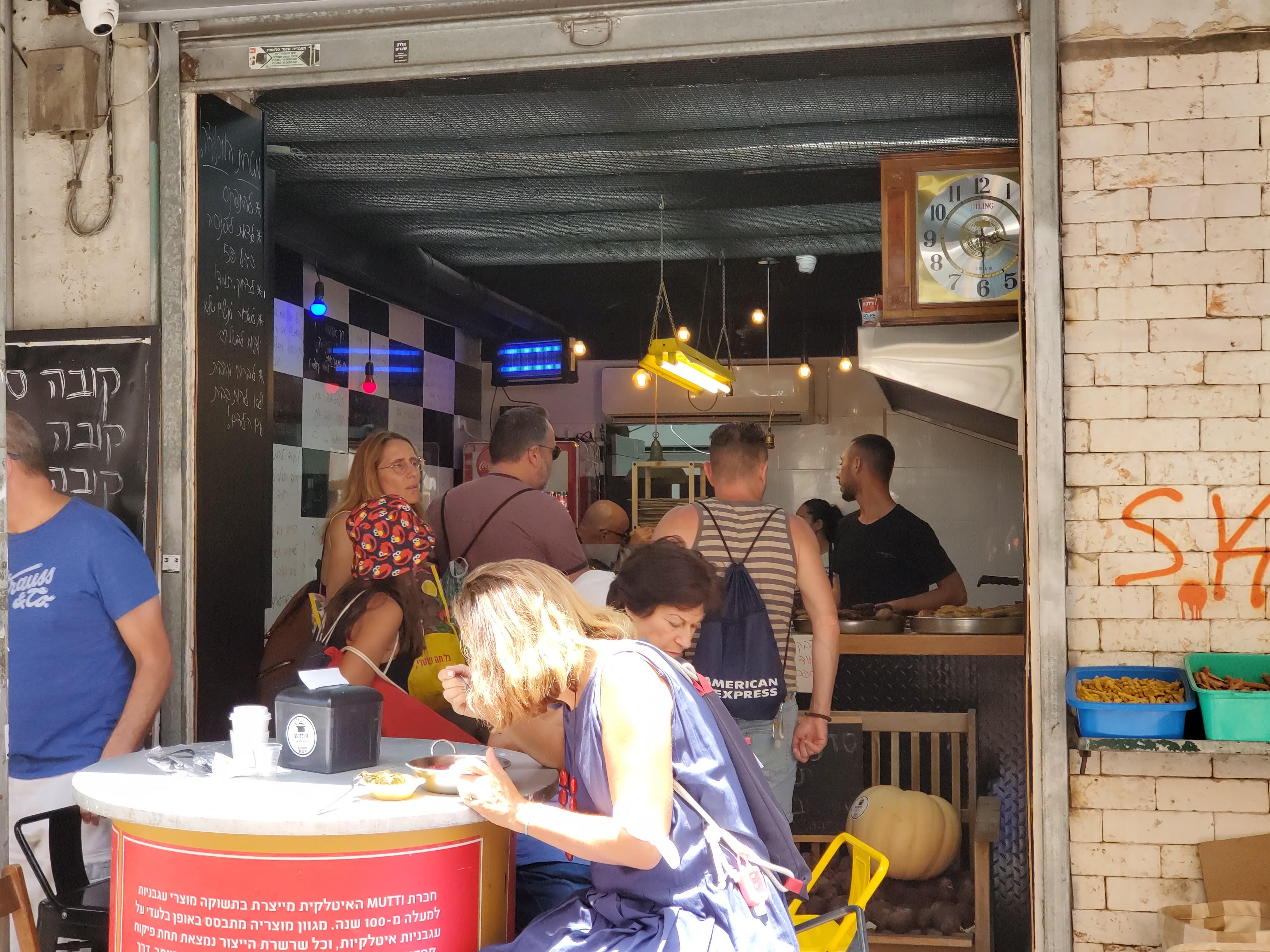
Next, we stopped at Levinsky 53, HaKubbah Shel Avi, or Avi’s Kubbah. Kubba is an Iraqi dumpling, generally filled with meat, that can be eaten fried, often topped with techina and amba, or floating in soup. The dumplings are typically made from semolina, bulgar, or potatoes, and can contain other ingredients, such as the colorful beet kubba. The various types of kubba are lined up for customers to choose from and are then dropped into a pot of oil to quickly fry them up. We ordered some potato kubba, covered in techina and amba, but soon found out we had misunderstood and that these were in fact filled with meat, and not vegetarian. The initial bite of the was delicious. It was warm and chewy, with the fried potato flavor mixing with the nuttiness of the techina and the bite of the amba. We also ordered some kefte de prasa or leek patty. Much like a potato latke, but with the garlicky, oniony flavor of the leek filling the mouth. It was absolutely delicious.
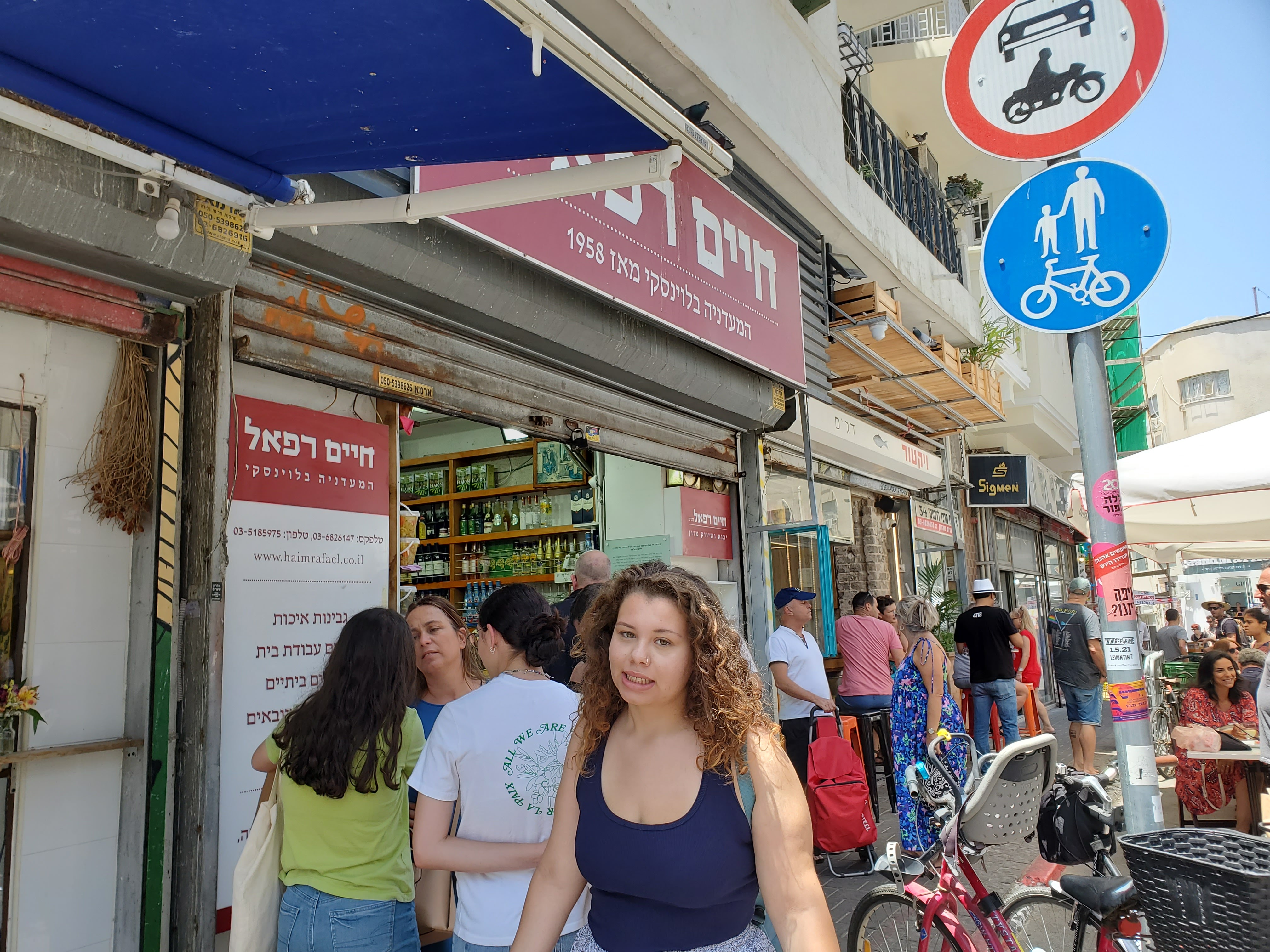
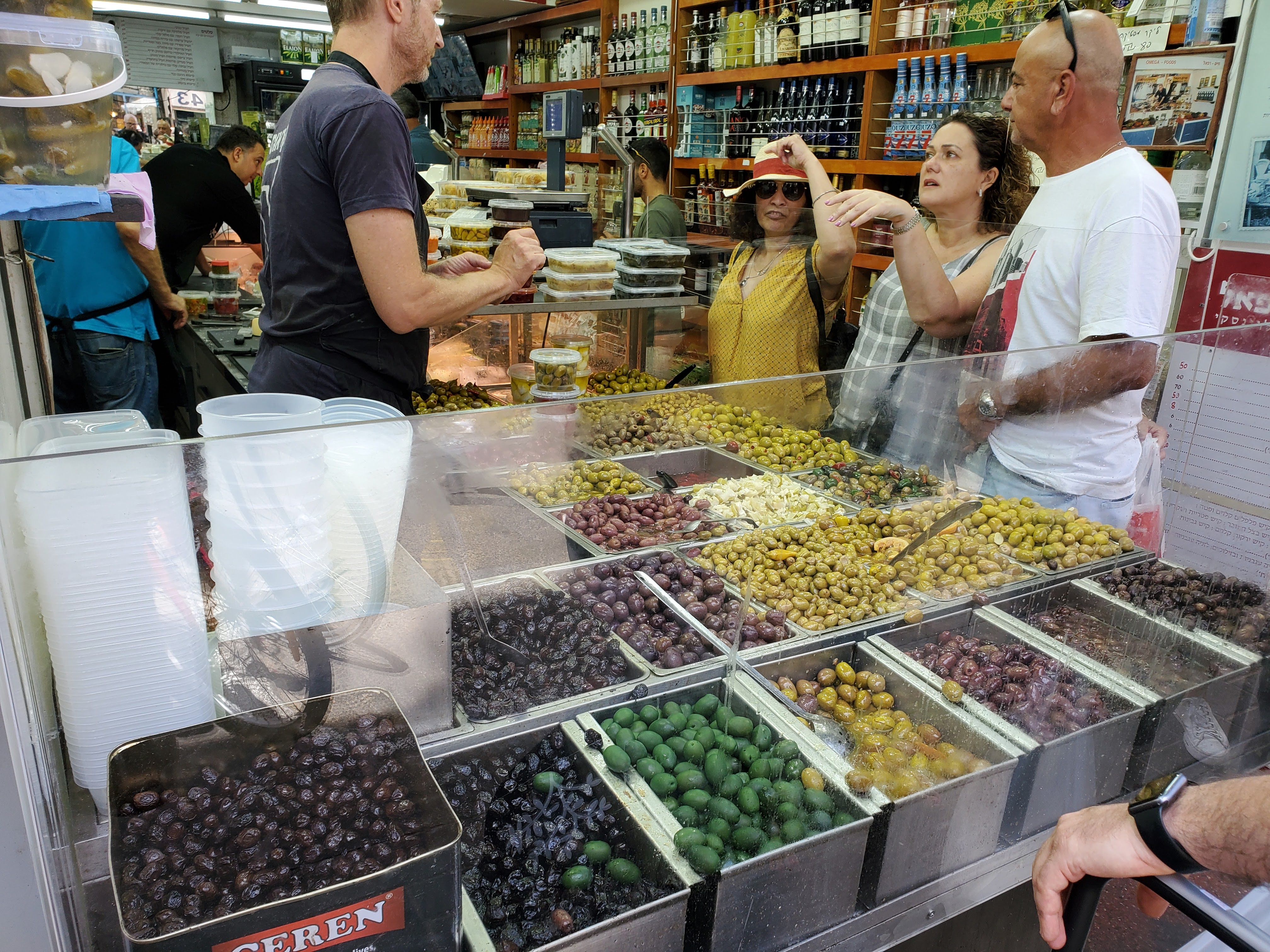
Our next stop was Haim Raphael, a deli selling olives, pickles and other pickled goods, cheeses, smoked and salted fish, prepared salads, and cured meats. Haim Raphael, immigrated from Salonika, following the Holocaust and opened up the shop in Shuk Levinsky, which has become an institution within the market. We waited in the line to enter the rather small and cramped store, listening to the Greek music filling the air from next door. Waiting, you passed by vat after vat of different styles of olives and pickled peppers. We bought some pickled cherry peppers, and a little smoked salmon. Both turned out to be delicious. Adding to cherry peppers to hummus, techina, tomato and cucumber salad, roasted kohlrabi, fried eggplant and hard boiled egg, made a delicious lunch sandwich the next day.
Long lines dissuaded us (or Orli) from checking out Burekas Penso, which makes a wide variety of the the dough pockets filled with cheese, spinach, potatoes, eggplant , and more. We also skipped Cafe Levinsky 41 and its famous gazoz drinks for the the same reason. The gazoz there is made with fresh and preserved fruit, natural syrup, and fresh herbs. The drinks looked very refreshing, but we moved on.
Our last stop was at Havshush Spices, a small hole in the wall store on a side street, with the door only half-opened. Inside one is greeted with the scent of an incredibly varied blend of spices, as well as the sight of bulk containers of grains, and beans, and spices. I loaded up on spices to bring home to restock my depleted spice rack, concentrated on those things which I wouldn’t be able to find easily at home: ras el hanout, za’atar, harissa, hawajj for soup, hawajj for coffee, and some grilling spices. I almost can’t wait to get home to begin to use them.
After a short walk, we were at the bus stop and on our way back home.

 My Journey to Israel: Connections and Disruptions