Ga’aton Boulevard

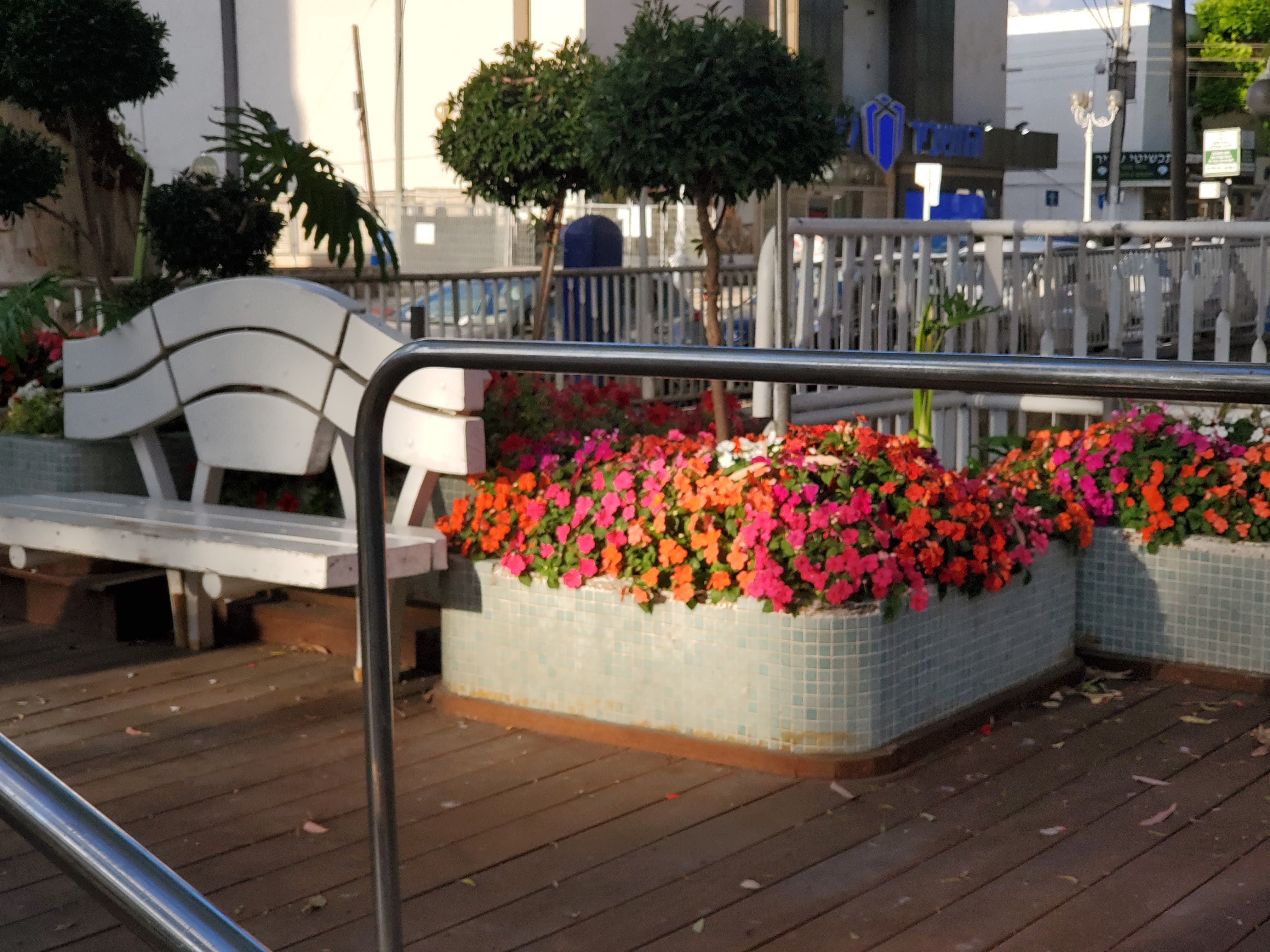
Ga’aton Boulevard or Sderot Haga’aton serves as the central road through downtown Nahariya. The Ga’aton River, or at this time of year, the trickle that used to be the Ga’aton, runs through the middle of the road enclosed in a concrete causeway around which and even above people can sit, have a coffee, and chat.
The road is filled with restaurants and shops catering to both residents and tourists. If you are hungry for pizza, then Ga’aton Blvd. might be the place for you. I counted 7 pizza shops over the course of 5 blocks. There were also 3 Mexican restaurants, which I found to be surprising, since Israel in general and Nahariya in particular do not seem like meccas for Mexican cuisine, but if you have a craving for fajitas or tacos, you can get your fix in downtown Nahariya.
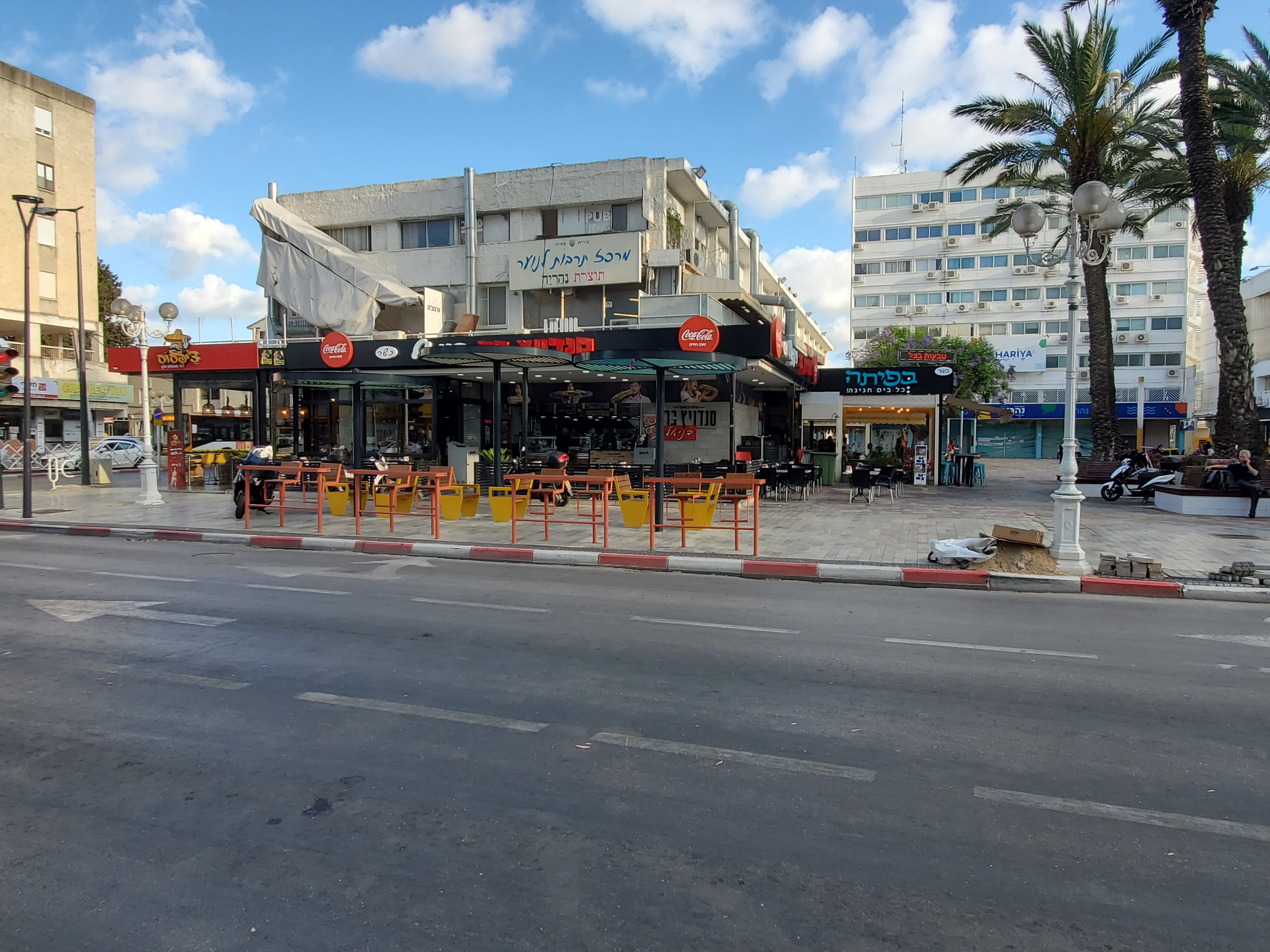
There are several places serving yogurt, ice cream or gelato. There are also at least 2 sushi bars. No street in Israel would be complete without bakeries or coffee bars of some sort. I counted four coffee shops, and three bakeries.

In addition there were a few felafel and kebab places, small grocery stores, several jewelers, a few clothing shops, some electronics stores and more.

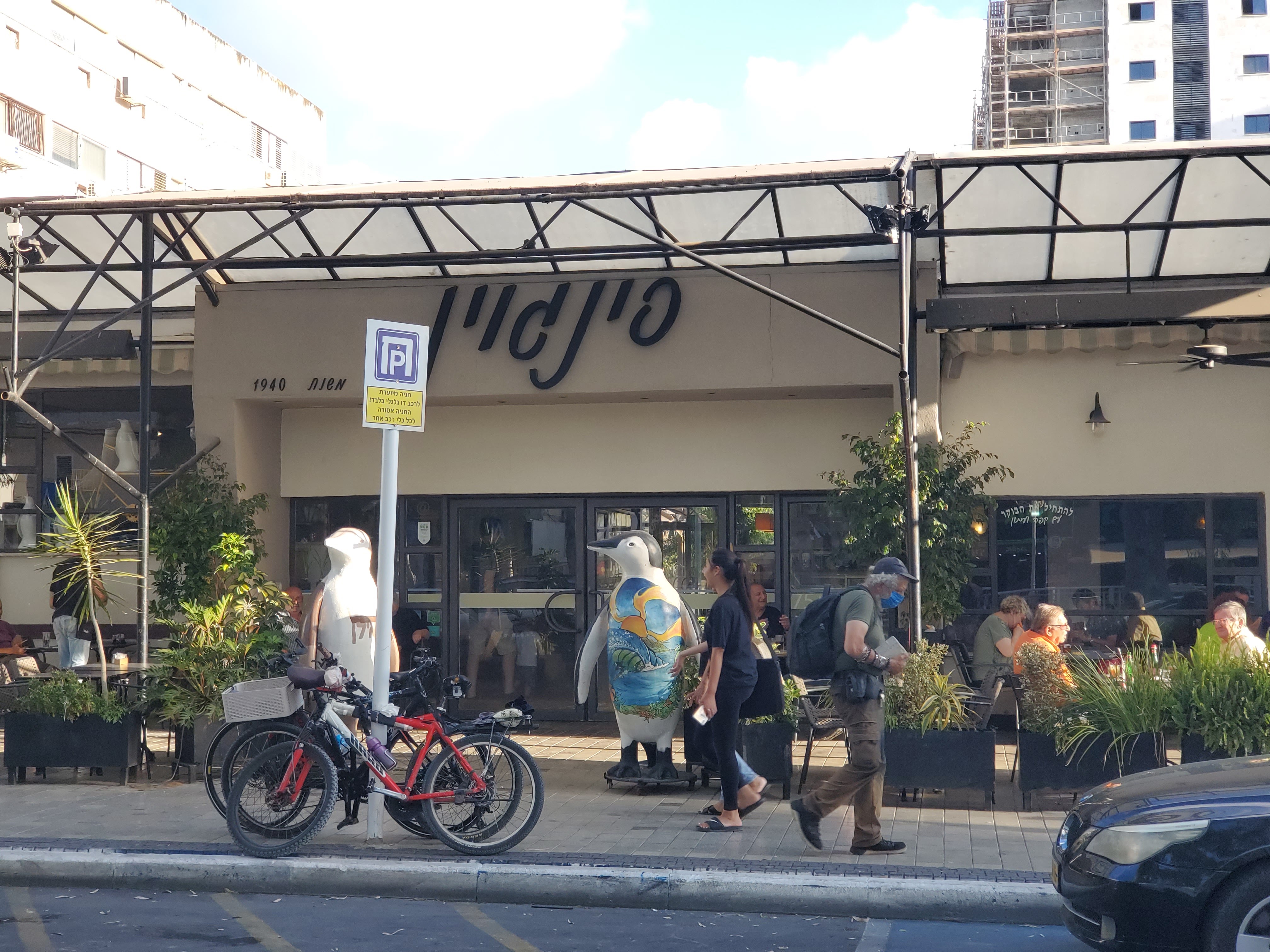
The most famous site along the boulevard is the Penguin restaurant. The Penguin is the oldest restaurant in Nahariya, and one of the oldest surviving businesses in the town, as well as being one of the oldest restaurants in the country. The Penguin was founded by German immigrants in in 1940 and the Oppenheimer family has operated it ever sense. It began by serving German fare and today its signature dish is its chicken schnitzel along with a more Israeli style menu.
At the opening edge of Ga’aton Blvd., is a sculptor of a ship, reflecting that Nahariya in the northernmost coastal town in Israel. The street, like the river in its midst, ends as it flows into the boardwalk of the Tayelet Nahariya and then on to the sea.
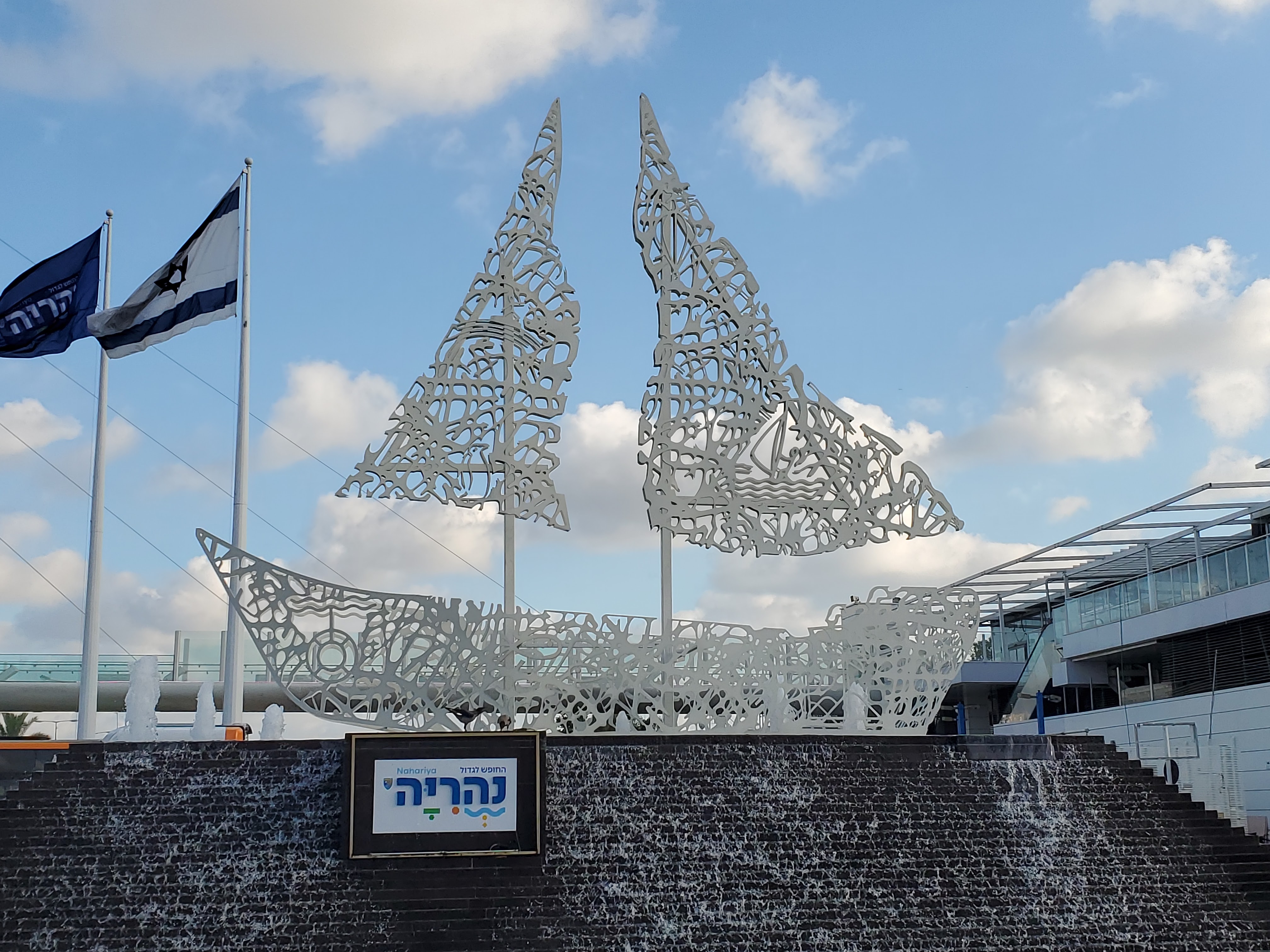
One can either walk from the middle of town onto the promenade and explore the beach or conversely, return from the beach right into the middle of town. The compact nature of this community makes it possible to experience the urban and the recreational within mere moments of each other.
The Tayelet Nahariya at Night

Nahariya has a tayelet, a promenade, that stretches along the beach, south toward Akko and north toward Akhziv beach. The promenade, constructed in various sections of brick, cobblestone and pavement is well-lit and filled with people day and night.

I went walking at dusk, walking about two miles south on the promenade from where I was staying and then turning and returning back north. I was impressed by the numbers and variety of people along the tayelet.

People were running and jogging, some in pairs and some solo, walking in groups, couples, or singly or just hanging out at different spots along the tayelet. Many were walking their dogs, and later in the evening, after the dogs left, the cats began to emerge.

The tayelet is more than just a walkway. There are activity areas alongside it. There are some areas with playground equipment for children to play on. There are others with exercise equipment, and still others for restaurants and bars. Alongside it are also benches, lounge chairs, swing sets, and other places to sit and rest.

As I walked, I imagined the stories behind the people I passed. I group of teenage girls was surrounding a phone and giggling. I assume it was about a boy. A second group of girls appeared to be consoling one of their group. I also assumed that was about a boy.

I saw an older man with a a brace around his ankle stand up from a bench he was sharing with his wife and began to demonstrate some dance moves. I’m not sure if he was showing her that he still had it or was demonstrating that his ankle was doing much better.

Some couples seemed to be using the walk as a means of catching up on the days events. Families here and there seemed to ignore the scowls of teens and tweens who clearly wanted to be anywhere else. One man appeared to be being chastised by what appeared to be members of his family and he apparently mounted his own defense. These conversations were in Hebrew, Russian, and even one in English.

Further down the tayelet, another older man had brought out a large speaker that was blaring music to whose time he was moving, tapping feet and moving his hands. He was having his own personal concert and the rest of us were just witnesses.

There was a father in a corner, just pushing a stroller back and forth, back and forth, following the familiar rhythm of putting a baby to sleep.

I saw several pairs of women jogging, one or two sets were obviouslly taking this fitness routine seriously with clenched jaws and eyes focused straight ahead. Others were jogging while talking and laughing.

At least one man walking was on his phone and I wondered if he really needed the phone to reach the other party, surely everyone else up and down the tayelet could hear his conversation clearly.

There were couples seated on the beach, half hidden in the shadows, others swinging quietly on swing sets, still others sitting on lounge chairs or ledges of the walkway. Some were laughing, others talking quietly, still others just sitting close and enjoying the evening.

In one area, a group of people were taking part in a fitness class with resistance bands. Not far away, another group was practicing handstands. A little farther down, two women were in one of the areas with exercise equipment working out to a fitness sound track. Not too far away in another area, men were tossing a medicine ball. And not too terribly far from them, another group of men were doing circuit training on the equipment in their area.

People were seated at restaurants and bars. The hookah bar seemed more crowded than many of those surrounding it. Still the hostesses for these places had that bored expression that told you they were counting the minutes until they could get out of there. The section of the boardwalk adjoining it still had children at play, riding model cars across the wooden slats of the boardwalk, gently pushed by mom or dad.

On my way back, the crowds had thinned, but it was still far from empty. There were fewer walkers and joggers, but couples and groups still gathered at the edges of the pavement. The moon was barely a crescent in the sky above. The only sounds were those of the waves crashing against the shore, of the occasional frog croaking in the grass, and of cats meowing in search of scraps.

As I returned to my apartment, I could see others begin to take their turn in traversing the tayelet.

The Trip North

Israel has a great public transportation system.  Buses, trains, and ride services, in addition to cabs and car rental, make it relatively easy to get around the country. 

Buses and trains utilize a prepaid card known as Rav Kav to pay for rides.  The cost of these trips is removed from the card by scanning an NFC chip on the card when entering a bus or a train station.  There are also apps available to transfer funds to refill your card.  In addition, there are apps like Moovit, that keep track of train and bus schedules and will give you directions on how to reach the proper station to board, when to exit,  and how to walk to your final destination.

With all of those advantages, travel should be almost seamless. There is the minor factor of human error. You have to be able to understand the map and to a degree the directions. For example, if you are told to take a slight right when exiting the bus, are you facing forward or backward? If you are turned around and confused, how can you tell if you’re walking in the correct direction to reach the bus stop or your destination? If a street curves around, intersects with other streets and then continues on, or changes its name somewhere in the middle of your trip, it can cause some confusion. I have experienced all of these issues on more than one occasion.

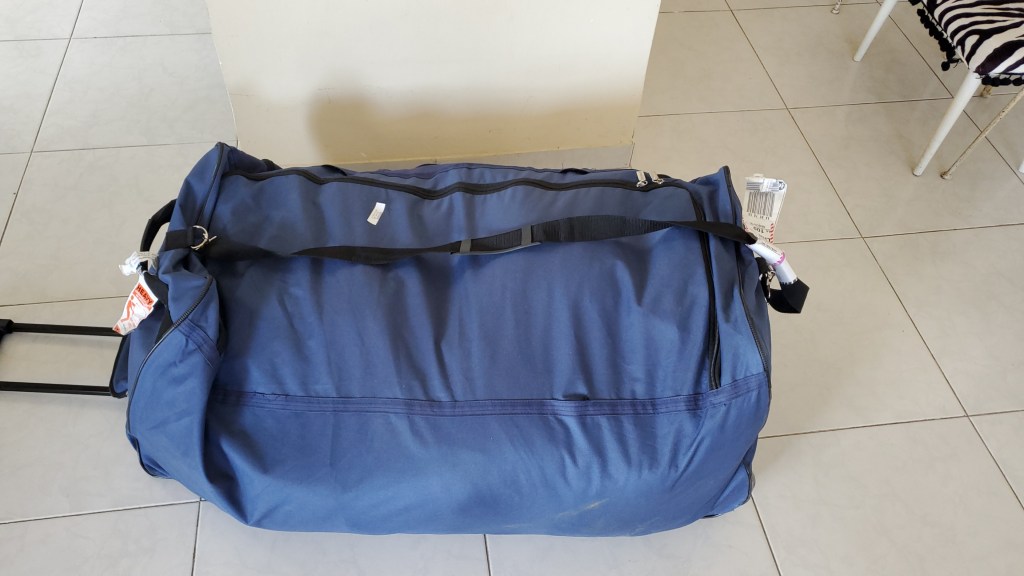
In fact, I think I experienced all of them trying to get from my Airbnb to the train station with two suitcases, a backpack, and a bag of food. I eventually made it, however, and managed to board the train to Nahariya.

As burdened as I was with my carry-ons, maneuvering on a train was somewhat of a challenge, which is why I stood for the first several stops until a seat or pair of seats opened up.

I made it the rest of the way without incident. Upon arriving, I considered whether I really wanted to complete a 20 minute walk to my Airbnb with all of that baggage . I didn’t think for long. Almost immediately I called for a cab, who promptly got lost on the way there.

For those who have been following from the beginning, fifteen minutes after I got there, I was finally reunited with my missing luggage.

I think it was much less worse for wear than it’s owner. I can’t speak for the suitcase, but I know that I was glad that the day’s travel was over.

Jaffa

Jaffa or Yafo, is the ancient city around which Tel Aviv grew.  Settlement of Jaffa began almost 4000 years ago.  It has been ruled by the Canaanites, Egyptians, Philistines,  Israelites, Seleucids, Hasmoneans, Romans, Arabs, Crusaders, Mameluks, French, Ottomans, and British prior to Israel’s independence in 1948.  Depending on the era, it has served as a relatively important or unimportant port.  In Biblical times, Jaffa is mentioned as the port through which the cedars of Lebanon were brought for building the First and Second Temples, as well as the port from which Jonah sailed, first fleeing to Tarshish and later to Ninevah.

In the early twentieth century, some Jewish families left Jaffa to found neighboring Tel Aviv (the Neve Tzedek neighborhood is the transition point between the two), but Jaffa has remained a vibrant mixed community of Jews and Arabs.

My trip to Jaffa was a somewhat less than smooth experience.  I made it to the bus stop without any issues.  Things grew a bit more muddied after I boarded the bus.  In Israel, most buses have a scrolling electronic sign in the front of the bus that announces the current and next stop in Hebrew, Arabic, and English.   The sign on this particular bus was out of order.  Not a big deal.  I also had the travel app, Moovit, that would let me know when to get off the bus.  Two small issues.  Moovit thought I was on the 142 bus, while I was on the 42 bus.  Both go to Jaffa, on similar, albeit different routes.  Second, there was a problem with my settings and Moovit wasn’t giving me a real time update.   I noticed halfway through the ride that the route didn’t seem right.  By the time I noticed lots of signs in Russian, I was pretty certain I had overshot Jaffa and was somewhere in the midst of Bat Yam.

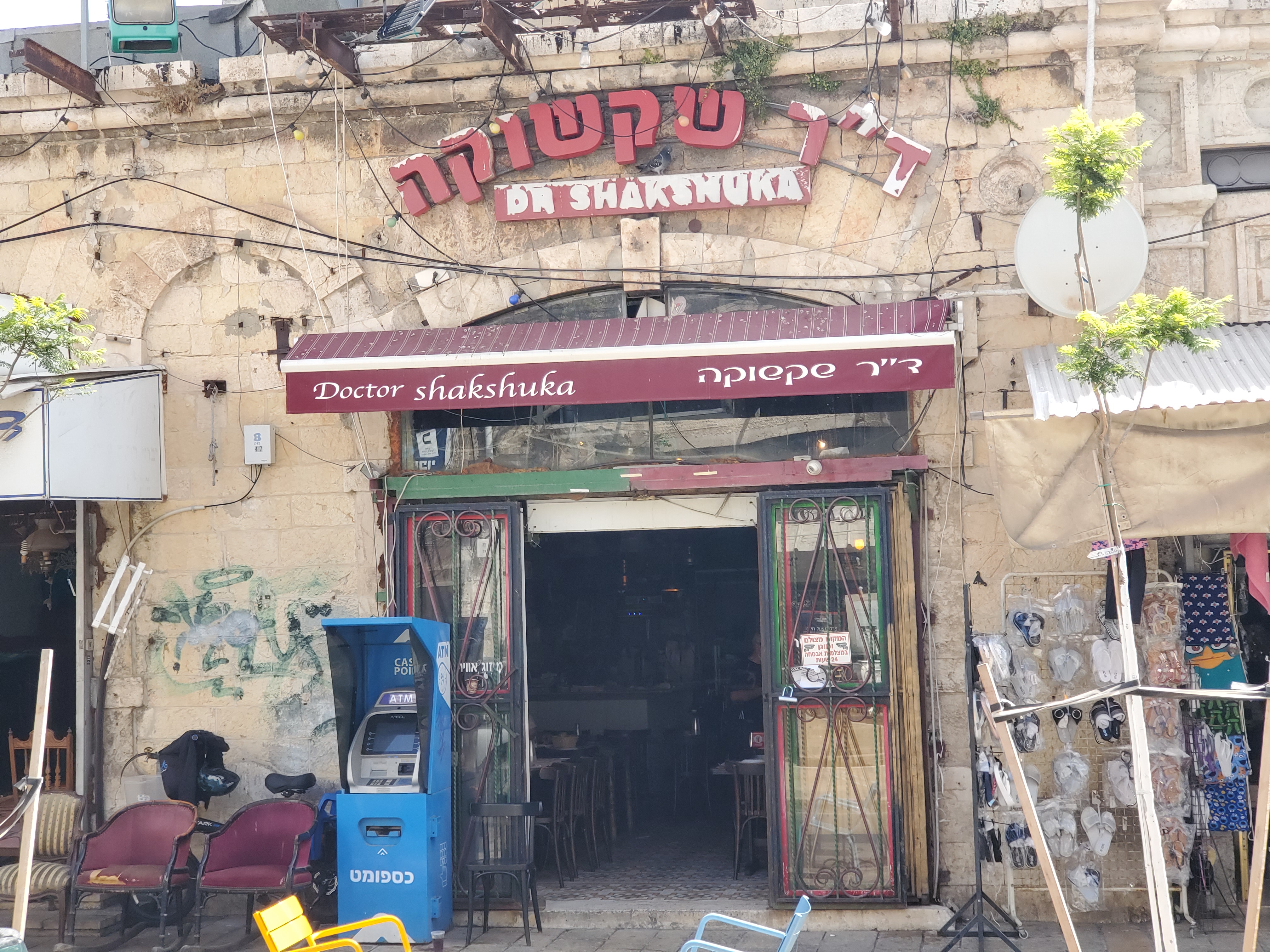
I was right.  I exited the bus, reset the settings on my phone, walked about 10 minutes, and boarded a bus back to Jaffa.  A little bit of a delay, but just another adventure in travel.  After breakfast at Dr. Shakshuka, I had some time to explore Jaffa.

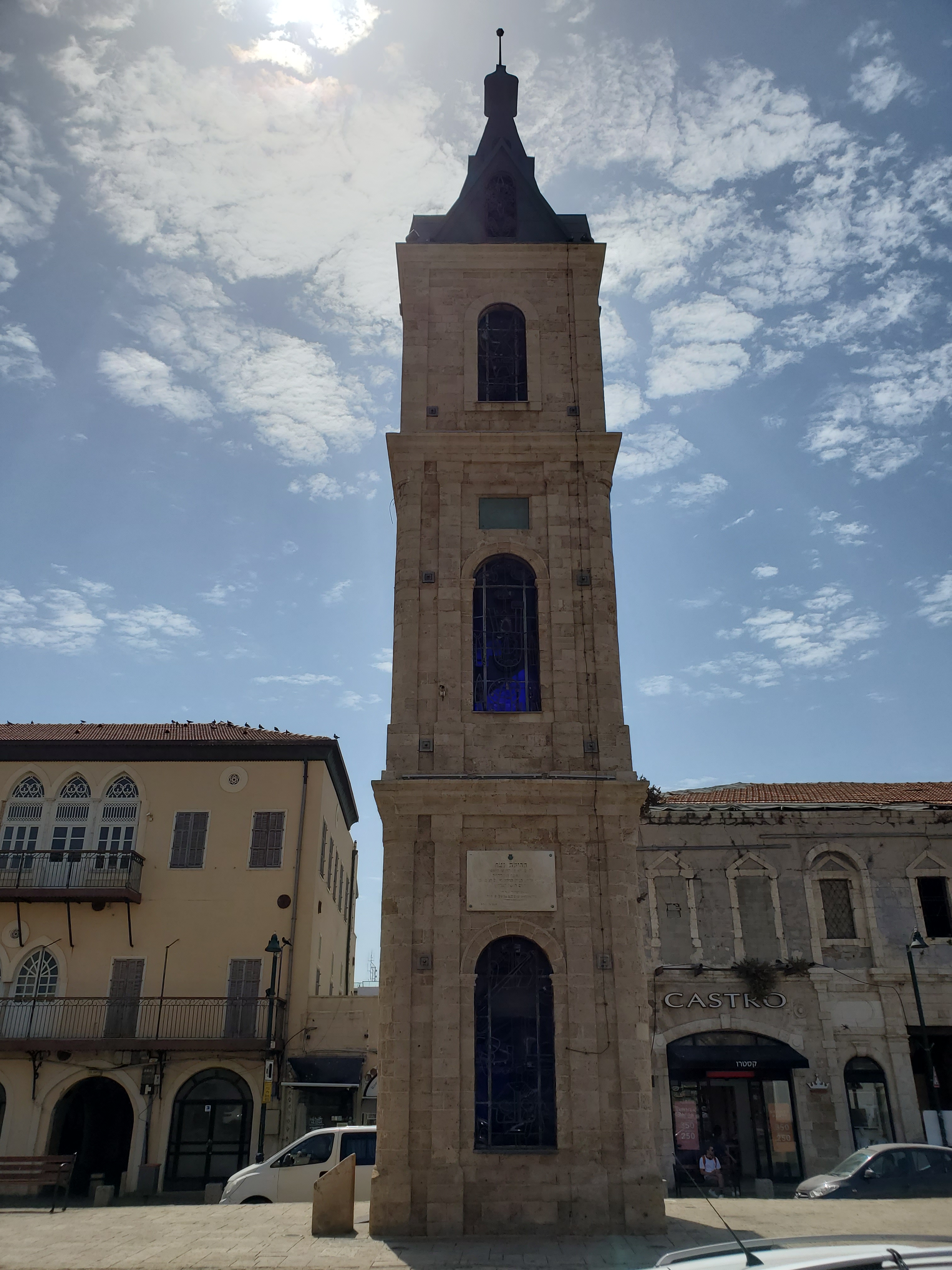
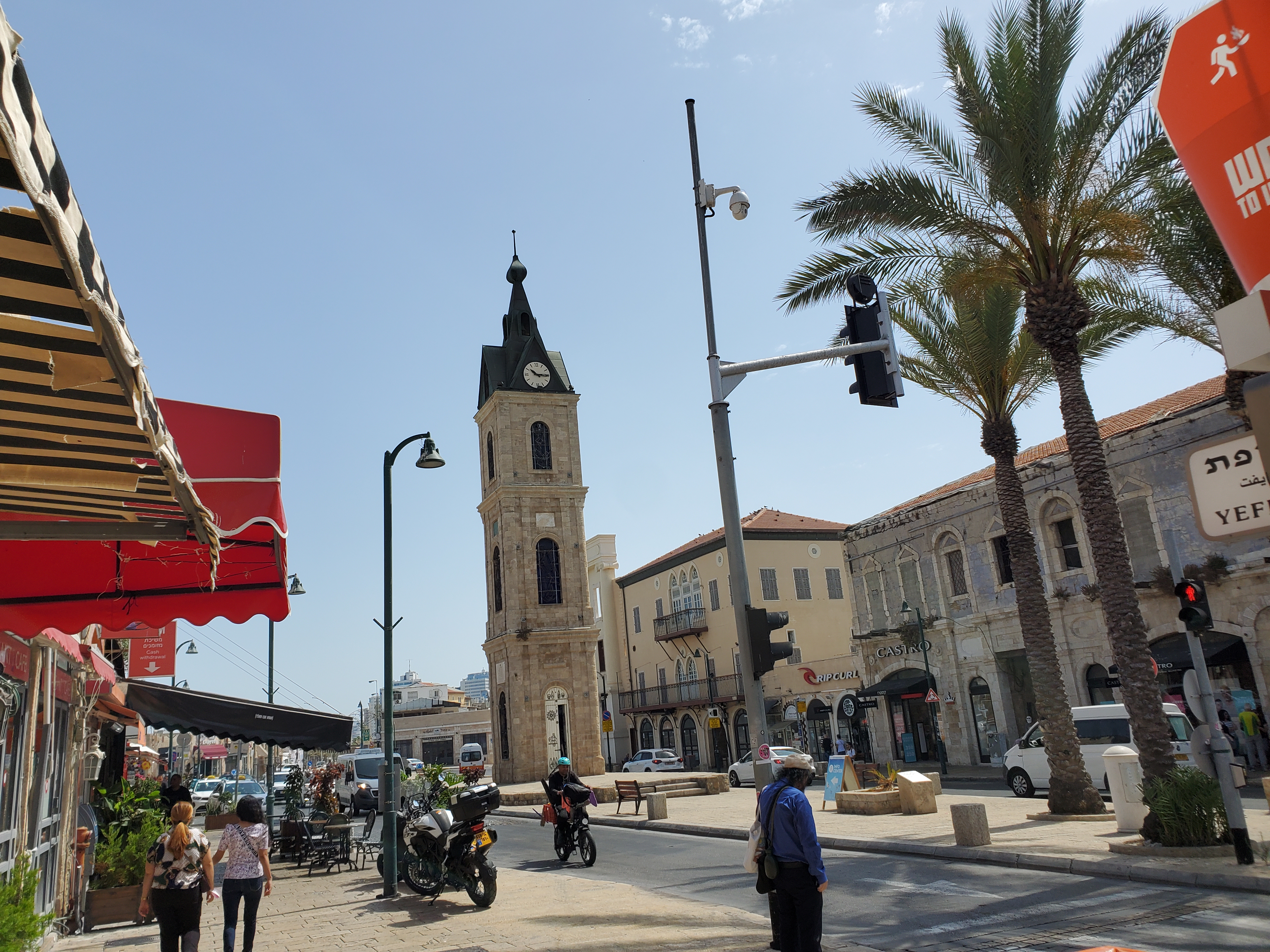
One of the most famous sights in Jaffa is the clock tower.  The clock tower was one of seven constructed in Israel in the early 1900’s commemorating the silver jubilee of Sultan Abdul Hamid II.  Six of the seven are still functioning, the seventh, in Jerusalem, was destroyed by General Allen by after capturing Jerusalem during World War I.

Today, the clock tower serves as both a tourist attraction and a means of aligning oneself in the older part of Jaffa.

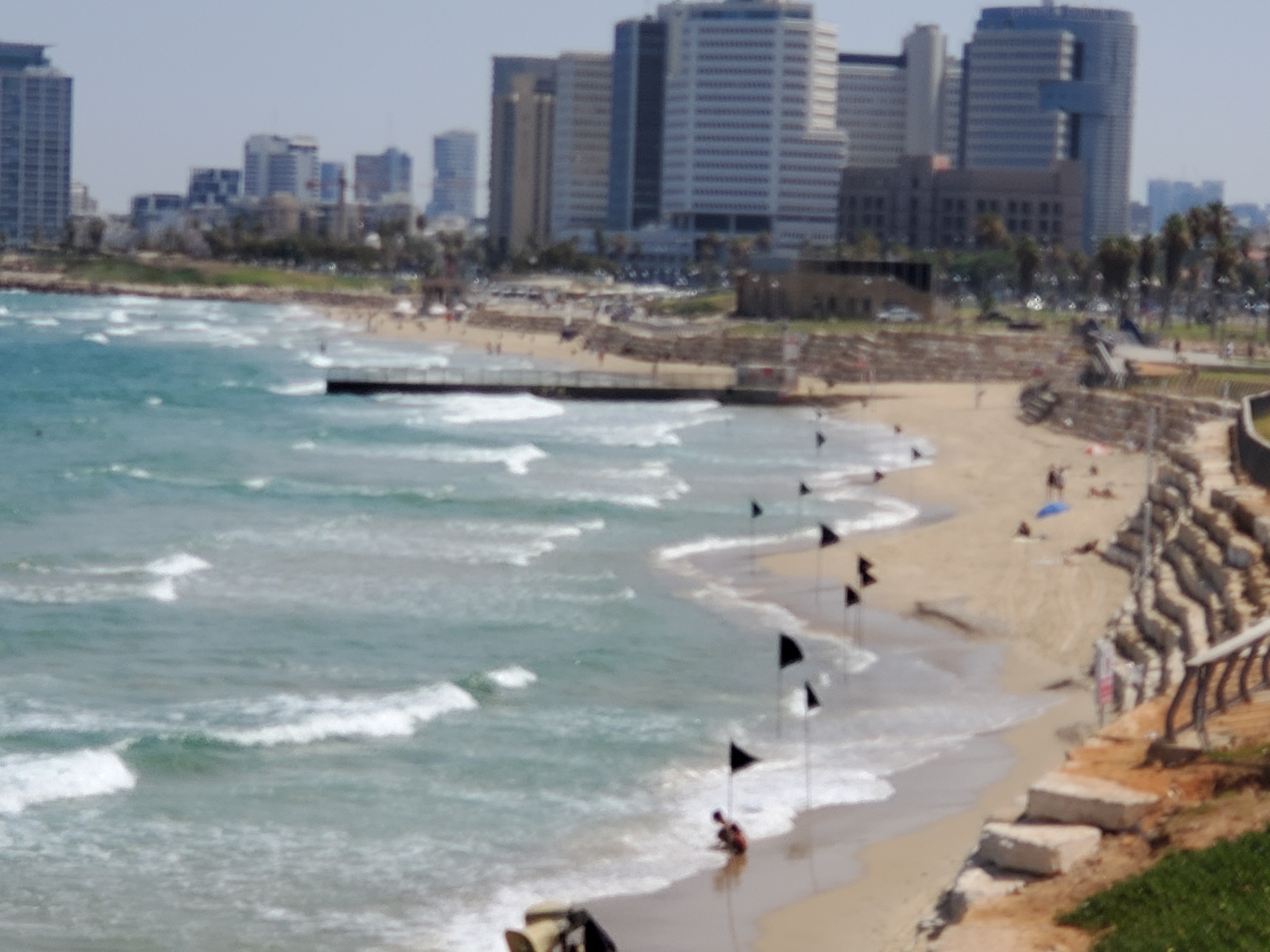
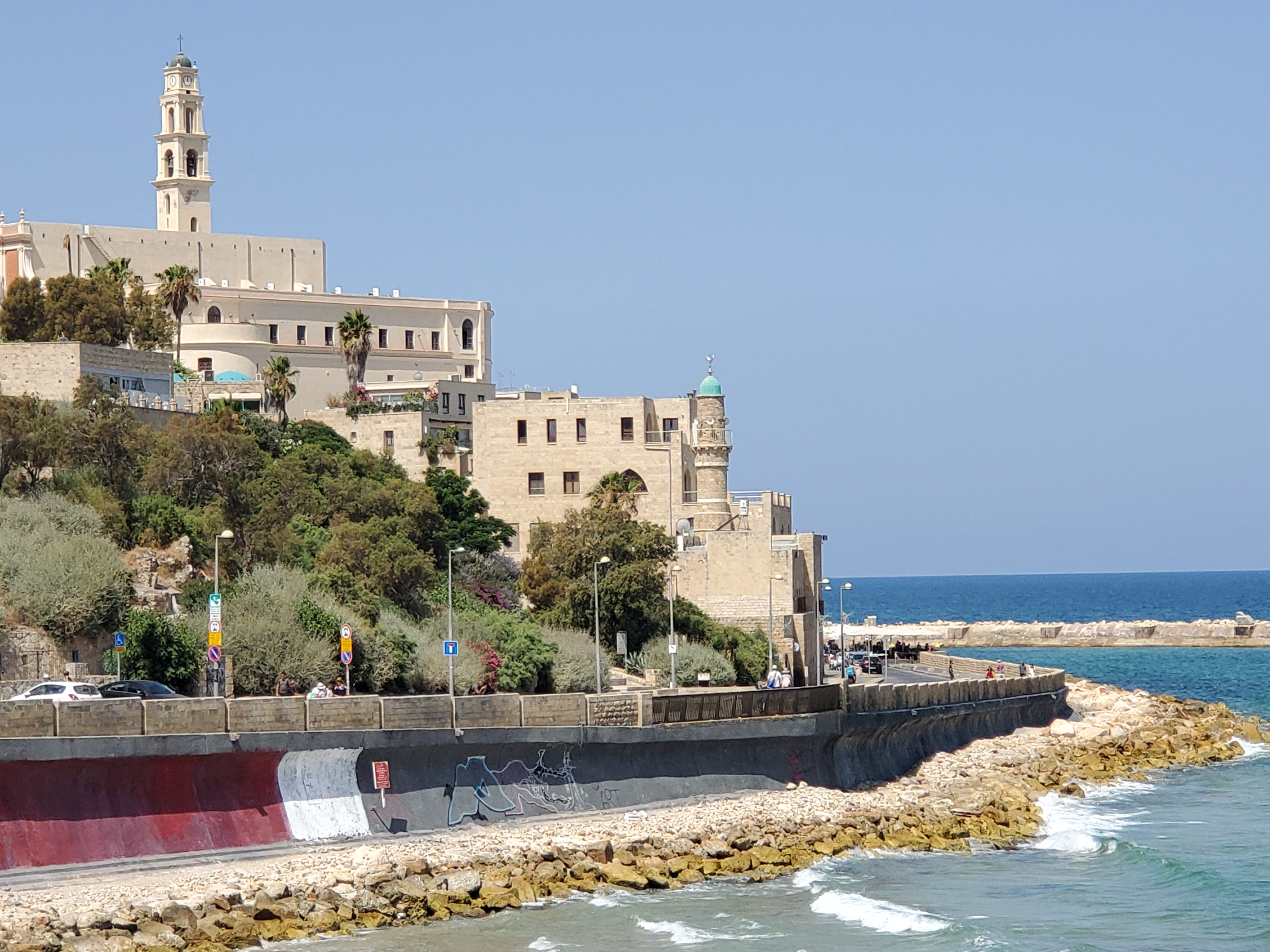
From the clock tower, it is a short walk to an overlook to view the sea, with spectacular views of Tel Aviv and the Jaffa port and the al Bahr Mosque.

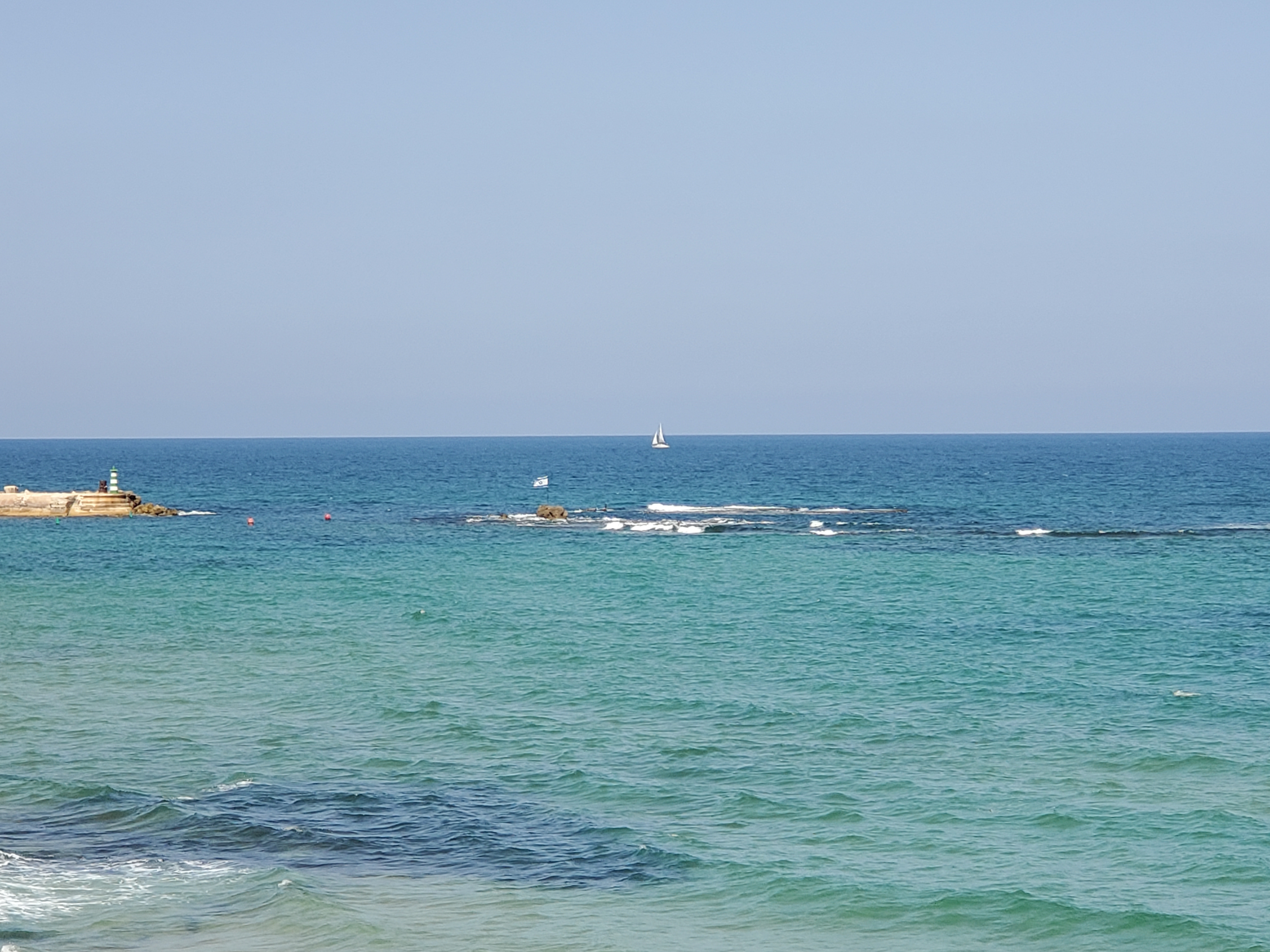
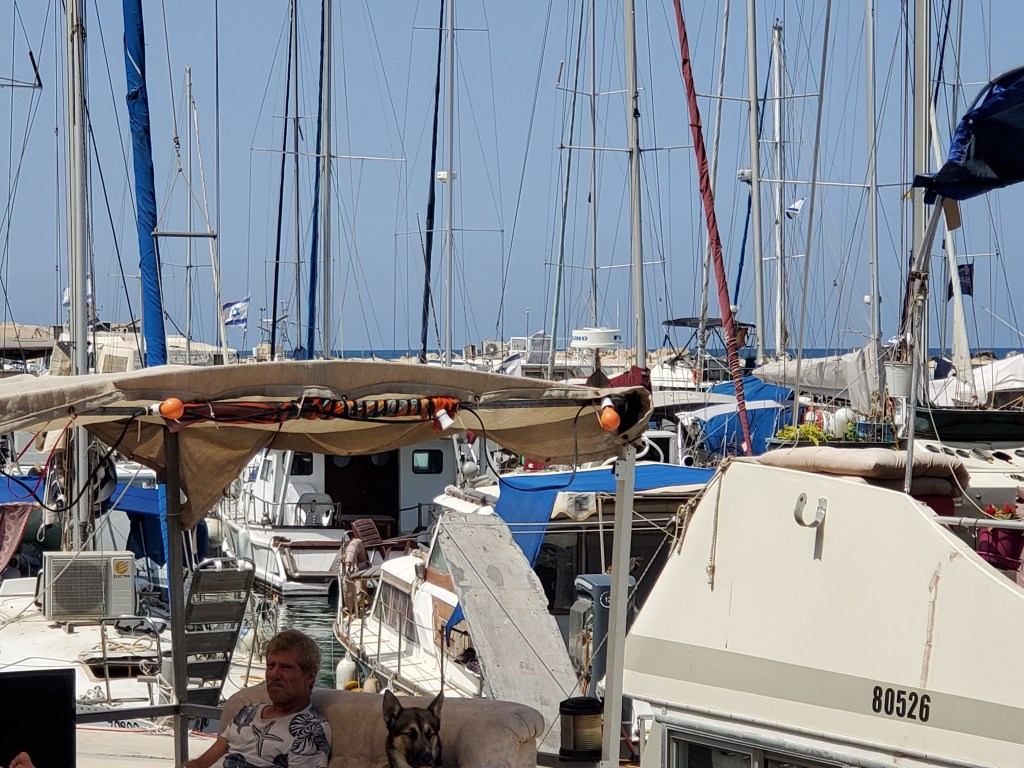
A short walk leads you to the actual port. Today the port is largely devoted to recreational craft and fishing, the primary commercial port in Israel is further south in Ashdod.

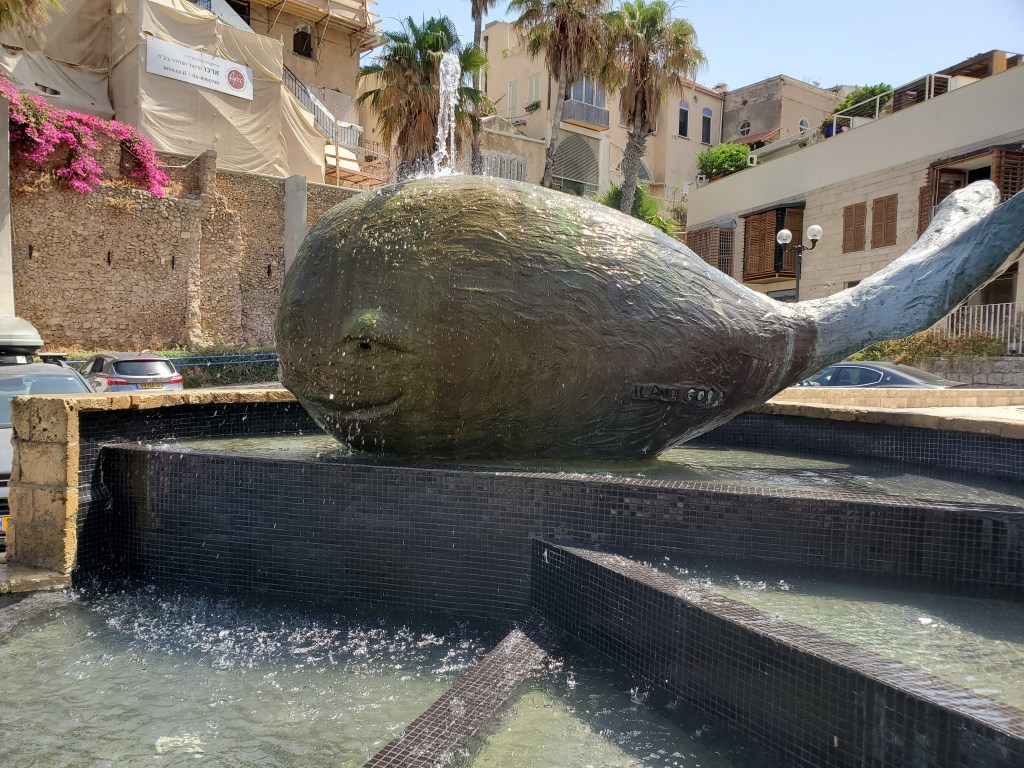
Not far from the port is a piece of artwork dedicated to the most famous journey out of Jaffa, that of Jonah. The famous artist, Ilana Goor, whose gallery is nearby created this sculpture of the Smiley Whale, which also acts as a fountain.

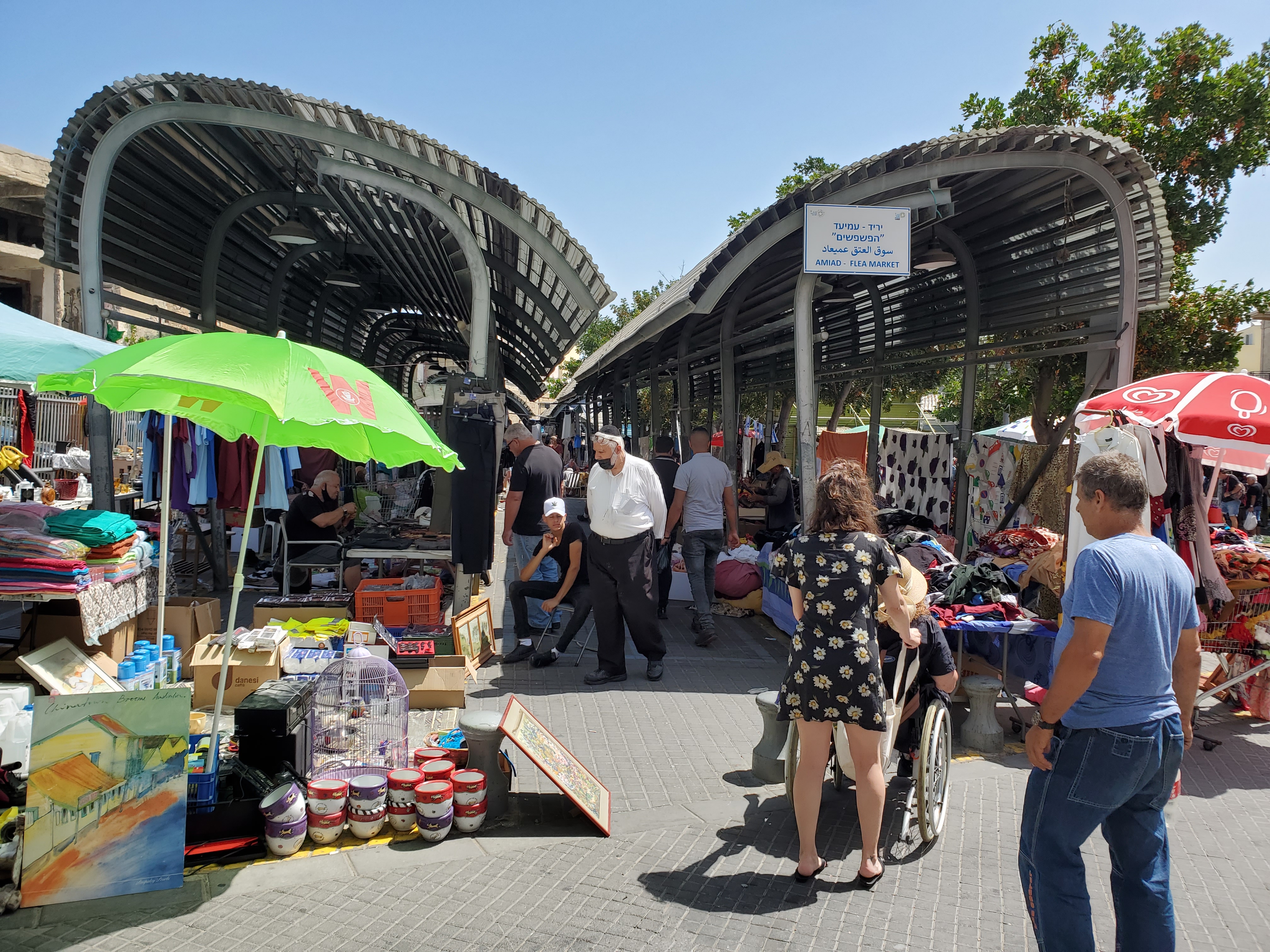
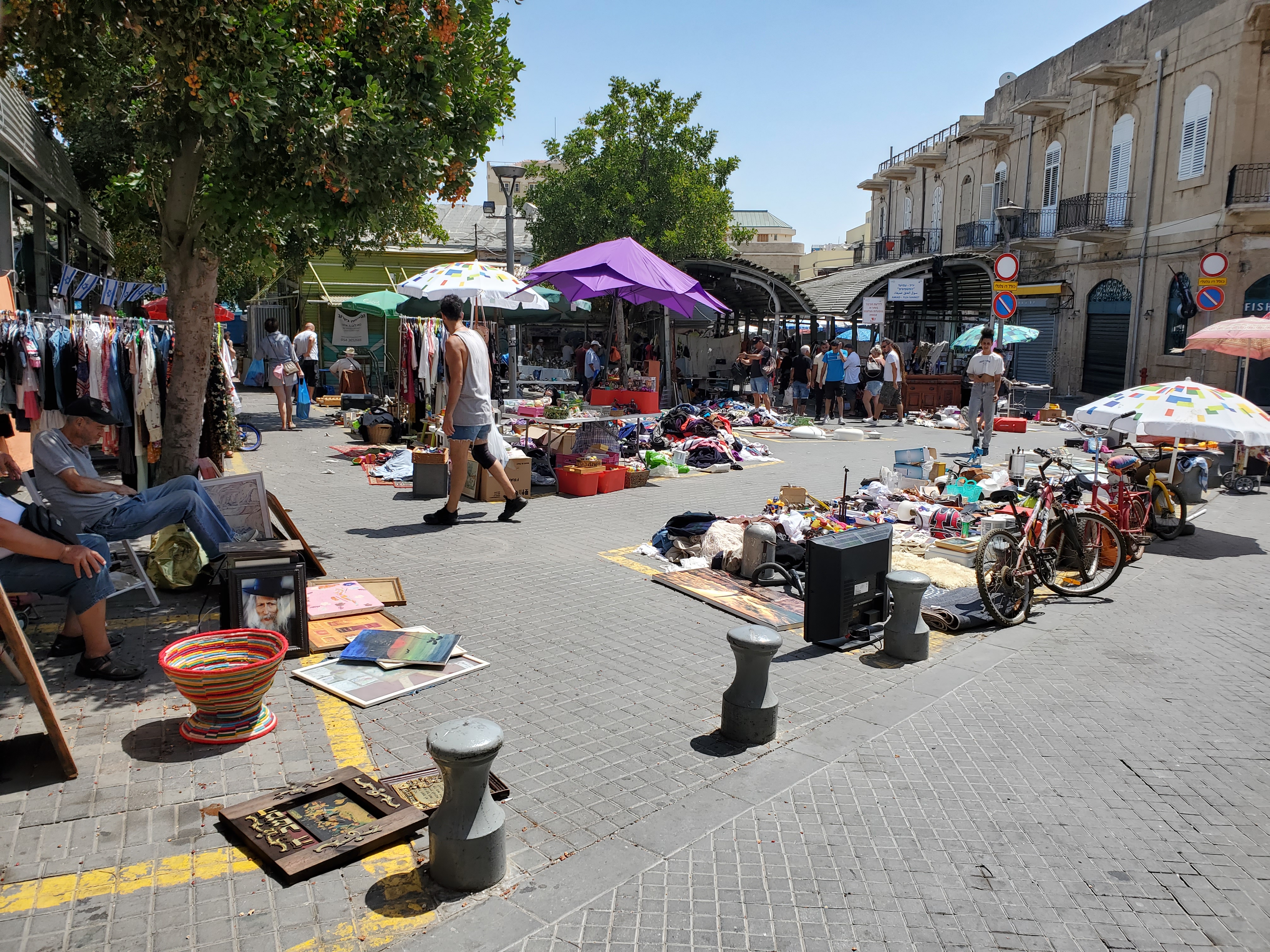
Among the most famous stops in Jaffa is the Shuk Hapishpishim, the Jaffa Flea Market, an eclectic mix of anything and everything you might or might not want. Everything from jewelry to second hand clothing, artwork, antiques, kitchen appliances, books and more can be found in the stalls within and bargained for by native and tourist alike.

After my brief tour, I had the opportunity to get lost once or twice searching for my bus stop and then I was on my way back to my Airbnb in Ramat Gan and then off for adventures in the North in Nahariya.

Dr.  Shakshuka

Among my favorite foods (I know that I’ve already listed a few in these posts) is shakshuka.  Shakshuka is a North African dish of eggs poached in a spicy tomato sauce.  Many North African communities claim to be the originators of shakshuka, coming from the Arabic for mixture. Moroccan, Tunisian, Libyan, Turkish, and Yemenite communities have all incorporated it into their regular diets.

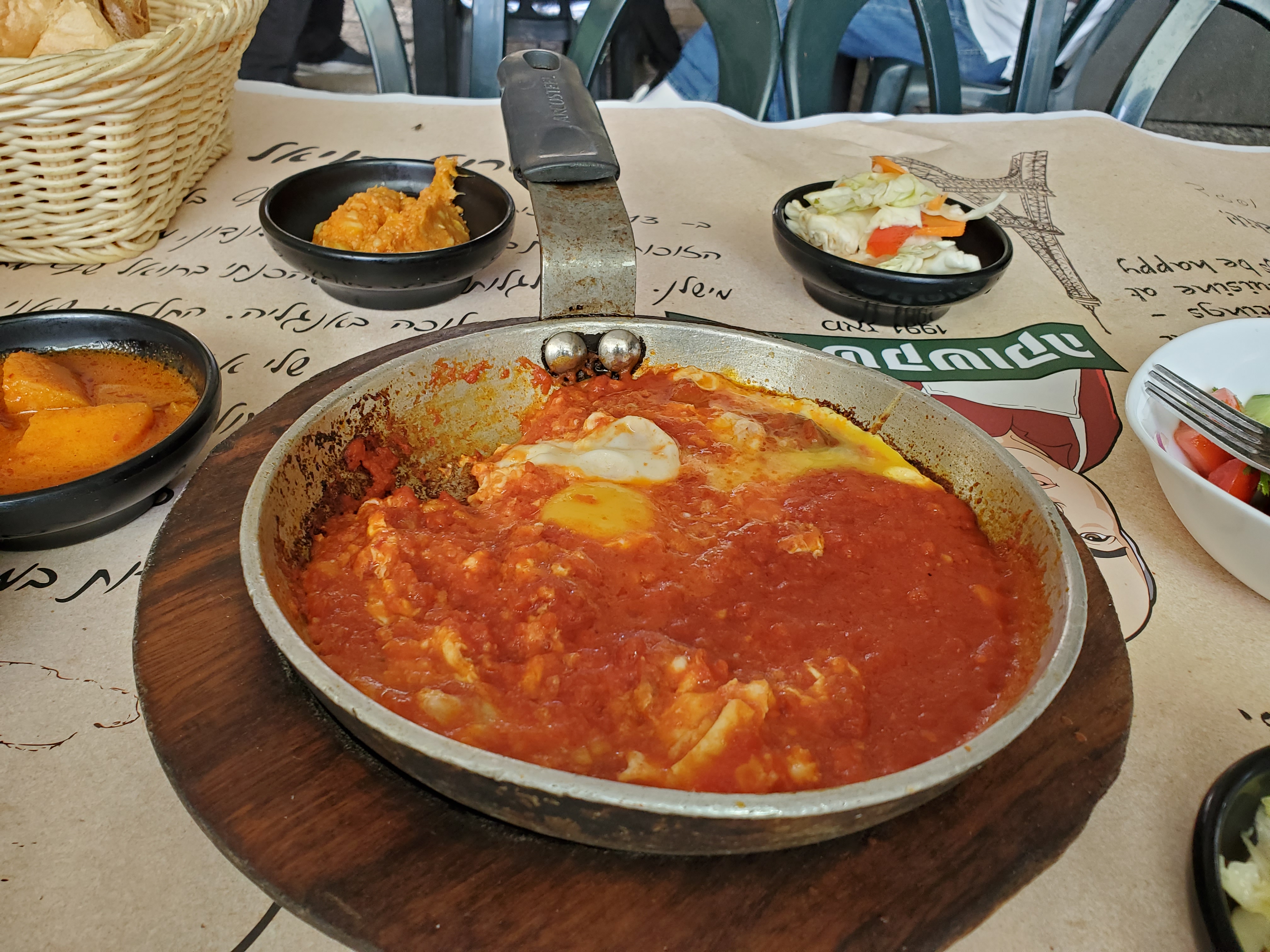
Dr. Shakshuka, a restaurant in Jaffa, owned and operated by Bino Gabso, aka Dr. Shakshuka, claims to be the purveyor of the original Tripolitan version of the dish. No matter what its origins might be, the food is absolutely delicious.

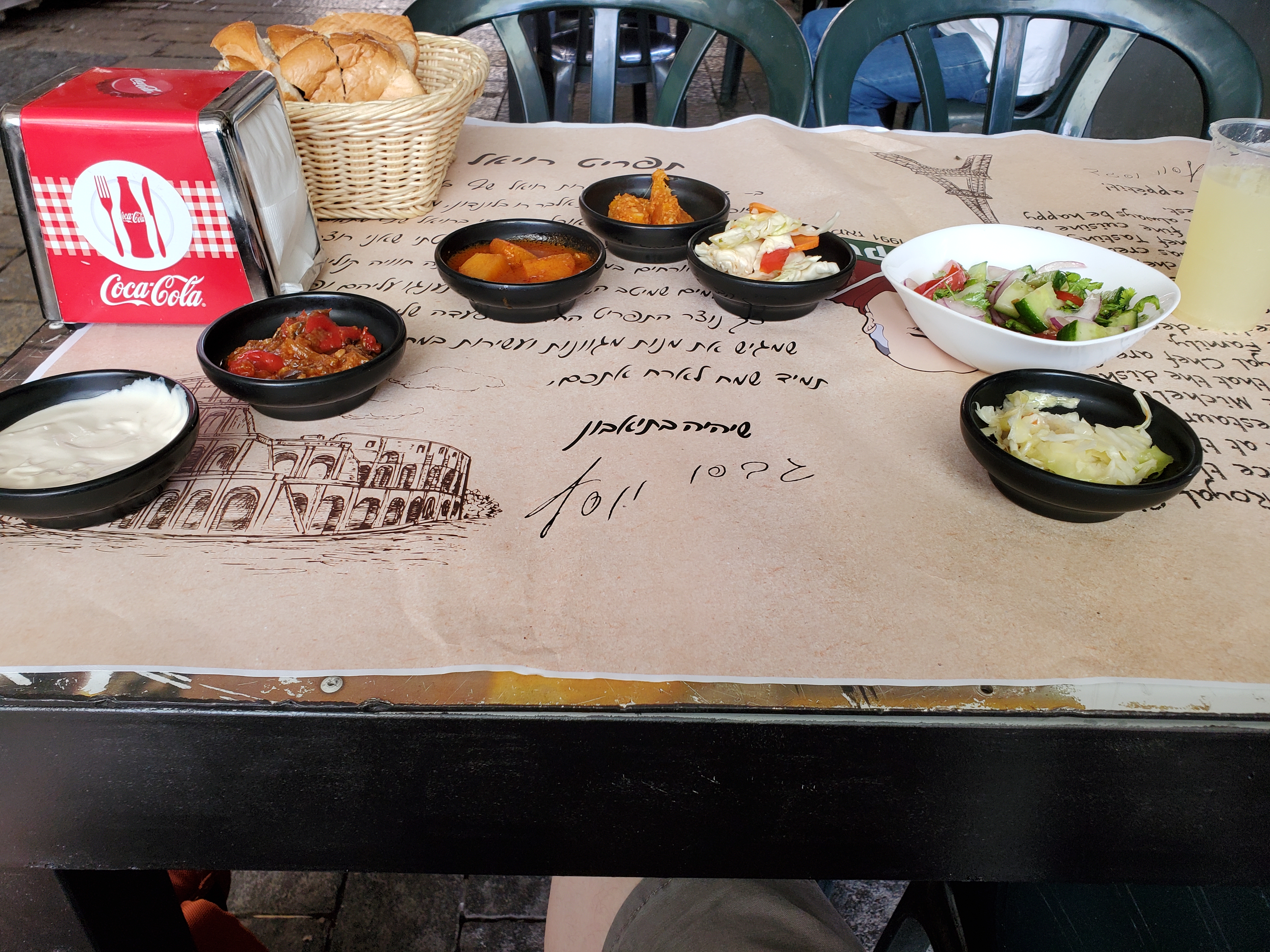
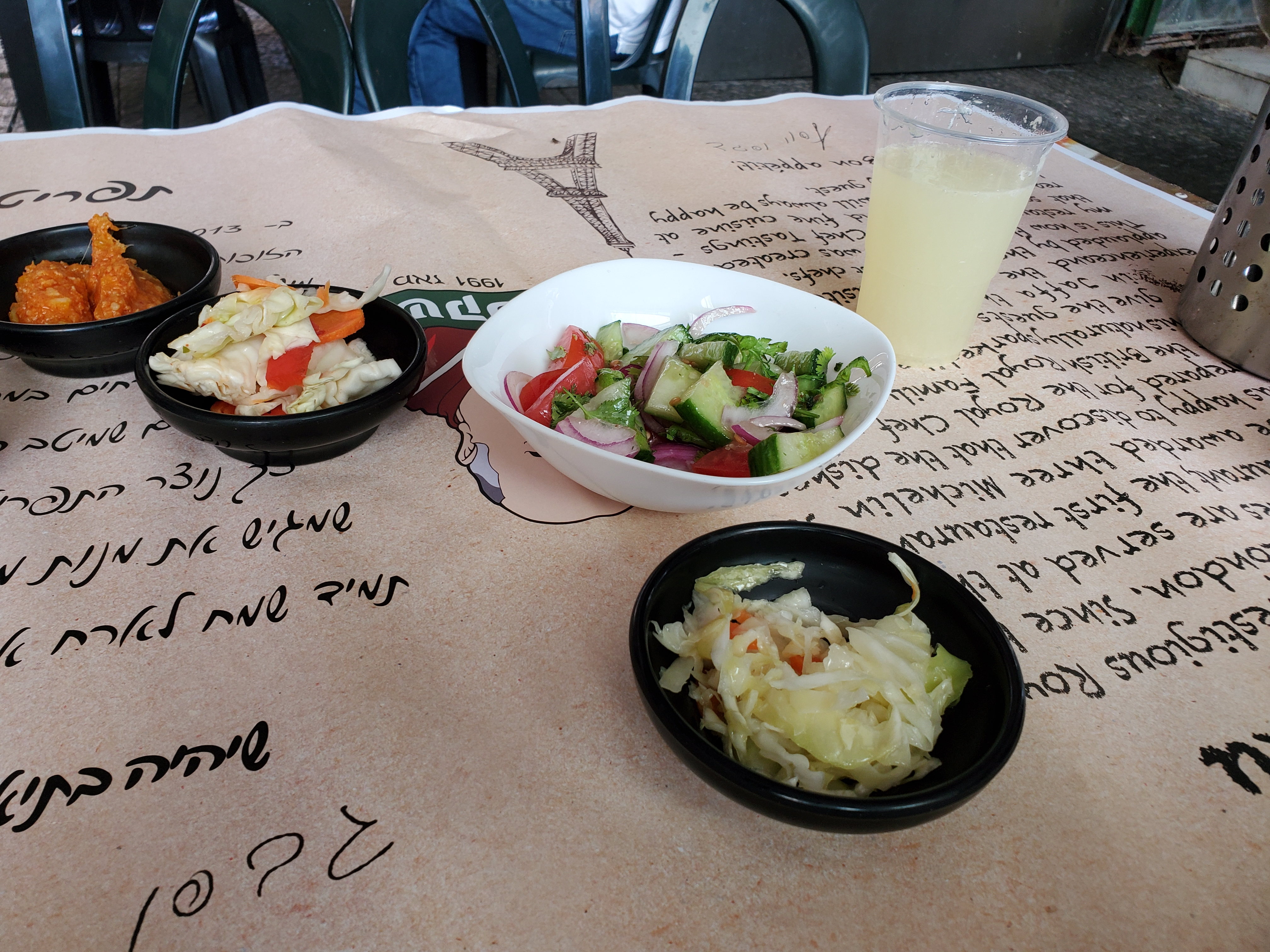
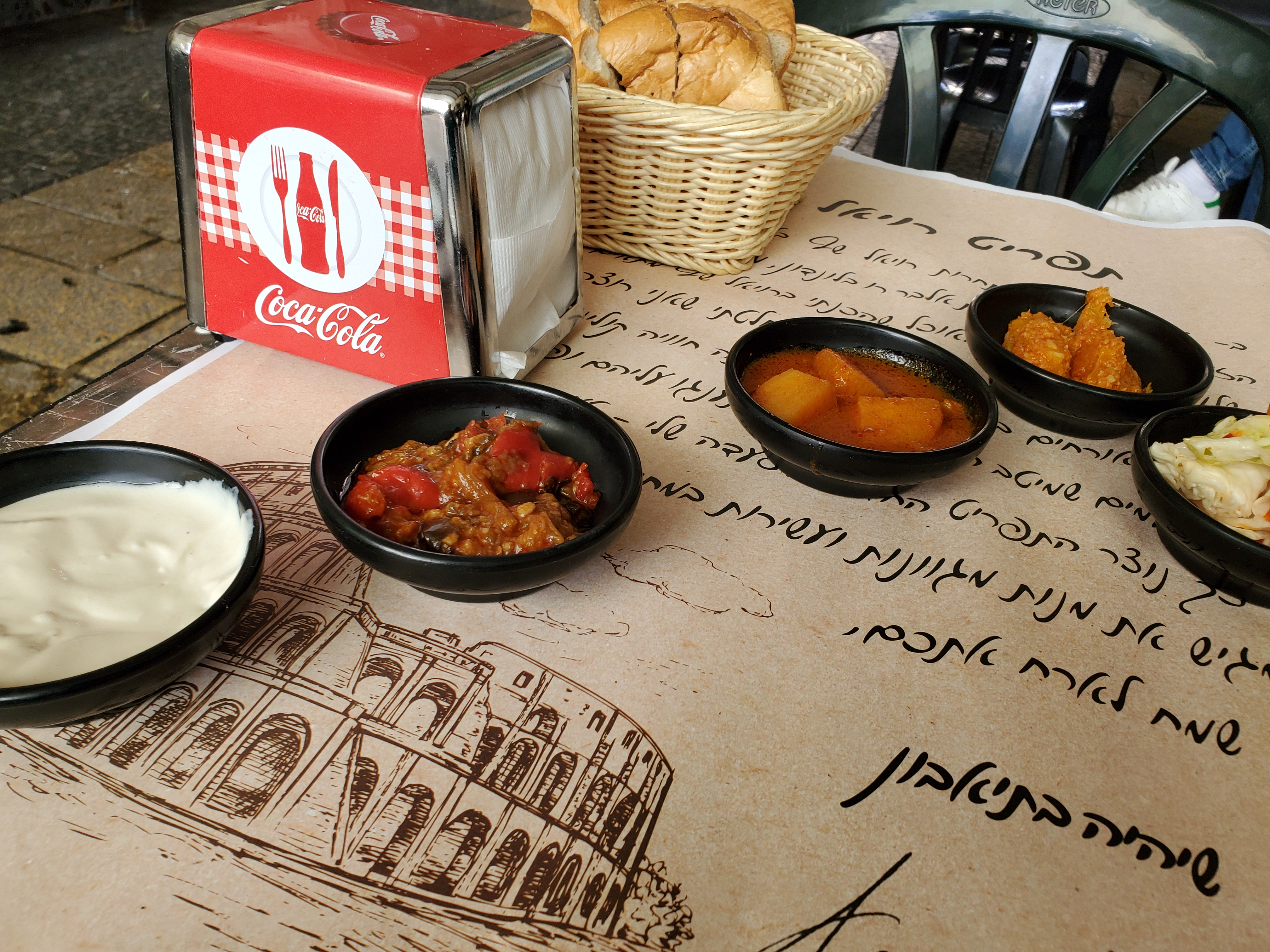
The first thing to arrive is a selection of salads, which could be a meal by themselves. The first was a cabbage in vinegar slaw. It was followed by an Israeli salad, made with chopped tomatoes, cucumbers, onions, and parsley. The third was a cabbage, carrots, and red pepper slaw.

This was followed by a Libyan pumpkin tershi or chershi, an incredibly tasty dip of pureed pumpkin, lots of garlic, lemon, harissa, and other spices. It was followed by boiled potatoes that had been cooked in a spicy sauce.

A fried eggplant salad and a garlic dip finished off the salad dishes.

The shakshuka itself was served in an individualized cast iron pan. The sauce was spicy, but not excessively hot or sharp. You could taste the tomato, onion, garlic, sweet and hot peppers, and the paprika. The white of the eggs was cooked through, but the yolks remained runny.

There were thick pieces of a partially cut loaf of bread for sopping up the shakshuka or any of the salads.

A refreshingly sweet cup of lemonade accompanied the meal and I ordered a cup of Turkish coffee as well.

I left satisfied and completely stuffed. It was an excellent meal.

Yarkon Park

For those who have been following my adventures, I’m sure that you can agree that I have had a busy week. After spending hours in airports, airplanes, buses, and busy markets, I had more than enough time spent with crowds and noise. I decided I needed a quiet Shabbat afternoon, so I headed to Ganei Yehoshua or Yarkon Park.

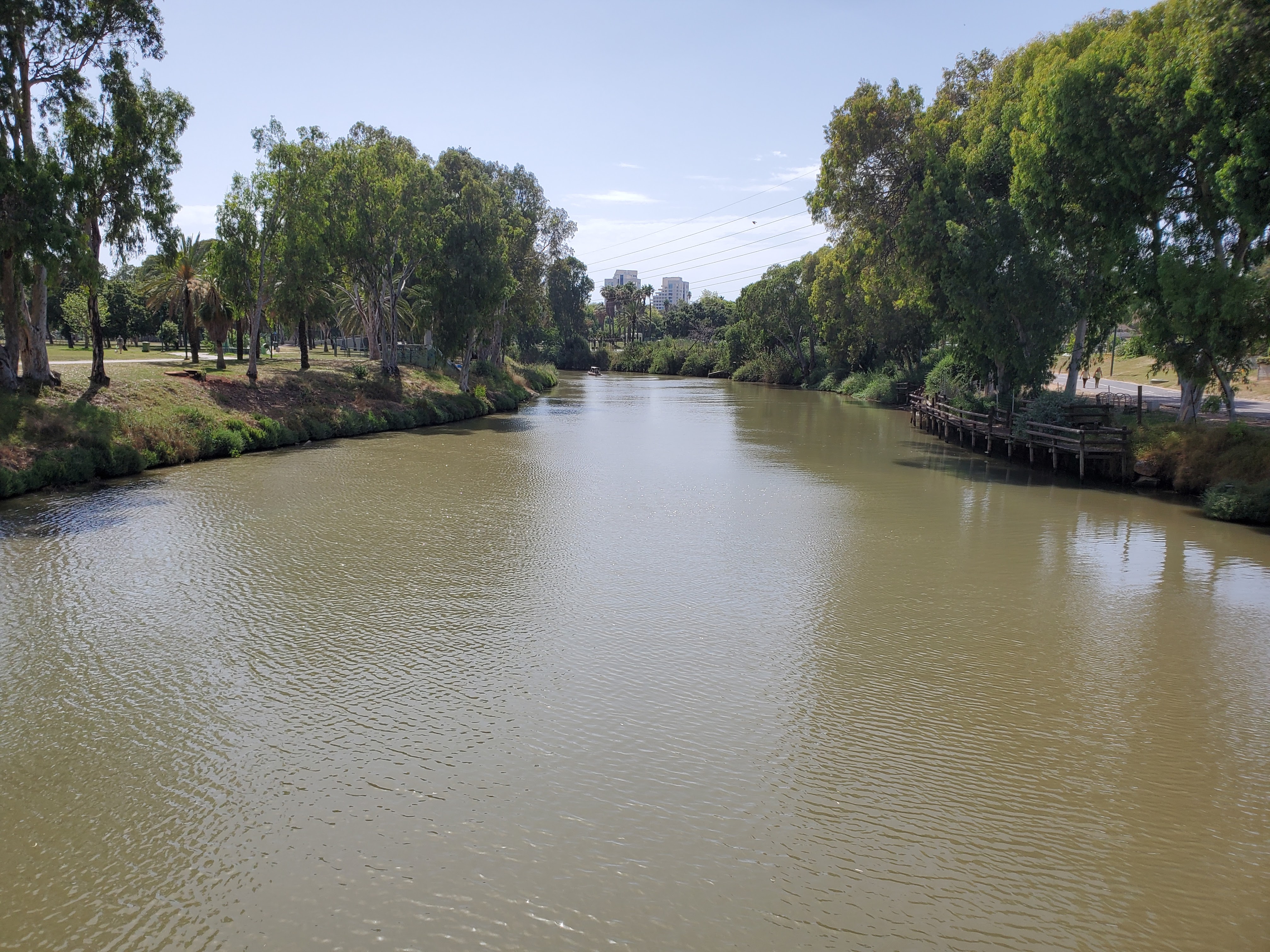
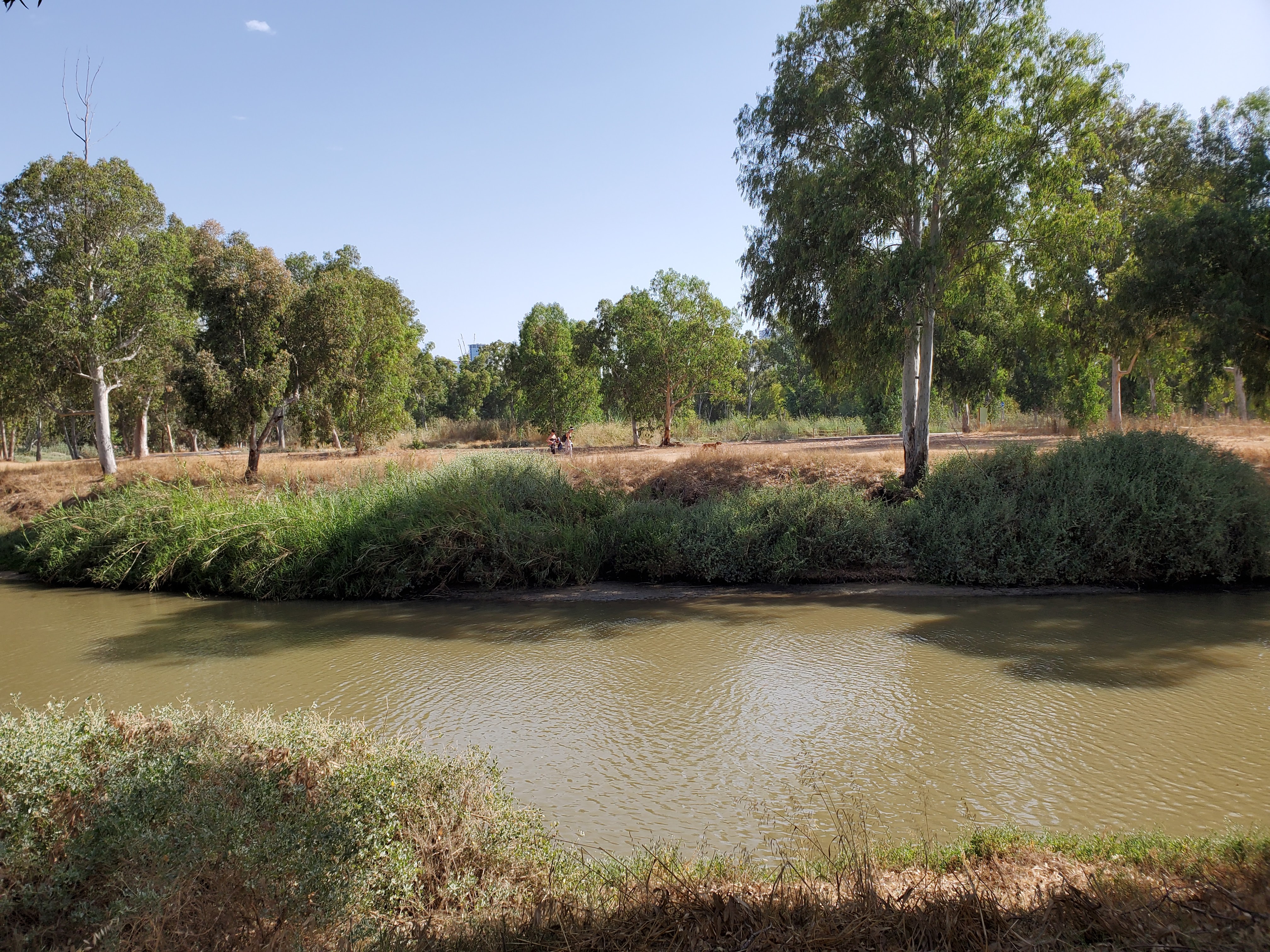
Yarkon Park, officially known as Ganei Yehoshua, the Gardens of Joshua, is one of the largest urban parks in Israel, stretching some 3,750 square meters along the Yarkon River in northern Tel Aviv. The name Ganei Yehoshua, is for the former mayor of Tel Aviv, Yehoshua Rabinovich, who was mayor during its planning and opening.

One of the entrances to the park is at the end of the block where I was staying, so it was a short walk to get into the park and away from the noise of a crowded city and begin to decompress a little.

Walking I encountered the full range of everyday society. At the edge I saw all of the dog walkers, followed by those who were out for a run or a jog. After that there were people on bicycles and scooters, and people taking leisurely strolls. High school kids on bikes talked excitedly, boys tried to impress girls, and they zipped around me.

Middle-aged and older couples walked or biked at a comfortable pace. Young families rode or tried to ride along the path with parents patiently teaching their children how to ride bikes or scooters.

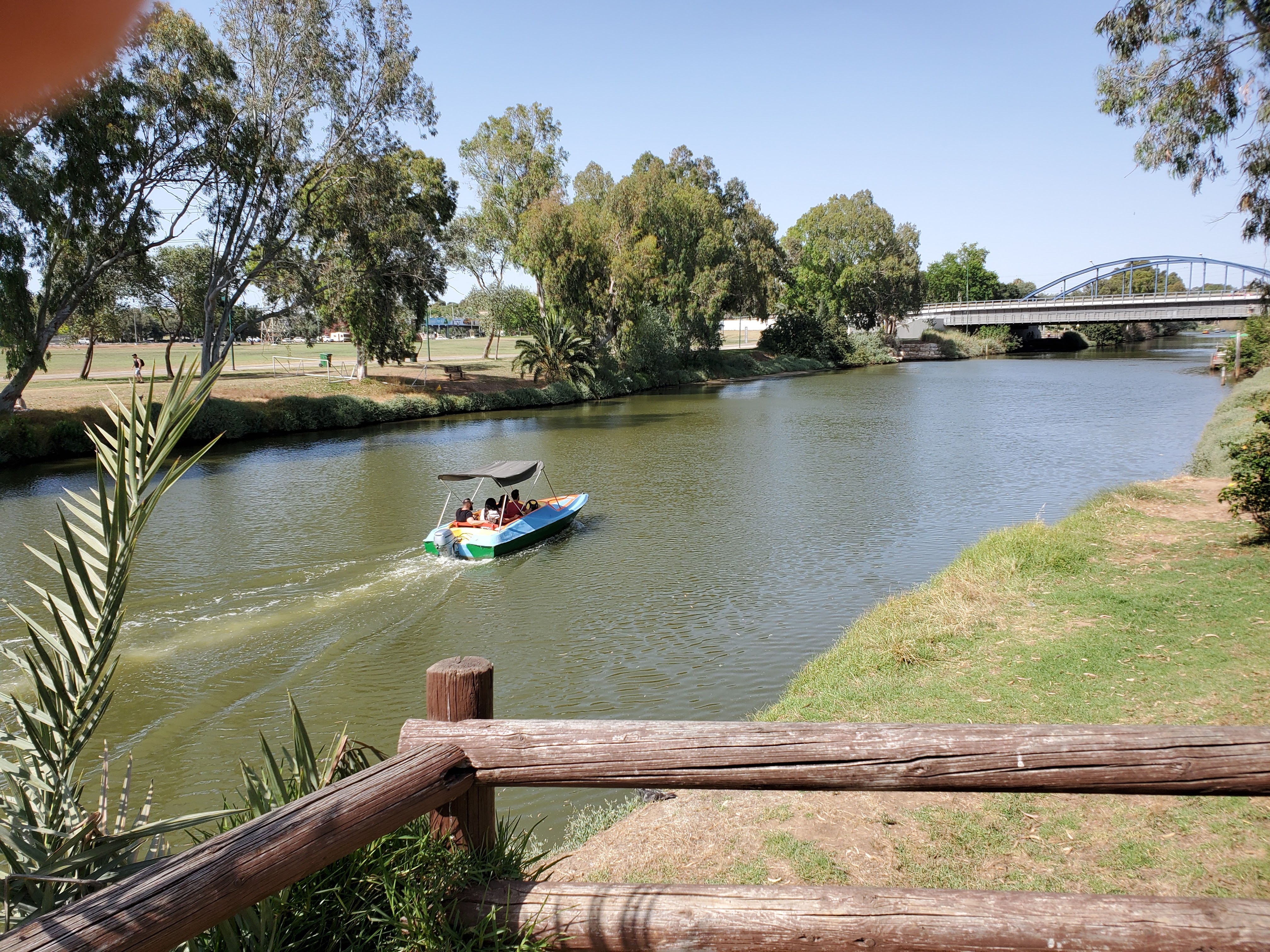
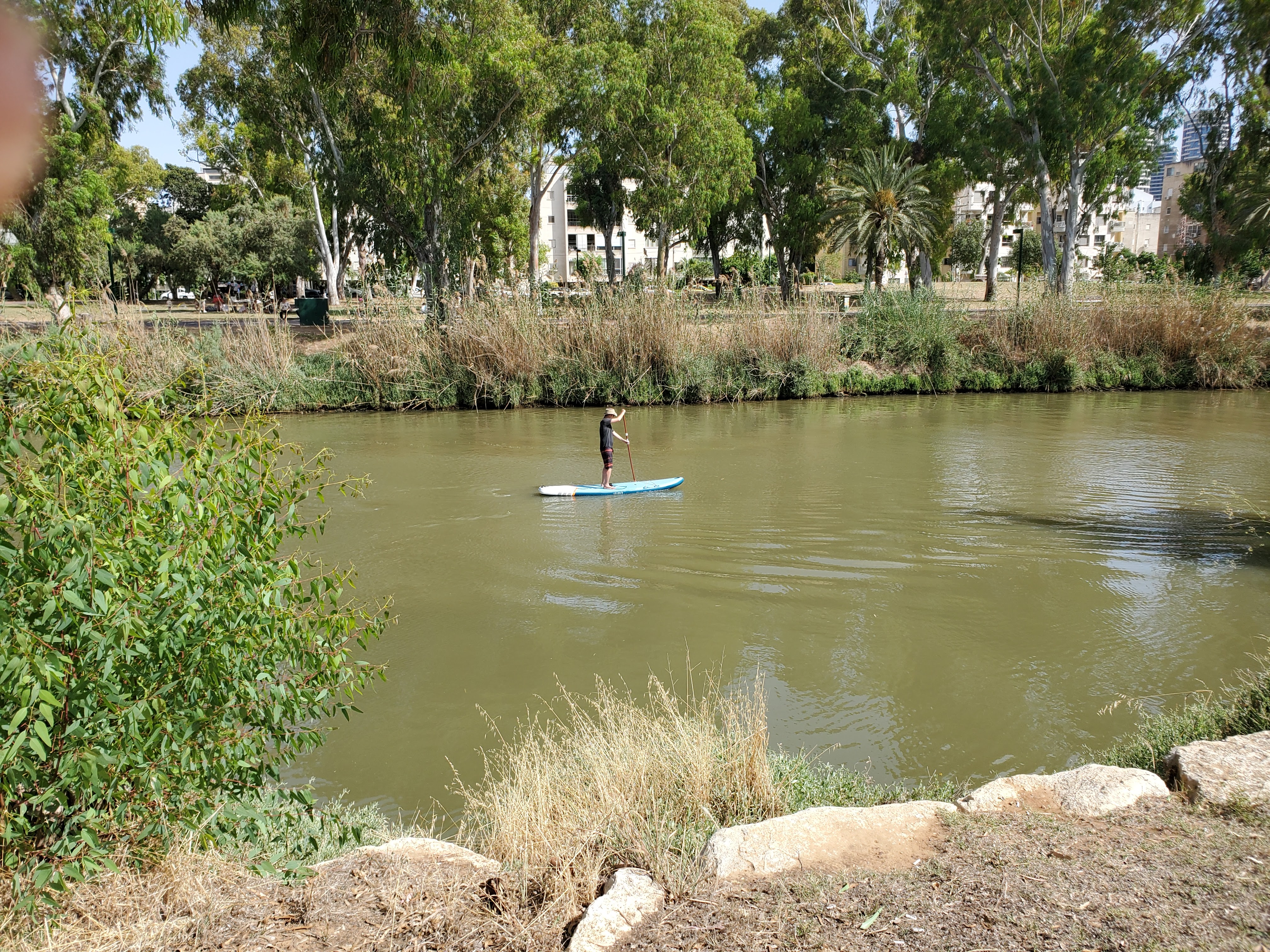
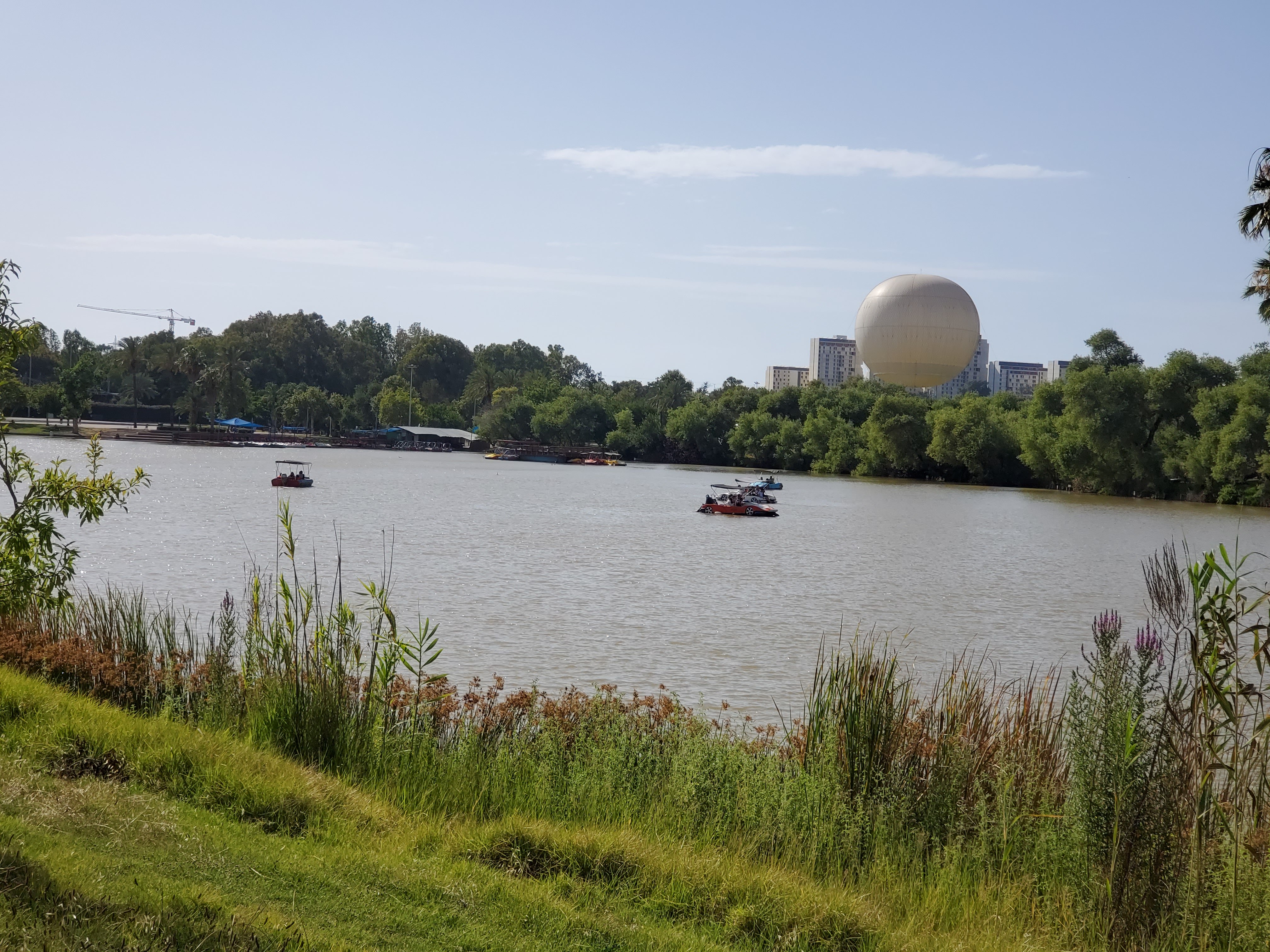
Further into the park, you could watch people paddle-surfing or piloting small boats along the river and a little further along I could see the boat rental area.

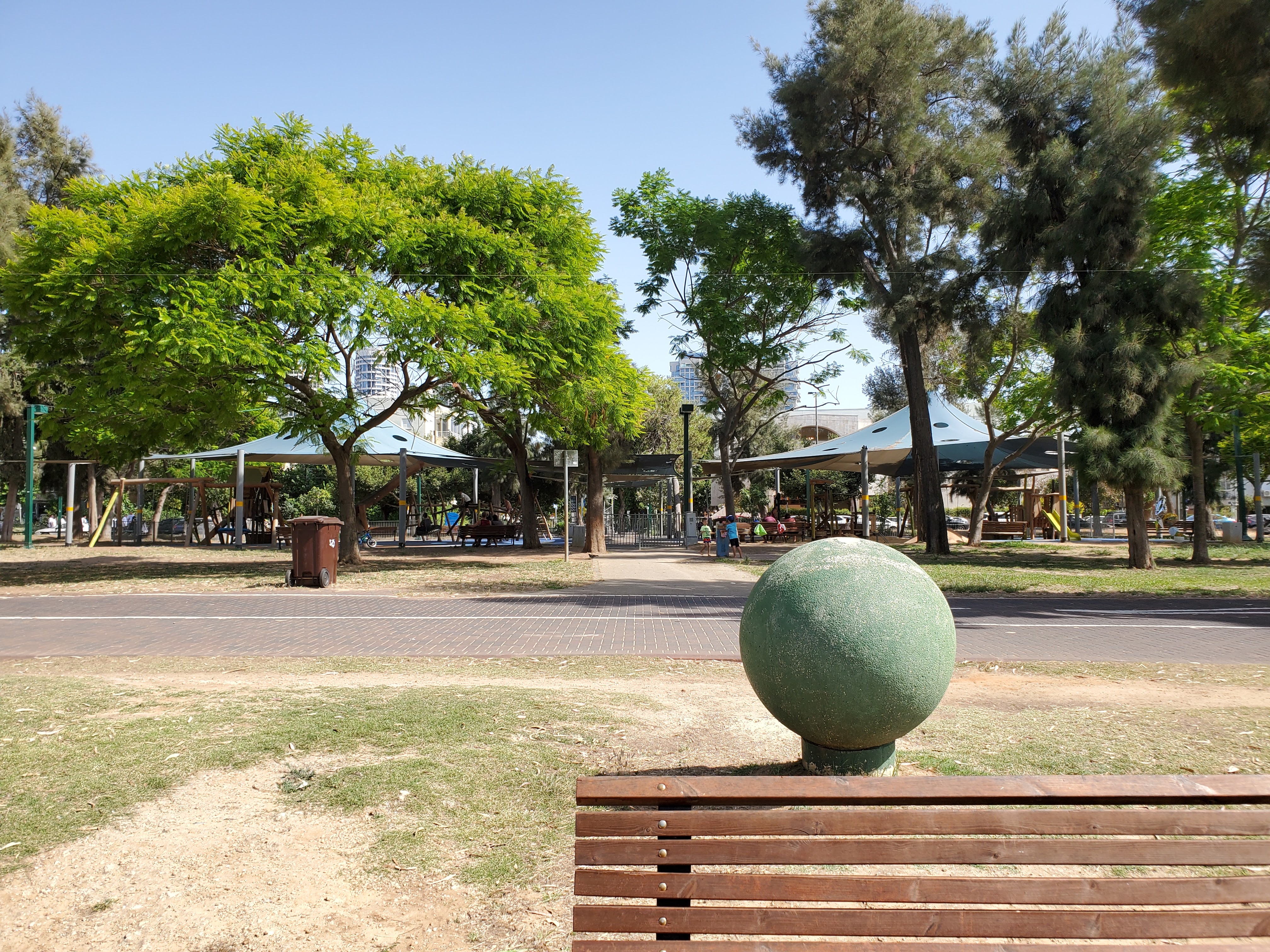
Along the banks, children played on playground equipment, couples sat lazily under trees and families picnicked.

I saw and heard more than a dozen different species of birds, as well as a seeing both a golden jackal and a mongoose in less-traveled areas of the park.

The five mile loop that I walked was a refreshing way to decompress and enjoy the natural beauty of Tel Aviv.

Shuk Levinsky

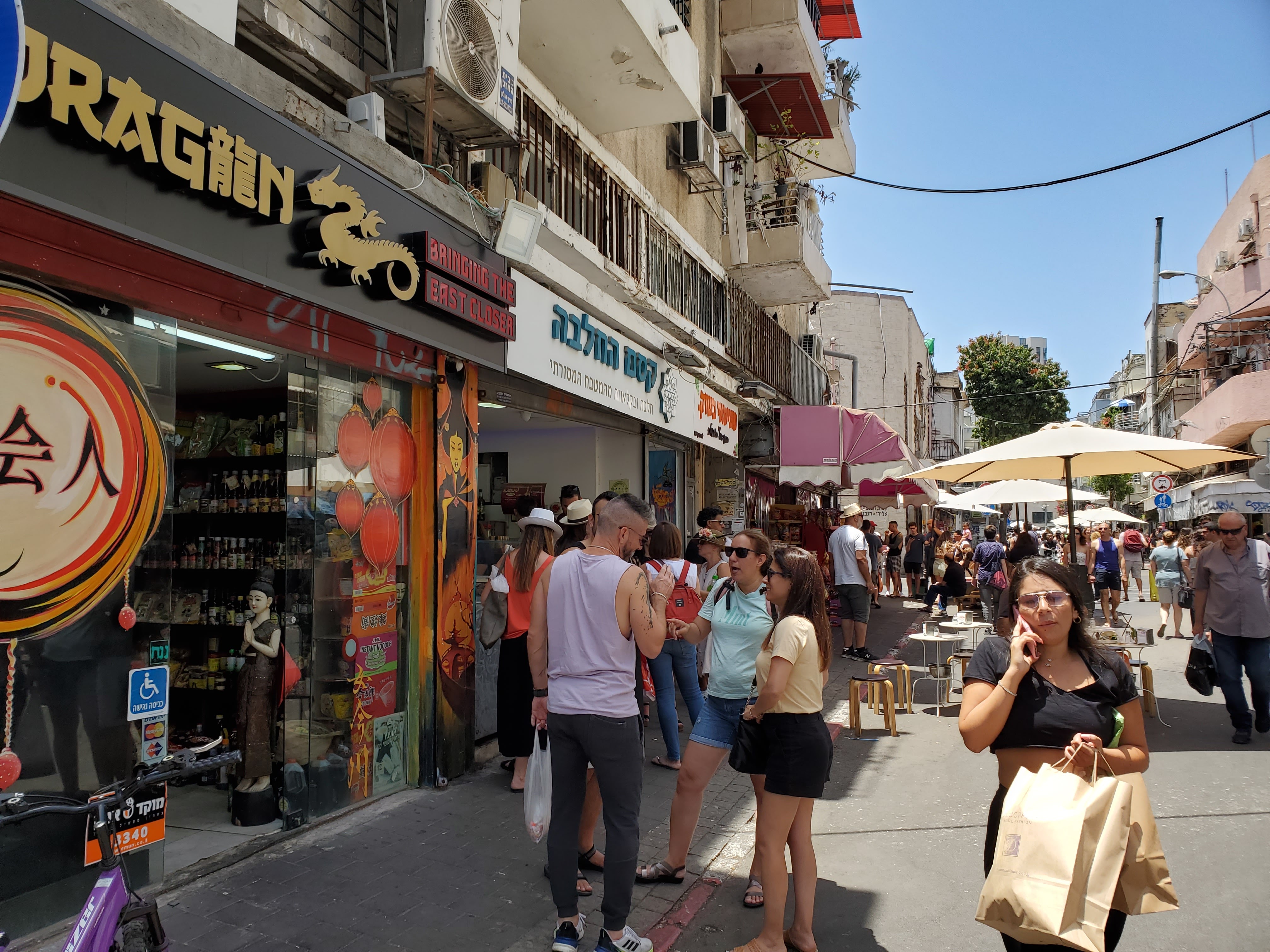
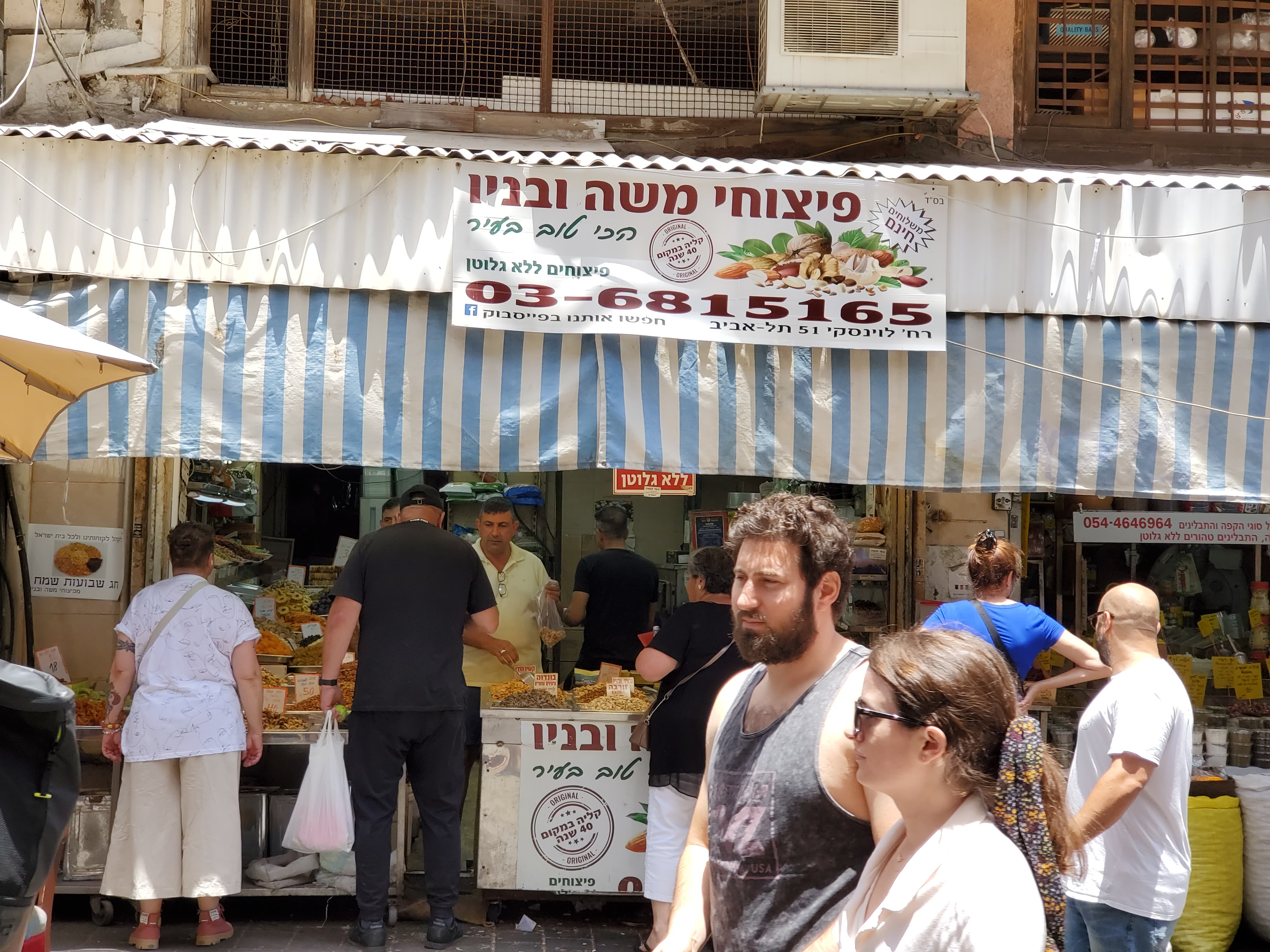
Shuk Levinsky, the Levinsky Market, is another of the famous food markets in Tel Aviv.  Shuk Levinsky was founded in the late 1920’s in the Florentin neighborhood of Tel Aviv, by Jews who immigrated from Salonika in Greece.  They were soon joined by immigrants from Turkey, the Balkans, and shortly thereafter,  Persia.   What began as a spices market expanded into a market filled with vegetables, nuts, sweets, restaurants, and more.  

For my visit to Shuk Levinsky, I went with my daughter Orli.  Not known for her patience, I knew this would not be quite as leisurely a stroll as my excursion to Shuk Hatikva, but we did a brief walk through to get our bearings and then headed back through to do some shopping.  Our first stop was at Pitzuchei California or California Market.  Pitzuchim, literally things that can crack, refers to seeds and nuts, like sunflower seeds and pumpkin seeds, which one can crack the shell open with one’s teeth, as well as peanuts, almonds, cashews, and pistachios.  Pitzuchim generally also have a selection of dried fruits and other goodies.  We sampled some of the nuts and Orli decided to buy some dried mango for a snack.

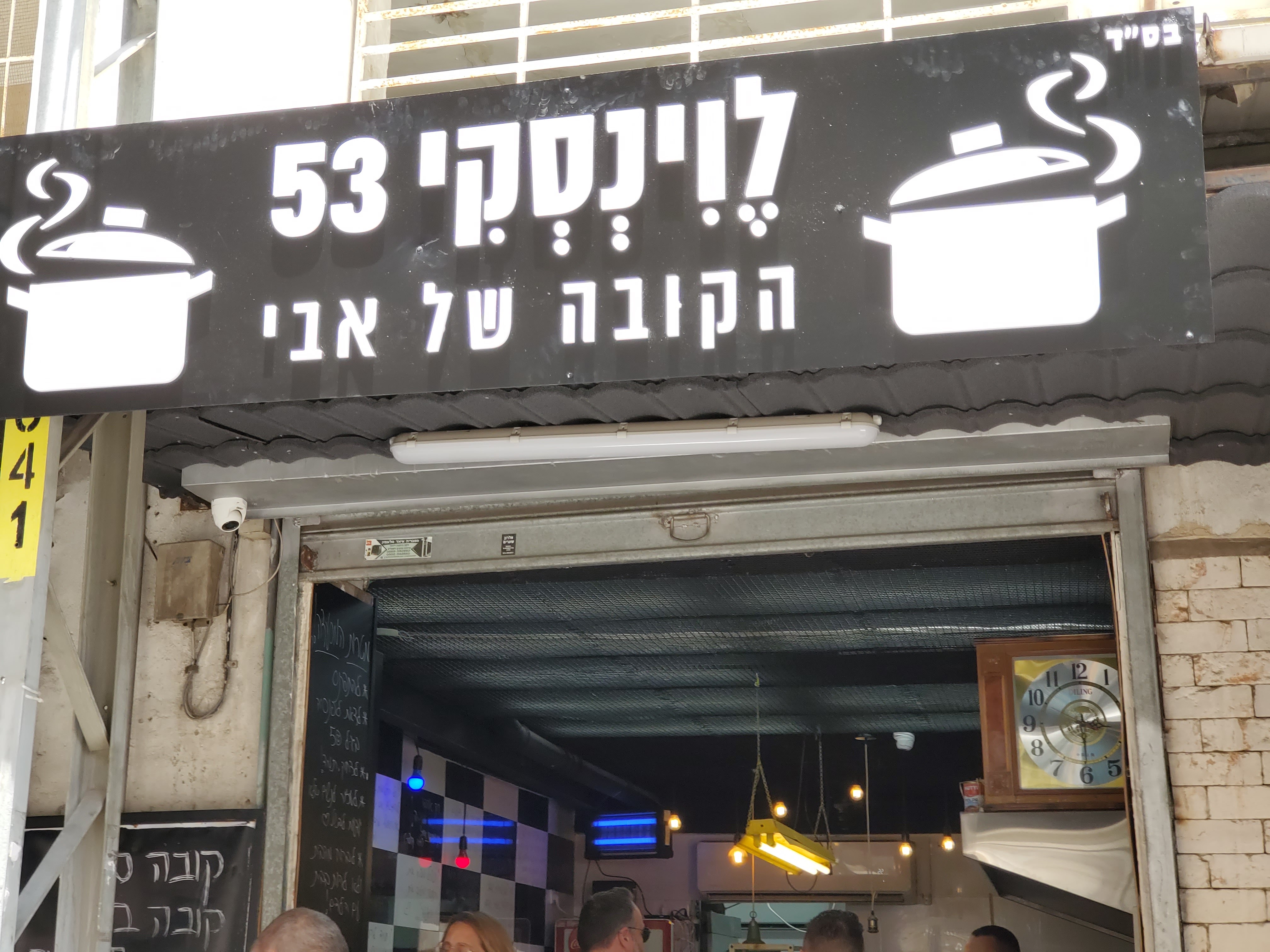
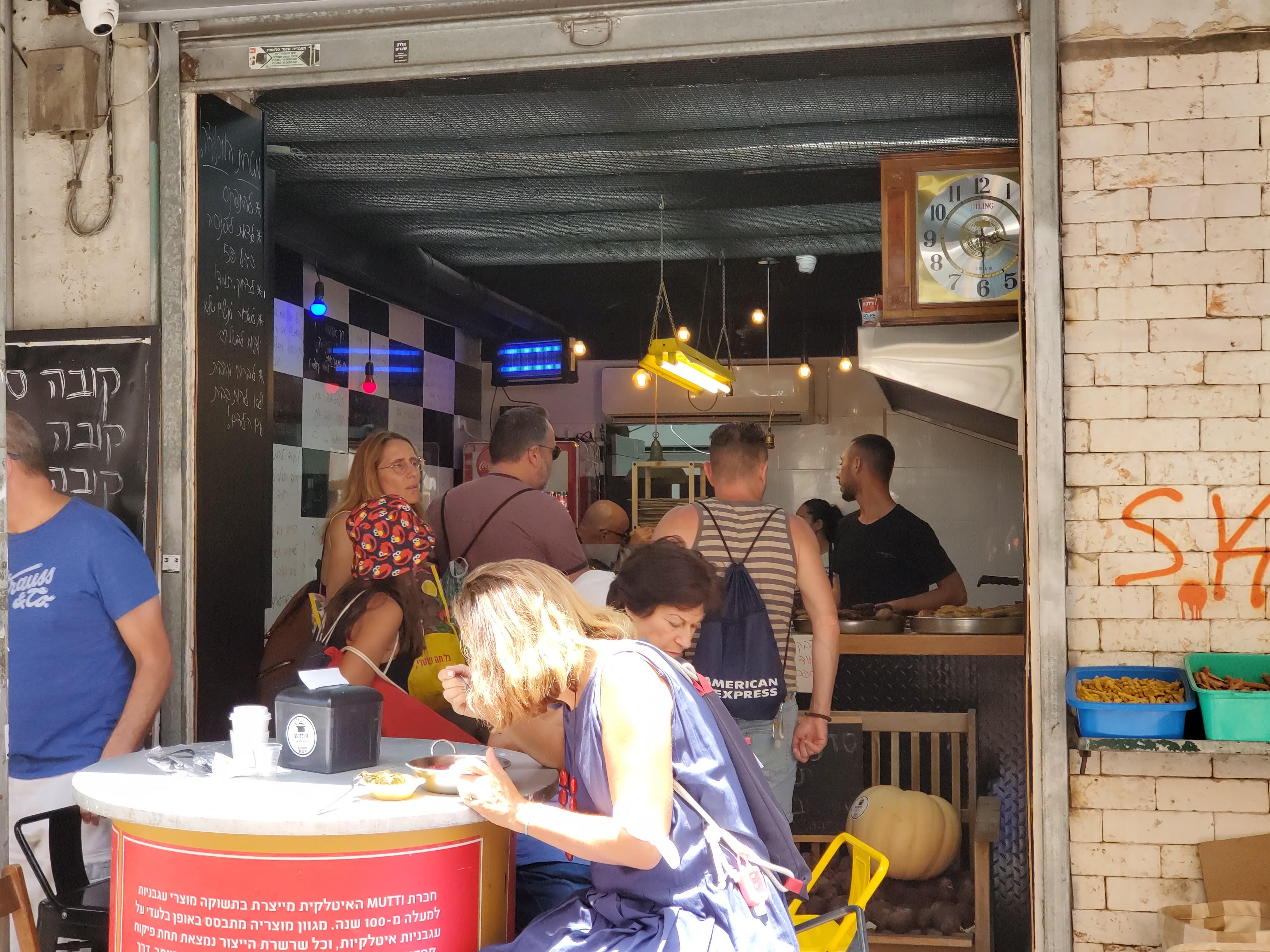
Next, we stopped at Levinsky 53, HaKubbah Shel Avi, or Avi’s Kubbah.  Kubba is an Iraqi dumpling, generally filled with meat, that can be eaten fried, often topped with techina and amba, or floating in soup.  The dumplings are typically made from semolina, bulgar, or potatoes, and can contain other ingredients, such as the colorful beet kubba.  The various types of kubba are lined up for customers to choose from and are then dropped into a pot of oil to quickly fry them up.  We ordered some potato kubba, covered in techina and   amba, but soon found out we had misunderstood and that these were in fact filled with meat, and not vegetarian.  The initial bite of the was delicious.  It was warm and chewy, with the fried potato flavor mixing with the nuttiness of the techina and the bite of the amba.  We also ordered some kefte de prasa or leek patty.  Much like a potato latke, but with the garlicky, oniony flavor of the leek filling the mouth.  It was absolutely delicious.

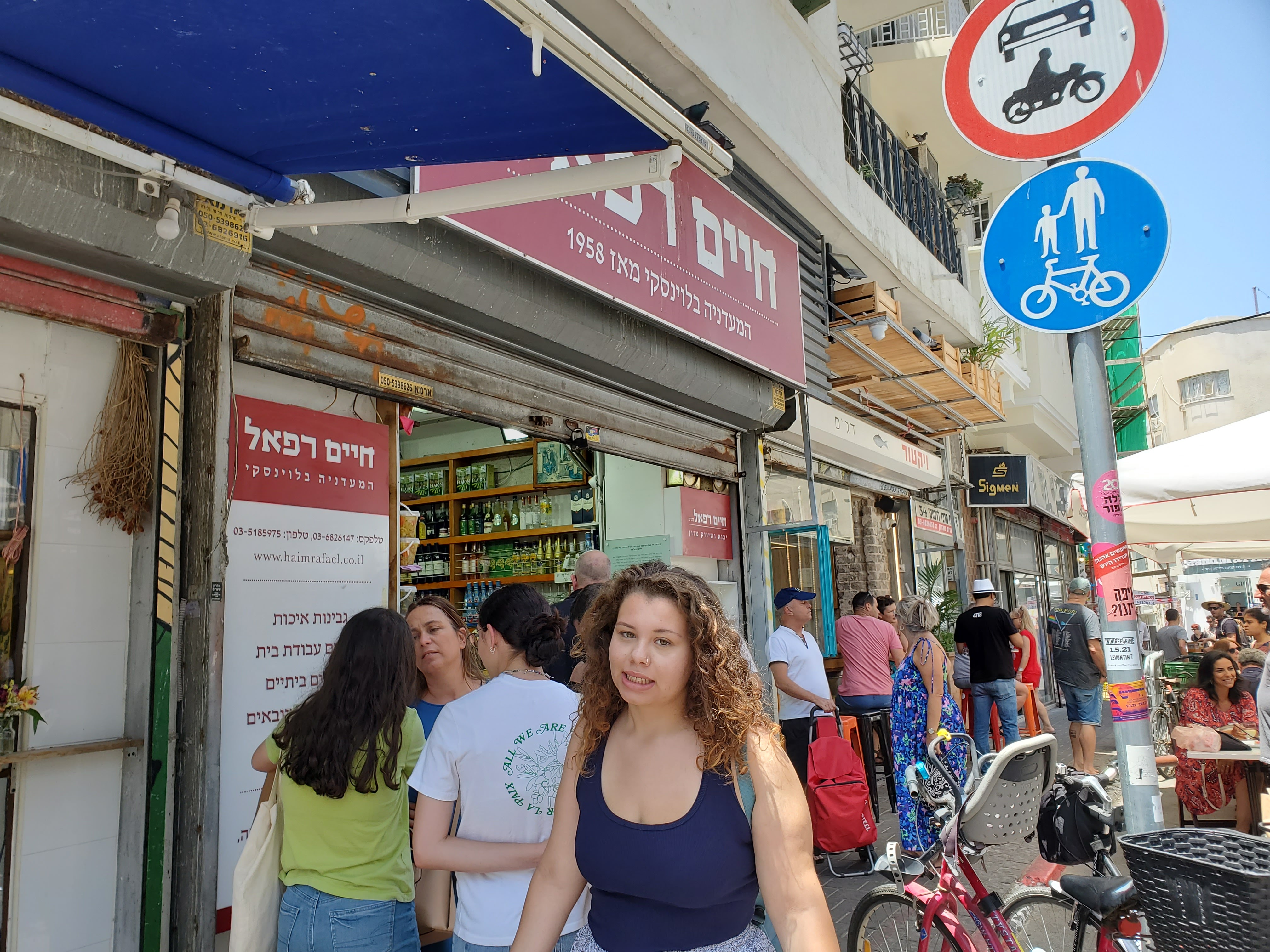
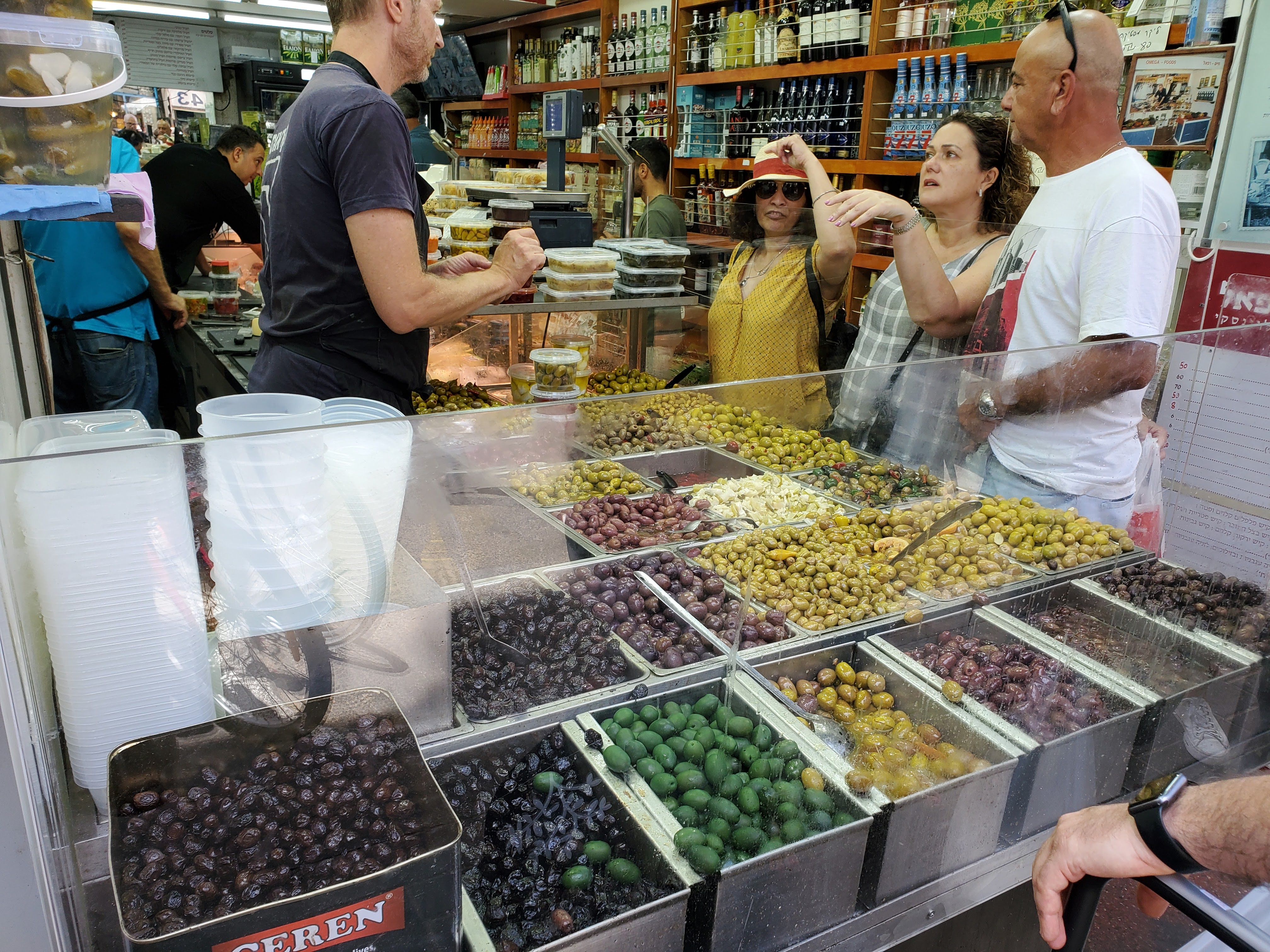
Our next stop was Haim Raphael, a deli selling olives, pickles and other pickled goods, cheeses, smoked and salted fish, prepared salads, and cured meats.  Haim Raphael, immigrated from Salonika, following the Holocaust and opened up the shop in Shuk Levinsky, which has become an institution within the market.  We waited in the line to enter the rather small and cramped store, listening to the Greek music filling the air from next door.  Waiting, you passed by vat after vat of different styles of olives and pickled peppers.  We bought some pickled cherry peppers, and a little smoked salmon.  Both turned out to be delicious.  Adding to cherry peppers to hummus, techina, tomato and cucumber salad, roasted kohlrabi, fried eggplant and hard boiled egg, made a delicious lunch sandwich the next day.

Long lines dissuaded us (or Orli) from checking out Burekas Penso, which makes a wide variety of the the dough pockets filled with cheese, spinach, potatoes, eggplant , and more.  We also skipped Cafe Levinsky 41 and its famous gazoz drinks for the the same reason.  The gazoz there is made with fresh and preserved fruit, natural syrup, and fresh herbs.  The drinks looked very refreshing, but we moved on.

Our last stop was at Havshush Spices, a small hole in the wall store on a side street, with the door only half-opened.  Inside one is greeted with the scent of an incredibly varied blend of spices, as well as the sight of bulk containers of grains, and beans, and spices.   I loaded up on spices to bring home to restock my depleted spice rack, concentrated on those things which I wouldn’t be able to find easily at home:  ras el hanout, za’atar, harissa, hawajj for soup, hawajj for coffee,  and some grilling spices.  I almost can’t wait to get home to begin to use them.

After a short walk, we were at the bus stop and on our way back home.

Graduation, Part 2

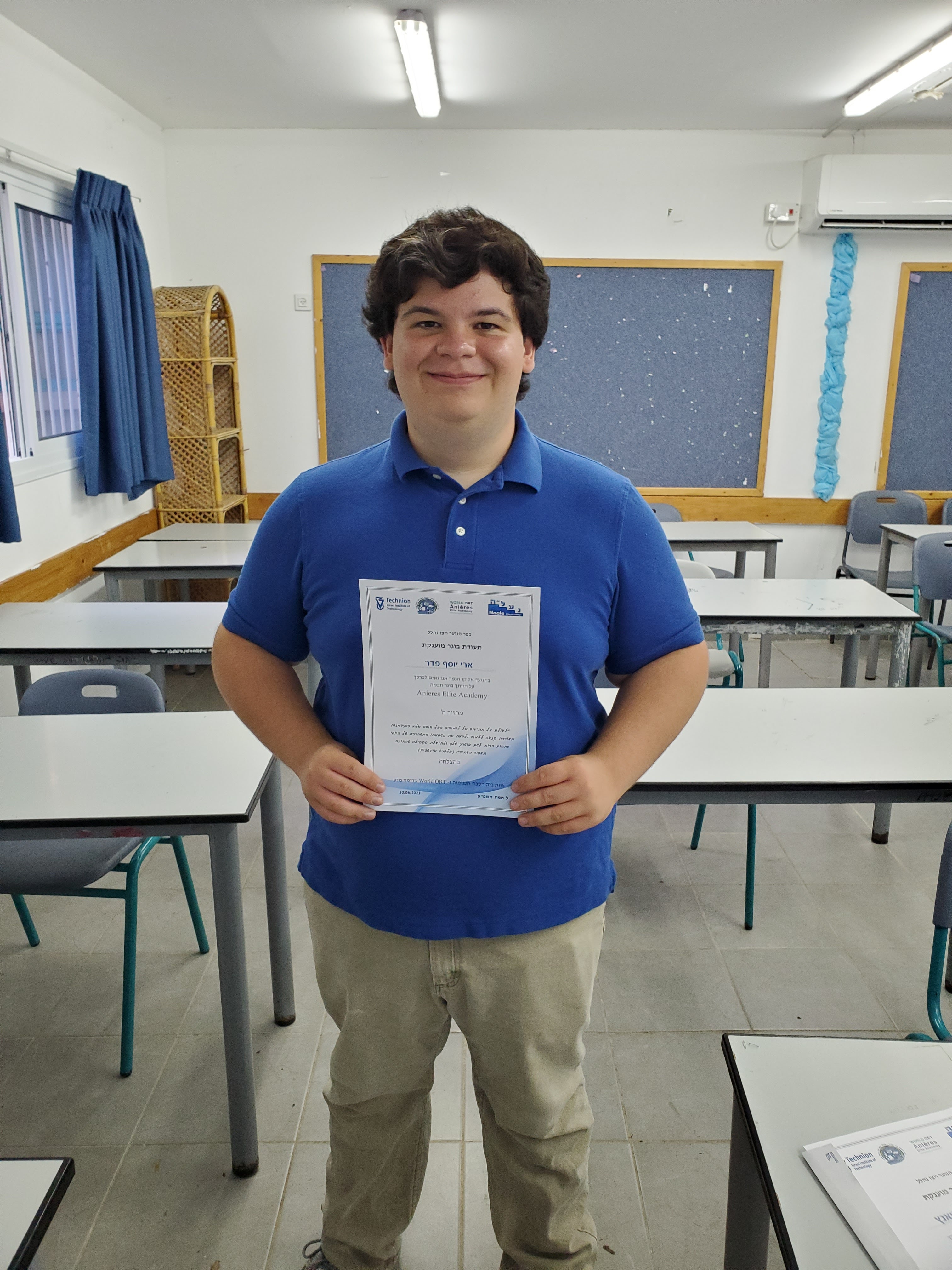
Twenty four hours after landing, it was time to travel 65 miles to my son’s first graduation event, the closing ceremony for his program at the Anieres School in Moshav Nahalal. The event began at 5:30 pm. My son told me I could leave at 3. I left at 2. I have at least learned something over the course of this trip.

The bus trips were relatively uneventful and I arrived at Nahalal about 4:45 and had a 15-20 minute walk from the bus stop to the auditorium. I arrived before my son, not that big a suprise.

Because of COVID and his schedule, I had not seen my son, Ari, in a year and a half. I’d really missed him and he’s not the most communicative person over text or phone, so checking in in person was important.

It was good to see him and meet some of his friends. His eventthat night was the conclusion ceremony for his program, Anieres Academy. His boarding school, which contains multiple programs,, and his school will hold their graduations on July 1.

His growth in self-confidence has been tremendous. He left home as a quiet, bookish, introverted kid, almost the opposite of his social butterfly sister. When he arrived, he immediately had to work on his own to fix his cellphone, which had a bad Israeli SIM card. He did that on his own and I could see then that he was already becoming more independent.

Over the years, he has taken on the responsibility for cooking for his classmates for Thanksgiving, for any event requiring grilling, and for baking cakes and treats for birthdays. Over the past year and a half, he began volunteering for the Youth Village, by helping to care for the horses there. After a few months as a volunteer, they moved him from volunteer to paid staff and began expanding the responsibilities given to him.

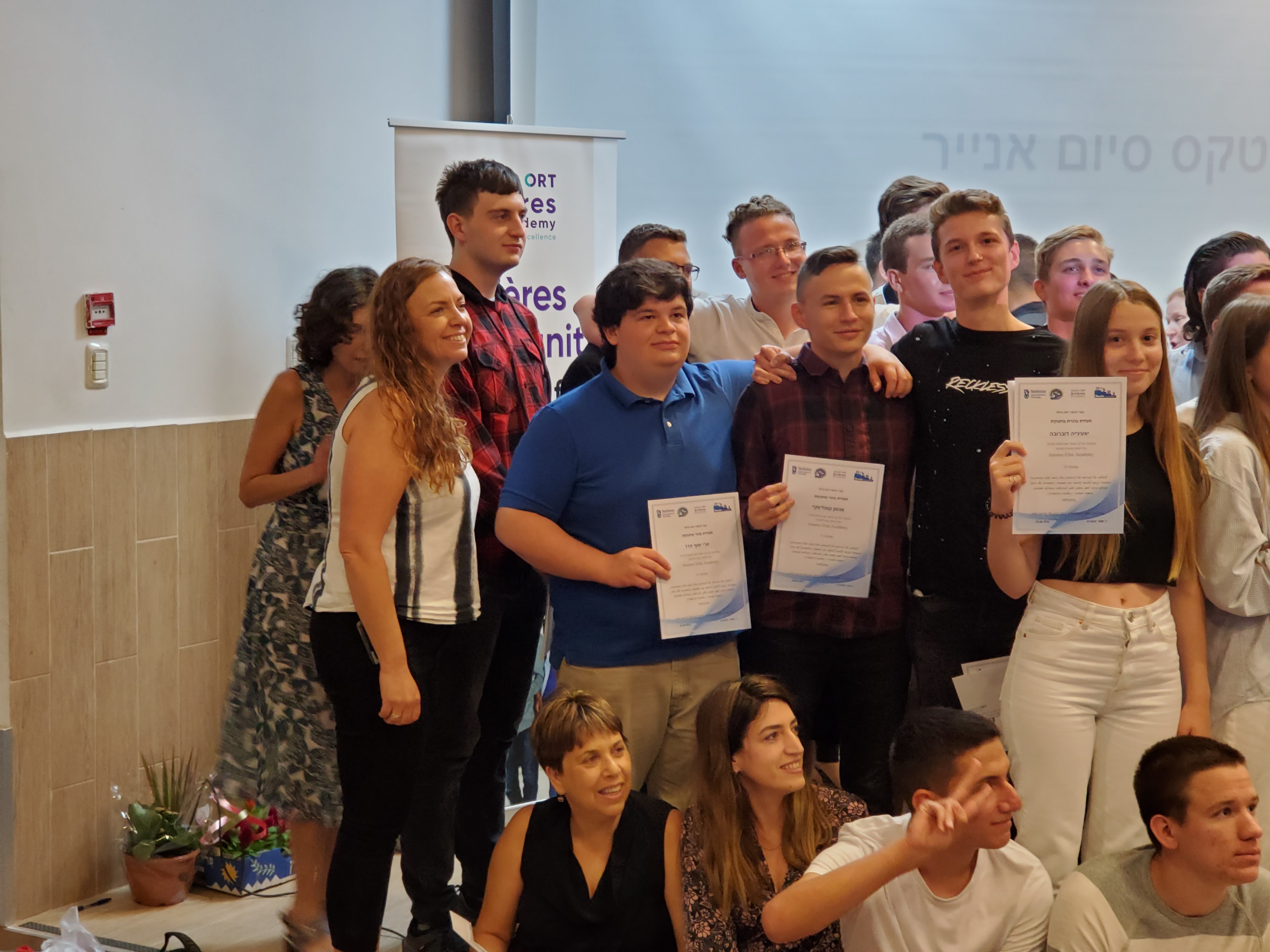
In the closing ceremony, the manager of the Youth Village praised Ari in particular for all of his work for the Youth Village. One of the parents who spoke also singled Ari out for being such a brave and good friend.

I am proud of my son’s accomplishments academically for making it through a rigorous program of study. I’m even more proud that he’s turned out to be such a good person, a real mensch.

His ceremony went on for a while. Due to the number of Russian students in his program, there were quite a number of speeches in Russian. Eventually, everyone was called to stage to receive his or her certificate individually and then they reassembled as a group on the stage for a final song.

There was a reception with a buffet line, following the ceremony. I followed my son in to get some food and then all of sudden he wasn’t there. I found a spot to stand and eat and waited and still no Ari. I texted to ask where he was and he said that he went off for a second with friends and was heading back.

On the one hand, I was a little miffed that I hadn’t seen him in a long time, had sat on buses for three hours, and walked for twenty minutes just to get there and he had abandoned me. On the other hand, I was very happy that he had those friends that he could run off with and then still come back to me. Like his sister, he’d built friendships and a support network that would last for years to come. He really was becoming a mature responsible adult.

Following the reception, we went to a short awards ceremony for all thirteen classes in his grade and then it was time for his next event and time for me to find my way to the bus stop. He walked me all the way to the stop, a good fifteen minute walk, and we had a chance to talk about where he was now and where he was going, his military placement and future housing situation. I asked him if he made the right decision going into the program and he responded with an enthusiastic yes. That’s all that I can really ask as a parent, that my children are happy with the decisions they’ve made and the journeys that they are taking.

Shuk Hatikva

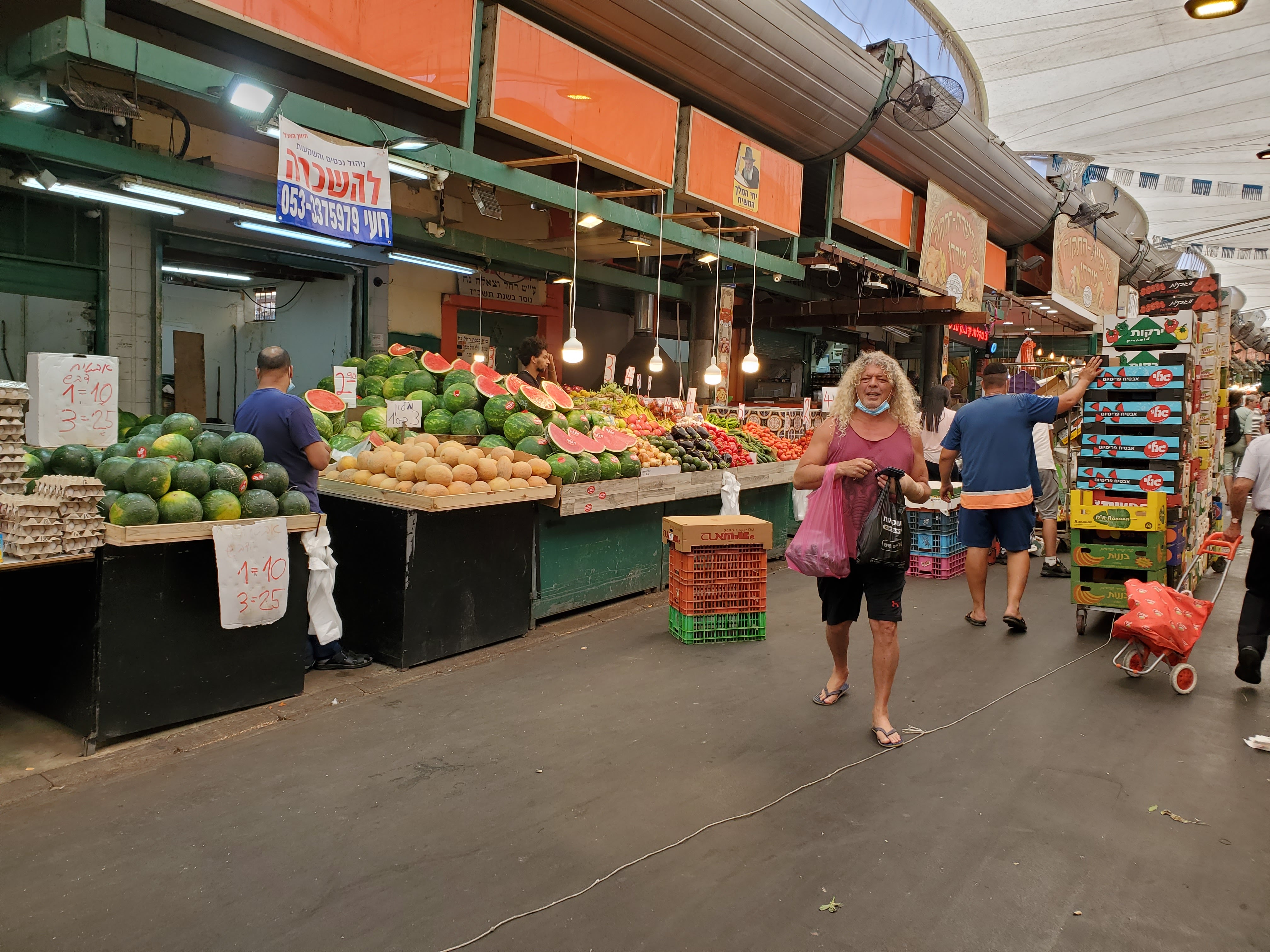
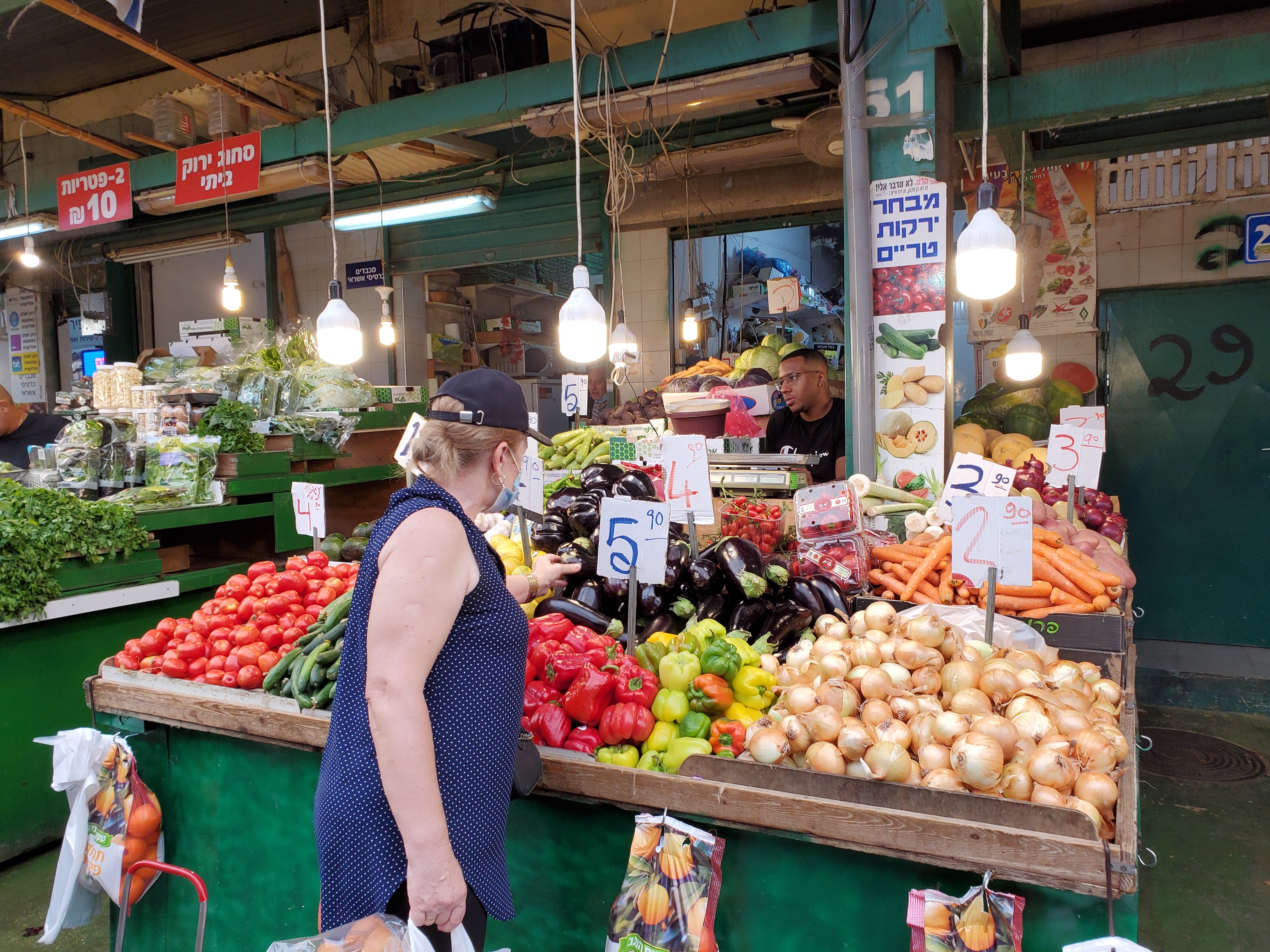
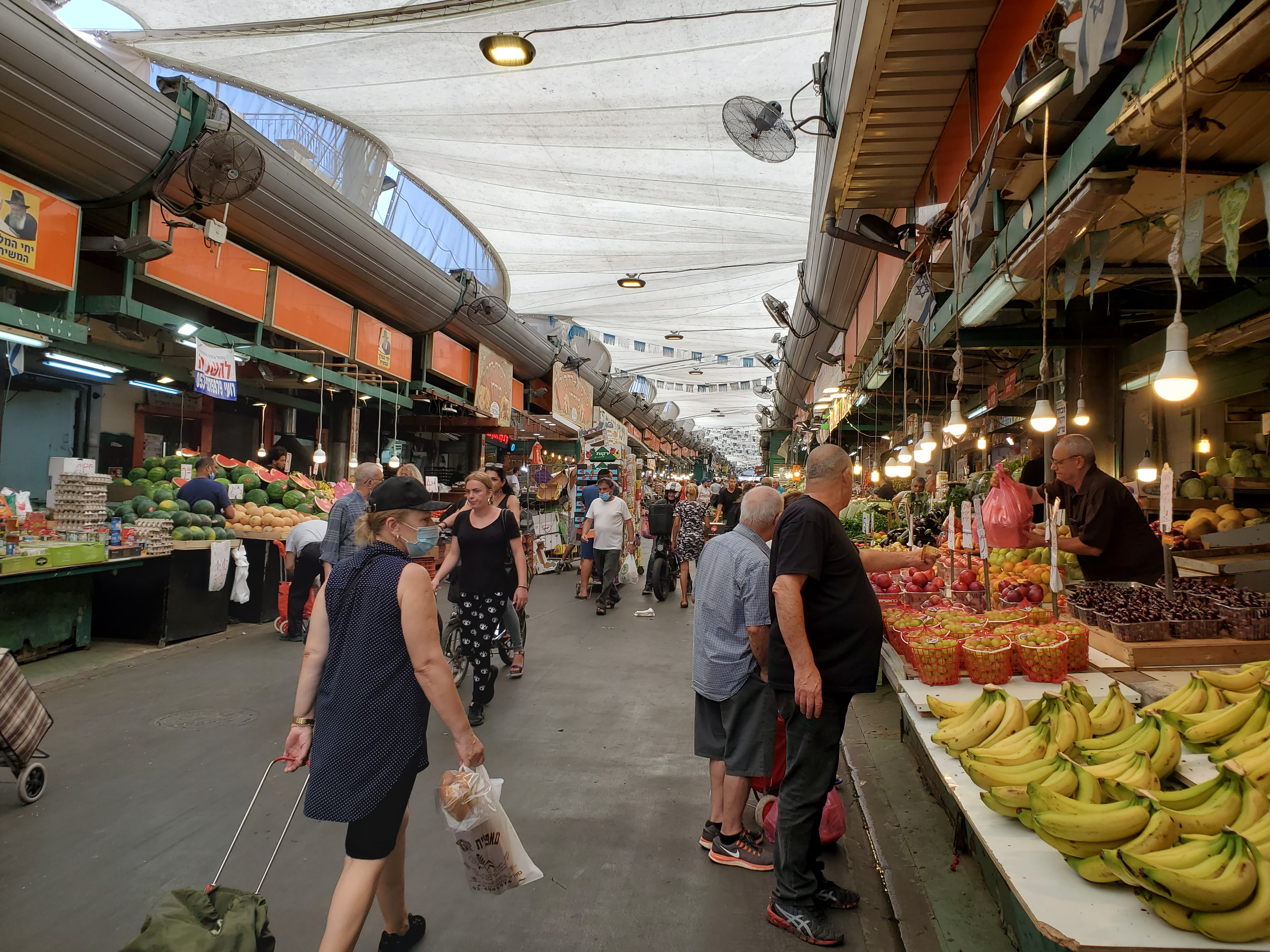
One of the things I love most about Israel are the various shukim or markets around the country. The fresh produce, the banter from vendors and the amazing variety of the crowds you encounter make my trips to them my real Israel experiences.

The smells. No matter which market we’re talking about, there is always a similar mixture of scents: the fresh fruits, vegetables and herbs alongside the aromas of grilling meat, frying pastries, and roasting nuts, with subtle hints of cigarette smoke, rotting vegetables and decaying meat, and just a nose of urine every now and then.

The people. You can see every stratum of society, young and old, well-to-do and poor, secular and religious, standing and shopping side by side. You also notice people from every ethnic background shopping next to each other: Iraqis, Moroccans, Yemenites, Russians, Ethiopians, South Africans, and Americans all mixed together doing their regular grocery shopping.

Shuk Hatikva is in the Hatikva neighborhood of Tel Aviv, a working class neighborhood, still filled with immigrants. The market was founded in the mid-1930’s when Arab farmers from the nearby village of Salama stopped coming to the neighborhood to sell their produce. Initially opened with a few stalls from Iraqi, Yemenite, Persian, and Syrian immigrants. The market grew and has spread over several streets in South Tel Aviv and has added foods from Russian, Georgian, Bukharan, and other communities.

Unlike some of the larger markets like Shuk Hacarmel in Tel Aviv or Machane Yehuda in Jerusalem, or like its smaller neighbor, Shuk Levinksy, Shuk Hatikvah has not gentrified, but remains a working person’s market, filled with whatever produce a person might need, as well as true homestyle food.

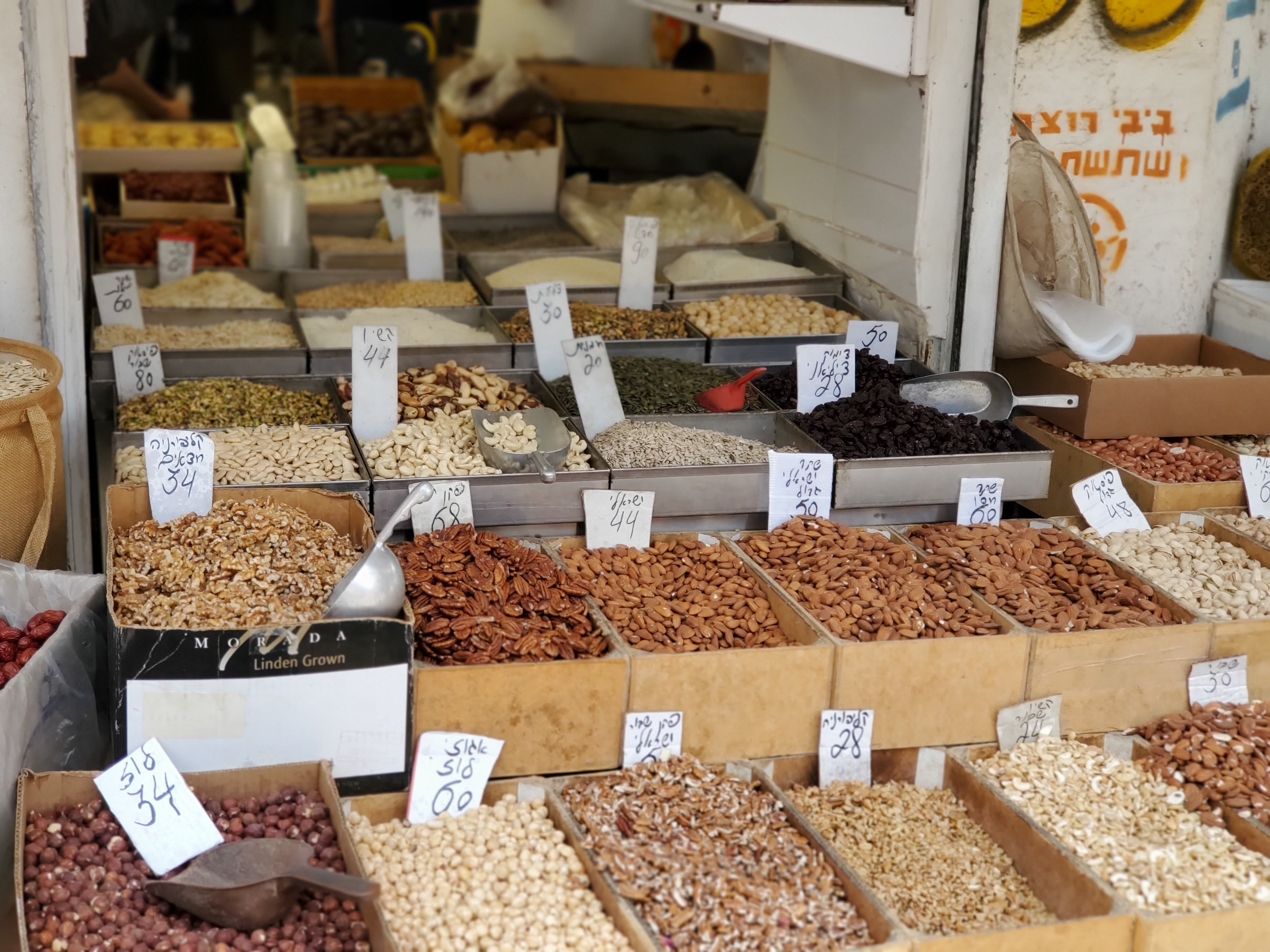
I visited Shuk Hatikva on a Thursday morning when it was busy, but not overly crowded. I was struck by the variety and volume of fresh produce – not just the tomatoes, cucumbers, and peppers, but squashes, eggplant, kohlrabi, watermelon, apricots, plums, and more. In addition, there are butcher shops filled with fresh meat, fish mongers, a shops filled with dried fruits and nuts, cookies, and pastries.

The hardest thing to figure out is where to start. I walked the market to get a feel for the selection and prices and began to pick out some items that I would likely use over the next few days. In addition to the usual salad ingredients, I picked up some eggplant, kohlrabi, amba, hummus, techina, roasted nuts, and pita.

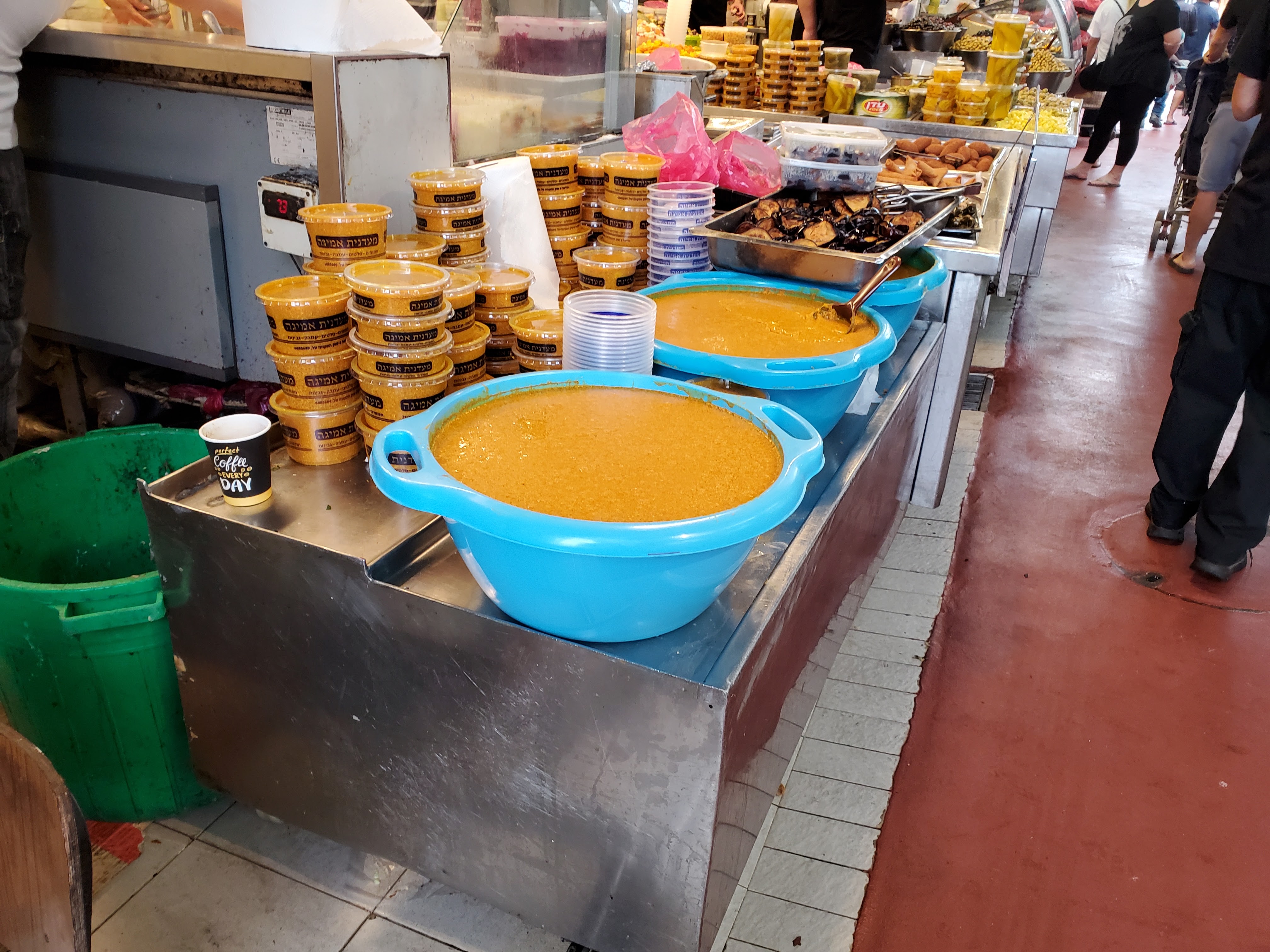
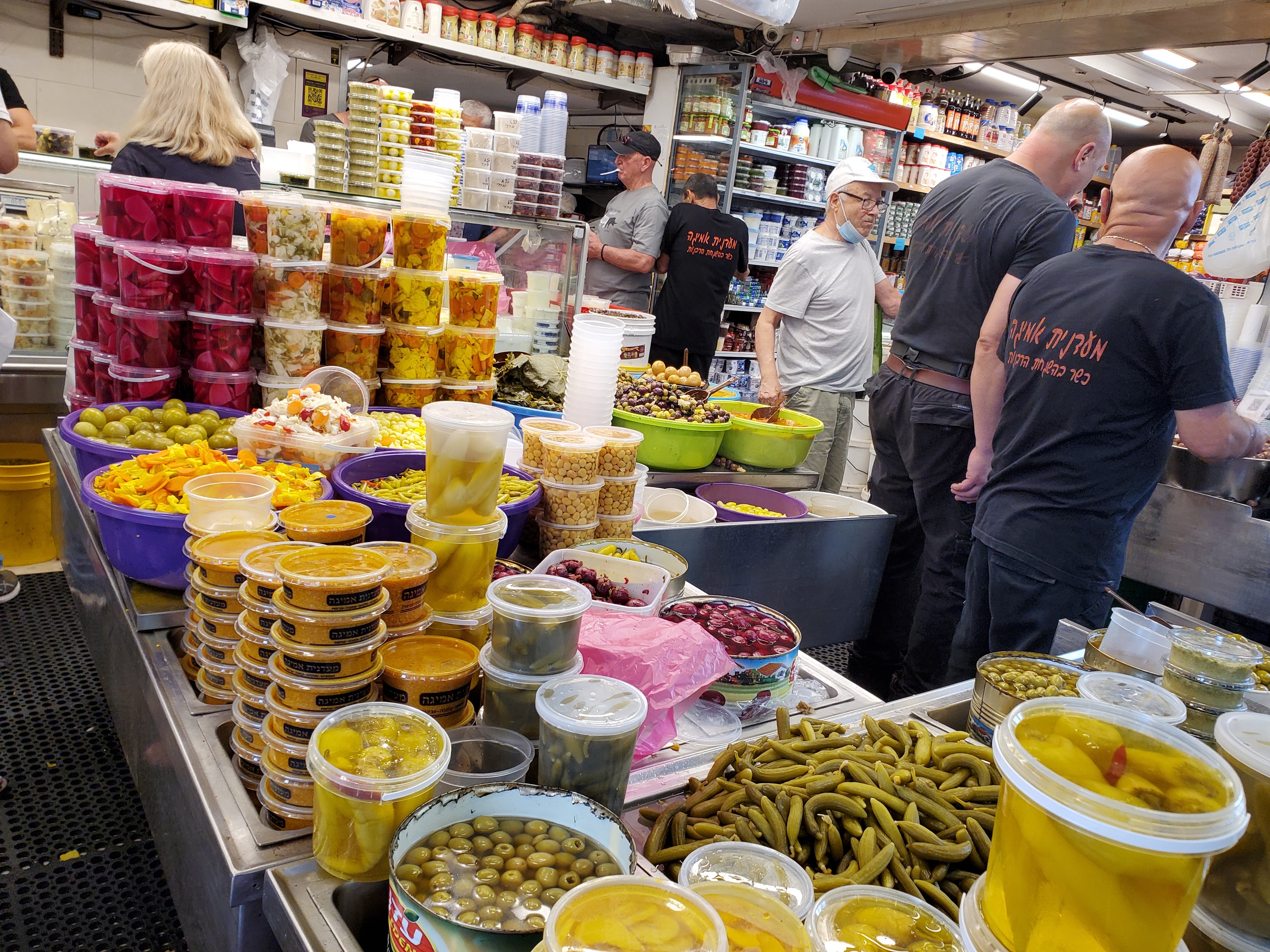
Maadani Ofer sells, hummus, techina, a wide variety of salads, olives, pickles, and other foods, but the star is the amba. Amba is a sauce made from green mangoes, vinegar, salt, turmeric, chilis, and fenugreek. It is used as a topping on sabich, kubbeh, falafel, and more. You can see vats of amba in various stages of preparation and purchase pre-packaged bottles or have them scoop it out into plastic containers on the spot.

The roasted peanuts that I bought came straight off the roaster into a plastic bag from which I greedily scooped them up. Unlike many of the roasted peanuts that we buy in jars or tins, these didn’t have all of the excess salt, just that wonderful just roasted flavor.

The pita were recently baked, not the dry thin shells we find packaged in supermarkets. These were soft and doughy, with that wonderful chewy bread texture. I can see a future of these being stuffed with tomatoes, cucumbers, hummus, techina, and whatever else I might pick up later.

On my way out of the market, I picked up sabich for a late breakfast/early lunch. Sabich , for those unfamiliar is an incredibly tasty sandwich brought to Israel by Iraqi Jews. The base of the sandwich as slices of fried eggplant and chopped hard-boiled eggs. To that are added techina, amba, and your choice of additional salad toppings, all stuffed inside a pita. You can taste each individual ingredient, but at the same time feel all the flavors blending in your mouth from the pungent amba to the smooth nutty techina, the smokiness of the eggplant and creaminess of the eggs, with some sharp, sweet, bitter, and hot notes from the additional ingredients. Sabich remains one of my favorite foods and this one was an amazing taste experience.

One shuk down, several more to experience.

Graduation, Part 1

I have two children. Years ago, I naively thought that I’d have one high school graduation ceremony, maybe two. I have five. I’ve arrived in Israel for the first of my daughter’s two ceremonies; my son has three.

True to form, after arriving in the Airbnb, I dropped off the bags I had, jumped in the shower, dressed, and tried to find a cab to get me to her campus. One app, the one my daughter recommended using, wouldn’t take my credit card. I tried again, still no luck. I tried a different credit card. Same result. I tried a different company and a different app. Success. I had just over an hour to make the thirty- minute drive to her school. I, of course, made it to the campus with only ten minutes to spare. Of course, after almost breaking my neck to get there, the event started thirty minutes late.

The boarding school, or pnimiya, graduation was not what I expected. Some of the things that I expect from graduations were missing. There were no caps and gowns, no presentation of certificates, no marching in and out in alphabetical order. Instead, it felt more like the end of summer camp combined with speeches by the staff.

There were a lot of adults who took the opportunity to speak. No one has ever argued that the school lacks a sufficient number of administrators. Among the speakers were the principal of the school, the head of the program, the olim or immigrant coordinator for the program, counselors, the house mother, and a representative from the Ministry of Education.

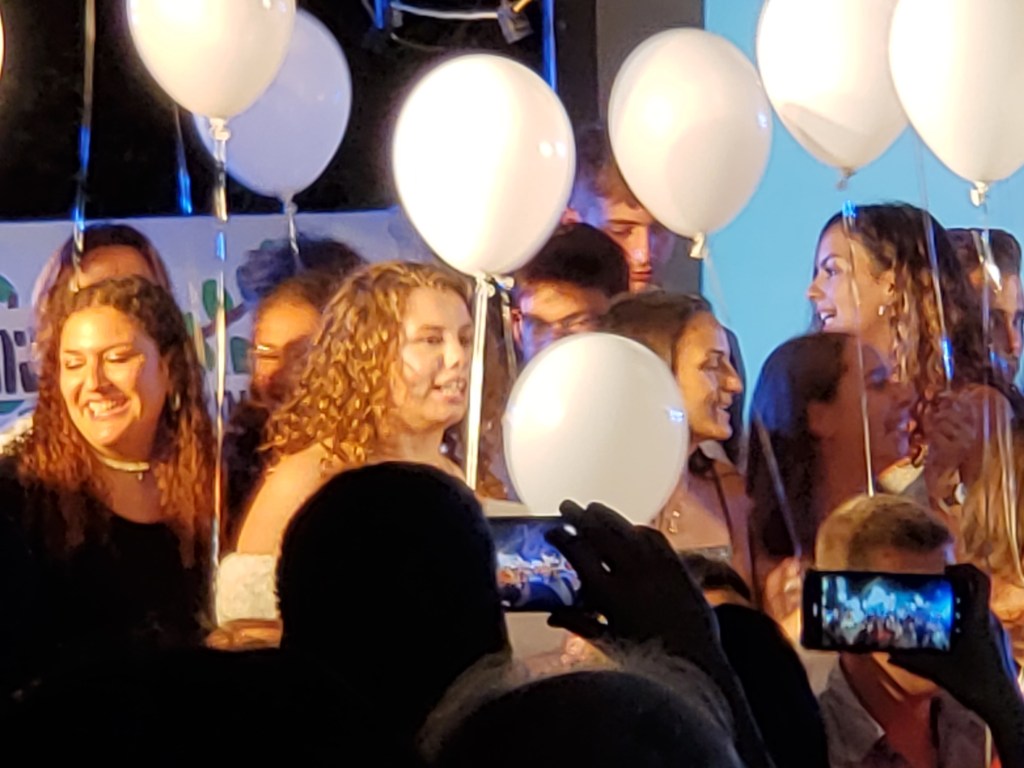
The students emceed their portion of the event and performed a variety of skits about their experiences in school over the last four years. At the end, each student was called up by name, received a balloon, and joined in singing the school song, at the end of which the balloons were released.

It was a bittersweet experience for me. I am very proud of what my daughter has accomplished in four years living in Israel. Beyond the academics in which she has excelled, she has learned to be independent, learned how to fight for what she needs, built relationships and a support network, and learned how to navigate Israeli society and bureaucracy. She has become a very confident and driven young woman.

At the same time, seeing her surrounded by all the friends that I’ve heard about for years, some of whom I’ve spoken to or heard while on the phone, I feel the downside of four years abroad. I really don’t know her friends or her day to day life the same way I would if she were back in the United States with friends coming over to study, spending the night on weekends, or going out together. Not being there for birthdays, special occasions, and just going out for ice cream or an after-dinner treat. It is definitely a tradeoff. Who is to say whether or not she would have developed the same degree of confidence and independence at home?
I am here for several more weeks. I’m looking forward to being able to spend more time with her, her brother, and their friends.